Gold Jewelry Investment: Technical ROI & Melt Value Analysis
Analyze the true ROI of gold jewelry investment. We break down melt value math, karat liquidity, retail premiums, and strategic sourcing.

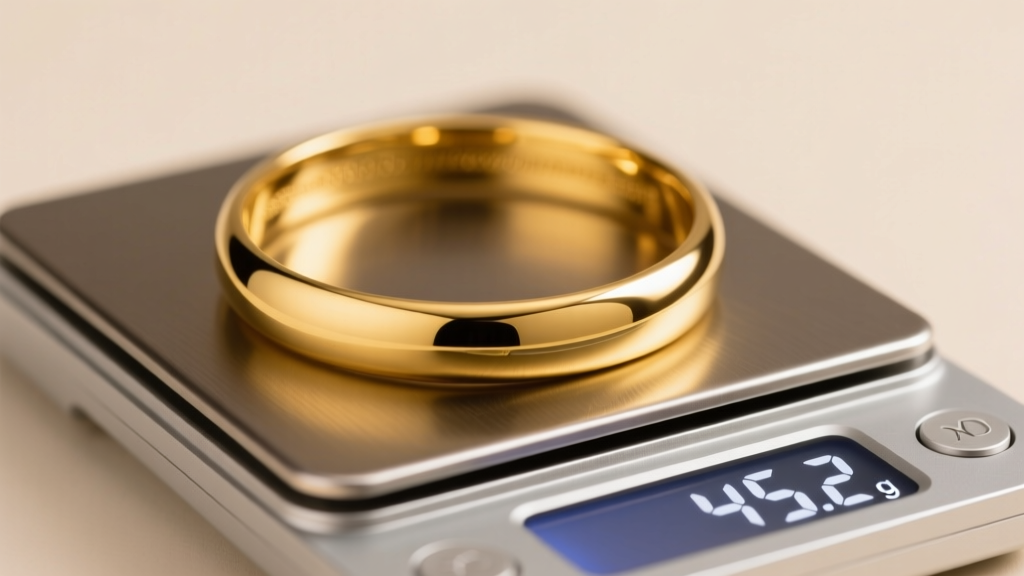
The Core Dilemma: Melt Value vs. Craftsmanship Premium
Most financial advisors dismiss the concept of a gold jewelry investment as a vanity purchase burdened by insurmountable retail premiums. From a purely mathematical standpoint, they are often correct. A standard retail gold chain carries a markup of 40% to 300% over its intrinsic melt value to cover manufacturing, branding, and retail overhead. However, for the technically informed buyer who understands assay protocols, karat liquidity, and secondary market spreads, select gold jewelry can function as a highly portable, wearable store of wealth. This deep dive dissects the exact mathematics, metallurgical constraints, and acquisition strategies required to make gold jewelry a viable alternative asset class.
The Mathematics of Melt Value
To evaluate any gold jewelry investment, you must first master the melt value formula. Gold is traded globally in troy ounces (31.1035 grams). The intrinsic value of a piece of jewelry is strictly a function of its pure gold content relative to the current spot price. According to real-time data from Kitco, spot prices fluctuate daily, meaning your baseline valuation is always moving.
The Formula:
(Item Weight in Grams ÷ 31.1035) × Karat Purity Fraction × Current Spot Price = Melt Value
Real-World Example:
Assume the spot price of gold is $2,100 per troy ounce. You are evaluating a 50-gram 18k gold chain. 18k gold is 75% pure (0.750).
(50 ÷ 31.1035) × 0.750 × $2,100 = $2,531.86 Melt Value.
If the retail jeweler is selling this chain for $4,500, you are paying a 77.7% premium over melt. For this to be a sound financial investment based purely on gold appreciation, the spot price must nearly double just for you to break even at a retail liquidation point.
Karat Analysis: Which Alloys Actually Hold Value?
Not all karats are created equal when it comes to liquidity. The Gemological Institute of America (GIA) outlines specific purity standards, but market liquidity is heavily dictated by geography and cultural norms.
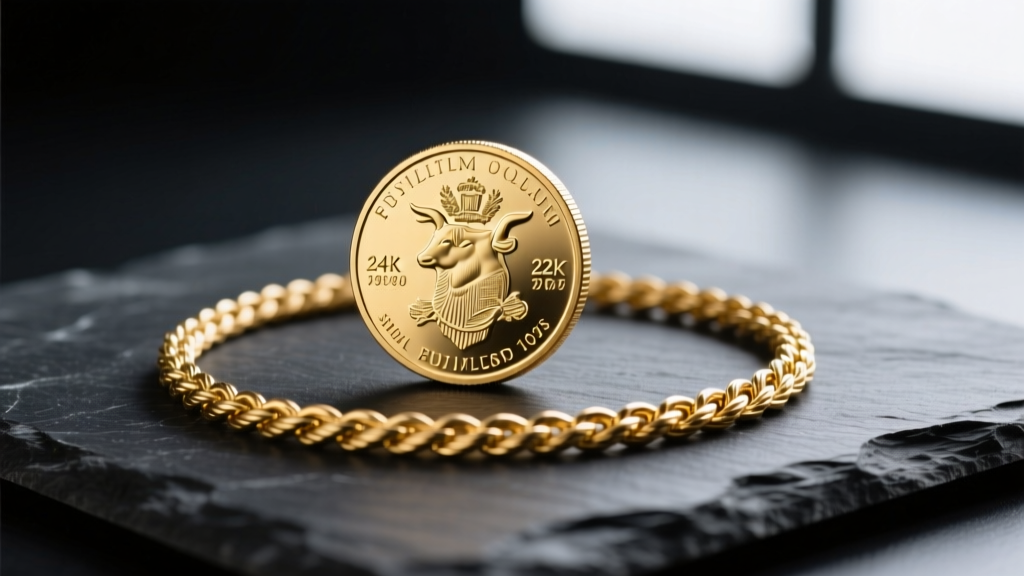
24K (99.9%) and 22K (91.6%)
In Western markets, 24k and 22k are rarely used in everyday jewelry due to their extreme malleability. However, in the Middle East, India, and Southeast Asia, 22k (often stamped with the BIS 916 hallmark) and 24k are the standard for investment-grade jewelry. These pieces are traded with very low "making charges" (premiums over melt) and are highly liquid in their respective regions. If you are buying in Dubai or Mumbai, 22k gold jewelry is effectively a wearable bullion equivalent.
18K (75%) and 14K (58.3%)
These are the standards for fine jewelry in the US and Europe. From an investment perspective, they are generally poor choices if bought at retail. The craftsmanship premium is too high, and refiners will only pay you for the 75% or 58.3% pure gold content, discarding the alloy metals (copper, silver, zinc) entirely.
Comparative Data: The Investment Spread Matrix
The table below illustrates the typical financial realities of buying and selling different types of gold assets. The "Liquidation Spread" represents the percentage lost when selling back to a dealer or refiner compared to the retail purchase price.
| Asset Type | Purity | Avg. Retail Premium Over Spot | Liquidation Spread | Investment Viability |
|---|---|---|---|---|
| 24K Bullion Coin | 99.99% | 3% - 8% | 1% - 3% | Excellent |
| 22K Cultural Jewelry (East) | 91.6% | 8% - 15% | 3% - 8% | Very Good (Region Dependent) |
| 18K Fine Chain (West) | 75.0% | 40% - 150% | 30% - 60% | Poor (Unless bought at estate) |
| 14K Fashion Jewelry | 58.3% | 100% - 300% | 50% - 80% | Terrible |
| Signed Vintage (e.g., Cartier) | Varies | N/A (Numismatic) | 10% - 20% (Auction) | Good (Collector Market) |
The Numismatic Exception: Provenance Over Purity
The primary exception to the "melt value rule" is the secondary market for signed, vintage, or historically significant jewelry. A standard 18k gold chain melts. A vintage 18k Cartier Love bracelet, a piece by mid-century master Andrew Grima, or an ancient Hellenistic gold artifact transcends its metallurgical value. In these cases, you are investing in provenance, brand equity, and numismatic rarity. According to historical auction data tracked by the World Gold Council and major auction houses, signed pieces from heritage maisons can command premiums of 50% to 500% over melt, entirely insulated from minor fluctuations in the spot price of gold.
Strategic Acquisition: Minimizing the Spread
If your goal is a true gold jewelry investment based on intrinsic value, you must bypass traditional retail entirely. Your objective is to acquire pieces as close to the melt value as possible. Here is the technical framework for strategic sourcing:
- Estate Liquidations and Probate Sales: Executors of estates are often motivated by speed rather than maximizing yield. Buying 18k and 14k lots at estate sales can frequently be done at 110% to 130% of melt value.
- Pawnshop Overstock Auctions: Unredeemed pledges are liquidated in bulk. You can acquire heavy gold chains and bangles with minimal markup over the pawnshop's internal scrap valuation.
- Direct from Importers/Wholesalers: Establishing a relationship with a jewelry district wholesaler (e.g., in New York's Diamond District or London's Hatton Garden) allows you to purchase new chains based on a simple formula: Daily Melt + Fixed Making Charge (usually $15-$30 per gram).
Storage, Assay, and Liquidation Realities
High-karat gold (22k and 24k) is exceptionally soft. While scratches and dents do not diminish the intrinsic melt value of the metal, they will completely destroy any numismatic or brand premium if you are holding signed vintage pieces. Store investment-grade vintage jewelry in individual, soft flannel pouches treated with anti-tarnish compounds, and maintain strict climate control to prevent alloy oxidation in lower-karat pieces.
When it comes time to liquidate, understand the assay process. Reputable refiners use X-ray Fluorescence (XRF) spectrometers to determine exact elemental composition without damaging the piece. Avoid buyers who rely solely on destructive acid testing, as this can lead to inaccurate readings on complex alloys, hollow-core chains, or pieces with solder joints that contain lower-karat metals. Always weigh your items on a calibrated milligram scale before approaching a buyer, and know your exact melt baseline for that day's spot price.
Expert Verdict: Gold jewelry is a poor investment if purchased at retail for its aesthetic value. It becomes a highly effective, portable wealth-preservation tool only when acquired at or near melt value through secondary markets, or when dealing in high-karat cultural pieces with established regional liquidity.


