2026 Trends: Inside a 14 Karat Jewelry Store Beverly Hills
Discover 2026 gold trends from a top 14 karat jewelry store Beverly Hills. Expert analysis on 14k alloys, pricing, and luxury everyday silhouettes.

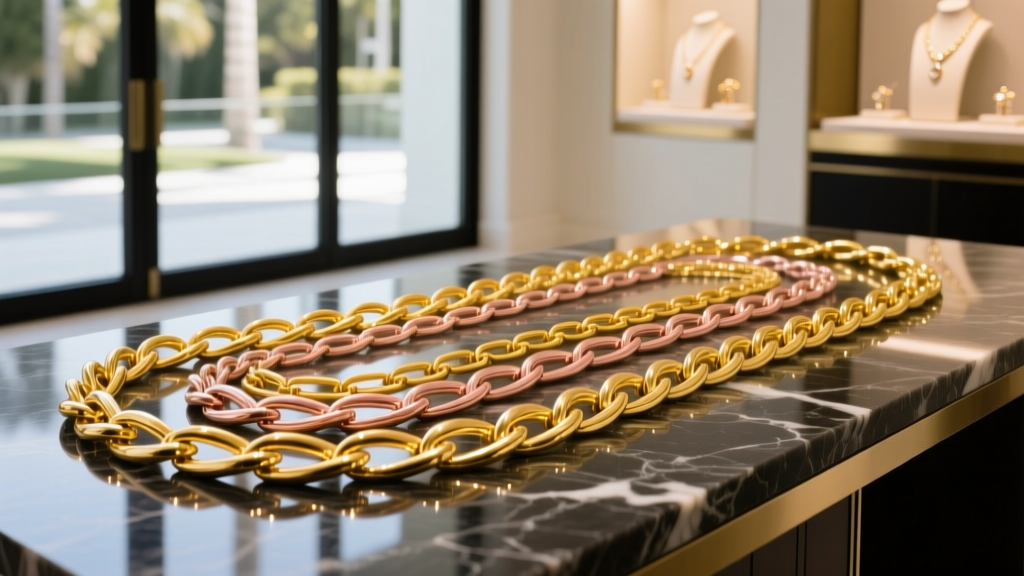
The landscape of luxury gold jewelry is undergoing a seismic shift as we move through 2026. While the historical prestige of Beverly Hills has long been associated with ostentatious displays of high-karat, buttery 24k gold and heavy 18k statement pieces, the modern luxury consumer is demanding something entirely different. Today, the most sought-after pieces on Rodeo Drive prioritize durability, architectural minimalism, and everyday wearability. This evolution has placed 14k gold at the absolute center of the high-end market. To understand this phenomenon, we conducted an extensive style and trend analysis from the perspective of an elite 14 karat jewelry store beverly hills buyers frequent, examining why 58.3% pure gold is outperforming its higher-karat counterparts in both design innovation and retail volume.
The Metallurgical Shift: Why 14k is the New Luxury Standard
For decades, the luxury jewelry market operated on a simple heuristic: the higher the karat, the higher the prestige. However, the 2026 luxury consumer leads an active, dynamic lifestyle that demands resilience from their investments. Pure 24k gold is exceptionally soft, scoring low on the Vickers hardness scale, while 18k gold (75% pure) remains prone to micro-scratching and deformation when crafted into delicate, modern silhouettes.
Enter 14k gold. Comprising exactly 58.3% pure gold and 41.7% alloy metals, 14k gold offers a Vickers hardness rating of approximately 120-140 HV, compared to the 90-110 HV of 18k gold. This metallurgical advantage allows master jewelers to execute ultra-fine micro-pavé settings, tension mounts, and razor-thin herringbone weaves that would structurally fail in higher karats. According to the Gemological Institute of America (GIA), the specific alloy mixtures used in 14k gold not only provide superior tensile strength but also allow for a wider, more nuanced spectrum of color manipulation.
"The modern luxury client doesn't want a piece of jewelry they have to take off before a tennis match or a flight. They want armor that looks like art. 14k gold provides the structural integrity required for the architectural, fluid designs dominating our 2026 showcases."
— Senior Bench Jeweler, Beverly Hills Custom Atelier
Deconstructing the 2026 14k Alloy Palettes
- 14k Yellow Gold: Alloyed with a precise ratio of silver and copper to maintain a warm, rich hue without the brassy undertones found in lower-karat mass-market jewelry.
- 14k Rose Gold: Achieved by increasing the copper content (often up to 20.5%) while balancing with silver. The 2026 trend leans toward a "champagne rose"—a softer, less reddish pink achieved by tweaking the silver-to-copper ratio.
- 14k White Gold: Alloyed with palladium rather than nickel to create a naturally whiter base metal, reducing the reliance on heavy rhodium plating and appealing to hypoallergenic demands.
2026 Trend Forecast: Dominant Silhouettes on Rodeo Drive
Walking into a premier boutique in the 90210 zip code this year reveals a distinct departure from the heavy, logo-driven chains of the early 2020s. The current aesthetic is defined by "fluid architecture"—pieces that move like fabric but hold rigid, geometric shapes at rest.
1. The Fluid Herringbone and Micro-Snake Chains
The herringbone chain has returned, but not as the fragile, easily kinked iterations of the past. Using advanced CAD/CAM milling and precision drawing plates, Beverly Hills manufacturers are producing 14k white and yellow gold herringbone chains in the 15-gram to 25-gram weight range. These pieces drape like liquid metal across the clavicle but possess the structural memory to resist permanent folding. They are frequently layered in mixed metals—a 2mm 14k yellow gold snake chain intertwined with a 4mm 14k white gold herringbone.
2. Architectural Signets and Tension Rings
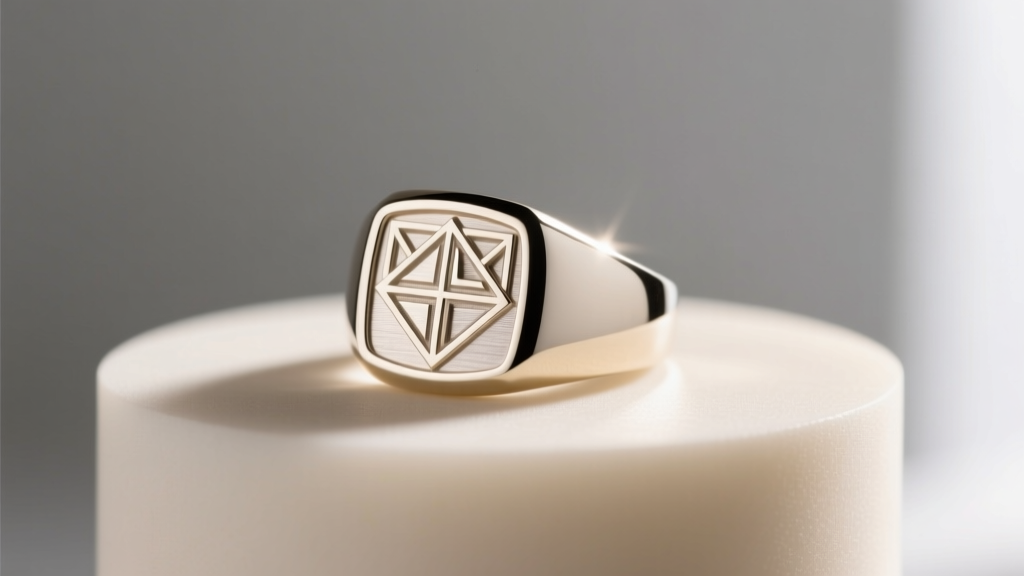
The traditional family crest signet has been replaced by brutalist, geometric topographies. Master casters are utilizing 14k yellow gold to create heavy, asymmetrical signet rings (often weighing between 12 and 18 grams) featuring deep, laser-engraved negative space. Furthermore, tension-set solitaire rings in 14k white gold are trending heavily. The superior hardness of the 14k alloy allows the metal itself to act as a spring, holding a 1-carat diamond securely in place with zero prongs, creating an illusion of the stone floating entirely on its own.
3. Modular Paperclip Links with Integrated Clasps
The paperclip chain remains a staple, but the 2026 iteration focuses on the clasp as a centerpiece. Rather than hiding a standard lobster clasp, high-end 14k gold designs feature oversized, magnetic barrel clasps or interlocking geometric toggles that are meant to be worn asymmetrically at the front or side of the neck.
Price Index: Beverly Hills Boutique vs. National Averages
Understanding the pricing dynamics of luxury 14k gold requires looking beyond the spot price of the raw metal. When you purchase from a high-end retailer, you are paying for superior finishing techniques (such as hand-polishing and micro-sandblasting), ethical sourcing traceability, and exclusive design rights. Below is a comparative analysis of 2026 retail pricing for solid 14k gold staples.
| Piece Category | Weight Range | Beverly Hills Boutique Price | National Chain Average | Value Drivers in Luxury Market |
|---|---|---|---|---|
| Fluid Herringbone Chain (18") | 15g - 25g | $2,400 - $4,200 | $1,100 - $1,800 | Hand-linked weaving, anti-kink structural memory, custom magnetic clasps. |
| Architectural Signet Ring | 12g - 18g | $1,800 - $3,500 | $900 - $1,400 | Lost-wax casting precision, deep laser topography, ergonomic interior comfort-fit. |
| Micro-Pavé Hoop Earrings (15mm) | 4g - 6g | $2,200 - $3,800 | $1,200 - $1,900 | VS-clarity diamond melee, palladium-alloyed white gold, frictionless hinge mechanisms. |
| Modular Paperclip Bracelet (7") | 8g - 12g | $1,500 - $2,600 | $700 - $1,100 | Individually soldered links to prevent stretching, seamless integrated toggles. |
How to Vet a High-End 14k Gold Retailer
Not every retailer claiming to offer luxury gold possesses the bench expertise required to produce heirloom-quality 14k pieces. When evaluating a boutique, particularly in a saturated market like Los Angeles, consumers must look for specific markers of authenticity and craftsmanship. Industry data from JCK Online indicates a rising consumer demand for transparency in alloy sourcing and manufacturing origins.
Critical Vetting Criteria for 2026
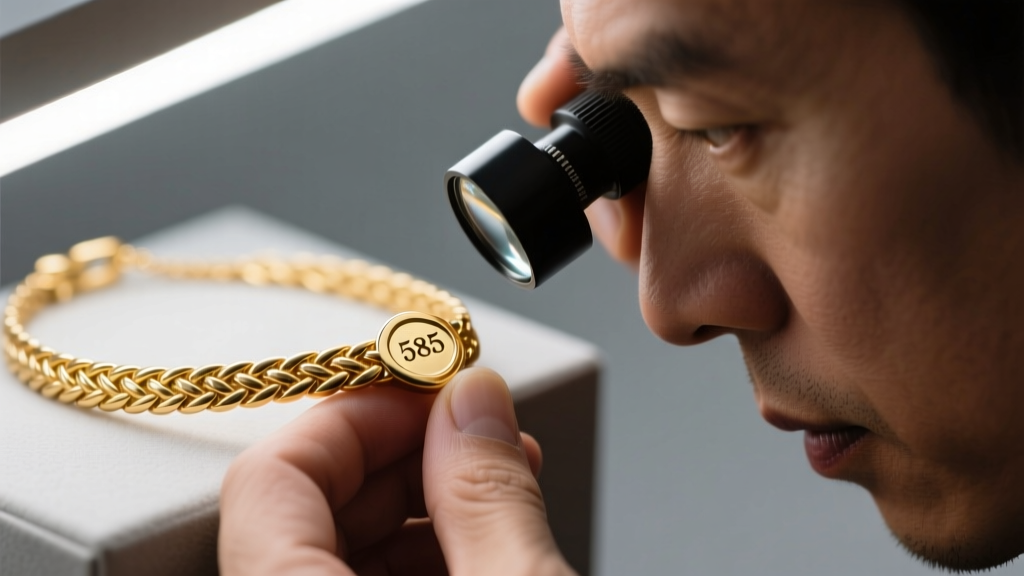
- Hallmarking and Maker's Marks: A legitimate luxury piece will never only bear a "14k" or "585" stamp. It must also feature a registered maker's mark (the manufacturer's trademarked symbol). This ensures accountability for the exact alloy composition.
- Alloy Transparency: Elite boutiques should be able to explicitly tell you what their 14k white gold is alloyed with. If they cannot confirm whether it is nickel-based or palladium-based, they are likely sourcing from mass-market, overseas casters.
- Certifications: Look for affiliations with the American Gem Society (AGS) or Jewelers of America (JA). These organizations enforce strict ethical and metallurgical standards.
- Finishing Inspection: Examine the interior of rings and the backplates of pendants. High-end 14k jewelry will feature "comfort-fit" interiors (slightly domed) and meticulously polished backplates, whereas lower-tier manufacturers leave the interiors flat and the backplates porous or rough-cast.
Final Verdict: The Future of West Coast Gold
The narrative that 14k gold is merely a "budget" alternative to 18k or 24k has been entirely dismantled by the 2026 luxury market. Through advanced metallurgical engineering and a commitment to fluid, architectural design, 14k gold has claimed its rightful place as the premier medium for high-end, everyday jewelry. For the modern collector, the true value lies not just in the raw gold content, but in the structural ingenuity, the precision of the cast, and the seamless integration of the piece into a dynamic lifestyle. As Beverly Hills continues to set the global standard for quiet luxury, 14k gold remains the undisputed metal of the moment.


