Can Gold Plated Jewelry Get Wet? The Science of Tarnish & Wear
Discover the electrochemical truth behind whether gold plated jewelry can get wet. Expert analysis on micron thickness, porosity, and water damage.

The Short Answer: Porosity and the Electrochemical Cell
To answer the question, "can gold plated jewelry get wet?" we must first separate the properties of pure gold from the realities of electroplating. Pure 24k gold is a noble metal; it is entirely impervious to water, oxygen, and most acids. However, gold plating is a microscopic veneer applied over a reactive base metal. The short answer is no, gold plated jewelry should not get wet, but the technical reason why goes far beyond simple "tarnish."
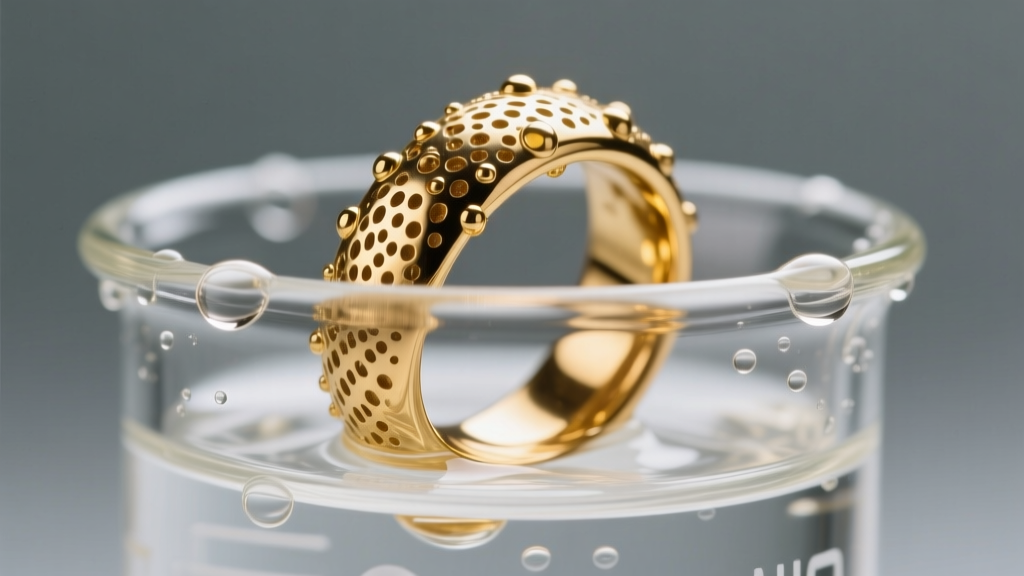
When gold is electroplated onto a base metal (like brass or copper), the gold atoms deposit in a crystalline lattice structure. At sub-micron thicknesses, this lattice is inherently porous. These microscopic voids act as capillaries. When exposed to water, moisture penetrates these pores and reaches the base metal. Because gold is highly cathodic (noble) and base metals like copper or zinc are highly anodic (reactive), the introduction of water creates a galvanic cell—a microscopic battery. The water acts as an electrolyte, accelerating the oxidation of the base metal underneath, which then bleeds through the pores as green or black corrosion.
Micron Thickness: Flash Plating vs. Vermeil vs. Heavy Plate
The water resistance of your jewelry is directly dictated by the thickness of the gold layer, measured in microns (µm). The Federal Trade Commission (FTC) strictly regulates these definitions to protect consumers from misleading marketing. Understanding these tiers is critical for predicting how a piece will react to moisture.
| Plating Type | Thickness (Microns) | Typical Base Metal | Water Resistance Rating |
|---|---|---|---|
| Flash / Wash Plating | 0.1 - 0.5 µm | Brass, Nickel, Zinc Alloy | None (Fails upon contact with sweat/water) |
| Standard Gold Plated | 0.5 - 1.0 µm | Brass, Stainless Steel | Low (Survives brief splashes, fails in pools) |
| Gold Vermeil | 2.5+ µm | Sterling Silver (925) | Moderate (Resists rain, damaged by chlorine) |
| Heavy Gold Plate | 3.0 - 5.0+ µm | Sterling Silver, Copper | High (Withstands occasional submersion) |
As noted by metallurgical experts at Rio Grande, a standard 0.5-micron plate contains thousands of microscopic pores per square millimeter. Only when plating exceeds 2.5 microns (the legal threshold for Vermeil) does the gold layer become dense enough to significantly restrict moisture penetration.
The Chemistry of Water Damage: It's Not Just H2O
Not all water is created equal. The chemical composition of the water your jewelry encounters dictates the specific failure mode of the plating.
Chlorinated Water (Pools & Spas)
Chlorine is the ultimate enemy of gold alloys and plated jewelry. In high concentrations and elevated temperatures (like a hot tub), chlorine can actually form gold chloride, which is water-soluble. While this primarily affects lower-karat solid gold (like 10k or 14k where copper and zinc are present), in plated jewelry, the chlorine aggressively attacks the base metal through the plating's pores. This causes rapid structural failure, leading to the gold layer flaking or peeling off entirely within hours of exposure.
Saltwater and Galvanic Corrosion
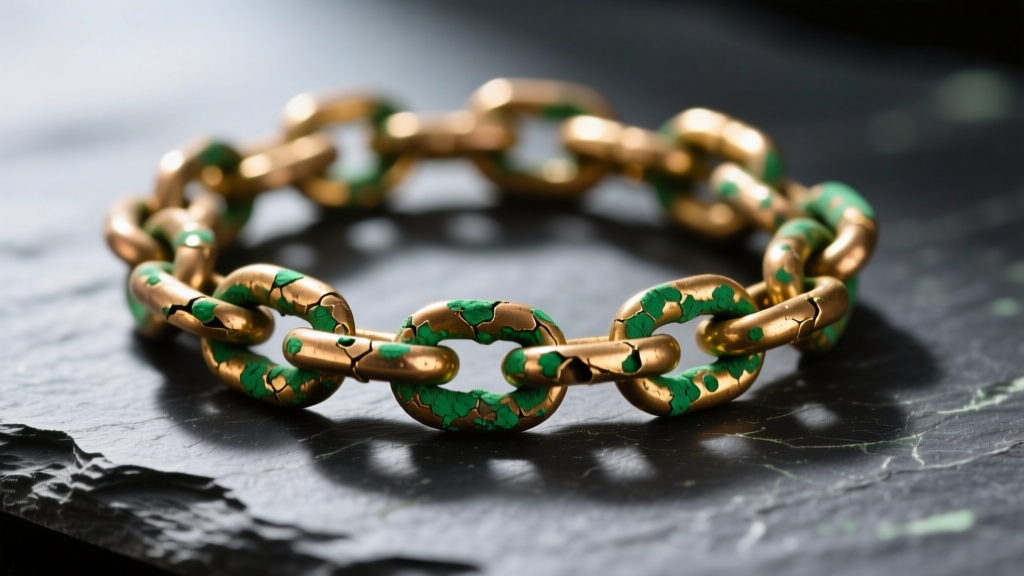
Ocean water is a highly conductive electrolyte due to its dissolved sodium chloride. When saltwater bridges the gap between the cathodic gold surface and the anodic brass or copper core, it triggers aggressive galvanic corrosion. The base metal sacrifices itself, oxidizing rapidly. This is why a gold-plated brass ring worn in the ocean will often turn your finger green within minutes—the copper in the brass is oxidizing into copper chloride and migrating to the surface.
Hard Water and Mineral Deposits
Showering in hard water introduces calcium and magnesium carbonate to the jewelry. These minerals do not chemically react with the gold, but they physically lodge themselves into the microscopic pores of the electroplated layer. Over time, this creates a dull, chalky film that is incredibly difficult to remove without using abrasive polishes that will strip the delicate gold plating.
Base Metal Failure Modes: What Happens Underneath
When water breaches the gold layer, the resulting damage depends entirely on the core metal. According to the World Gold Council, the interaction between gold and base metals is a primary factor in jewelry longevity.
- Brass (Copper/Zinc Alloy): Susceptible to "dezincification." The zinc leaches out when exposed to chlorinated water, leaving a porous, brittle copper matrix that collapses, taking the gold plating down with it.
- Copper: Reacts with moisture and oxygen to form cuprite (red/black) and malachite (green). This expansion creates physical blisters under the gold plate.
- Sterling Silver (Vermeil): Silver reacts with sulfur compounds often found in municipal water supplies to form silver sulfide (black tarnish). While less structurally destructive than brass oxidation, it darkens the appearance of the gold from beneath.
Expert Recovery: How to Salvage Water-Damaged Plating
If your gold plated jewelry has been exposed to water, immediate and correct intervention can halt the galvanic corrosion process. Never use ultrasonic cleaners or silver dip solutions, as the cavitation and harsh acids will strip the remaining microns of gold.
- Neutralize the Electrolyte: Rinse the piece immediately under distilled water (not tap water, which contains chlorine and minerals) to wash away salt, chlorine, or sweat.
- Apply a Mild Surfactant: Use a drop of pH-neutral dish soap (free of lotions or citrus additives) and gently lather with your fingertips. Do not use a toothbrush; the bristles will micro-scratch the gold.
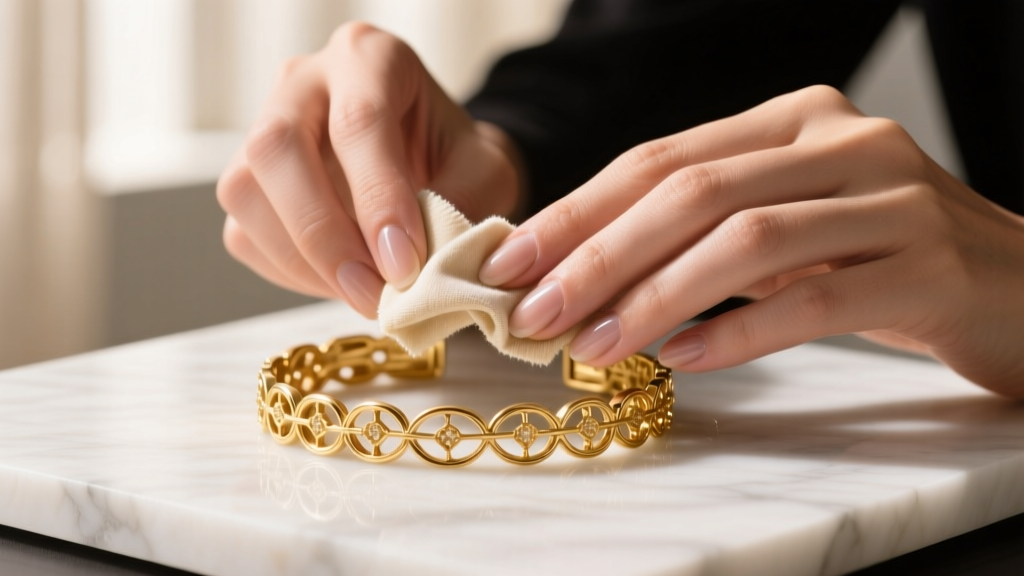
- Thorough Drying: Pat dry with a lint-free microfiber cloth. Follow up with a hair dryer on the "cool" setting to force air into the crevices and evaporate trapped moisture.
- Seal the Pores (Optional): For flash-plated items that must be worn daily, applying a microscopically thin layer of Renaissance Wax or a specialized jewelry sealant can temporarily plug the pores and block moisture ingress.
The 2026 Standard: PVD Coating as the Waterproof Alternative
For consumers seeking the look of gold with genuine waterproof capabilities, the industry has largely pivoted toward Physical Vapor Deposition (PVD). Unlike electroplating, which relies on a liquid chemical bath, PVD vaporizes titanium or zirconium in a vacuum chamber, bonding it to a stainless steel core at an atomic level.
PVD gold coatings are measured in nanometers rather than microns, but they are virtually non-porous, incredibly hard (often exceeding 2000 HV on the Vickers scale), and completely impervious to saltwater, chlorine, and sweat. While traditional electroplated gold will always remain vulnerable to moisture due to its crystalline porosity, PVD offers a technically superior alternative for active, water-exposed lifestyles.
Expert Takeaway: Gold plating is an aesthetic finish, not a structural shield. Treat all electroplated jewelry as strictly "dry-wear" only. If your lifestyle demands waterproof jewelry, bypass electroplating entirely and invest in solid 14k/18k gold or high-grade PVD-coated stainless steel.