Expert Guide to Cleaning Gold Plated Jewelry Without Damage
Learn the exact steps for cleaning gold plated jewelry without stripping the finish. Discover safe solutions, tools, and expert maintenance tips.

Understanding the Microscopic Reality of Gold Plating
When you are cleaning gold plated jewelry, you are not interacting with a solid block of precious metal. Instead, you are handling a microscopic metallic skin stretched over a reactive base metal—usually brass, copper, or stainless steel. The longevity of your piece depends entirely on preserving this fragile outer layer. According to the Federal Trade Commission (FTC) Jewelry Guides, a piece can only be legally marketed as "gold electroplate" if the gold layer is at least 0.175 microns thick. Heavy Gold Electroplate (HGE) requires a minimum of 2.5 microns, while "flash plating" can be as thin as 0.05 microns.
Because the gold layer is so thin, aggressive friction, harsh chemicals, and abrasive powders will literally strip the gold away, exposing the base metal beneath. Once the brass or copper core is exposed to oxygen and the sulfur in your sweat, rapid tarnishing and the dreaded "green skin" effect will occur. Therefore, the goal of cleaning is to lift oils, dead skin cells, and environmental dust without applying any mechanical abrasion to the gold surface.
The 5-Step Method for Safe Cleaning
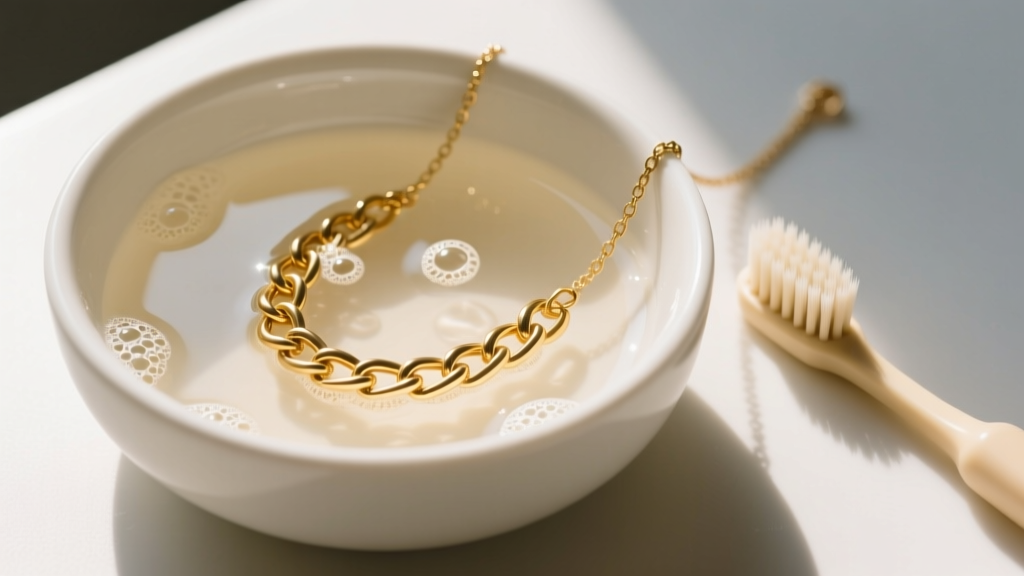
To safely restore the luster of your gold-plated rings, necklaces, and earrings, follow this exact protocol. You will need: distilled water, a pH-neutral dish soap (like Dawn Free & Clear), a 100% cotton baby toothbrush (extra-soft), and a clean microfiber cloth.
- Prepare the Solution: Fill a small ceramic or glass bowl with lukewarm distilled water. Avoid tap water, as the dissolved minerals and chlorine can leave hard water spots or trigger galvanic corrosion on exposed base metals. Add exactly two drops of pH-neutral dish soap. Avoid moisturizing soaps or body washes, as they contain lipids and lotions that leave a cloudy film on the gold.
- The Brief Soak: Submerge your jewelry in the solution for no more than 3 to 5 minutes. This brief window is enough to soften sebum and cosmetic buildup without allowing water to penetrate any microscopic micro-fissures in the plating.
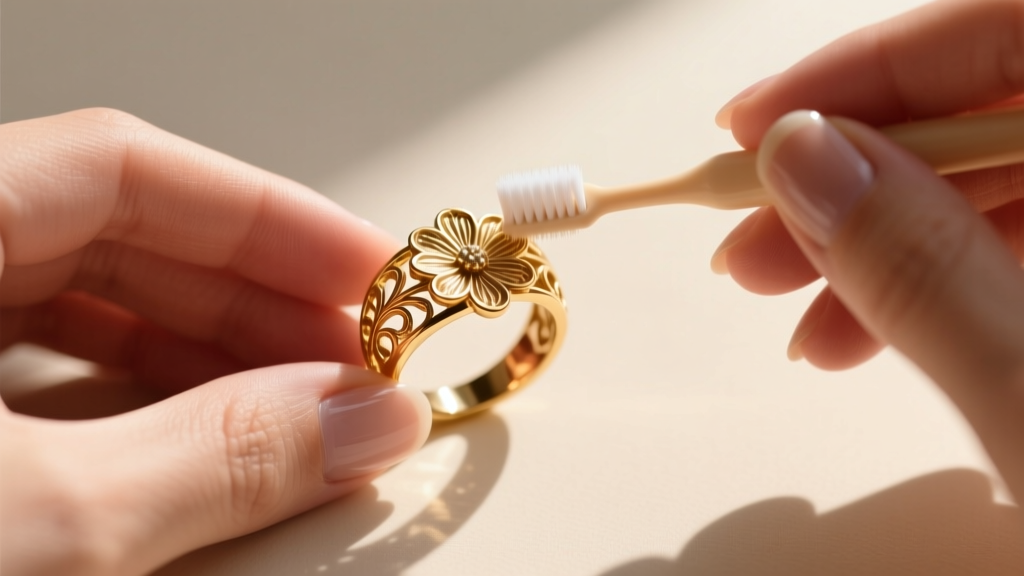
- Gentle Agitation: Remove the piece and use the baby toothbrush to lightly sweep over the surface. Focus on the backs of rings and the clasp mechanisms of necklaces where lotion accumulates. Use light, circular motions. Never scrub back and forth aggressively.
- The Distilled Rinse: Rinse the jewelry under a slow stream of room-temperature distilled water to wash away the suspended soap and dirt particles.
- Microfiber Drying: Pat the piece dry with a clean, lint-free microfiber cloth. Do not use paper towels or tissues; wood pulp fibers are surprisingly abrasive and can inflict micro-scratches on soft 14k or 18k gold plating. Allow the piece to air-dry completely on a towel for 10 minutes before storing.
The "Never Do This" List: Plating Killers
Many well-intentioned jewelry owners ruin their gold-plated pieces by borrowing cleaning methods meant for solid gold or diamonds. Avoid these common mistakes at all costs:
- Ultrasonic Cleaners: The high-frequency sound waves create microscopic cavitation bubbles that implode against the metal. While great for solid diamonds, this violent vibration will shatter and flake delicate gold plating right off the base metal.
- Baking Soda and Vinegar: This DIY volcano mixture is highly abrasive and acidic. Baking soda has a Mohs hardness of 2.5, which is hard enough to scratch pure gold and easily wear through a 1-micron plating layer.
- Toothpaste: Toothpaste contains hydrated silica, an abrasive agent designed to strip plaque from tooth enamel. It will act like sandpaper on your gold-plated finish.
- Chlorine and Ammonia: Never wear or clean plated jewelry near swimming pools or household bleach. Chlorine causes an immediate chemical reaction with the copper and zinc alloys in the base metal, leading to irreversible structural weakening and discoloration.
"The Gemological Institute of America (GIA) notes that while pure gold is highly resistant to corrosion, the alloys beneath gold plating are not. Protecting the barrier of the plating is the single most important factor in jewelry maintenance."
Dealing with Tarnish and Base Metal Bleed-Through
If you notice dark patches or a brassy hue showing through your jewelry, the gold plating has worn thin or fractured, allowing the underlying copper or brass to react with atmospheric sulfur. Unfortunately, you cannot "clean" this away, because the gold is physically gone. However, if the tarnish is merely surface-level oxidation on a piece with heavy gold electroplate (2.5+ microns), you can use a specialized, non-abrasive polishing cloth infused with mild anti-tarnish agents. Gently wipe the surface without applying heavy pressure. If the base metal is fully exposed, the only remedy is professional replating.
Maintenance Schedule & Storage Framework
How often you clean your pieces should be dictated by how often they are worn and their proximity to your skin's natural oils. Below is a recommended maintenance framework:
| Jewelry Type | Wear Frequency | Cleaning Schedule | Storage Protocol |
|---|---|---|---|
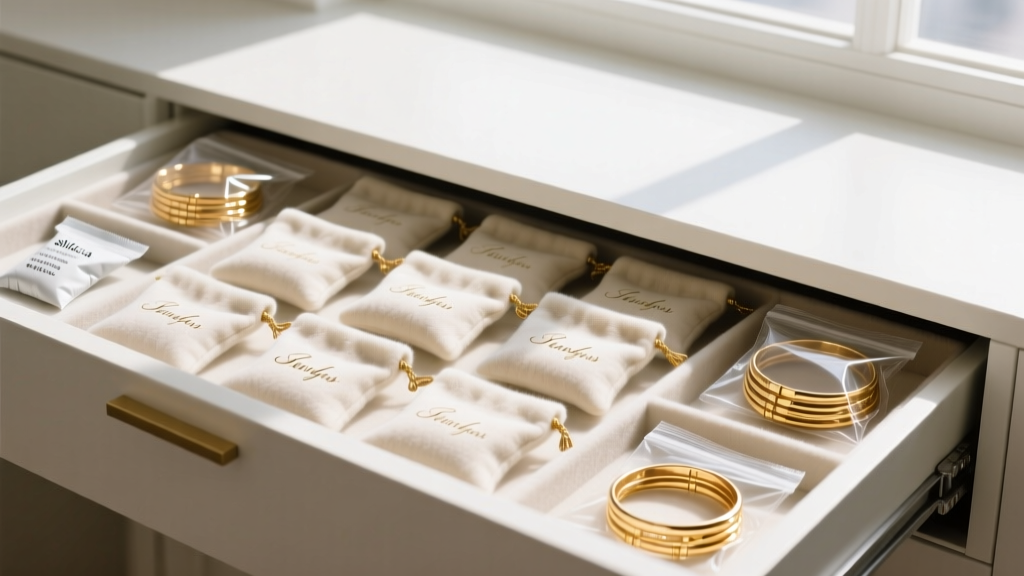
| Gold-Plated Rings | Daily | Weekly | Individual polybag with anti-tarnish strip |
| Gold-Plated Hoops | 2-3x / Week | Bi-Weekly | Sealed flannel pouch in a dry drawer |
| Statement Necklaces | Occasional | After every wear | Laid flat in a lined jewelry box with silica gel |
| Delicate Chains | Daily | Monthly | Hang vertically to prevent micro-kinks and moisture trapping |
When to Replate: Recognizing the Point of No Return
Even with meticulous care, gold plating is a consumable finish. Friction from clothing, the acidic pH of your skin, and environmental factors will eventually wear it away. If your favorite piece has lost its luster and shows widespread brass or silver undertones, it is time for replating. A professional jeweler will chemically strip the remaining gold, polish the base metal, apply a barrier layer (often rhodium or palladium to prevent copper migration), and submerge it in a new gold electroplating bath. This process typically costs between $45 and $120, depending on the surface area and the karat of gold used, effectively giving your beloved piece a brand-new lifespan.


