How to Clean and Protect Your Gold Plated Brass Jewelry
Learn expert cleaning and maintenance tips to prevent tarnish, stop peeling, and extend the lifespan of your gold plated brass jewelry pieces.

The Metallurgy of Plated Brass: Why It Tarnishes and Peels
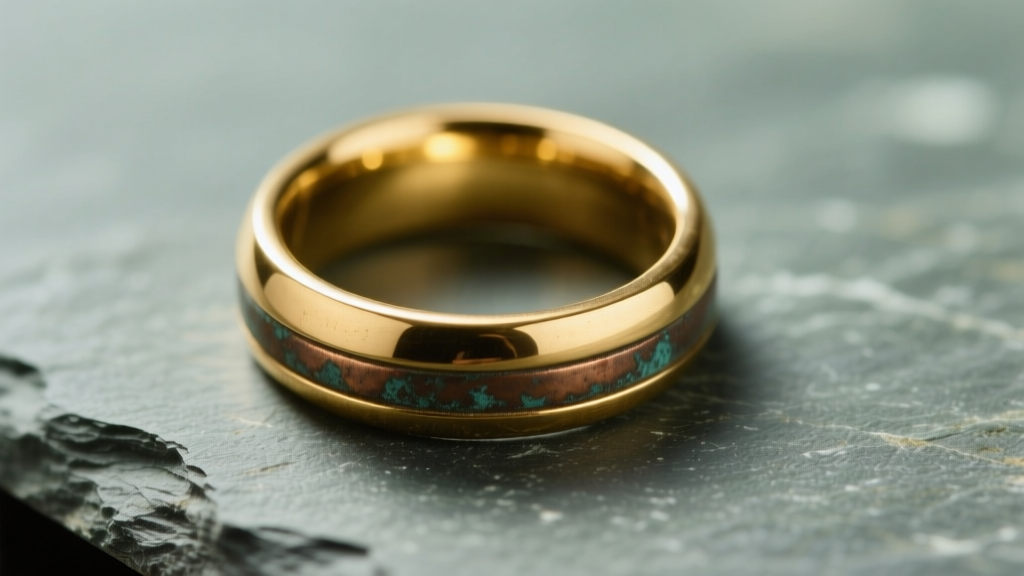
To properly care for gold plated brass jewelry, you must first understand the metallurgical reality beneath the surface. Brass is an alloy primarily composed of copper (typically 60-70%) and zinc (30-40%). While this makes it an excellent, affordable base metal with a warm undertone that mimics high-karat gold, copper is highly reactive. When exposed to moisture, oxygen, and sulfur, copper oxidizes, forming copper carbonate—the notorious green patina that stains your skin.
The gold layer protecting this reactive brass core is measured in microns. According to the Federal Trade Commission Jewelry Guides, "flash" gold plating is typically less than 0.5 microns thick, while "heavy gold electroplate" must be at least 2.5 microns. In 2026, many fast-fashion brands use flash plating to cut costs. When this microscopic layer wears down to just 0.1 microns through friction, the brass core becomes exposed to your skin's natural acidity, initiating a rapid galvanic corrosion process.
Proactive Maintenance: Stopping the Green Skin Reaction
Preventing tarnish and skin discoloration is vastly superior to trying to clean oxidized brass after the fact. Human sweat has a pH ranging from 4.5 to 7.0, making it slightly acidic. When this acid interacts with exposed copper in brass, the resulting copper chloride is what leaves a green or black ring on your finger.
The Barrier Method
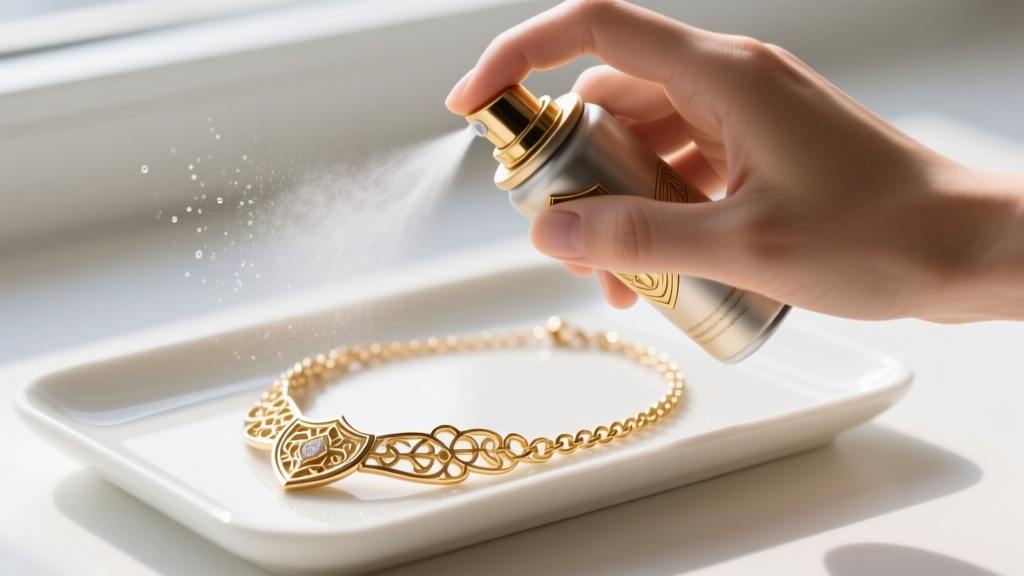
- Jewelry Shield Sprays: Polymer-based barrier sprays create a microscopic, breathable resin layer over the metal. Reapply every 3 to 4 weeks for rings, and every 2 months for necklaces.
- Clear Enamel Coatings: For the inside of brass rings, a thin coat of hard clear nail polish provides a durable physical barrier. Avoid doing this on the exterior gold plating, as removing the polish later will require acetone, which can degrade certain gold alloys and underlying adhesives in stone settings.
- The "Last On, First Off" Rule: Lotions, perfumes, and hairsprays contain alcohols and sulfur compounds that accelerate plating degradation. Always put your gold plated brass jewelry on after your cosmetics have fully dried, and remove it immediately upon returning home.
The Safe Cleaning Protocol for Gold Plated Brass
Never use commercial silver dips, baking soda pastes, or toothpaste on gold plated brass. These are highly abrasive or chemically aggressive and will strip flash plating instantly. Furthermore, avoid ultrasonic cleaners; the high-frequency cavitation bubbles will physically blast thin gold layers right off the brass substrate.
Step-by-Step Surfactant Wash
- Prepare the Solution: Mix one cup of distilled water (tap water contains chlorine and minerals that can spot the plating) with two drops of a pH-neutral, lotion-free dish soap.
- The Soak: Submerge the jewelry for exactly 3 to 5 minutes. This loosens sebum, dead skin cells, and cosmetic buildup without attacking the gold.
- Agitation: Use an extra-soft baby toothbrush (not a standard adult brush, which has stiff nylon bristles that cause micro-scratches). Gently sweep the bristles across the surface, paying special attention to the back of settings and chain links where lotion accumulates.
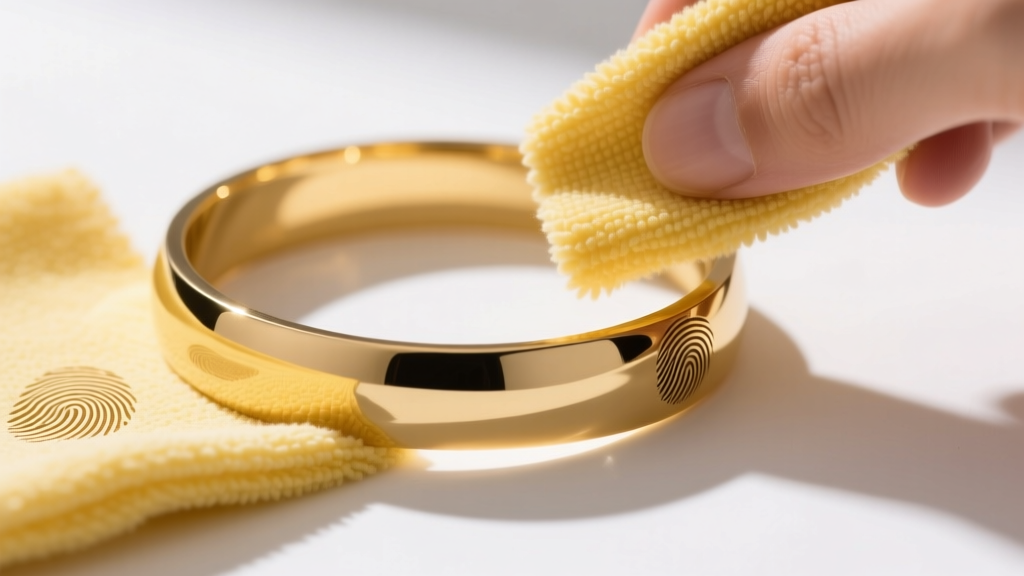
- Rinse and Dry: Rinse briefly under a slow stream of lukewarm distilled water. Immediately pat dry with a clean, lint-free microfiber cloth. Never air-dry plated brass, as water spots will etch into the thin gold layer as they evaporate.
Troubleshooting Common Plating Failures
Even with meticulous care, gold plated brass jewelry will eventually show signs of wear. Use this diagnostic framework to address specific issues:
| Symptom | Root Cause | Actionable Solution |
|---|---|---|
| Green/Black Skin Staining | Copper oxidation reacting with sweat acidity | Apply a polymer jewelry shield spray; clean the piece with isopropyl alcohol before reapplying. |
| Cloudy or Milky Film | Hard water mineral deposits or soap scum | Soak in distilled water with a drop of mild surfactant; gently brush with a baby toothbrush. |
| Flaking or Peeling Gold | Impact damage, poor initial adhesion, or chemical burn | Cannot be polished out. Requires professional stripping and replating. |
| Brassy/Reddish Tint Showing Through | Friction wear reducing gold thickness below 0.2 microns | Limit wear to occasional use; professional replating is the only permanent fix. |
Storage Best Practices: The Sulfur Threat
How you store gold plated brass jewelry is just as critical as how you clean it. The Canadian Conservation Institute notes that airborne sulfur compounds are the primary catalyst for metal tarnishing. Cardboard boxes, newspaper, and certain types of rubber bands emit sulfur gas as they degrade.
Store your pieces in individual, airtight polyethylene ziplock bags. Squeeze out as much air as possible before sealing. For added protection, drop a 3M anti-tarnish strip or a small silica gel desiccant packet into the bag to absorb ambient moisture and neutralize sulfur gases. Never store multiple pieces in the same bag; the friction of harder brass edges against softer gold plating will cause micro-abrasions that accelerate wear.
The Economics of Replating Brass
When the gold layer is entirely compromised, you must decide whether to retire the piece or invest in replating. As of 2026, professional electroplating a standard brass ring costs between $45 and $85, depending on the karat of gold used (18k vs. 24k) and the required micron thickness.
Expert Verdict: Replating is economically unjustifiable for mass-market, fast-fashion brass jewelry that originally cost under $40. However, for sentimental heirlooms, vintage designer pieces (like mid-century Trifari or Monet), or structurally complex brass items, professional replating to a heavy 2.5-micron standard is a highly viable restoration strategy that can add decades to the piece's lifespan.


