Troubleshooting Gold Hallmarks on Jewelry: Faked, Faded & Foreign
Learn how to authenticate gold hallmarks on jewelry. Troubleshoot faded, missing, or fake stamps with our expert verification guide.

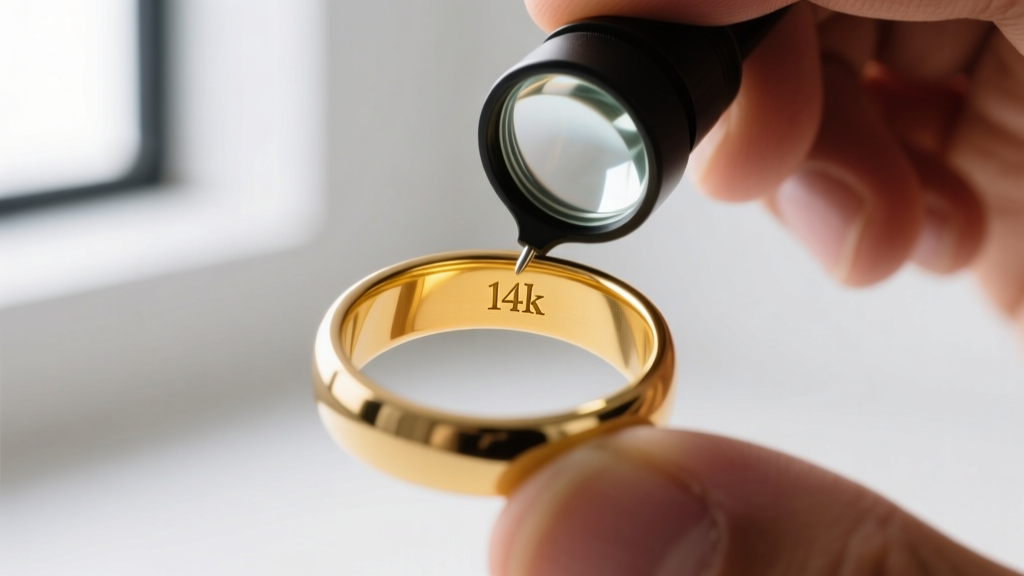
Buying gold jewelry should be a straightforward transaction, but the secondary market, estate sales, and even some retail environments are rife with mislabeled pieces. The primary line of defense for any buyer or collector is the hallmark. However, finding gold hallmarks on jewelry is only the first step; interpreting them, verifying their legitimacy, and troubleshooting anomalies is where true expertise is required. Whether you are dealing with a stamp that has worn away over decades, a suspicious '14K Italy' chain, or a cryptic European assay mark, this troubleshooting guide will help you authenticate your pieces with precision.
The Anatomy of Authentic Gold Hallmarks on Jewelry
Before troubleshooting, you must understand what a legitimate stamp looks like. In the United States, the Federal Trade Commission (FTC) mandates that if a karat mark is present, it must be accompanied by a registered maker's mark (a trademarked symbol, initials, or brand name).
- Karat Mark: Indicates the purity (e.g., 10K, 14K, 18K, 24K).
- Maker's Mark: The manufacturer's registered trademark, ensuring accountability.
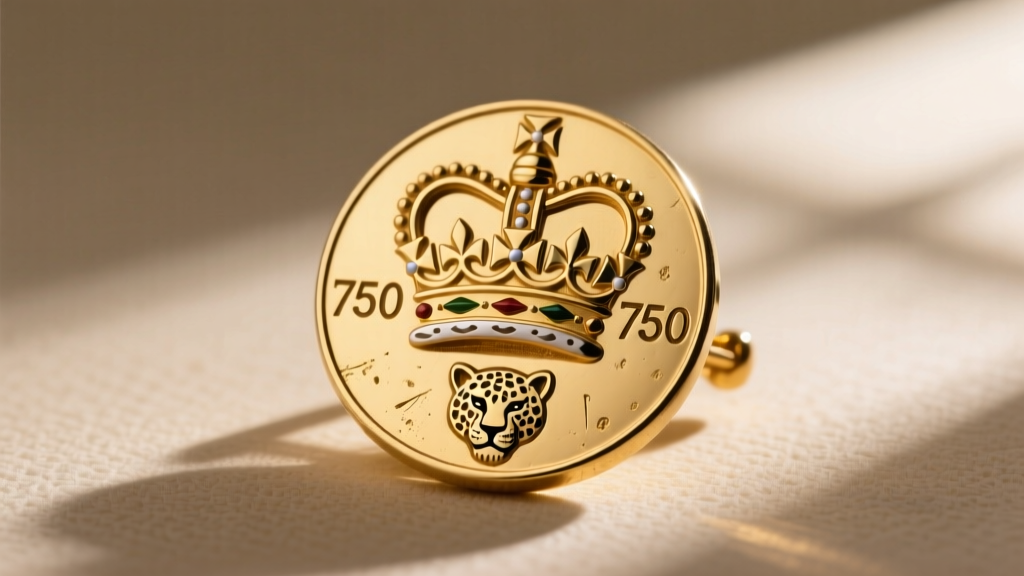
- Assay Mark (Foreign): In countries like the UK, an independent assay office tests and stamps the metal with symbols (e.g., a crown for gold, a leopard's head for London).
If you find a karat stamp without a maker's mark on a modern US-manufactured piece, it is an immediate red flag. While not illegal to sell, it violates FTC guidelines for manufacturers and often indicates mass-produced, unregulated imported jewelry where the karatage is highly suspect.
Troubleshooting Problem #1: Faded, Worn, or Missing Stamps
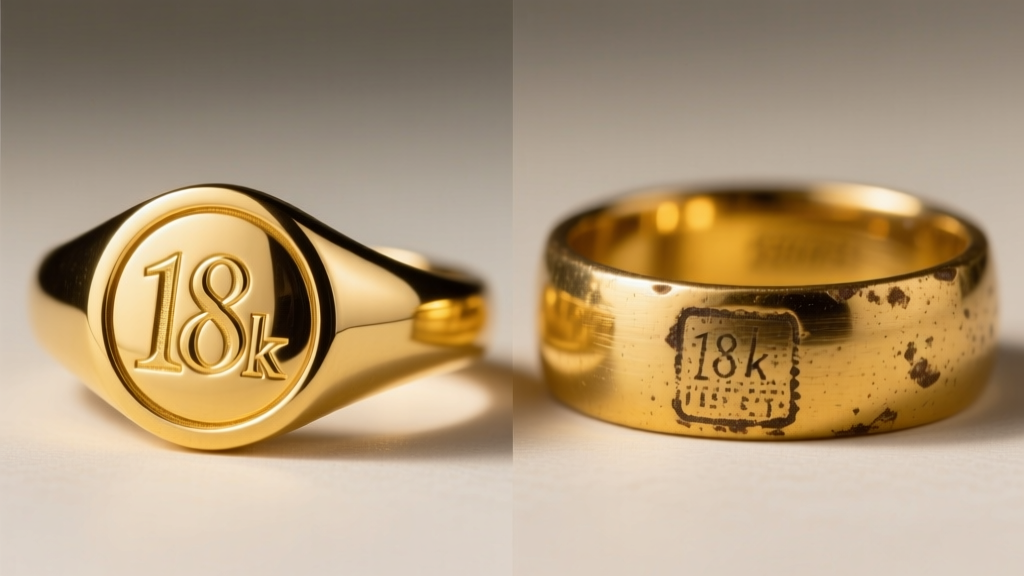
One of the most common issues with vintage or heavily worn gold jewelry is the complete disappearance of the hallmark. Ring shanks, in particular, wear down by fractions of a millimeter over decades of friction against the skin and other objects. Similarly, when a ring is resized, the jeweler often cuts out the exact section of the shank where the hallmark and maker's mark were stamped.
How to Verify Unmarked Gold
When gold hallmarks on jewelry are missing, you must pivot from visual inspection to physical and chemical testing.
- The Specific Gravity Test (At-Home): Gold is incredibly dense (19.32 g/cm³ for 24k, and roughly 13.0 to 15.0 g/cm³ for 10k-18k alloys). By weighing the piece in the air and then suspended in water, you can calculate its specific gravity. If a piece stamped '14K' elsewhere yields a specific gravity of 10.5, it is likely brass or bronze.
- XRF Spectrometry (Professional): X-Ray Fluorescence is the gold standard for non-destructive testing. A reputable jeweler or pawn shop will use an XRF gun to blast the metal with X-rays, reading the exact elemental breakdown. Expect to pay $25 to $50 for this service if you aren't selling the piece to them.
- Acid Testing (Destructive): A jeweler will file a small notch in an inconspicuous area and apply nitric acid. The color reaction indicates the karat. Warning: Never perform an acid test on the surface of a piece, as it may be gold-plated over base metal, yielding a false positive.
Troubleshooting Problem #2: Deceptive and Fake Hallmarks
The most dangerous scenario is not a missing stamp, but a lying one. Counterfeiters frequently stamp base metals with high-karat markings to deceive buyers. According to the Gemological Institute of America (GIA), misrepresentation of gold purity is a persistent issue in the global jewelry supply chain.
The 'Trap' Stamps: Decoding Deceptive Acronyms
Many consumers see '18K' and stop reading. Scammers rely on this by adding microscopic suffixes that legally change the item from solid gold to gold-plated base metal.
| Stamp Found | What It Actually Means | Real Solid Gold Content | Troubleshooting Action |
|---|---|---|---|
| 14K HGE | Heavy Gold Electroplate | 0% (Base metal core) | Reject if sold as 'solid'. |
| 18K GP | Gold Plated | < 0.05% (Microscopic layer) | Value is purely aesthetic. |
| 925 | Sterling Silver Base | 0% (Vermeil if gold-colored) | Verify if sold as gold. |
| 14K Italy | Origin claim (Often faked) | Highly Variable | Mandatory magnet & XRF test. |
Expert Insight: The '14K Italy' stamp on gold chains is one of the most frequently counterfeited marks in the world. If a '14K Italy' chain is magnetic, or if the links show silver or copper bleeding through the clasp joints, it is a brass chain flashed with a microscopic layer of gold.
Troubleshooting Problem #3: Foreign and Antique Assay Marks
If you are sourcing estate jewelry or buying from European auction houses, the standard US karat system (10K, 14K, 18K) is often replaced by the millesimal fineness system. This system denotes the parts per thousand of pure gold in the alloy.
Millesimal Fineness Translation Chart
- 375: 9 Karat Gold (Common in the UK and Australia; illegal to sell as 'gold' in the US without heavy caveats, as the US minimum is 10K).
- 417: 10 Karat Gold.
- 585: 14 Karat Gold (Often seen in Eastern European and German pieces).
- 750: 18 Karat Gold (The standard for high-end Italian, French, and Swiss jewelry).
- 916: 22 Karat Gold (Common in Indian, Middle Eastern, and Southeast Asian jewelry).
When troubleshooting foreign gold hallmarks on jewelry, look for the British Assay Office symbols if the piece originates from the UK. A legitimate British hallmark will feature three compulsory marks: the Sponsor's (maker's) mark, the Fineness mark (e.g., 750), and the Assay Office mark (e.g., an anchor for Birmingham, a leopard for London). If a piece claims to be antique British gold but only has a stamped '18CT' without the assay symbols, it was likely stamped post-manufacture or is a reproduction.
The 2026 Authentication Framework: Step-by-Step
To systematically troubleshoot any piece of gold jewelry, follow this exact diagnostic framework before handing over any money.
Step 1: The 10x Triplet Loupe Inspection
Do not use a cheap plastic magnifying glass. Purchase a 10x or 20x triplet loupe (which uses three lenses to eliminate edge distortion). Examine the stamp. Authentic machine-struck or laser-engraved hallmarks have sharp, clean edges. Fake stamps often look 'mushy,' uneven, or appear to have been added after the piece was polished, indicated by a lack of oxidation inside the stamp compared to the surrounding metal.
Step 2: The Neodymium Magnet Test
Gold is diamagnetic, meaning it is completely non-magnetic. Use a strong neodymium magnet (not a standard fridge magnet). If the clasp, chain, or ring shank pulls toward the magnet, it contains iron, nickel, or steel. Note: The internal spring of a lobster clasp is made of steel and will be magnetic; test the body of the jewelry, not the clasp mechanism.
Step 3: The Ceramic Streak Test (Use with Caution)
Drag the piece lightly across an unglazed ceramic tile. Real gold will leave a golden-yellow streak. Pyrite ('fool's gold') or gold-plated brass will leave a dark gray or black streak. Warning: This is a destructive test that will scratch your jewelry. Only use this on the edge of a piece you are willing to damage, or on raw gold nuggets.
Step 4: Professional Verification
If the piece passes the visual and magnet tests, but you still harbor doubts due to a suspicious weight-to-volume ratio or an unfamiliar foreign mark, take it to an independent, GIA-credentialed gemologist or a precious metals refinery for XRF testing. The $30 testing fee is a fractional insurance premium against losing thousands on a counterfeit piece.
Troubleshooting gold hallmarks on jewelry requires a blend of historical knowledge, legal awareness, and scientific skepticism. By understanding the anatomy of authentic marks, recognizing deceptive suffixes, and utilizing physical testing methods, you can navigate the gold market with absolute confidence.


