How to Clean Gold Jewelry with Baking Soda Without Scratching
Learn how to clean gold jewelry with baking soda safely. Discover the science, avoid micro-scratches, and troubleshoot tarnish without ruining your pieces.

The Baking Soda Dilemma: Miracle Cleaner or Micro-Abrasive?
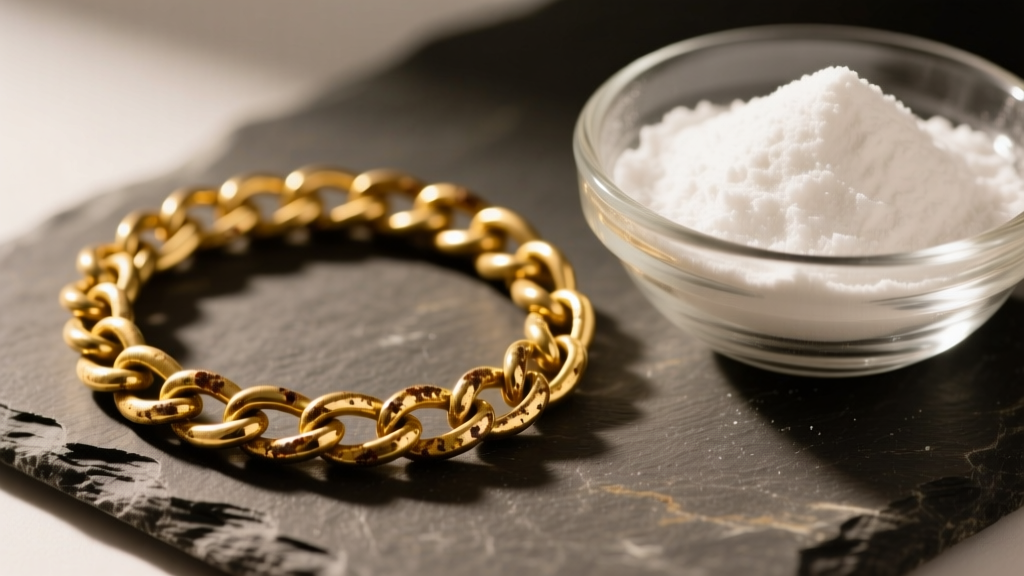
When searching for how to clean gold jewelry with baking soda, you will inevitably encounter a minefield of conflicting internet advice. Some lifestyle blogs hail sodium bicarbonate as a miraculous, eco-friendly degreaser, while professional jewelers warn that it is an abrasive hazard capable of ruining high-polish finishes. The truth, as is often the case in metallurgy and gemology, lies in the specific material science of your jewelry. Gold itself does not tarnish; it is the alloyed metals—copper, silver, zinc, and nickel—mixed into 10k, 14k, and 18k gold that oxidize and accumulate sebum, lotion, and environmental grime. While baking soda is an excellent alkaline degreaser, its physical crystalline structure poses a severe threat to the aesthetic integrity of your precious metals if applied incorrectly. This comprehensive troubleshooting guide will separate the chemical facts from the viral fiction, providing you with a definitive, damage-free protocol for restoring your gold jewelry using household ingredients.
The Science of Scratches: Mohs Hardness and Gold Alloys
To understand why baking soda requires extreme caution, we must look at the Gemological Institute of America (GIA) standards for metal hardness. Pure 24k gold sits at a mere 2.5 on the Mohs hardness scale—roughly the same hardness as a human fingernail. To make gold durable enough for daily wear, it is alloyed with harder metals. A 14k gold ring (58.5% pure gold) achieves a Mohs hardness of roughly 3.5 to 4.0. Baking soda, in its powdered form, also registers around 2.5 on the Mohs scale. However, hardness is only half the equation; crystal morphology is the other. Baking soda particles are angular and crystalline. When you rub baking soda paste against a 14k gold surface, those microscopic sharp edges act like ultra-fine sandpaper. Over time, or with aggressive scrubbing, this creates a web of micro-scratches that scatter light, transforming a brilliant mirror finish into a dull, matte haze. This effect is exponentially worse on 18k, 22k, and 24k gold, where the higher pure gold content makes the metal dangerously soft and susceptible to permanent surface deformation.
The Great Internet Myth: Foil, Boiling Water, and Baking Soda
Before detailing the correct method, we must aggressively debunk the most dangerous viral cleaning trend: the aluminum foil, boiling water, and baking soda bath. This method relies on an electrochemical redox reaction that converts silver sulfide (tarnish) back into pure silver. It is a brilliant, scientifically sound method for cleaning sterling silver. It is entirely useless for gold. Gold does not form a sulfide tarnish layer in standard environments. Submerging your gold jewelry in boiling water and baking soda will not lift oxidation; worse, the thermal shock of boiling water can easily fracture heat-sensitive gemstones frequently set in gold, such as emeralds, opals, tanzanite, and turquoise. Furthermore, the alkaline nature of the heated baking soda solution can degrade the porous structure of pearls and coral. Never use the silver foil bath method on gold jewelry.
Material Safety Matrix: What Can Handle Baking Soda?
Not all gold jewelry is created equal. The safety of using baking soda depends entirely on the karat, the manufacturing method, and the presence of gemstones. Use the following decision matrix before proceeding with any cleaning protocol.
| Jewelry Type | Composition Details | Baking Soda Safety | Risk Factor |
|---|---|---|---|
| 10k & 14k Solid Gold (Plain) | High alloy content (copper/zinc), no stones | Safe (Mild Paste Only) | Low risk if rubbed gently; high risk if scrubbed. |
| 18k, 22k, 24k Solid Gold | High pure gold content, very soft metal | Unsafe | High risk of permanent micro-scratching and hazing. |
| Gold Vermeil & Gold Filled | Thick gold layer over sterling silver or brass | Unsafe | Abrasion will wear through the gold layer prematurely. |
| Gold Plated (Flash Plated) | Microscopic gold layer over base metal | Highly Unsafe | Will strip the plating entirely, exposing base metal. |
| Gold with Porous Gems | Pearls, Opals, Turquoise, Emeralds, Lapis | Highly Unsafe | Alkaline chemicals and grit will pit and ruin stones. |
| Gold with Diamonds/Sapphires | Hard stones (Mohs 8-10) in solid gold settings | Conditionally Safe | Paste can trap in prongs; requires meticulous rinsing. |
Step-by-Step: How to Clean Gold Jewelry with Baking Soda Safely
If you have determined that your piece is a plain, solid 10k or 14k gold item without delicate gemstones, you can safely use a highly diluted baking soda paste to lift heavy sebum buildup and mild surface oxidation. The key is to minimize friction and maximize chemical dwell time.
Materials Required
- Arm & Hammer or generic pure sodium bicarbonate (ensure no added bleaching agents)
- Distilled water (tap water contains chlorine and minerals that can leave spots)
- Two lint-free microfiber cloths
- A soft horsehair detailing brush (optional, for crevices)
- A glass or ceramic bowl (avoid metal bowls to prevent galvanic reactions)
The Execution Protocol
- Formulate the Paste: Mix one part baking soda with two parts distilled water in your glass bowl. You want a runny, milky slurry, not a thick, gritty paste. The higher water ratio reduces the abrasive friction of the crystals.
- Pre-Soak: Submerge the gold jewelry in the slurry and let it sit for exactly 5 to 7 minutes. This allows the alkaline solution to break down the molecular bonds of skin oils and lotions without requiring mechanical scrubbing.
- Gentle Agitation: Remove the piece and use your bare fingertips to gently massage the surface. Do not use a toothbrush; nylon bristles trap baking soda crystals and drag them across the gold, acting like a grinding wheel.
- The Rinse: Rinse the jewelry thoroughly under a stream of lukewarm distilled water. Ensure all white residue is completely flushed from any grooves or chain links.
- Drying: Pat dry immediately with a clean, lint-free microfiber cloth. Air drying will result in water spots, even with distilled water.
Troubleshooting: What If My Gold Looks Worse After?
Even with careful application, mistakes happen. If your gold jewelry looks dull, hazy, or scratched after a baking soda cleaning, do not panic. The damage is usually superficial and entirely reversible.
Problem: The Gold Looks Cloudy or Matte
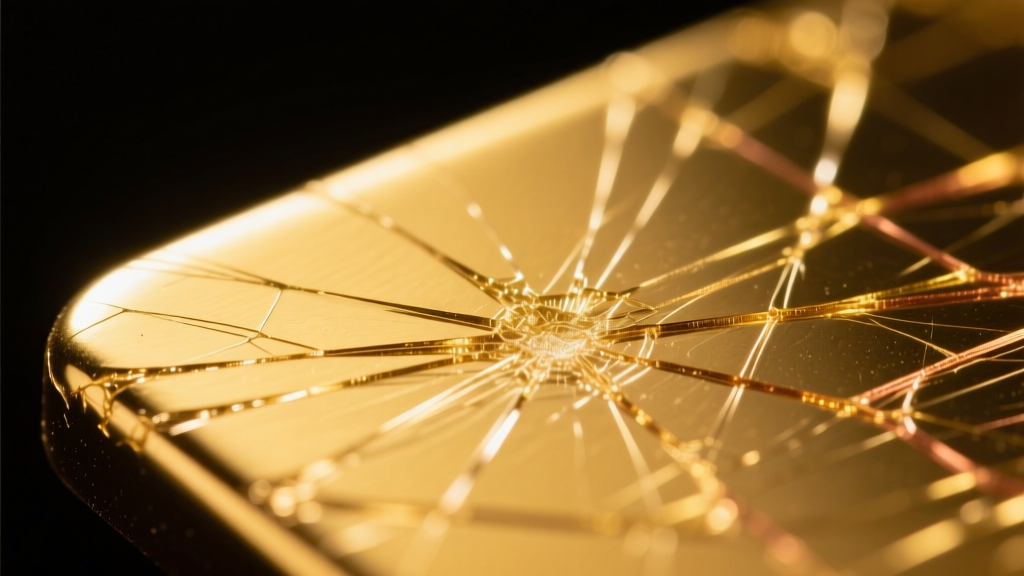
Diagnosis: You have inflicted micro-scratches on the surface, or you are dealing with a high-karat gold (18k+) that was too soft for the paste. The scratches are scattering light rather than reflecting it.
Solution: You need to re-polish the metal. Purchase a professional jeweler's polishing cloth impregnated with red jeweler's rouge (iron oxide). Gently rub the cloth in one direction along the grain of the metal. The rouge will fill and buff out the microscopic abrasions, restoring the mirror finish. Do not use liquid metal polishes like Brasso, as they contain harsh ammonia and abrasives that can strip gold alloys.
Problem: White, Chalky Residue Stuck in Crevices
Diagnosis: The baking soda paste has dried and hardened inside the intricate links of a chain, the milgrain detailing, or underneath gemstone prongs.
Solution: Do not pick at it with a metal needle or pin, as you will scratch the gold. Mix a solution of 50% distilled white vinegar and 50% distilled water. The mild acetic acid will instantly neutralize and dissolve the alkaline baking soda. Dip a soft horsehair brush into the vinegar solution, gently agitate the crevice, and rinse with distilled water.
Better Alternatives for Delicate and High-Karat Gold
If your jewelry failed the safety matrix above, you must abandon baking soda entirely. According to the American Gem Society (AGS), the safest, most effective, and universally approved cleaning solution for all karats of gold, as well as gold set with diamonds, sapphires, and rubies, is a mild surfactant combined with a degreasing agent. The industry-standard DIY alternative is the "Dawn and Ammonia" bath. Mix a few drops of original blue Dawn dish soap (an excellent lipid emulsifier) with warm distilled water, and add exactly three drops of clear, non-sudsing household ammonia. The ammonia safely cuts through heavy grease and restores the brilliance of diamonds and gold without any abrasive particulate matter. Soak for 15 minutes, agitate with a baby-soft toothbrush, and rinse. This method guarantees zero micro-scratches, making it the superior choice for preserving the long-term value, weight, and polish of your fine gold jewelry.


