Decoding Gold Jewelry Marks Hallmarks: A Troubleshooting Guide
Confused by stamps on your rings and chains? Learn how to read gold jewelry marks hallmarks, spot fakes, and troubleshoot missing or worn stamps.

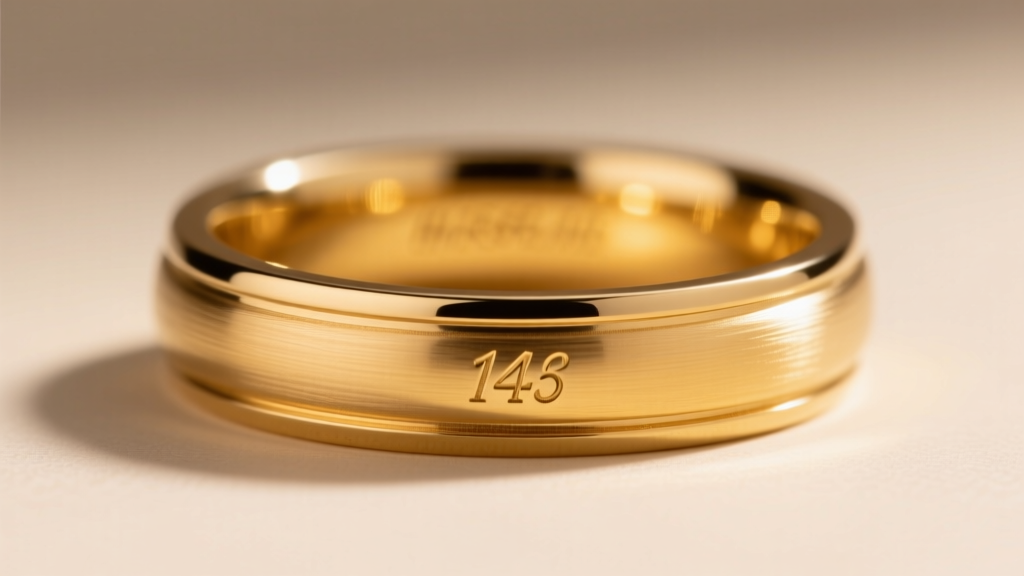
The Anatomy of a Gold Stamp: What You Are Actually Looking At
When you inherit a vintage ring or purchase an estate chain, the first instinct is to grab a jeweler's loupe and hunt for a stamp. However, deciphering gold jewelry marks hallmarks is rarely as simple as finding a "14K" and calling it a day. Hallmarking systems vary drastically by region, era, and manufacturing method. In the United States, the karat system (10K, 14K, 18K) denotes purity, while Europe and Asia predominantly use the millesimal fineness system (417, 585, 750).
According to the Federal Trade Commission (FTC) Jewelry Guides, any piece of gold jewelry sold in the US with a karat stamp must also bear a registered maker's mark (a trademark or brand stamp). This ensures accountability. If you see a "14K" stamp but absolutely no maker's mark, the piece may be imported, vintage, or potentially counterfeit. Understanding these nuances is the first step in troubleshooting your jewelry's true origin and value.
Troubleshooting Common Hallmark Problems
As a jewelry appraiser, I see the same hallmark-related issues cross my desk weekly. Here is how to troubleshoot the most frequent problems.
Problem 1: The Stamp is Missing or Worn Off
A missing hallmark does not automatically mean the gold is fake. Ring shanks, particularly those made of softer 18K or 24K gold, wear down over decades of friction against skin and surfaces. Furthermore, if a ring has been resized multiple times, the jeweler may have cut out the stamped section of the shank and soldered in a blank piece of gold.
The Fix: Do not rely on visual inspection alone. Take the piece to a certified gemologist or jeweler who can perform a non-destructive XRF (X-ray Fluorescence) test to determine the exact elemental composition beneath the surface patina.
Problem 2: Conflicting Marks on a Single Piece
Imagine inspecting a gold chain and finding "14K" on the clasp but "585" on the links, or perhaps a maker's mark that doesn't match the era of the design.
The Diagnosis: This usually indicates a repair or a composite piece. Clasps are frequently replaced when they break. A jeweler might have soldered a modern 14K gold clasp onto a vintage European 585 (14K) chain. While both are solid 14K gold, the piece is no longer entirely original, which can affect its antique appraisal value.
Problem 3: The "HGE" and "GP" Trap
Counterfeiters and vintage costume jewelry makers often use stamps that look legitimate at a glance but contain hidden qualifiers. You might see "14K HGE" (Heavy Gold Electroplate) or "18K GP" (Gold Plated). In these cases, the karat mark refers only to the microscopic layer of gold on the surface, not the core metal, which is usually brass or copper.
The Fix: Always read the entire stamp. If the letters HGE, EP, GP, or GF (Gold Filled) are present anywhere next to the karat mark, the piece has negligible melt value.
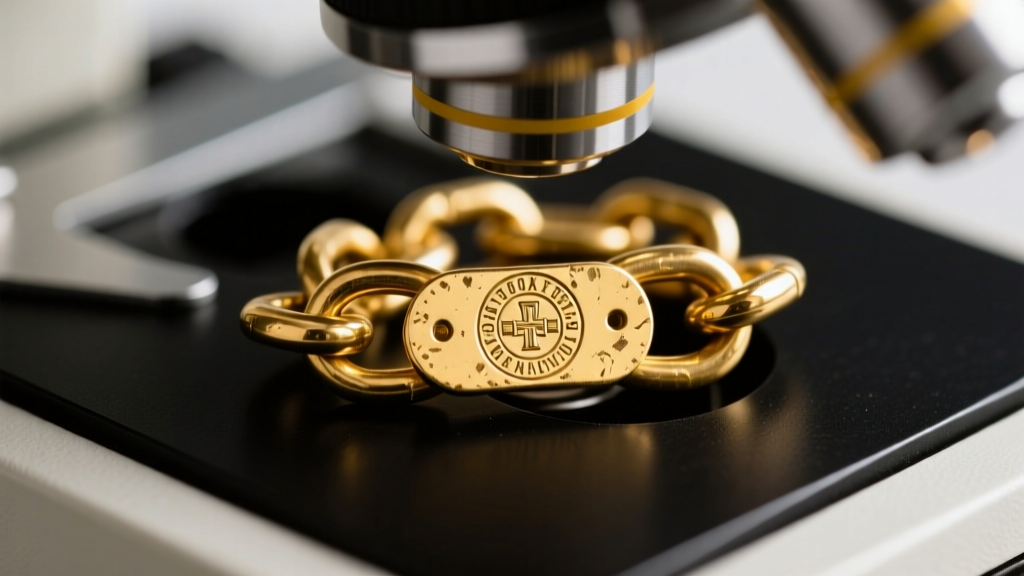
Global Hallmark Translation Chart
To accurately troubleshoot international or estate pieces, you must understand how different countries express gold purity. The Gemological Institute of America (GIA) recognizes both karat and millesimal standards globally. Use this chart to translate foreign marks:
| Stamp / Mark | Purity (%) | Primary Region | Notes & Troubleshooting |
|---|---|---|---|
| 10K / 417 | 41.7% | US / UK | Minimum karatage to be legally called "gold" in the US. Highly durable. |
| 14K / 585 | 58.3% | Global | The most common standard for US jewelry. Europe uses 585 to denote 58.5%. |
| 18K / 750 | 75.0% | Global | Standard for fine jewelry and luxury watches. Stamped 750 in Europe/Asia. |
| 375 | 37.5% | UK / Australia | Equivalent to 9K gold. Not legally recognized as "gold" in the US market. |
| 999 / 24K | 99.9% | Asia / Middle East | Pure gold. Extremely soft; usually reserved for investment bullion jewelry. |
When Hallmarks Lie: Spotting Counterfeit Stamps
With the rise of overseas e-commerce marketplaces, counterfeiters have begun stamping base metals with fake "14K" and "18K" marks, complete with fake maker's trademarks. These pieces will pass a basic visual inspection but will fail metallurgical testing.
Expert Insight: Never use the "magnet test" as your sole method of verification. While gold is non-magnetic, so are copper, brass, and aluminum—the exact metals used in high-quality counterfeits. A fake 18K gold chain made of brass will not stick to a magnet, giving you a false sense of security.
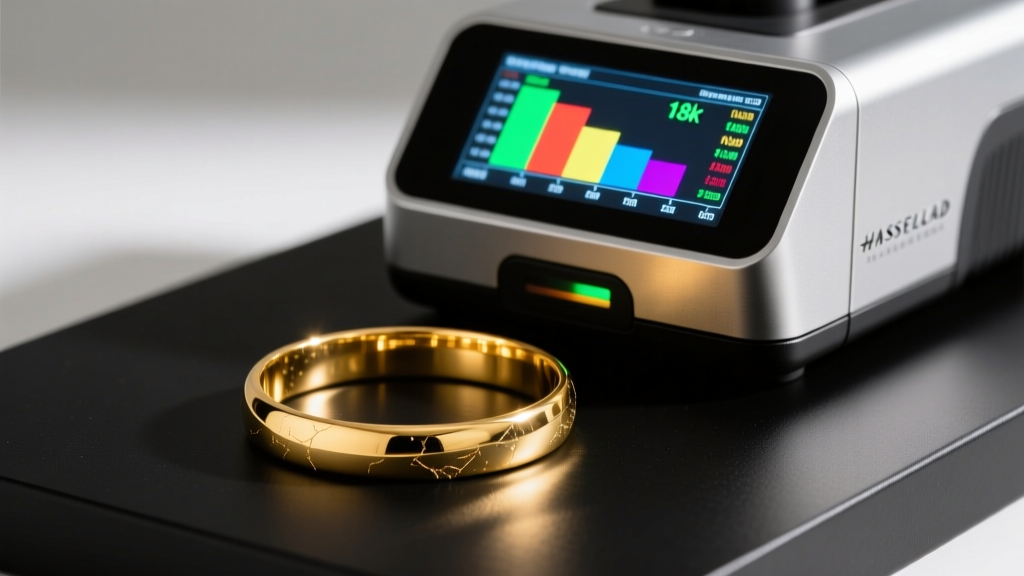
To combat sophisticated fakes, professional jewelers rely on XRF spectrometers. Unlike traditional acid tests, which require scratching the piece and applying nitric acid (potentially damaging the item), XRF technology shoots X-rays into the metal and reads the fluorescent energy emitted, providing a precise percentage of gold, silver, copper, and zinc in seconds.
Understanding British Assay Office Hallmarks
If you are troubleshooting vintage British jewelry, the hallmarking system is entirely different from the US. As detailed by The Goldsmiths' Company Assay Office, a full traditional UK hallmark consists of several distinct symbols struck into the metal:
- Sponsor's Mark: The maker's initials inside a specific shield shape.
- Standard Mark: A crown and a number (e.g., 375, 750) denoting purity.
- Assay Office Mark: A symbol indicating where it was tested (e.g., a Leopard's Head for London, an Anchor for Birmingham).
- Date Letter: A specific font and background shape that corresponds to the exact year the piece was assayed.
If a piece claims to be antique British gold but lacks the Assay Office symbol and Date Letter, it was likely either imported after 1998 (when hallmarking laws relaxed slightly for lightweight items) or it is a modern reproduction.
Next Steps: How to Verify Unmarked or Suspicious Gold
If you have exhausted your visual troubleshooting and the gold jewelry marks hallmarks are still confusing, missing, or suspicious, follow this actionable protocol:
- Weigh and Measure: Counterfeit chains often feel too light or have uniform, machine-perfect links that lack the subtle weight distribution of solid gold.
- Inspect the Clasp and Jump Rings: Look for seams. Solid gold jump rings are usually soldered shut. If you see a gap that easily pulls apart, or if the clasp springs back with a loud "click" (indicating a steel spring inside a gold-plated housing), proceed with extreme caution.
- Seek Professional XRF Testing: Most reputable local jewelers will perform an XRF scan for free or a nominal fee ($10-$20). This is the only 100% foolproof way to verify the elemental breakdown without damaging the piece.
By understanding the legal requirements, regional variations, and common deception tactics behind jewelry stamps, you can confidently buy, sell, and appraise gold pieces without falling victim to misleading marks.


