Expert Care Tips for Your Mother's Day Gold Jewelry
Preserve her gift with our expert guide to cleaning, storing, and maintaining Mother's Day gold jewelry, from 14k chains to 18k gemstone rings.

The Metallurgy of Her Gift: Understanding Gold Alloys
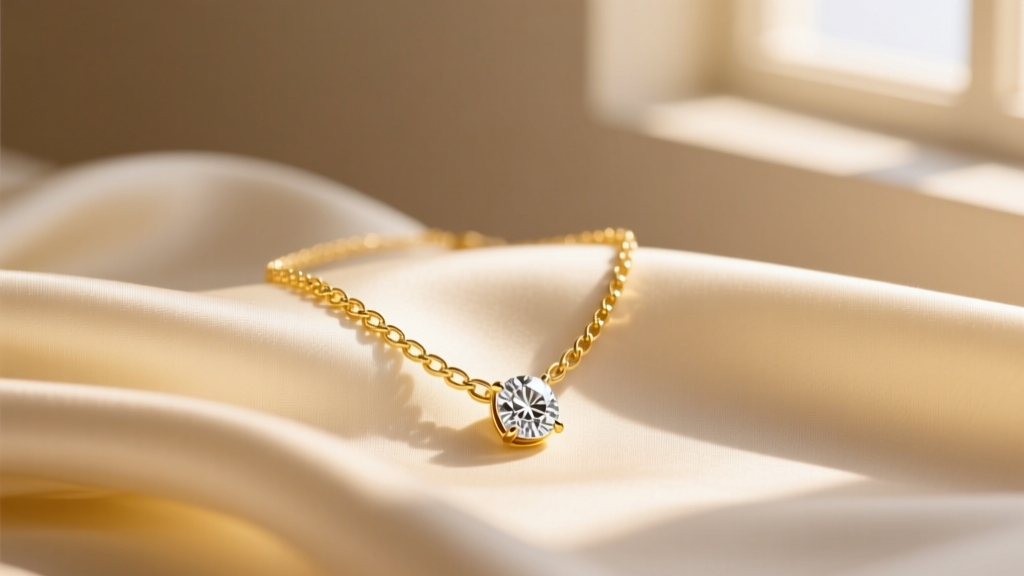
Mother's Day gold jewelry represents a significant emotional and financial investment. Whether you gifted her a vintage 18k yellow gold locket or a modern 14k white gold tennis bracelet, preserving its luster requires understanding the metallurgy of gold alloys. Pure 24k gold (99.9% gold) is virtually immune to tarnish and chemical corrosion, but its Mohs hardness of just 2.5 makes it entirely unsuitable for daily wear. It will bend, warp, and scratch with minimal friction.
Consequently, high-quality Mother's Day gifts are typically crafted in 14k (58.3% gold) or 18k (75% gold). The remaining percentage consists of alloy metals like copper, silver, zinc, and nickel, which provide structural integrity and dictate the color. Critical Insight: It is these alloy metals—not the gold itself—that react to chemicals, sweat, and cosmetics, leading to dullness, oxidation, or structural degradation. For instance, rose gold contains a higher copper content (up to 20%), making it more susceptible to developing a dark patina if exposed to acidic environments or neglected over time.
Environmental Threats and Chemical Reactions
Gold jewelry does not exist in a vacuum. Daily wear exposes these precious alloys to a variety of environmental and chemical threats. According to the Gemological Institute of America (GIA), understanding these interactions is the first step in preventing irreversible damage to gold settings and shanks.
| Environmental Threat | Chemical Interaction | Result on 14k/18k Gold |
|---|---|---|
| Chlorine (Pools/Spas) | Reacts aggressively with copper and silver alloys | Stress corrosion cracking, leading to sudden prong failure and lost stones |
| Mercury (Thermometers) | Forms a gold amalgam at room temperature | Permanent white/grey surface discoloration that requires professional torching to remove |
| Sulfur (Hot springs/Rubber) | Reacts with silver alloys present in 14k/18k gold | Black tarnish layer on the surface, particularly in crevices and under settings |
| Cosmetics & Perfumes | Abrasive micro-particles and chemical solvents | Dulling of high-polish finishes, accumulation of waxy buildup in gallery wires |
The Master Cleaning Protocol for Solid Gold
When it comes to cleaning Mother's Day gold jewelry that features solid gold construction without delicate gemstones, a meticulous, gentle approach yields the best results. Avoid commercial 'dip' cleaners, which often contain harsh thiourea compounds that can cause micro-pitting in lower-karat gold over time.
Step 1: Formulate the Solution
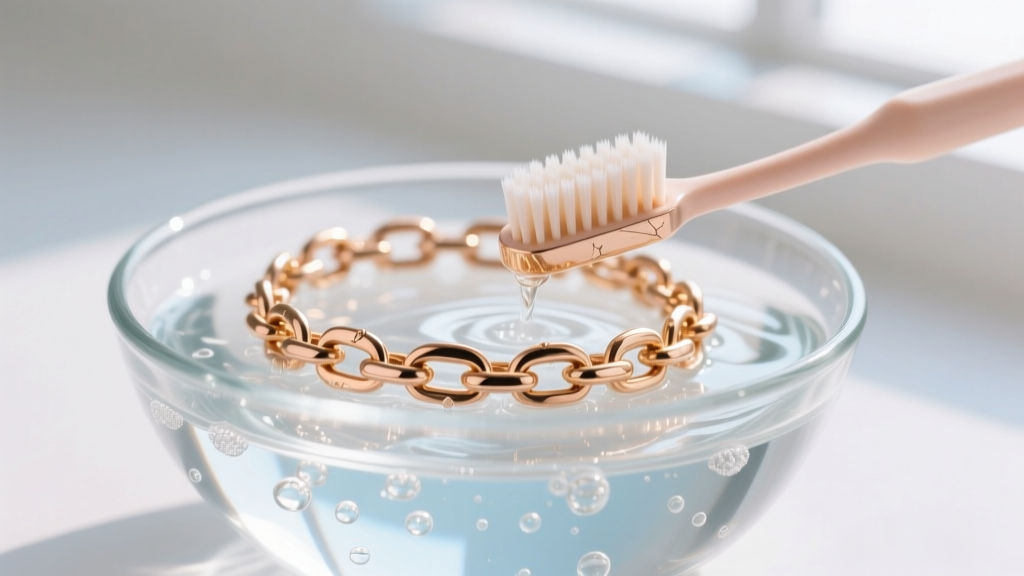
Fill a glass bowl with warm distilled water. Do not use tap water; the calcium and magnesium in hard water will leave microscopic mineral deposits on the gold, creating a cloudy film. Add three drops of a phosphate-free, mild dish soap (such as Dawn Ultra). Avoid any soaps containing moisturizing beads or harsh degreasers.
Step 2: The Soak and Agitation
Submerge the jewelry for 15 to 20 minutes to loosen sebum, dead skin cells, and lotion buildup. Next, use an extra-soft baby toothbrush (bristle diameter approximately 0.12mm). Standard adult toothbrushes are far too stiff and will inflict micro-scratches on high-polish 18k gold. Gently brush the piece, paying special attention to the underside of the setting (the gallery) and the interior of the band where grime accumulates.
Step 3: The Rinse and Dry
Rinse thoroughly under a gentle stream of distilled water. To dry, use a lint-free, non-abrasive microfiber cloth. Never use paper towels or tissues. These products are manufactured from wood pulp, and their microscopic wood fibers act like sandpaper against soft gold alloys, creating a web of fine scratches that dull the metal's reflectivity over time.
Gemstone and Pearl Caveats: The Danger Zone
Mother's Day jewelry frequently features birthstones, pearls, or delicate organic gems. The cleaning protocol changes drastically when these materials are introduced. The American Gem Society strongly advises against using ultrasonic cleaners or chemical soaks on porous or treated stones.
- Emeralds: Nearly all commercial emeralds are fracture-filled with cedar oil or synthetic resins to improve clarity. Warm soapy soaks and ultrasonic vibrations will strip this filler, revealing internal fissures and turning a vibrant green stone into a cloudy, fractured mess. Clean emerald-set gold only with a dry, untreated microfiber cloth.
- Pearls and Opals: These organic and semi-organic gems are highly porous and contain trace amounts of water. Submerging them can cause water to infiltrate the drill holes, degrading the silk thread they are strung on, or causing the stone to crack from the inside out as the water evaporates and contracts.
- Tanzanite and Opal: Both possess distinct cleavage planes or structural instability that make them highly susceptible to shattering under the high-frequency acoustic waves of an ultrasonic cleaner.
White Gold Specifics: Managing Rhodium Plating
If her Mother's Day gift was crafted in 14k or 18k white gold, you must understand that white gold is naturally a yellowish-grey alloy. To achieve the brilliant, mirror-like white finish, the jewelry is electroplated with a microscopic layer of rhodium, a rare platinum-group metal.
Harsh chemicals, abrasive polishing cloths, and even the natural acids in human sweat will gradually wear away this rhodium layer, revealing the yellowish alloy beneath—a phenomenon often mistakenly called 'tarnishing.' To maintain white gold, clean it only with mild soap and cool water, and avoid rubbing it with polishing cloths. Expect to have the piece professionally re-plated every 12 to 18 months, a service that typically costs between $40 and $80 at a reputable bench jeweler.
Long-Term Storage and Preservation
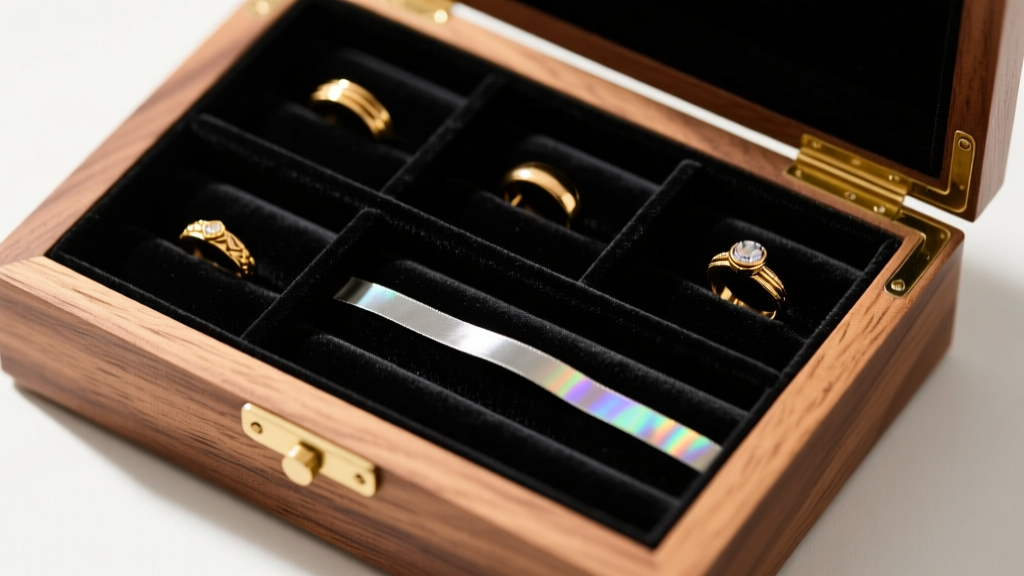
Proper storage is just as critical as cleaning. Gold is a relatively soft metal, and storing multiple pieces together in a single drawer will result in harder gemstones (like diamonds or sapphires) scratching the gold surfaces of adjacent pieces.
Store each piece individually in a soft flannel pouch or a dedicated compartment lined with anti-tarnish fabric. For long-term storage, place a 3M anti-tarnish strip inside the jewelry box. These strips contain activated carbon and silver nanoparticles that absorb ambient sulfur and hydrogen sulfide from the air, preventing the alloy metals in the gold from oxidizing. Finally, maintain the storage environment at a humidity level below 50% RH to slow down any electrochemical corrosion processes.
When to Seek Professional Restoration
While home maintenance is excellent for surface cleaning, it cannot replace professional bench work. Schedule a visit to a certified gemologist or bench jeweler every 12 months. They will use professional-grade ultrasonic and steam cleaners (only if the stones permit) to remove impacted grime that a toothbrush cannot reach. More importantly, they will inspect the prongs, bezels, and shanks under 10x magnification to detect stress fractures, thinning bands, or loose settings before a catastrophic failure occurs, ensuring her Mother's Day treasure remains flawless for generations.


