How to Clean Gold Jewelry With Diamonds: Buyer's Guide
Learn how to clean gold jewelry with diamonds safely. Our buyer's guide covers karat maintenance, setting care, and ultrasonic risks.

The Intersection of Purchasing and Maintenance
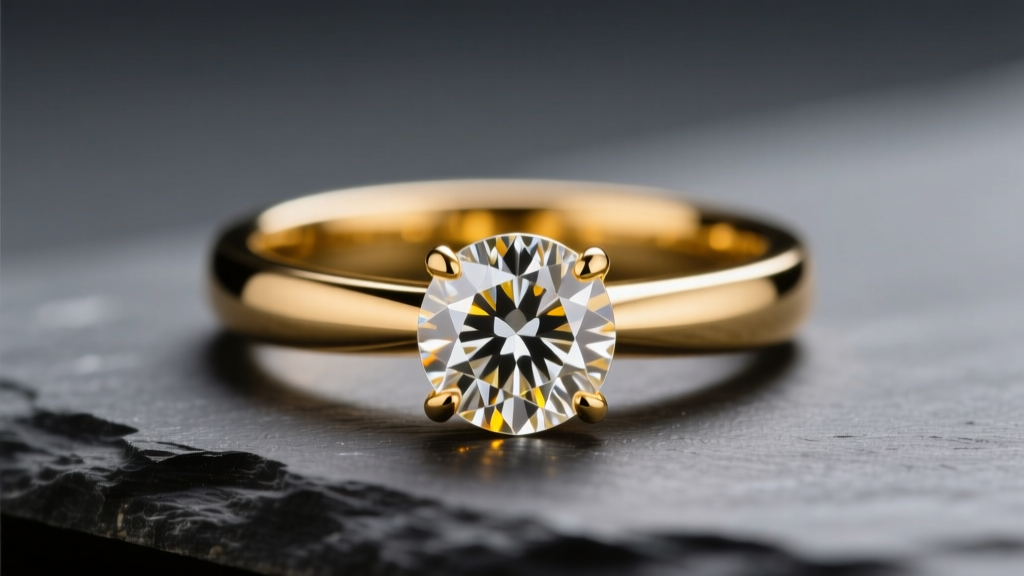
When investing in fine jewelry, most buyers focus entirely on the 4Cs of the diamond and the karat weight of the gold. However, understanding how to clean gold jewelry with diamonds is a critical, often overlooked component of the buying process. The maintenance requirements of a piece should directly influence your purchase decision, especially if you lead an active lifestyle or prefer low-maintenance accessories. A poorly chosen setting or gold alloy can turn a simple cleaning routine into a high-risk chore, potentially leading to lost stones or degraded metal.
This comprehensive buyer’s guide bridges the gap between acquisition and upkeep. We will explore the metallurgical chemistry of gold alloys, the structural vulnerabilities of different diamond settings, and the exact protocols required to maintain your jewelry's brilliance without causing microscopic damage. Whether you are eyeing a delicate pavé band or a heavy bezel-set solitaire, knowing what to look for before you buy will save you thousands of dollars in future repairs.
What to Look For: Settings and Gold Karats That Dictate Cleaning
Before you even think about soaking your jewelry in a cleaning solution, you must evaluate how the piece is constructed. The physical architecture of the ring or necklace determines how easily it traps dirt, body oils, and cosmetic residues.
Prong vs. Bezel vs. Pavé: The Dirt Trap Factor
If you want a low-maintenance piece, the setting style is your first clue. Bezel settings, where a continuous rim of gold surrounds the diamond's girdle, are the ultimate choice for easy cleaning. They prevent lotion and soap scum from accumulating beneath the stone. Prong settings (especially four- or six-prong solitaires) allow for maximum light return but require meticulous cleaning around the prong heads, where grime builds up and can eventually cause the prongs to lift. Pavé and micro-pavé settings are the most high-maintenance. The tiny beads of gold holding the melee diamonds trap oils rapidly, and aggressive brushing can bend the micro-prongs, causing stones to fall out.
14k vs. 18k Gold: Alloy Chemistry and Cleaner Sensitivity
Pure 24k gold is too soft for diamond settings, so it is alloyed with metals like copper, silver, zinc, and nickel. This alloy composition drastically affects how the metal reacts to cleaning chemicals.
- 14k Gold (58.5% pure gold): Highly durable but contains a significant amount of copper and zinc. These base metals are highly susceptible to stress corrosion cracking when exposed to chlorine (found in tap water, bleach, and household cleaners). If you frequently clean your jewelry in chlorinated water, 14k gold prongs can become brittle and snap.
- 18k Gold (75% pure gold): Contains fewer reactive base metals, making it more chemically stable against household cleaners and chlorine. However, its higher pure gold content makes it softer and more prone to micro-scratches from abrasive cleaning cloths or stiff brushes.
How to Clean Gold Jewelry With Diamonds: The Safe Protocols
Once you have selected a piece that matches your maintenance tolerance, you need a reliable, safe cleaning protocol. The Gemological Institute of America (GIA) consistently recommends mild, non-abrasive methods for routine home care. Avoid commercial "dip" cleaners, which often contain harsh acids that can degrade gold alloys over time.
The Universal Mild Soap Method
This is the gold standard for safely cleaning untreated diamonds set in solid 10k, 14k, or 18k gold. Follow these exact specifications for the best results:
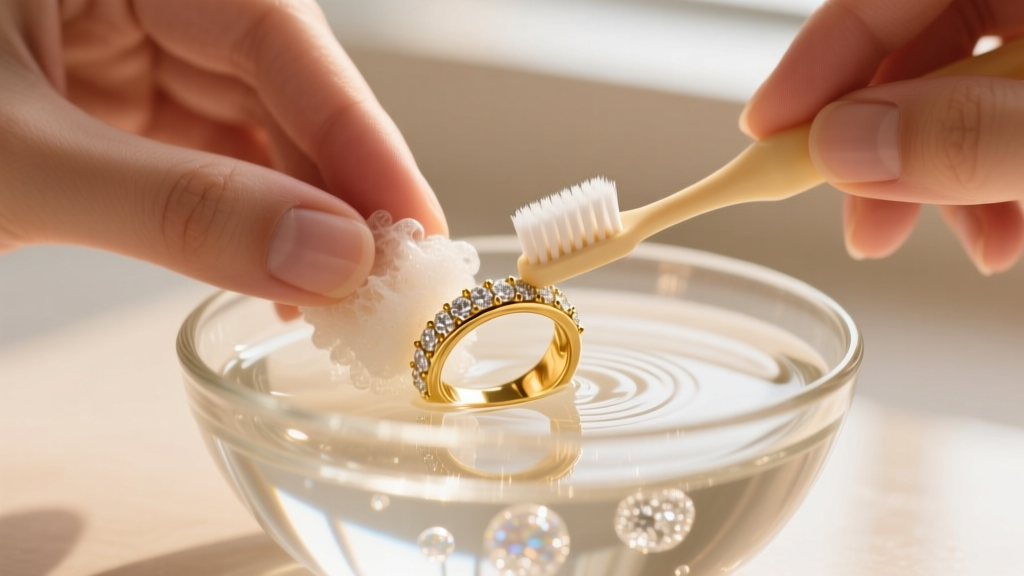
- The Solution: Mix 10 drops of phosphate-free, degreasing dish soap (avoid moisturizing soaps, which leave a lipid film that dulls the diamond's refractive index) into 1 cup of distilled warm water. Distilled water prevents hard water calcium deposits from spotting the gold.
- The Soak: Submerge the jewelry for 15 to 20 minutes. This allows the surfactants in the soap to break down the sebum and cosmetic oils clinging to the diamond's pavilion (the bottom half of the stone).
- The Agitation: Use an extra-soft baby toothbrush. Gently brush the back of the diamond and the setting. Never use a standard toothbrush, as the stiff nylon bristles can scratch high-polish 18k gold and bend micro-pavé prongs.
- The Rinse and Dry: Rinse thoroughly under warm distilled water. Pat dry with a lint-free microfiber cloth, avoiding paper towels which contain wood fibers that can cause microscopic abrasions on the gold.
The Ultrasonic and Steam Debate
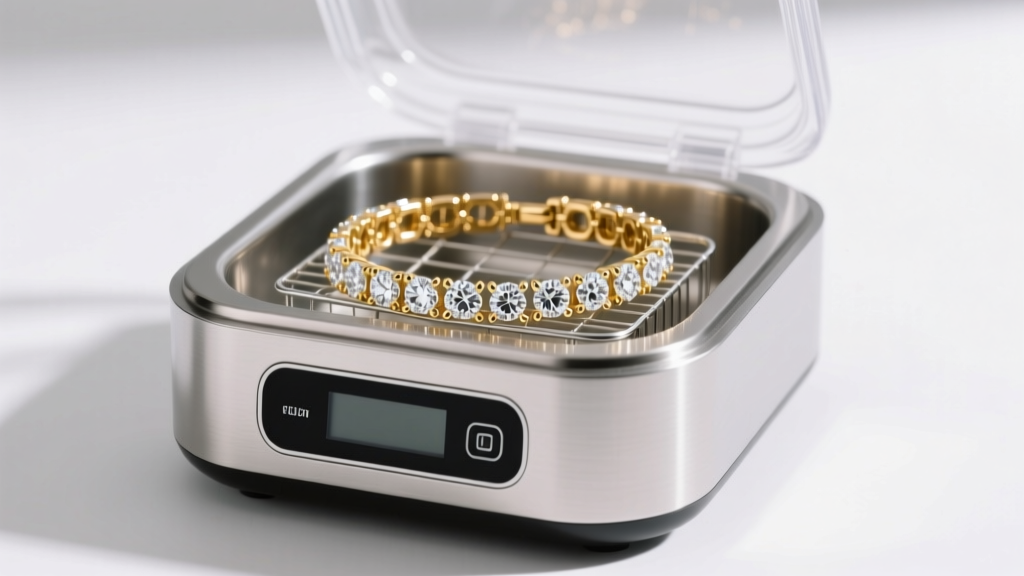
Ultrasonic cleaners use high-frequency sound waves to create microscopic cavitation bubbles that blast dirt away. While highly effective, they are not universally safe. According to Jewelers of America, ultrasonic waves can shake loose diamonds if the prongs are already worn or if the setting is a tension mount. Furthermore, steam cleaners are excellent for blasting debris out of prong settings, but the intense heat and pressure can damage fracture-filled diamonds or cause thermal shock to stones with existing internal fissures.
Critical Warning: Treated Diamonds and Plated Gold
The most vital buying advice regarding maintenance is to always ask the jeweler if the diamonds have been clarity-enhanced or fracture-filled. The Yehuda process, a common fracture-filling technique, injects a glass-like resin into the diamond's natural fissures to make them invisible to the naked eye.
If you own a fracture-filled diamond, you must never use an ultrasonic cleaner, a steam cleaner, or any jewelry cleaning solution containing mild acids or ammonia. These chemicals will etch the resin, turning a brilliant stone cloudy and permanently ruining the treatment. Similarly, if you are buying gold-plated or gold vermeil diamond jewelry, avoid ultrasonic machines entirely. The cavitation process will strip the thin micron-layer of gold right off the brass or sterling silver base metal, leaving you with a patchy, discolored piece.
Cleaning Compatibility Matrix
Use this reference table when evaluating jewelry in the display case to ensure the piece aligns with the cleaning equipment you have at home.
| Jewelry Material & Type | Mild Soap & Soft Brush | Ultrasonic Cleaner | Steam Cleaner |
|---|---|---|---|
| Solid 14k / 18k Gold + Untreated Diamond | Highly Safe | Safe (Check prongs first) | Safe |
| Solid 10k Gold + Untreated Diamond | Safe | Use Caution (Alloy pitting risk) | Safe |
| Gold Plated / Vermeil + Diamond | Safe (Gentle dabbing) | UNSAFE (Strips plating) | UNSAFE |
| Any Gold + Fracture-Filled Diamond | Safe (No ammonia) | UNSAFE (Destroys resin) | UNSAFE |
| Any Gold + Pavé / Micro-Pavé Setting | Safe (Extra-soft brush only) | Risky (Can loosen melee stones) | Safe |
Final Verdict for Smart Buyers
Understanding how to clean gold jewelry with diamonds is not just an afterthought; it is a fundamental part of the purchasing strategy. If you desire a piece that you can safely drop into an ultrasonic cleaner once a month with zero anxiety, opt for a solid 14k or 18k gold bezel or sturdy prong setting featuring an untreated, natural diamond. If you fall in love with a delicate pavé band or a fracture-filled stone, recognize that you are committing to a gentle, meticulous, and strictly manual cleaning routine. By aligning your purchase with your maintenance reality, you ensure your jewelry remains secure, brilliant, and structurally sound for generations. For more detailed regulatory standards on jewelry metals and treatments, refer to the FTC Jewelry Guides to ensure you are getting exactly what you pay for.


