How to Clean Gold Jewelry: Trend-Specific Care Guide
Discover how to clean gold jewelry based on 2026 texture trends. Expert methods for hammered, high-polish, and porous vintage gold finishes.

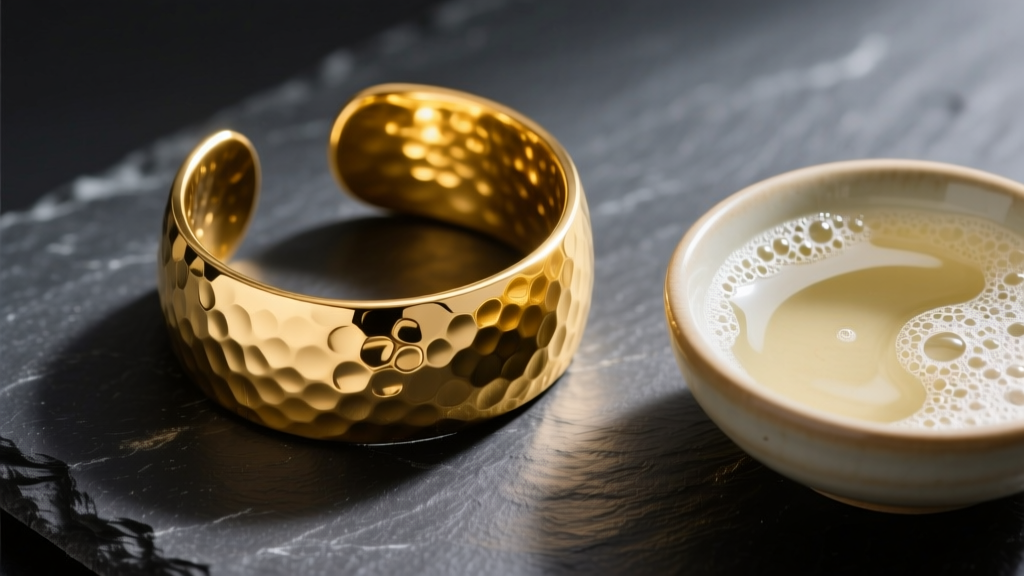
The 2026 Artisanal Gold Movement: Why Texture Dictates Care
If you are researching how to clean gold jewelry in 2026, you have likely noticed a massive shift in the market. The ultra-sleek, mirror-polished minimalist gold pieces that dominated the early 2020s have given way to the 'artisanal luxury' movement. Today's top designers are favoring raw, hammered, Florentine, and bark-textured finishes in 14k, 18k, and even 22k gold. While these organic textures add incredible depth and character to modern jewelry, they also introduce a complex new variable to jewelry maintenance: microscopic dirt traps.
Gold itself is a noble metal and does not tarnish or oxidize. However, the alloy metals mixed with pure gold to create durable 14k (58.5% gold) and 18k (75% gold) pieces—such as copper, silver, zinc, and nickel—are highly reactive. When you combine these reactive alloys with deep, hand-hammered crevices or porous matte finishes, standard cleaning methods can either fail to remove trapped sebum and lotions or, worse, permanently alter the designer's intended finish. Understanding how to clean gold jewelry now requires a nuanced, texture-specific approach.
How to Clean Gold Jewelry with Hammered & Raw Finishes
Hammered gold cuffs, raw-cast signet rings, and 'melted' gold link chains are the hallmark of the 2026 aesthetic. The uneven surfaces of these pieces are notoriously difficult to clean because environmental dust, dead skin cells, and heavy moisturizers become compacted into the micro-fissures created by the jeweler's hammer or casting process.
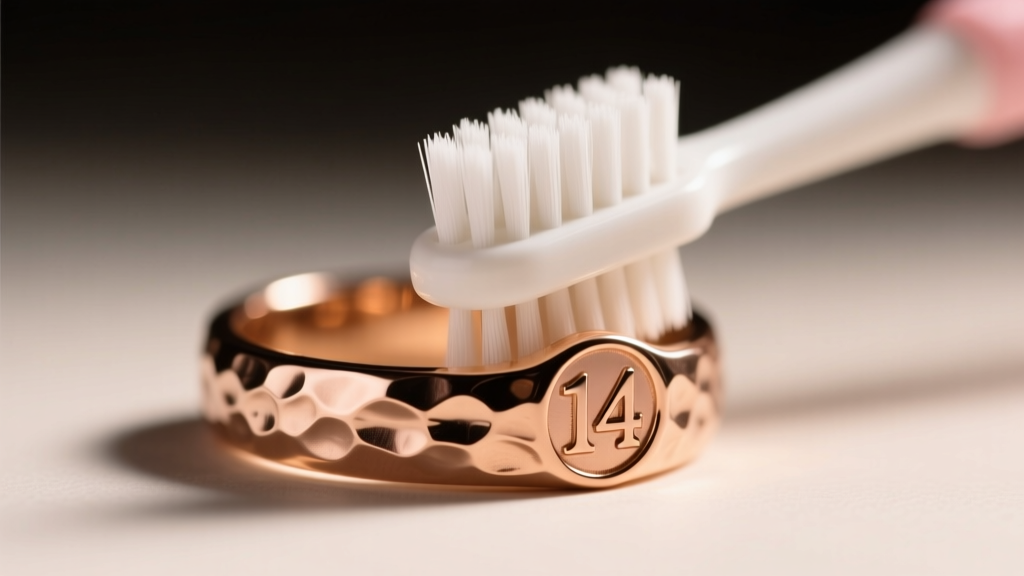
The Soak and Agitate Method
For heavily textured gold, you must rely on chemical breakdown rather than abrasive friction. Follow this exact protocol to preserve the raw edges:
- The Solution: Mix one cup of warm distilled water with exactly two drops of phosphate-free, mild dish detergent (such as original Dawn). Avoid tap water, as trace minerals and chlorine can leave micro-deposits in raw crevices.
- The Soak: Submerge the piece for 15 to 20 minutes. This allows the surfactants to break the surface tension of trapped oils.
- The Agitation: Use an extra-soft goat-hair detailing brush or a baby toothbrush with trimmed bristles. Gently sweep the bristles across the hammered divots in a circular motion. Never use medium or hard bristles, as they can leave micro-scratches on the softer alloy metals present in 14k and 18k gold.
- The Rinse: Rinse under a gentle stream of lukewarm distilled water. Do not use the sink drain without a strainer basket.
Expert Warning: Never place raw or hammered gold jewelry in an ultrasonic cleaner. The high-frequency sound waves (typically 40kHz) can cause microscopic fatigue in the uneven structural points of raw-cast gold, potentially leading to stress fractures over time.
The Science of Alloys: Why Rose & White Gold Need Different Care
When determining how to clean gold jewelry, the color of the gold dictates the chemical vulnerabilities of the piece. According to the Gemological Institute of America (GIA), the alloy composition fundamentally changes how the metal reacts to cleaning agents and environmental factors.
14k and 18k Rose Gold
Rose gold achieves its warm, pinkish hue through a high copper content—sometimes up to 20% or more of the total alloy mix. Copper is highly susceptible to oxidation. Over time, rose gold will develop a natural patina, darkening slightly. If you wish to restore the original bright rose color, you need a specialized, non-abrasive copper-safe jewelry dip. However, many collectors in 2026 actively seek out this vintage patina, choosing to clean their rose gold only with mild soap and water to preserve the darkened, romantic aesthetic.
14k and 18k White Gold
White gold is an alloy of yellow gold and white metals like palladium or nickel, but it is almost always plated with a microscopic layer of rhodium to achieve a brilliant, icy white finish. When cleaning white gold, aggressive polishing or the use of abrasive toothpaste or baking soda pastes will strip the rhodium plating, revealing the faint yellowish-grey undertone of the base alloy. Always use a dedicated microfiber cloth and gentle soap solutions for white gold.
The Florentine & Matte Gold Cleaning Matrix
Florentine finishes (characterized by intricate, cross-hatched engraving lines) and sandblasted matte finishes are incredibly popular in contemporary wedding bands and statement rings. These finishes are created by physically removing or displacing the top layer of polished gold. If you use a standard jewelry polishing cloth on a Florentine finish, you will slowly burnish the cross-hatching, turning a matte texture into a shiny, uneven mess.
| Finish Type | Dirt Trap Risk | Recommended Cleaning Agent | Tools to Strictly Avoid |
|---|---|---|---|
| Hammered / Raw | High (Deep Crevices) | Distilled water + Phosphate-free soap | Ultrasonic cleaners, stiff brushes |
| Florentine (Cross-hatch) | Medium (Surface lines) | Isopropyl alcohol (90%+) on a cotton swab | Jewelry polishing cloths, abrasive pastes |
| Sandblasted Matte | High (Porous surface) | Warm soapy water + Goat-hair brush | Paper towels, sonic cleaners, polishing dips |
| Mirror Polish | Low (Surface oils only) | Microfiber cloth, mild soap | Tissue paper (causes micro-scratches) |
Chemical Warnings: Stress Corrosion & Chlorine
One of the most critical aspects of learning how to clean gold jewelry is understanding what not to expose it to. The Jewelers of America consistently warns against exposing karat gold to chlorine. This is not just about surface discoloration; it is a structural threat.
When the copper, silver, and zinc alloys in 14k and 18k gold are exposed to chlorine (found in swimming pools, hot tubs, and harsh household bleach cleaners), a chemical reaction occurs that leads to stress corrosion cracking. This phenomenon causes the alloy metals to leach out of the microscopic grain boundaries of the gold, leaving the metal brittle. A ring exposed to heavy chlorine can literally snap in half under minor physical pressure, even if it looks perfectly fine on the outside. Never use bleach-based household cleaners while wearing your gold jewelry, and never use chlorine-based solutions to clean your pieces.
Professional vs. At-Home Maintenance
While at-home care is sufficient for removing daily oils and lotions, certain 2026 trend pieces require professional intervention. If your gold jewelry features intricate pavé diamond settings embedded within a textured gold bezel, at-home brushing will not remove the hardened grime trapped beneath the microscopic prongs.
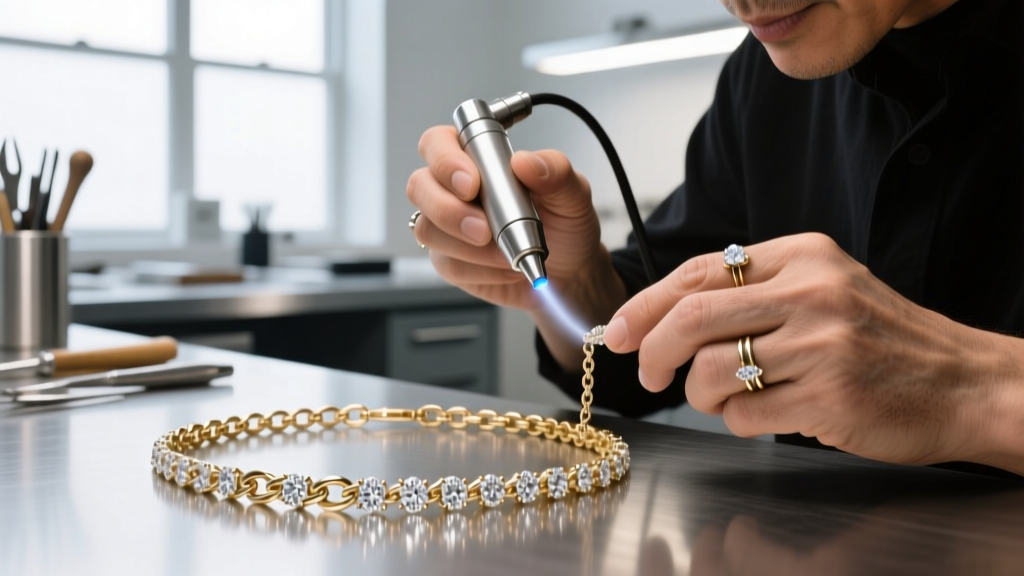
Professional jewelers utilize high-pressure steam cleaners and specialized ultrasonic frequencies calibrated specifically for delicate gemstone settings. Furthermore, if your white gold pieces have lost their brilliant white luster due to rhodium wear, no amount of cleaning will restore them. They must be professionally re-plated. As a general rule, have your heavily textured and pavé-set gold jewelry professionally cleaned and inspected for prong integrity once every 12 to 18 months, while relying on the gentle, texture-specific at-home methods outlined above for your weekly maintenance routine.


