How to Clean Brushed Gold Jewelry Without Ruining It
Learn how to clean brushed gold jewelry safely. Discover expert tips to remove dirt from matte textures and restore the finish without polishing it away.

The Unique Challenge of Brushed Gold Finishes
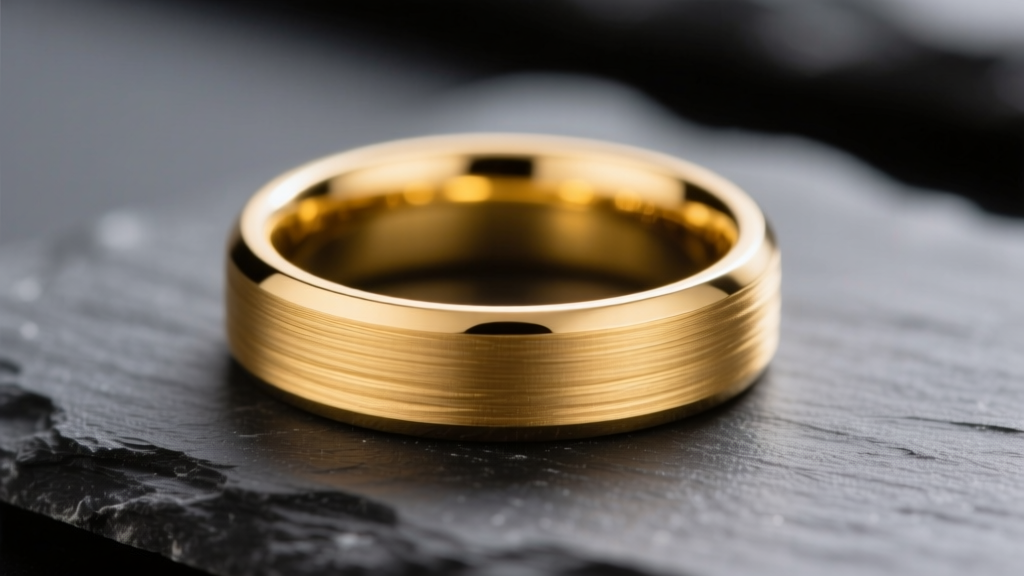
Brushed gold jewelry offers a sophisticated, understated elegance that high-polish pieces simply cannot match. However, maintaining this specific texture requires a fundamentally different approach than standard shiny gold. To understand how to clean it, you must first understand how it is made. According to finishing experts at Rio Grande, a brushed or satin finish is created by abrading the metal's surface with fine wire brushes, fiberglass pens, or abrasive pads. This process leaves microscopic, unidirectional grooves—typically ranging from 400 to 800 grit—across the gold.
The primary issue with brushed gold jewelry is that these microscopic grooves act as traps. Sebum (skin oils), dead skin cells, lotions, sunscreen, and environmental dust pack tightly into these linear scratches. Over time, this accumulation creates a dark, muddy appearance that dulls the metal's natural luster. Unlike a high-polish ring where dirt simply sits on the surface and wipes away easily, dirt in a brushed finish becomes impacted.
Furthermore, the karat of your gold dictates how quickly the finish degrades. An 18k gold ring is significantly softer than a 14k or 10k ring. On high-friction areas like the bottom of a ring shank or the clasp of a necklace, the 18k gold will naturally wear down, slowly polishing the brushed grooves into a semi-shiny finish through everyday friction.
Daily Maintenance and Prevention
Preventing deep impaction is far easier than attempting to excavate hardened grime from a matte texture. Implement these daily habits to prolong the life of your brushed finish:
- The Lotion Rule: Apply lotions, sunscreens, and serums at least 15 minutes before putting on your brushed gold jewelry. Allow the products to fully absorb into your skin to prevent thick emollients from immediately clogging the metal's grooves.
- Nightly Wipe-Down: Keep a clean, dry, lint-free microfiber cloth on your nightstand. Gently wipe your jewelry in the same direction as the brushed grain before taking it off for the night. This removes surface oils before they can oxidize and harden.
- Chemical Avoidance: Chlorine and bromine are highly reactive with the alloy metals (like copper and silver) mixed into karat gold. Remove your jewelry before entering pools or hot tubs to prevent microscopic pitting, which will permanently ruin a uniform brushed texture.
- Isolated Storage: Store brushed pieces in individual soft cotton pouches. Tossing a brushed gold ring into a communal jewelry box with diamond pieces guarantees that the harder diamonds will scrape against the gold, creating deep, random gouges that interrupt the uniform brushed grain.
Step-by-Step Cleaning Routine for Matte Gold
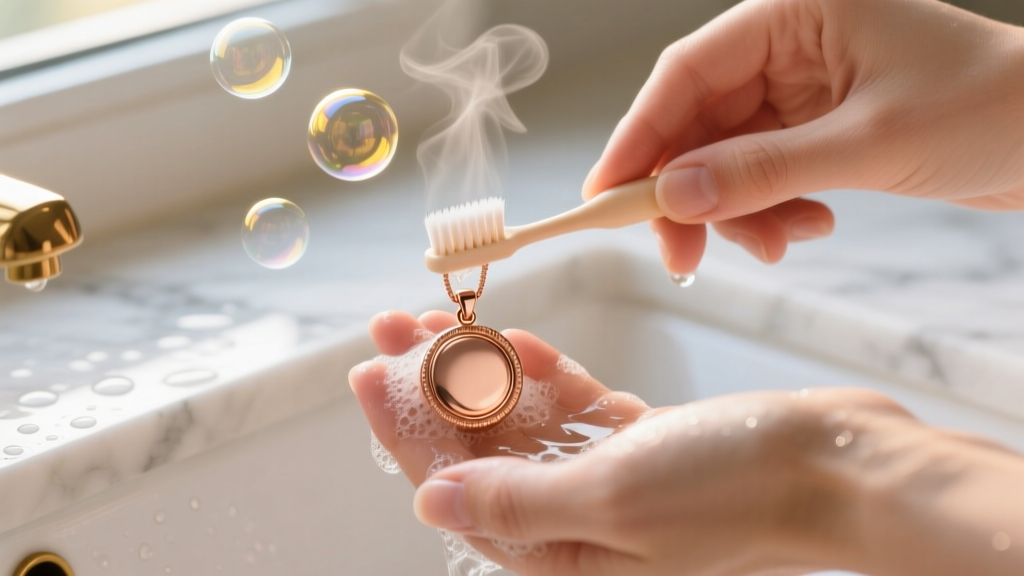
When your brushed gold jewelry begins to look dull or dark, it is time for a deep clean. The goal is to lift the impacted debris without altering the directional grain of the metal.
What You Need
- Mild, phosphate-free dish soap (e.g., original blue Dawn)
- Lukewarm distilled water (tap water can leave hard water mineral deposits in the grooves)
- An extra-soft baby toothbrush (Do not use a standard medium-bristle toothbrush; the stiff nylon bristles will create random, cross-grain micro-scratches that ruin the uniform brushed pattern)
- A clean, lint-free cotton cloth
The Washing Process
- Prepare the Solution: Mix three drops of mild dish soap into one cup of lukewarm distilled water in a glass bowl. Avoid metal bowls, which can cause micro-abrasions if the jewelry clinks against the sides.
- Soak: Submerge the brushed gold jewelry and let it soak for exactly 15 to 20 minutes. This softens the hardened sebum and lotion trapped in the grooves. Do not exceed 30 minutes.
- Directional Agitation: Remove the piece from the water. Using the extra-soft baby toothbrush, gently brush the surface. Critical: You must only brush in the exact same direction as the brushed grain. Brushing in circles or against the grain will destroy the finish.
- Rinse: Rinse thoroughly under a gentle stream of lukewarm distilled water to ensure no soap residue remains.
- Dry: Pat the jewelry dry with a lint-free cotton cloth. Do not rub vigorously. Allow it to air dry completely for an hour before storing to prevent moisture trapping.
Expert Insight: According to the Gemological Institute of America (GIA), you should never use toothpaste, baking soda, or abrasive household cleaners on any karat gold. These substances contain hard particulates (like calcium carbonate) that are harder than gold alloys and will aggressively scratch and alter the intended brushed finish.
Restoring the Brushed Texture: DIY vs. Professional
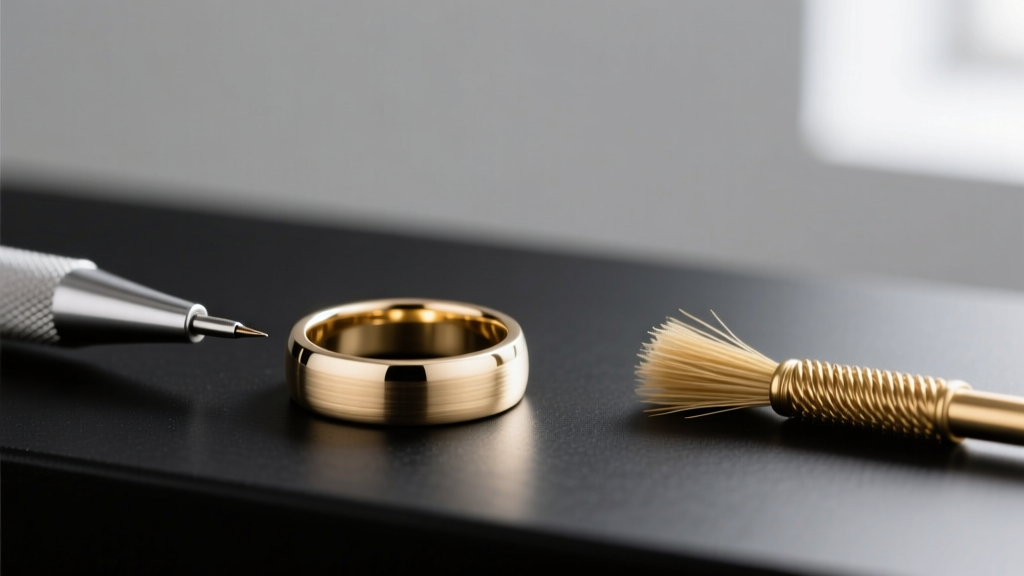
Eventually, high-wear areas on brushed gold jewelry will naturally polish down and become shiny. When this happens, cleaning will not restore the matte look; the texture itself must be physically recreated. While a professional jeweler can easily re-brush your piece using a motorized brass wire wheel, you can perform minor touch-ups at home using specialized jewelry finishing tools.
Tools for Home Restoration
| Tool | Best Used For | Aggressiveness | Skill Level |
|---|---|---|---|
| Fiberglass Scratch Pen | Small, precise areas and tight corners | Medium (Leaves fine, bright lines) | Beginner |
| Soft Brass Wire Brush | Large, flat surfaces and wide ring shanks | Low (Creates a soft, satin sheen) | Intermediate |
| Scotch-Brite Pad (Maroon 7447) | Creating a uniform, non-directional matte finish | Medium-High (Removes metal quickly) | Professional |
When using a fiberglass scratch pen or a brass brush, always secure the jewelry in a ring clamp or lay it on a non-slip rubber mat. Apply light, consistent pressure, and pull the tool in one continuous direction. Overlapping strokes in multiple directions will result in a chaotic, scuffed appearance rather than a refined brushed finish. Always wear safety glasses and a dust mask when using fiberglass pens, as the tiny glass shards can break off and irritate the skin or eyes.
A Note on White Gold: If you are restoring 14k or 18k brushed white gold, remember that the metal is usually rhodium-plated. Re-brushing the surface at home will strip the rhodium plating, exposing the slightly yellowish underlying gold alloy. For brushed white gold, professional re-plating and re-finishing is almost always required to maintain the stark white color.
Common Mistakes That Destroy Brushed Gold
To protect your investment, avoid these frequent care errors that permanently alter matte gold jewelry:
- Using Polishing Cloths: Treated jewelry polishing cloths (like the popular Sunshine Cloth) contain embedded micro-abrasives and polishing compounds. While excellent for high-polish gold, rubbing a polishing cloth over brushed gold will slowly buff away the matte texture, leaving you with a patchy, semi-shiny surface.
- Ultrasonic Cleaners: While ultrasonic cavitation is highly effective at shaking dirt loose from microscopic grooves, the high-frequency vibrations can loosen the settings of tension-set or pave stones often found in modern brushed gold rings. Furthermore, if the ultrasonic solution is not perfectly pH-balanced, it can cause chemical etching on the matte surface.
- Steam Cleaning: High-pressure steam can force moisture and microscopic debris deeper into the grooves or under gemstone bezels, leading to hidden corrosion or stone damage over time.
Expert Verdict
Caring for brushed gold jewelry is an exercise in restraint and precision. By adopting a gentle, directional cleaning routine and avoiding abrasive polishing compounds, you can keep the matte texture looking intentional and crisp for decades. When high-friction areas inevitably wear smooth, utilize a fiberglass scratch pen for minor touch-ups, or entrust the piece to a master jeweler for a complete professional re-finishing. Treat the texture with the same respect you would a delicate gemstone, and your brushed gold will maintain its sophisticated, understated edge.


