How to Clean Rose Gold Jewelry: An Expert Metallurgy Guide
Master how to clean rose gold jewelry with our expert metallurgical guide. Learn safe solutions, karat-specific care, and copper-alloy preservation.

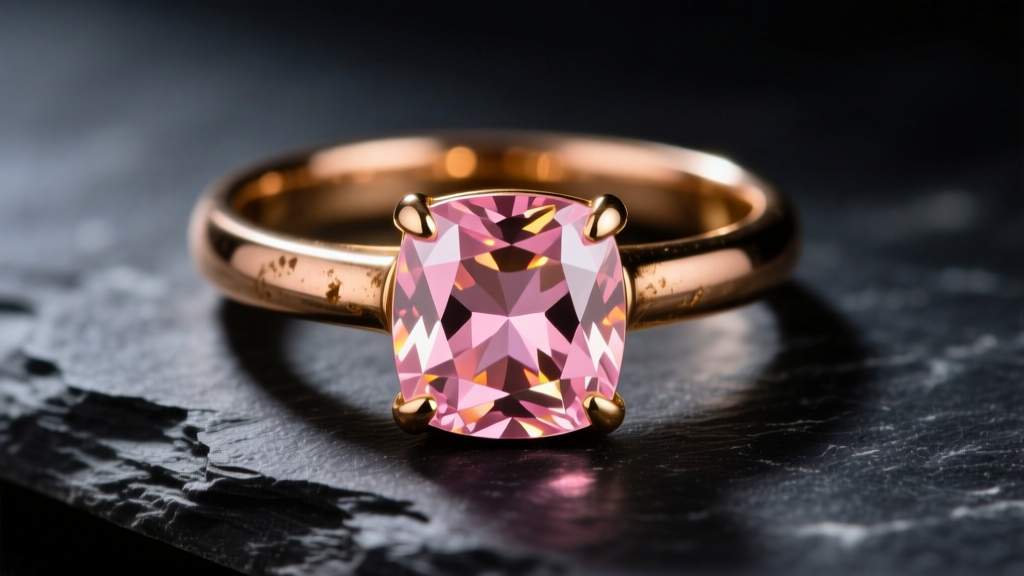
The Metallurgy of Rose Gold: Why Copper Changes the Cleaning Rules
Understanding how to clean rose gold jewelry requires a foundational grasp of its metallurgical composition. Unlike yellow gold, which relies on silver and zinc alloys, or white gold, which utilizes nickel, palladium, or manganese, rose gold derives its signature warm blush from a high concentration of copper. In a standard 18-karat rose gold alloy, the matrix consists of 75% pure gold, 22.25% copper, and 2.75% silver. In 14-karat rose gold, the copper content can surge past 40%.
This copper dominance fundamentally alters the metal's chemical reactivity. Pure gold (24k) is a noble metal, virtually impervious to oxidation and most household acids. Copper, however, is a reactive transition metal. When exposed to oxygen, sulfur compounds, and halogens, the copper atoms within the rose gold alloy matrix readily form surface oxides and sulfides. This means the cleaning protocols for yellow gold cannot be blindly applied to rose gold; doing so risks stripping the alloy, inducing micro-fractures, or permanently altering the metal's color profile.
Chemical Agents to Avoid: The Copper Vulnerability
When researching how to clean rose gold jewelry, you will encounter countless 'hack' videos suggesting harsh household chemicals. As a metallurgical rule, you must categorically avoid the following agents:
- Chlorine and Bleach: Chlorine reacts violently with copper to form cuprous chloride. This compound expands within the metal's crystalline lattice, leading to a catastrophic failure mode known as stress corrosion cracking. A single exposure to concentrated bleach can cause a rose gold prong to snap under microscopic pressure.
- Ammonia: While ammonia is a staple in commercial silver and white gold dips, it acts as a complexing agent for copper. Prolonged exposure will selectively leach copper from the surface layer of your rose gold, leaving behind a porous, yellowish, and structurally weakened rind.
- Abrasive Polishes: Baking soda pastes and toothpaste contain hard particulates (like calcium carbonate or silica) that rank higher on the Mohs scale than the copper-gold alloy matrix. These will induce micro-scratches, trapping future dirt and accelerating tarnish cycles.
Step-by-Step Protocol: How to Clean Rose Gold Jewelry Safely
To safely remove sebum, cosmetic residues, and environmental sulfur without attacking the copper alloy, follow this precise three-phase protocol.
Phase 1: The Pre-Clean Inspection
Before introducing any liquid, inspect the piece under a 10x jeweler's loupe. Check for loose prongs, micro-fractures in the shank, and the integrity of any gemstone settings. If the piece features closed-back settings or foil-backed vintage stones, skip the wet cleaning entirely and use a dry, lint-free microfiber cloth.
Phase 2: The Surfactant Bath
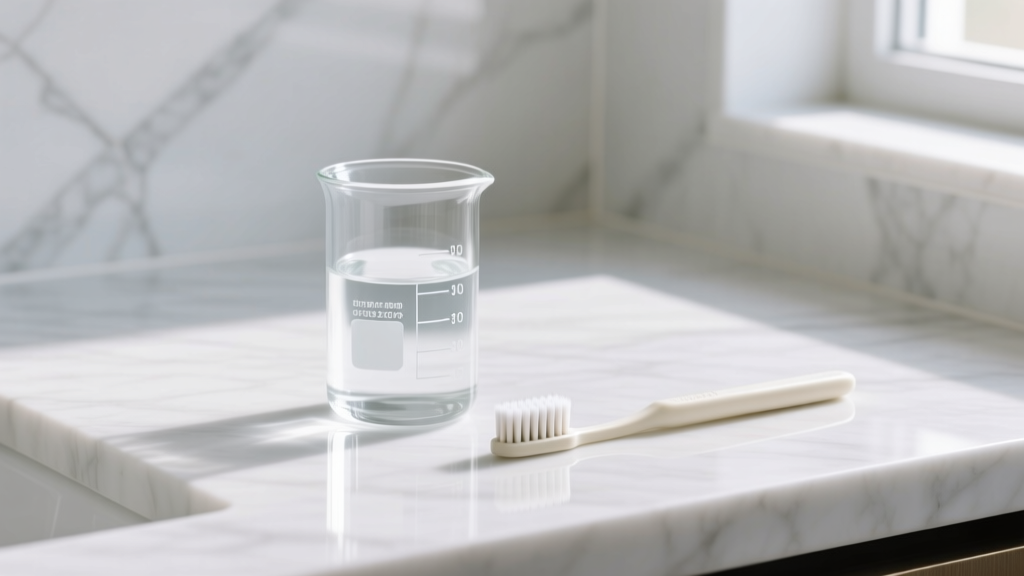
Prepare a bath using distilled water (to prevent calcium carbonate hard-water spotting) heated to a lukewarm 25-30°C. Add three drops of a pH-neutral, non-ultra dish surfactant (standard Dawn or similar, avoiding formulas with added citrus extracts or moisturizing lotions). Submerge the rose gold jewelry for exactly 3 to 5 minutes. This allows the surfactant's hydrophilic and lipophilic ends to break down lipid-based skin oils without requiring aggressive chemical oxidation.
Phase 3: Mechanical Agitation and Drying
Using a baby toothbrush with ultra-soft bristles (0.15mm diameter or less), gently agitate the metal. Focus on the pavilion (underside) of gemstones and the interior of the band where dead skin cells accumulate. Rinse under a gentle stream of distilled water. Do not air dry; water spots will form as the copper oxidizes slightly in the presence of standing moisture. Instead, immediately pat dry with a clean, untreated microfiber cloth and use a low-pressure compressed air duster to blow moisture out of crevices.
Karat Variations: 14k vs. 18k Rose Gold Maintenance
The karat weight of your rose gold dictates its durability and its tolerance to mechanical cleaning. Because 14k rose gold contains significantly more copper than 18k, it is physically harder but more chemically reactive.
| Property | 18k Rose Gold (75% Au) | 14k Rose Gold (58.3% Au) |
|---|---|---|
| Copper Content | ~22.25% | ~41.7% |
| Vickers Hardness (HV) | ~130 HV | ~170 HV |
| Tarnish Susceptibility | Moderate | High |
| Ultrasonic Safety | Safe (if no fragile gems) | Safe (if no fragile gems) |
| Polishing Frequency | Once every 18-24 months | Once every 24-36 months |
Because 14k rose gold is harder, it resists surface scratching better than 18k. However, its higher copper content means it will develop a darker, more pronounced patina over time if exposed to sulfur-rich environments (such as hot springs or urban pollution). According to the Gemological Institute of America (GIA), regular maintenance of lower-karat gold alloys requires more frequent gentle washing to prevent the buildup of copper sulfides, which can eventually pit the metal if left untreated for years.
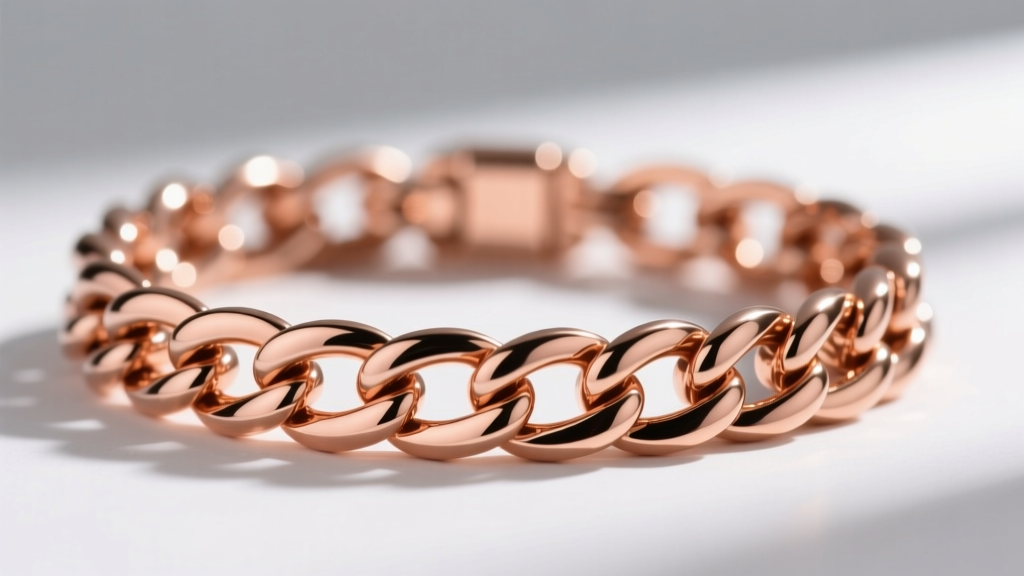
Gemstone Complications: Cleaning Rose Gold Settings with Porous Stones
Rose gold is the industry-standard pairing for copper-toned gemstones like morganite, kunzite, and certain sapphires. This creates a complex cleaning scenario. Morganite, a beryl variety, ranks 7.5 to 8 on the Mohs scale, suggesting durability. However, morganite frequently contains internal fluid inclusions and microscopic fracture planes.
While the rose gold setting could theoretically withstand an ultrasonic cleaner's high-frequency cavitation, the morganite center stone cannot. The rapid localized heating and shockwaves generated by ultrasonic waves can cause included morganites to shatter internally. Furthermore, kunzite is highly sensitive to sudden temperature changes and prolonged light exposure. When cleaning rose gold jewelry featuring these stones, the surfactant bath must remain strictly at room temperature, and mechanical agitation must be limited to the metal shank, avoiding direct brushing of the gemstone's girdle.
Patina vs. Tarnish: When Not to Clean
Expert jewelers and antique collectors distinguish between 'tarnish' and 'patina'. Tarnish is a layer of corrosive copper sulfide or chloride that degrades the metal and traps moisture against the skin, potentially causing contact dermatitis. Patina, however, is a stable, ultra-thin layer of copper oxide that provides a rich, vintage depth to the rose gold, highlighting hand-engraving and milgrain detailing.
'A uniform, warm darkening in the recesses of a vintage rose gold piece is a desirable historical record. Aggressively polishing this away with chemical dips or motorized buffing wheels destroys the piece's numismatic and aesthetic value.' — Bench Jeweler Best Practices, Jewelers of America.
If your rose gold jewelry is a modern, high-polish piece, regular cleaning to maintain maximum reflectivity is appropriate. If it is an Edwardian or Art Deco era piece featuring intricate filigree, restrict your cleaning to a simple dry wipe with a jeweler's cloth. Understanding how to clean rose gold jewelry is ultimately about knowing when to intervene and when to let the metallurgical history of the copper alloy speak for itself.


