The Ultimate Guide to Cleaning Vermeil Gold Jewelry Safely
Learn expert techniques for cleaning vermeil gold jewelry safely. Discover daily wear rules, safe cleaning agents, and storage tips to prevent tarnish.

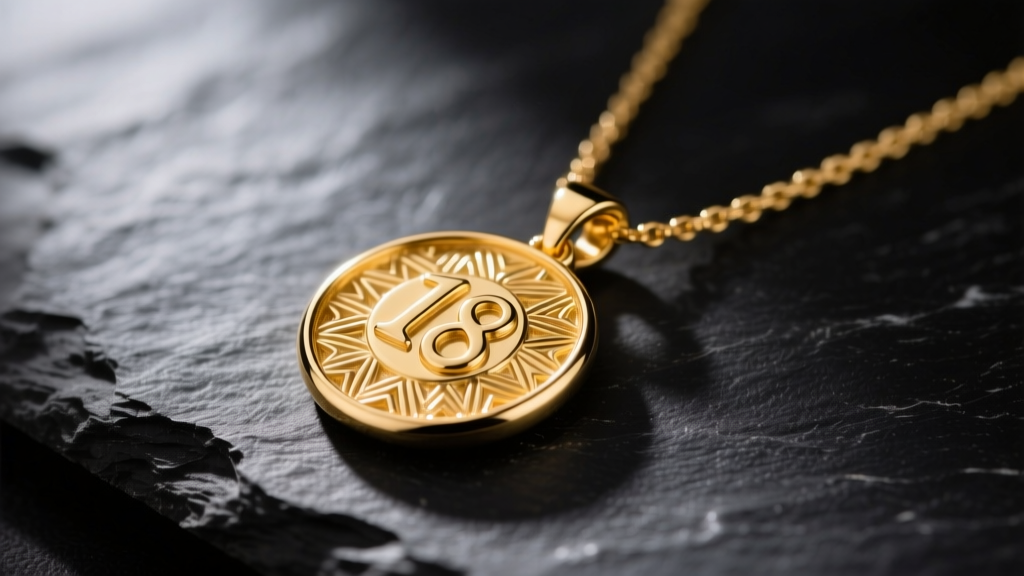
Gold vermeil offers the luxurious appearance of solid gold at a fraction of the cost, making it a staple in modern jewelry collections. However, because vermeil is fundamentally a layered material—consisting of a thick gold plating over a sterling silver base—it requires a highly specific approach to maintenance. Treat it like solid gold, and you risk stripping the plating; treat it like cheap costume jewelry, and the silver base will rapidly tarnish from beneath.
In this comprehensive guide, we break down the exact chemistry, daily wear protocols, and step-by-step cleaning methods required to maximize the lifespan of your vermeil gold jewelry. Whether you are dealing with a delicate 18k vermeil chain or a heavy 14k signet ring, these expert techniques will keep your pieces radiant for years.
The Anatomy of Vermeil: Why Care is Different
Before applying any cleaning solution, it is crucial to understand what you are actually cleaning. According to the Federal Trade Commission (FTC), for a piece to be legally classified as gold vermeil in the United States, it must meet three strict criteria:
- The Base Metal: Must be 925 sterling silver (not brass or copper).
- The Gold Purity: The plating must be at least 10k gold, though 14k and 18k are industry standards.
- The Thickness: The gold layer must be a minimum of 2.5 microns thick.
While 2.5 microns is significantly thicker than standard gold-plated jewelry (which often measures less than 0.5 microns), it is still a microscopic layer. The primary enemy of vermeil is not just surface dirt, but the oxidation of the underlying sterling silver. When the silver base reacts with sulfur and moisture in the air, it creates silver sulfide (tarnish). If this tarnish reaches the surface, it causes the gold layer to bubble, flake, or discolor.
The Daily Wear Protocol: Preventing Micro-Abrasions
The most effective cleaning method is preventative care. The chemicals found in everyday cosmetics and environments can degrade the 2.5-micron gold barrier, exposing the reactive silver beneath.
The 'Last On, First Off' Rule
Always put your vermeil gold jewelry on after applying perfume, hairspray, lotions, and sunscreen. Many cosmetic products contain alcohols and emulsifiers that leave a microscopic film on the gold, dulling its luster and trapping moisture against the metal. When you return home, take your jewelry off first, before washing your face or applying night creams.
Environmental Hazards to Avoid
- Chlorine: Never wear vermeil in swimming pools or hot tubs. Chlorine aggressively attacks the copper alloys present in the 925 sterling silver base, leading to structural weakening and rapid blackening.
- Sulfur: Hot springs, heavily polluted urban air, and even certain foods (like eggs and onions) contain sulfur compounds that accelerate silver tarnish.
- Sweat: The natural acids and salts in human sweat will eat away at the gold layer over time. Always remove rings and chains before intense workouts.
Step-by-Step Cleaning Routine for Vermeil
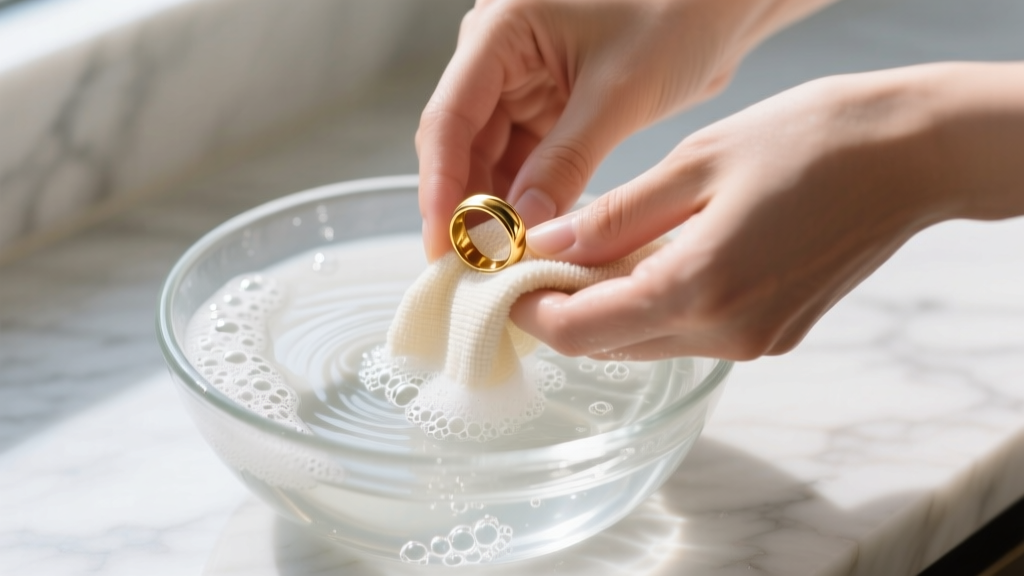
When your jewelry loses its shine or accumulates skin oils, it is time for a wash. According to Jewelers of America, gentle manual cleaning is the only safe method for plated and vermeil pieces. Follow this 5-minute protocol to restore brilliance without damaging the micron layer.
Step 1: Prepare the Solution
Fill a small glass bowl with lukewarm water (never hot, as extreme heat can cause the gold and silver to expand at different rates, leading to peeling). Add two drops of a mild, phosphate-free dish soap, such as original blue Dawn. Avoid soaps with heavy moisturizers or citrus extracts, as the citric acid can be mildly abrasive.
Step 2: The Brief Soak
Submerge your vermeil gold jewelry in the solution for exactly 3 to 5 minutes. This is just enough time to loosen sebum, dead skin cells, and cosmetic residue. Do not leave it soaking for hours, as prolonged water exposure encourages the sterling silver base to oxidize.
Step 3: Gentle Agitation
Use a clean, ultra-soft baby toothbrush or your fingertips to gently massage the jewelry. Pay special attention to the back of ring bands and the clasps of chains, where dirt accumulates. Never scrub aggressively; let the soap do the chemical lifting.
Step 4: The Rinse and Dry
Rinse the piece thoroughly under a gentle stream of lukewarm water to remove all soap residue. Immediately pat it completely dry with a lint-free microfiber cloth. Do not air dry, as water spots will leave mineral deposits on the gold surface.
Safe vs. Unsafe Cleaning Agents
Using the wrong chemical cleaner is the fastest way to ruin vermeil gold jewelry. Below is a definitive guide to what you should and should not use.
| Category | Safe for Vermeil | Unsafe for Vermeil (Avoid Completely) |
|---|---|---|
| Cleaners | Mild dish soap, specialized gold polishing liquids (non-abrasive) | Silver dip, jewelry dip, ammonia, bleach, alcohol |
| Tools | Microfiber cloth, soft baby toothbrush, 100% cotton swabs | Silver polishing cloths, paper towels, stiff nylon brushes |
| Methods | Hand washing, gentle wiping, air blowing | Ultrasonic cleaners, steam cleaners, boiling water |
| Abrasives | None | Baking soda paste, toothpaste, salt scrubs |
Expert Warning: Never use a standard 'silver polishing cloth' on vermeil gold jewelry. These cloths are impregnated with micro-abrasives and anti-tarnish chemicals designed to strip oxidation from bare silver. If used on vermeil, they will literally polish the gold layer right off the piece.
Advanced Storage: Stopping Tarnish Before It Starts
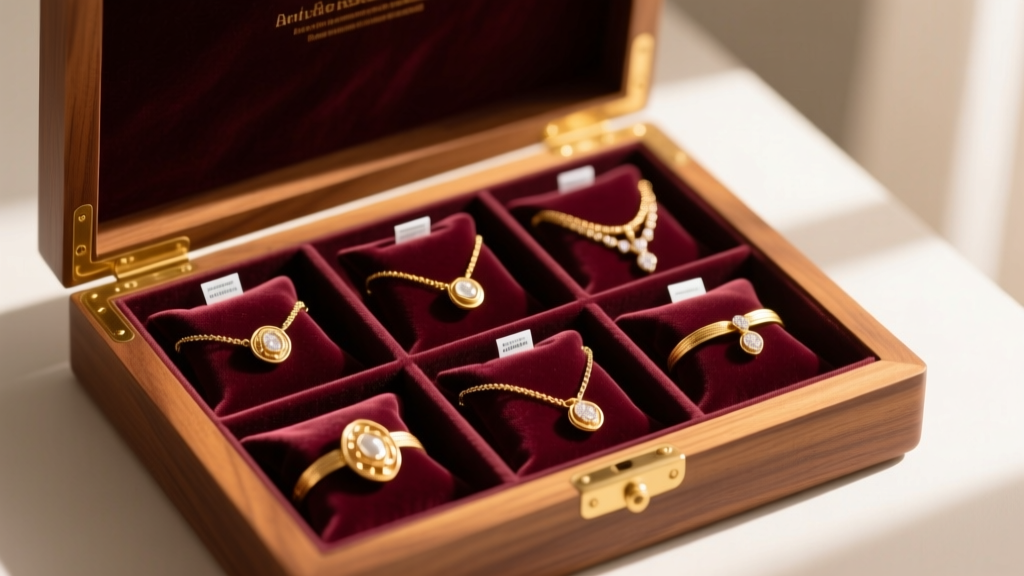
How you store your vermeil gold jewelry when it is not being worn is just as critical as how you clean it. Sterling silver is highly reactive to ambient humidity and airborne sulfur.
The Anti-Tarnish Ecosystem
To create an optimal storage environment, you need to control both moisture and airborne pollutants. Store each piece individually in a soft, non-abrasive flannel or velvet pouch to prevent the pieces from scratching one another. Inside your main jewelry box, place 3M Anti-Tarnish Strips. These strips contain a specialized copper-based polymer that absorbs sulfur gases and moisture from the air, neutralizing the primary catalysts for silver tarnish before they can reach your jewelry.
Silica Gel Packs
For those living in high-humidity climates (such as coastal regions or tropical areas), toss a few silica gel desiccant packets into your jewelry drawers or storage boxes. Keeping the relative humidity inside the box below 50% drastically slows the oxidation process of the sterling silver core.
Recognizing Wear: When to Replate
Even with impeccable care, the friction of daily wear will eventually wear down the 2.5-micron gold layer, particularly on high-contact areas like the inside of ring bands or the links of a bracelet. You will know it is time for professional intervention when you notice a pale, yellowish-gray hue showing through the rich gold color—this is the exposed sterling silver base.
Fortunately, because the base is solid 925 silver, vermeil can be professionally replated. A master jeweler will polish away the remaining gold, clean the silver base, and electroplate a fresh layer of 18k or 22k gold. Expect to pay between $60 and $150 for professional replating, depending on the surface area and complexity of the piece. This makes vermeil a highly sustainable, long-term investment compared to gold-plated brass, which cannot be easily salvaged once the base metal begins to corrode.
By adhering to these meticulous cleaning and storage protocols, your vermeil gold jewelry will retain its luxurious finish and structural integrity, allowing you to enjoy its brilliance for a lifetime.


