Dearborn Jewelry & Gold Factory: Quality & Repair Troubleshooting
Troubleshoot common high-karat gold issues from Dearborn Jewelry & Gold Factory, including 21k soldering, porosity fixes, and authenticity testing.


Dearborn, Michigan, has long been recognized as a premier hub for Middle Eastern jewelry design, with the Dearborn Jewelry & Gold Factory standing out as a cornerstone for high-karat custom manufacturing. Unlike standard American retail jewelers that primarily stock 14k gold, specialized factories in this region frequently cast, forge, and repair 18k, 21k, and 22k gold. While these high-purity alloys offer unmatched richness and hypoallergenic properties, they introduce unique metallurgical challenges when troubleshooting repairs, resizing, or verifying authenticity.
As of 2026, the intersection of traditional high-karat goldsmithing and modern laser technology has shifted how we approach jewelry maintenance. Whether you are dealing with a porous custom casting, a failing solder seam on a heavy 21k bangle, or prong wear on a diamond-set piece, understanding the specific failure modes of high-purity gold is essential. This guide provides a deep-dive troubleshooting framework for owners and bench jewelers navigating the complexities of high-karat gold repairs.
The Metallurgy of Middle Eastern High-Karat Gold
To troubleshoot effectively, one must first understand the material science at play. Pure 24k gold is too malleable for daily wear, so alloying metals like copper, silver, and occasionally zinc are added. In the Dearborn manufacturing sector, 21k gold (87.5% pure gold) is the industry standard for intricate bridal sets and heavy bangles. The remaining 12.5% alloy mix is carefully calibrated to maintain a deep yellow hue while providing just enough tensile strength for structural integrity.
However, this high gold content means the metal has a lower yield strength and a higher melting point than 14k gold. When a bench jeweler attempts to repair a 21k piece using standard 14k repair protocols, the results are often disastrous. The thermal conductivity differs, the oxidation rates of the alloying metals change under a torch, and the color match becomes nearly impossible without custom alloy mixing.
Troubleshooting Solder Seams and Color Mismatches
The most frequent complaint following a ring sizing or chain repair on high-karat jewelry is a visible, discolored solder seam. Standard commercial solders are designed for 14k and 18k gold. When applied to 21k or 22k gold, the lower-karat solder creates a stark visual contrast and a galvanic weak point.
- The Problem: Eutectic solders used for 18k gold melt around 1,450°F. 21k gold requires a solder that flows closer to 1,750°F to ensure a seamless molecular bond without pitting the surrounding metal.
- The Troubleshooting Step: Inspect the seam under a 10x triplet loupe. If the seam appears dark or recessed, the jeweler likely used a lower-karat solder that has oxidized or failed to flow completely into the joint.
- The Solution: Advanced jewelers will custom-melt 22k gold scrap with a precise percentage of deoxidizing flux and a lower-melting-point alloy (like cadmium-free zinc) to create a bespoke 20.5k solder that matches the color and melts just below the parent metal's threshold.
| Parent Metal | Gold Purity | Ideal Solder Flow Temp | Color Match Difficulty |
|---|---|---|---|
| 18k Yellow | 75.0% | 1,450°F - 1,550°F | Low (Commercial solders available) |
| 21k Yellow | 87.5% | 1,700°F - 1,780°F | High (Requires custom alloy mixing) |
| 22k Yellow | 91.6% | 1,800°F - 1,850°F | Extreme (Laser welding preferred) |
Fixing Casting Porosity in Heavy Custom Pieces
Custom cast pieces, particularly heavy solid bangles and intricate filigree work produced in high-volume factory settings, are highly susceptible to gas porosity. Because high-karat gold alloys are denser and have higher melting temperatures, they trap oxygen and hydrogen gases more readily during the cooling phase of the investment casting process.
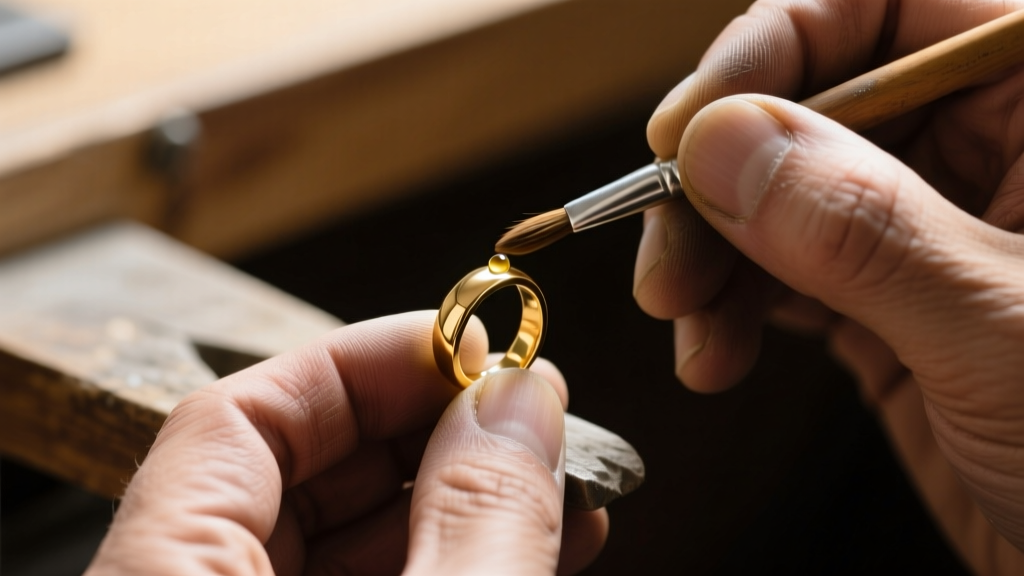
When polishing a newly cast 21k bangle, a jeweler might suddenly break through the surface skin and reveal a cluster of microscopic pits. Traditional torch soldering to fill these pits will result in visible scarring and heat-induced warping of the heavy gold piece.
Actionable Fix: The only acceptable troubleshooting method for surface porosity in 21k and 22k gold is laser welding. By using a 120-watt Nd:YAG laser welder with a pulse width of 4.0ms and 45% voltage, the jeweler can melt a microscopic drop of matching 21k wire directly into the pit. The laser's pinpoint heat prevents thermal shock to the surrounding metal, and the rapid cooling prevents new gas pockets from forming. Expect to pay between $85 and $150 per hour for specialized laser bench work in 2026.
Gemstone Setting Failures in High-Karat Prongs
High-karat gold is inherently soft. A 21k gold prong will wear down, bend, or snap up to three times faster than a 14k white gold prong under identical daily wear conditions. If you purchase a diamond or sapphire ring from a Dearborn factory set entirely in 21k gold, stone security is a primary troubleshooting concern.
"Never re-tip a 21k gold prong with 21k gold wire. The wear rate will remain identical, and the stone will loosen again within 18 months. Always upgrade the prong tips to 14k or 18k white gold for structural longevity, even if it requires rhodium plating to mask the color difference." — Master Bench Jeweler Standard
If a stone becomes loose, inspect the gallery wire beneath the setting. In heavy high-karat rings, the shank often bends out of round, pulling the gallery wire apart and popping the stone out of the head. The fix requires re-shanking the ring with a heavier, thicker 18k base while preserving the original 21k upper aesthetic.
Chain Stretch and Clasp Failures in 21k and 22k Gold
Heavy Middle Eastern pendants require robust chains, but 21k and 22k chains (like woven mesh or heavy rope chains) are prone to stretching under the pendant's weight. The links elongate, and the spring-ring or lobster clasps fail because the high-karat jump rings pull open.
- Identify the Stress Point: Use a loupe to check the two jump rings connecting the clasp to the chain. These are the most common failure points.
- Upgrade the Hardware: Replace the high-karat jump rings and the clasp itself with 14k yellow gold or stainless steel components. The slight color variance at the very end of the chain is an acceptable trade-off for preventing a catastrophic drop.
- Laser-Weld the Links: If the chain itself has stretched, a jeweler can use a laser welder to fuse the open seams of the elongated links, effectively locking them in place and preventing further stretching or snagging.
Authenticity Testing Discrepancies After Repairs
A common point of panic for consumers occurs when a repaired piece of jewelry fails an electronic or acid authenticity test at a pawn shop or secondary buyer. If you take a 21k chain to a buyer and they test the repaired link, the machine may read 14k or 18k, leading to accusations of fraud.
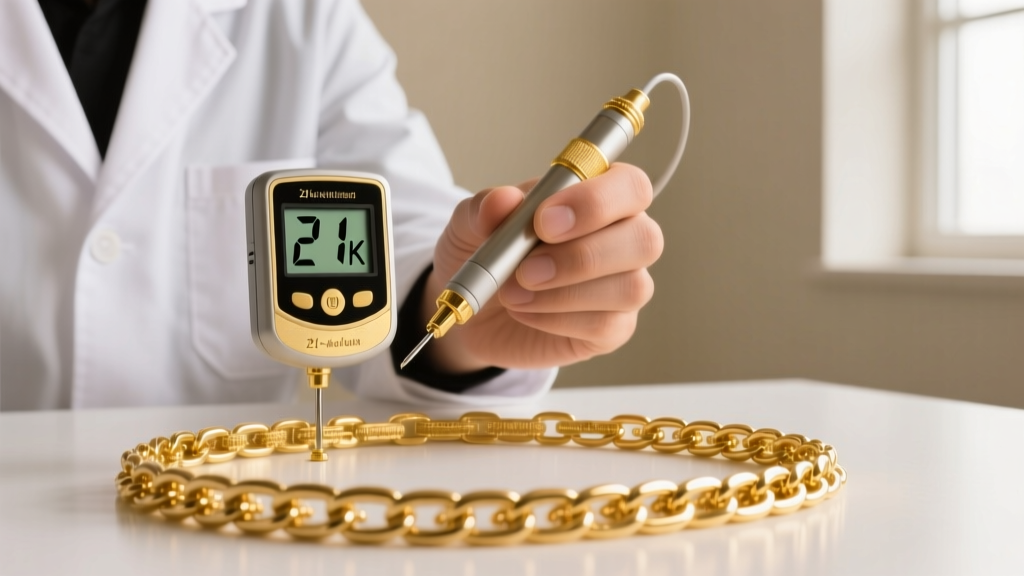
This discrepancy is a known metallurgical reality, not a scam. According to the Federal Trade Commission (FTC) Jewelry Guides, there is an allowable tolerance for karat purity, which expands when solder is present. The solder used to repair a chain or resize a ring is inherently lower in karat than the parent metal to ensure it melts first. If an electronic tester's probe is placed directly over a soldered seam, it will read the lower-karat alloy.
Furthermore, the Gemological Institute of America (GIA) notes that surface oxidation from torch repairs can also skew electronic conductivity testers. To properly troubleshoot and verify authenticity post-repair, the testing area must be filed down to bare, untreated metal, and tested at least one inch away from any visible seams or solder joints. Always demand that buyers test the main body of the casting, not the repair joints.
Preventative Maintenance Framework
Owning high-karat jewelry from specialized manufacturers like the Dearborn Jewelry & Gold Factory requires a shift in maintenance habits. To prevent the need for complex troubleshooting, implement a bi-annual inspection routine focused on prong integrity and clasp tension. Store 21k and 22k pieces individually in soft microfiber pouches to prevent high-karat gold from scratching itself—a common issue due to the metal's low Mohs hardness rating. When repairs are inevitable, bypass standard mall jewelers and seek out bench jewelers equipped with Nd:YAG laser welders and custom high-karat alloying capabilities to preserve the structural and aesthetic integrity of your investment.


