How to Dip Jewelry in Gold: Troubleshooting Plating Fails
Learn the truth when you dip jewelry in gold. Troubleshoot peeling, fading, and color issues with expert electroplating and base metal guides.

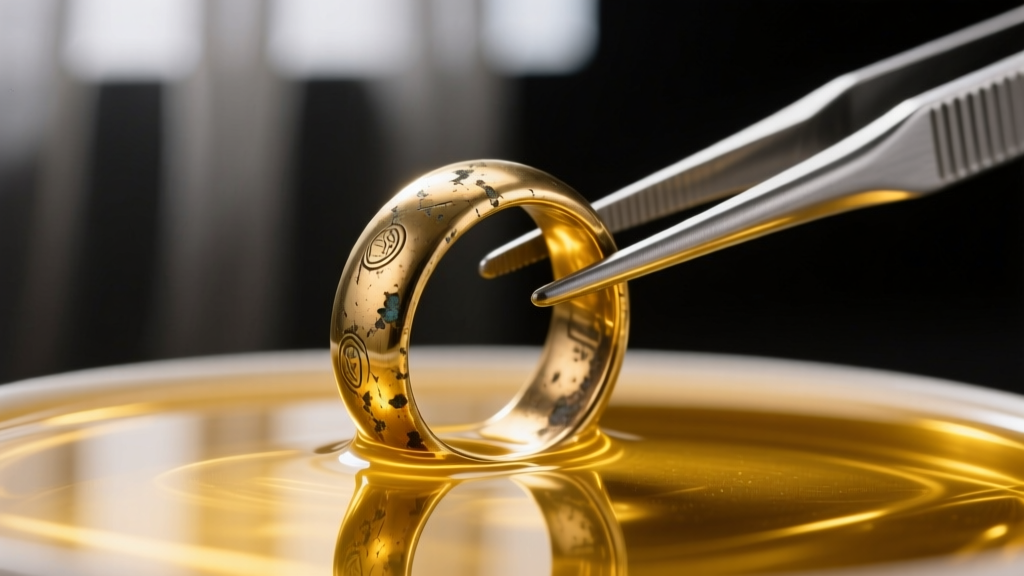
The Chemistry of "Dipping": Electroplating vs. Immersion
When consumers ask if they can simply "dip jewelry in gold," they are usually referring to gold electroplating. True chemical immersion—where a base metal is dunked into a solution and magically coats itself in gold without an electrical current—does not exist in modern jewelry manufacturing. Instead, the process relies on electrolysis. A rectifier converts alternating current (AC) to direct current (DC), sending a low-voltage electrical charge through a liquid electrolyte solution containing dissolved gold salts. The jewelry piece acts as the cathode (negative terminal), attracting the positively charged gold ions to bond to its surface.
Troubleshooting a failed gold dip requires understanding that plating is not a superficial paint job; it is a metallurgical bond. If the voltage is too high, the gold will deposit too quickly, resulting in a porous, spongy layer that flakes off. If the voltage is too low, the bond will be weak. Most professional gold plating operates between 1.5V and 3.0V, depending on the specific chemical bath and the surface area of the piece.
Base Metal Compatibility Matrix
Not all metals accept a gold dip equally. The underlying substrate dictates the necessary preparation and intermediate "strike" layers required to prevent atomic migration, which causes the gold layer to tarnish from the inside out.
| Base Metal | Compatibility | Required Strike Layer | Common Failure Mode |
|---|---|---|---|
| Sterling Silver (925) | Excellent | Palladium or Nickel | Silver sulfide tarnish bleeding through porous gold |
| Brass / Bronze | Good | Nickel or Copper | Zinc migration causing green/black spotting |
| Stainless Steel | Poor (Requires Activation) | Wood's Nickel Strike | Complete delamination due to passive oxide layer |
| Zinc Alloy / Pewter | Very Poor | Heavy Copper Flash | Pitting, blistering, and rapid surface degradation |
Troubleshooting: Why Your Gold Dip is Peeling or Flaking
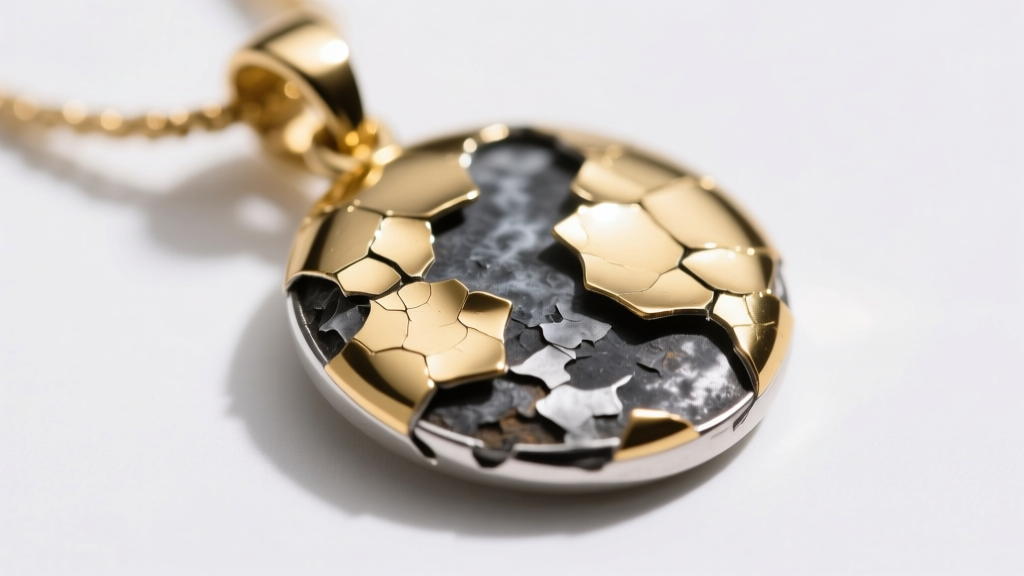
There is nothing more frustrating than watching a freshly dipped gold ring begin to peel like sunburned skin within weeks. According to Rio Grande's Electroplating Resource Center, peeling is almost never a failure of the gold itself, but rather a failure of surface preparation or barrier layers.
Failure Mode 1: Missing the Strike Layer
If you dip sterling silver directly into a standard gold bath, the silver and gold atoms will intermingle. Over time, the silver oxidizes, and that tarnish pushes through the microscopic pores of the gold, causing dark spots and eventual flaking. A "strike" layer—typically a micro-thin coating of palladium or nickel—acts as an impermeable shield. If your jeweler skipped this step to save time, the plating will inevitably fail.
Failure Mode 2: Surface Contamination
Gold will not bond to oils, fingerprints, or polishing compounds. Before a piece enters the plating tank, it must undergo ultrasonic cleaning, electro-cleaning in an alkaline solution, and a mild acid dip. If a jeweler uses a polishing rouge (like Tripoli) and fails to completely remove the waxy residue via ultrasonic cavitation, the gold will plate directly over the wax. Once the wax degrades, the gold flakes off in large, continuous sheets.
Color Correction: Fixing the "Fake" Orange Hue
A common complaint after attempting to dip jewelry in gold is that the final color looks overly yellow, brassy, or "fake." This is a karatage issue. Pure 24-karat gold plating is naturally a deep, saturated orange-yellow. While beautiful on certain cultural or high-karat pieces, it looks unnatural on modern Western jewelry designs, which are traditionally cast in 14k or 18k gold.
- 24k Gold Dip: 99.9% pure gold. Extremely soft, wears away quickly, and yields a harsh orange tone. Best for decorative, non-wearable items.
- 18k Gold Dip: Alloyed in the plating bath with trace amounts of copper or silver. Yields a warm, rich, realistic champagne-yellow hue.
- 14k Gold Dip: Contains higher alloying agents. Produces a paler, slightly cooler yellow that perfectly matches standard American jewelry castings.
- Rose Gold Dip: Achieved by adding specific ratios of copper to the gold salt bath. Troubleshooting rose gold requires strict temperature control; if the bath is too hot, the copper deposits faster than the gold, turning the piece brown.
Professional Rectifiers vs. DIY Brush Plating Kits
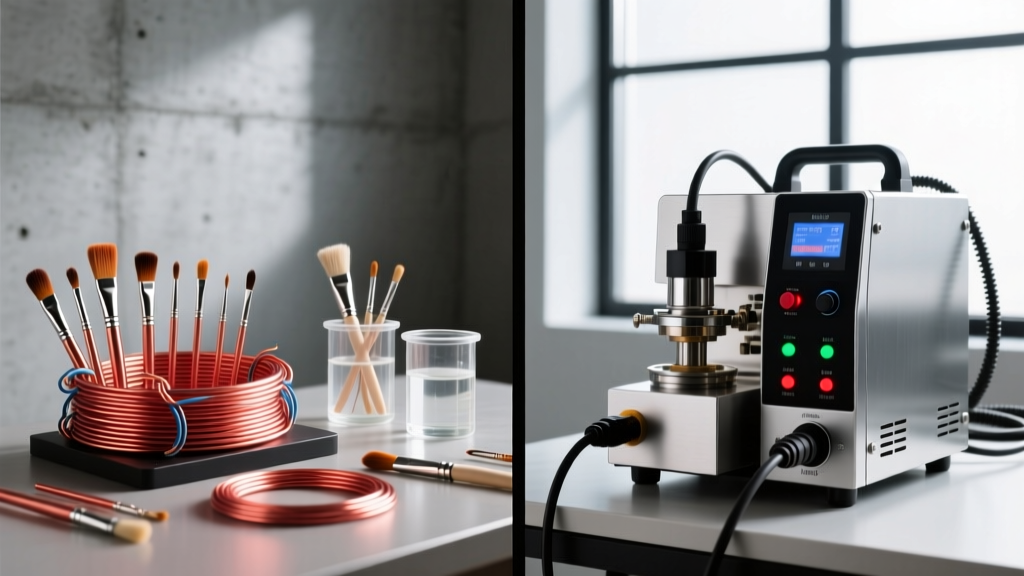
The market is flooded with DIY "gold dipping" kits that utilize brush plating or small, unregulated power supplies. While these can be fun for craft projects, they are fundamentally unsuited for fine jewelry troubleshooting and restoration.
Professional electroplating requires a precision rectifier capable of maintaining exact voltage and amperage densities. Amperage density (measured in Amps per Square Decimeter, or ASD) dictates how evenly the gold distributes. A professional can calculate the exact surface area of a complex filigree ring and set the rectifier to ensure the gold plates evenly inside the crevices and on the outer bands. DIY kits rely on guesswork, leading to "burn" marks on edges and thin, translucent plating in recessed areas.
Step-by-Step Recovery: Stripping and Re-Dipping
If you have a piece of jewelry with a botched, peeling, or discolored gold dip, you cannot simply plate over it. The old gold must be completely removed to reset the metallurgical canvas.
"Attempting to plate over failing gold is like painting over rust. The underlying structural failure will immediately compromise the new layer. Complete stripping is non-negotiable for a lasting bond."
- Electro-Stripping: The piece is placed in a specialized stripping solution and the electrical current is reversed. The gold is safely drawn off the piece and recovered into the solution without damaging the base metal.
- Chemical Stripping (Aqua Regia): For stubborn alloys, a mixture of nitric and hydrochloric acid is used. Warning: This is highly dangerous and should only be performed by certified metallurgists in ventilated environments.
- Surface Re-Polishing: Once bare, the base metal is polished to a mirror finish to ensure the new gold layer reflects light perfectly.
- Re-Striking and Plating: The piece receives a fresh palladium strike before being submerged in the final 18k or 14k gold bath.
Maintenance and FTC Thickness Standards
Finally, troubleshooting premature fading requires understanding thickness. The Federal Trade Commission (FTC) strictly regulates gold plating terminology. "Gold Flash" is a microscopic layer (under 0.175 microns) that will wear off in weeks. "Gold Electroplate" must be at least 0.175 microns thick. For jewelry meant to be worn daily, you must request "Heavy Gold Electroplate" (HGE), which guarantees a minimum thickness of 2.5 microns. When you dip jewelry in gold, always ask your jeweler for the micron thickness; without this data point, you are flying blind and setting yourself up for rapid wear and tear.


