Maximize Your Dollars for Gold & Jewelry: Troubleshooting Low Offers
Discover why your gold jewelry appraisal fell short. Learn expert troubleshooting steps to calculate melt value, avoid scams, and maximize your payout.

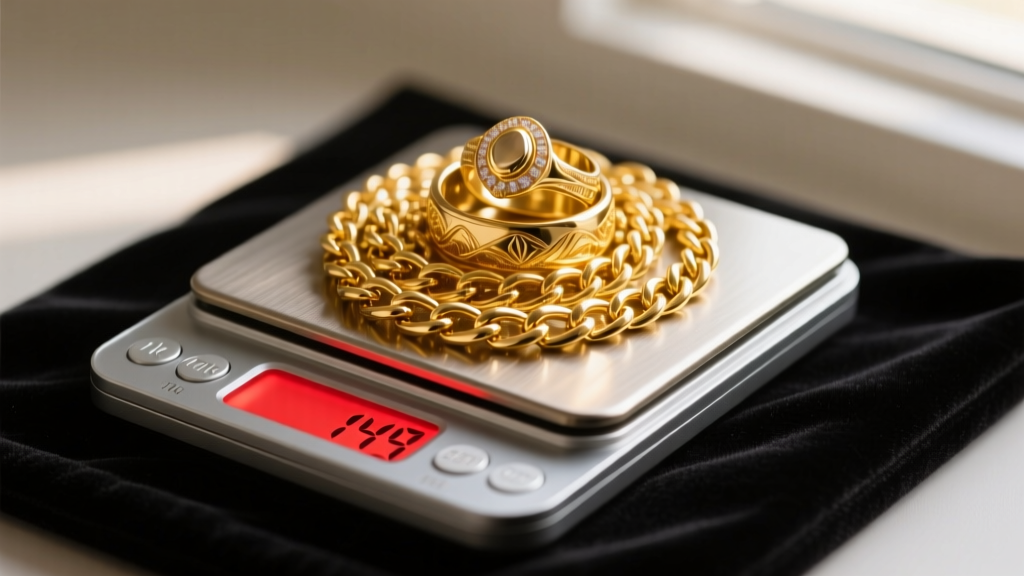
Walking into a gold buyer or pawn shop with a collection of inherited or unwanted pieces often ends in disappointment. You expect a significant payout, but the offer on the counter barely covers a nice dinner. If you are trying to figure out how to get the most dollars for gold & jewelry, you must first understand why your initial appraisals are falling short. The gap between what you paid for a piece and its intrinsic scrap value is vast, and predatory buyers rely on your lack of market knowledge to widen that gap.
In this troubleshooting guide, we will dissect the most common reasons sellers get lowballed, how to accurately calculate your melt value in the current 2026 market, and the exact steps to take when a buyer attempts to misrepresent your jewelry's purity or weight.
The "Lowball" Problem: Why Your Appraisal Fell Short
The most frequent complaint from sellers is the shock of the "melt value" reality check. When you purchase a 14k gold necklace from a retail jeweler, you are paying for the metal, the craftsmanship, the brand markup, and the store's overhead. When you sell that same necklace for scrap, the buyer only cares about the raw metal content.
Retail Replacement vs. Intrinsic Melt Value
Insurance appraisals are notoriously inflated. An appraisal document stating a bracelet is worth $3,500 is a retail replacement value—the cost to buy a brand-new equivalent in a jewelry store. It is not an offer to purchase. According to the Jewelers of America, replacement appraisals are strictly for insurance underwriting. When troubleshooting a low offer, discard your old insurance appraisals; they are irrelevant to the secondary scrap market.
"The single biggest mistake sellers make is anchoring their expectations to the original retail receipt or an inflated insurance appraisal rather than the daily spot price of gold."
Troubleshooting Karat Confusion and Rejected Pieces
Another major reason your payout is lower than expected is the presence of non-solid gold pieces in your lot. Buyers will quickly separate solid gold from gold-plated or gold-filled items, often discarding the latter or offering mere pennies.
Decoding Deceptive Stamps
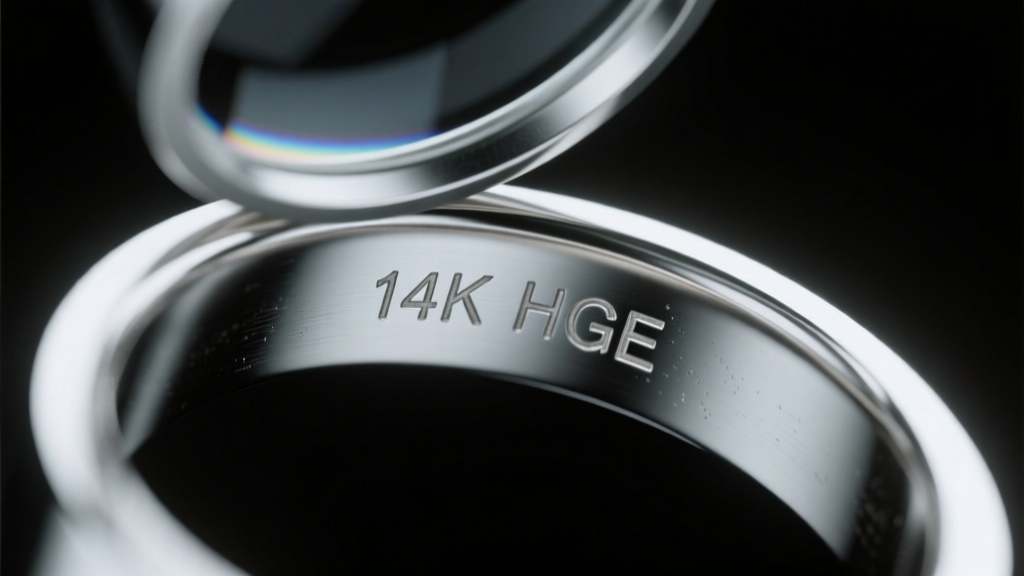
Not all stamps mean what you think they mean. If a buyer rejects a piece that is stamped "14K," check for secondary letters that indicate plating. The Federal Trade Commission (FTC) strictly regulates these markings, but vintage and imported pieces often feature confusing stamps:
- HGE or HGP: Heavy Gold Electroplate or Heavy Gold Plated. This is a microscopic layer of gold over a base metal like brass. Melt value: $0.
- GF or RGP: Gold Filled or Rolled Gold Plate. Usually marked as "1/20 14K GF". This means only 5% of the total weight is 14k gold. The cost of refining it exceeds the value of the gold recovered.
- Vermeil: Gold plated over sterling silver. While the silver has some scrap value, the gold layer is negligible.
Troubleshooting Step: Always use a 10x jeweler's loupe to inspect the clasp and inner shank of rings before visiting a buyer. If you see "EPNS" (Electroplated Nickel Silver) or "GF," remove those pieces from your lot so they do not taint the buyer's perception of your entire collection.
The Melt Value Calculation Framework
To negotiate effectively, you must know the exact mathematical value of your gold before you walk through the door. Gold is traded globally in Troy ounces (31.103 grams), but local jewelry scales measure in standard grams or pennyweights (dwt). One pennyweight equals exactly 1.55517 grams. Unscrupulous buyers will sometimes quote a price "per pennyweight" that sounds high, but apply a hidden multiplier, or weigh in grams but pay out using a skewed pennyweight conversion.
2026 Spot Price Multipliers
Below is a troubleshooting matrix to help you verify buyer math. This table assumes a hypothetical spot price of $2,350 per Troy ounce (always check Kitco for the live daily spot price before selling).
| Karat | Purity % | Decimal Multiplier | Value per Gram (at $2,350/oz) | Value per Pennyweight (dwt) |
|---|---|---|---|---|
| 24k | 99.9% | 0.999 | $75.51 | $117.04 |
| 22k | 91.6% | 0.916 | $69.24 | $107.32 |
| 18k | 75.0% | 0.750 | $56.63 | $87.78 |
| 14k | 58.5% | 0.585 | $44.17 | $68.46 |
| 10k | 41.7% | 0.417 | $31.48 | $48.80 |
The Formula: Take the live spot price, divide by 31.103, multiply by your item's gram weight, and multiply by the karat decimal. A reputable refiner or high-end estate buyer will pay between 85% and 95% of this calculated melt value. A pawn shop will typically offer 60% to 75%.
Hidden Value: Bypassing the Melt Market Entirely
If you are strictly calculating melt value, you are troubleshooting the wrong problem for certain high-end pieces. The fastest way to lose hundreds or thousands of dollars is to sell a signed, vintage, or high-craftsmanship piece to a "cash for gold" melt buyer.
When to Seek an Estate or Consignment Buyer
Melt buyers will routinely snap the prongs off a diamond ring, discard the stones (unless they are over 1.00 carat and high clarity), and melt the setting. You must identify pieces that carry a secondary market premium:
- Signed Designer Pieces: Brands like Tiffany & Co., Cartier, David Yurman, and Van Cleef & Arpels command massive premiums on the secondary market. A crushed Cartier Love bracelet sells for significantly more to a luxury vintage dealer than its raw gold weight.
- Art Deco and Vintage Eras: Pieces from the 1920s-1930s featuring intricate filigree or milgrain detailing possess historical and artistic value that far exceeds their scrap weight.
- Large or High-Quality Gemstones: Sapphires, rubies, and diamonds over 0.50 carats should be evaluated separately by a certified gemologist (GIA or AGS) before the piece is ever placed on a scrap scale.
Step-by-Step Negotiation and Verification Protocol
When you are ready to sell your solid gold scrap, the environment in which the transaction takes place is critical. Never hand over your jewelry to a buyer who takes it "to the back room."
Demand Non-Destructive XRF Testing
Historically, buyers used the "acid test"—scratching the gold on a black stone and applying nitric acid to observe the color change. While effective for basic verification, acid testing is subjective, damages the piece slightly, and cannot detect sophisticated modern fakes like tungsten-filled gold chains.
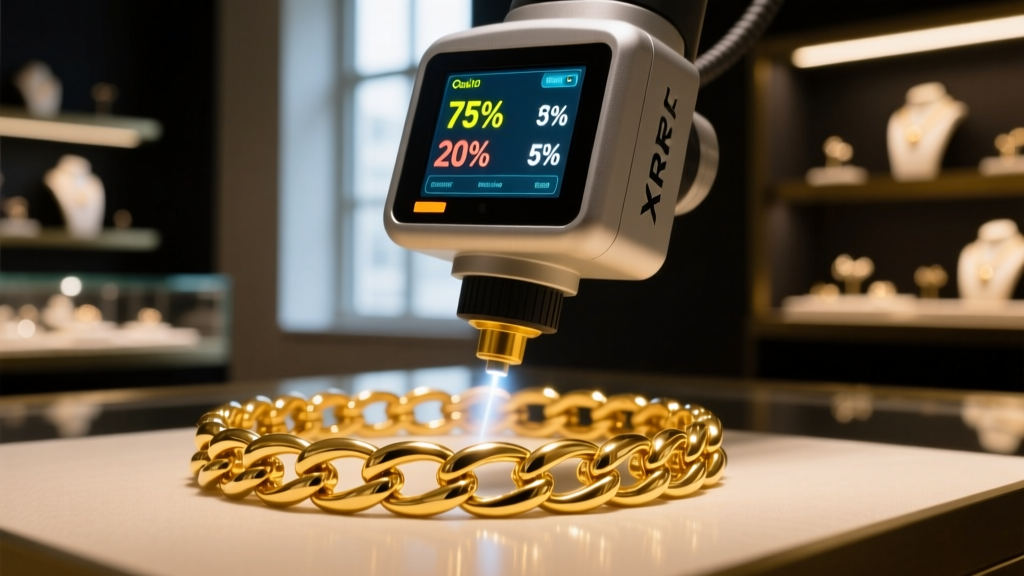
Top-tier buyers in 2026 use X-ray Fluorescence (XRF) machines. An XRF gun shoots harmless x-rays into the metal and reads the exact elemental composition on a digital screen, showing precise percentages of gold, silver, copper, and zinc. If a buyer relies solely on a file and acid for heavy chains or thick rings, consider taking your business to a more technologically equipped precious metal refinery.
The "Scale Check" Troubleshooting Trick
Before visiting a buyer, weigh your items at home on a calibrated digital jeweler's scale (available online for under $20). Write down the exact gram weight to two decimal places. When the buyer places your items on their scale, watch the digital readout. If their scale shows a discrepancy of more than 0.05 grams compared to yours, politely ask them to calibrate their scale using a standard test weight, or simply pack up your items and leave.
Final Pre-Sale Checklist
Before you finalize any transaction to exchange your dollars for gold & jewelry, run through this rapid troubleshooting checklist to ensure you are not leaving money on the table:
- Sort by Karat: Separate 10k, 14k, and 18k items. Buyers will often weigh a mixed pile and pay you the lowest karat rate (10k) for the entire lot if you do not separate them.
- Remove Non-Gold Components: Take out heavy gemstones, enamel, or steel clasps that might artificially inflate the weight and cause the buyer to apply a heavy "deduction" penalty.
- Check the Live Spot: Verify the daily spot price on a financial terminal or Kitco on your phone while standing at the counter.
- Get Multiple Quotes: Never accept the first offer. Visit a pawn shop, a dedicated coin/bullion dealer, and a specialized precious metal refinery to establish the true local market range.
By treating the sale of your gold not as a casual errand, but as a precise financial transaction, you eliminate the vulnerabilities that lowball buyers exploit. Armed with the correct math, a basic understanding of metallurgy, and a refusal to accept opaque testing methods, you will secure the maximum possible return for your precious metals.