Divan Jewelry Gold: A Beginner's Guide to Court Styles
Discover the rich history of divan jewelry gold. Learn about 22k karats, Kazazlik weaving, authentic hallmarks, and how to care for ornate court pieces.
What Exactly is Divan Jewelry Gold?
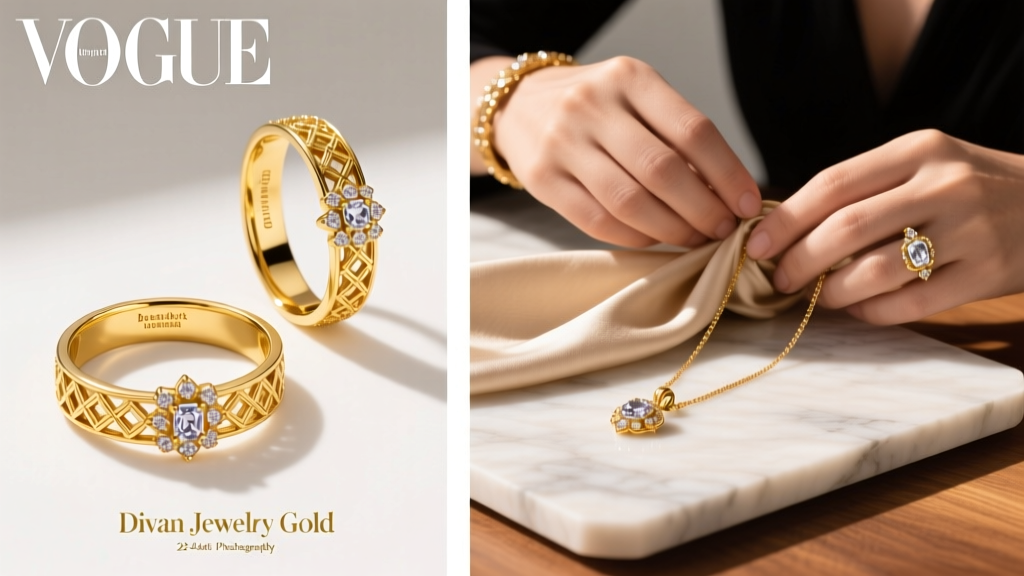
When navigating the vast world of heritage adornments, few terms evoke as much opulence and historical weight as divan jewelry gold. For beginners, the term can be slightly confusing. Is it a brand? A specific alloy? In reality, 'Divan' refers to the imperial council and royal court of the Ottoman Empire. Therefore, Divan-style jewelry encompasses the intricate, highly ornate, and historically rich goldsmithing traditions that flourished under court patronage from the 15th to the 19th centuries, and which continue to influence modern Middle Eastern, Turkish, and Balkan jewelry design today.
Unlike minimalist contemporary gold chains, divan jewelry gold is characterized by its bold presence, heavy gram weight, and meticulous hand-crafted details. According to the Metropolitan Museum of Art's archives on Ottoman court art, royal jewelers were organized into specialized guilds, each mastering a specific technique—from gem-setting to wire-drawing. Today, when you purchase a piece marketed as 'Divan style,' you are typically looking at designs featuring traditional arabesques, floral motifs, and high-karat gold alloys meant to serve as both wearable art and generational wealth storage.
The Karat Conundrum: 22k vs. 18k vs. 14k
One of the most critical aspects of understanding divan jewelry gold is grasping the karat system. Traditional court pieces were almost exclusively crafted in 22k or even 24k gold due to the cultural preference for the deep, buttery yellow hue and the intrinsic investment value of pure gold. However, as the Gemological Institute of America (GIA) notes, pure gold is exceptionally soft, making it prone to warping under the stress of heavy filigree work.
In 2026, modern jewelers adapt these historical designs using varying karats to balance authenticity with everyday durability. Here is how the most common alloys compare in the context of Divan-style pieces:
| Karat | Gold Purity | Color Profile | Durability & Use Case |
|---|---|---|---|
| 22k (91.6%) | 91.6% Gold, 8.4% Alloy (usually copper/silver) | Rich, intense yellow-orange | Soft. Best for bridal sets, investment pieces, and occasional wear. Prone to scratching. |
| 18k (75.0%) | 75.0% Gold, 25.0% Alloy | Warm, classic yellow | Moderate. The sweet spot for modern Divan rings and bangles meant for regular wear. |
| 14k (58.3%) | 58.3% Gold, 41.7% Alloy | Muted, paler yellow | High. Ideal for intricate, structural filigree that requires rigidity to hold its shape. |
If you are buying a piece strictly as an heirloom or investment, 22k is the gold standard. If you plan to wear a heavy Divan-style cuff bracelet daily, opt for 18k to prevent the clasp mechanisms from bending out of shape.
Signature Techniques: Telkari and Kazazlik
To truly appreciate divan jewelry gold, you must understand the labor-intensive techniques used to create it. The value of these pieces lies not just in the raw metal, but in the hundreds of hours of artisanal labor.
Telkari (Filigree)
Telkari is the art of soldering impossibly fine gold wires onto a solid gold backplate. Master artisans draw gold down to wires as thin as 0.2 millimeters. These wires are curled into spirals, teardrops, and geometric shapes, then fused using a low-melting-point gold solder. The result is a lace-like metallic fabric that catches the light dynamically.
Kazazlik (Silk-Wrapped Gold Weaving)
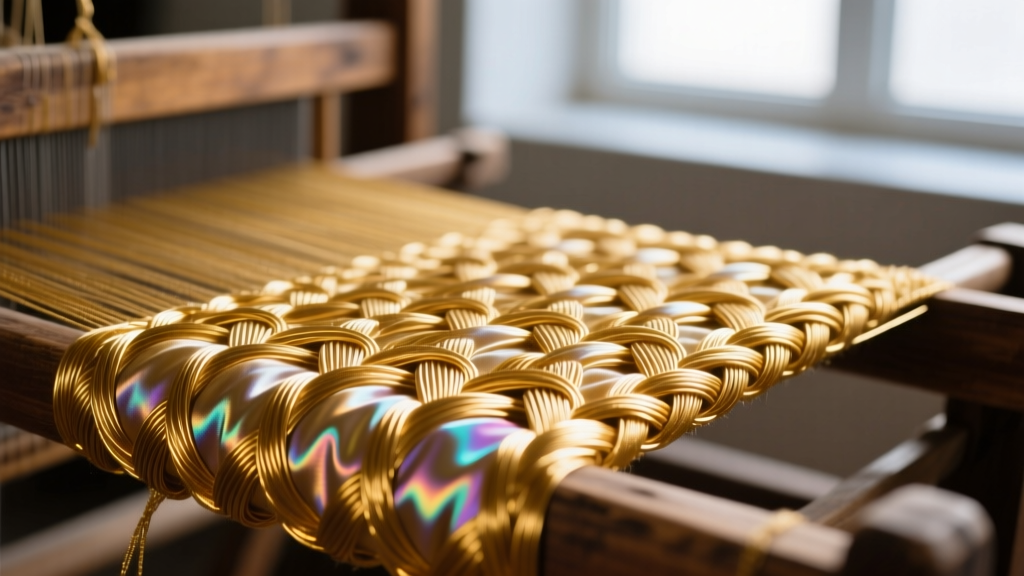
Originating from the Trabzon region, Kazazlik is a hallmark of high-end divan jewelry. It involves wrapping 0.08-micron-thick sheets of 22k or 24k gold around a core of silk thread. This gold-silk hybrid thread is then braided, knotted, and woven into three-dimensional tassels, chains, and mesh-like surfaces. Because the core is silk, Kazazlik pieces are remarkably lightweight despite their massive visual volume, making them highly prized for statement necklaces and earrings.
Identifying Authentic Court Motifs
Mass-produced imitations often rely on generic swirls, but authentic divan jewelry gold draws from a strict historical lexicon of motifs. When evaluating a piece, look for these specific design elements:
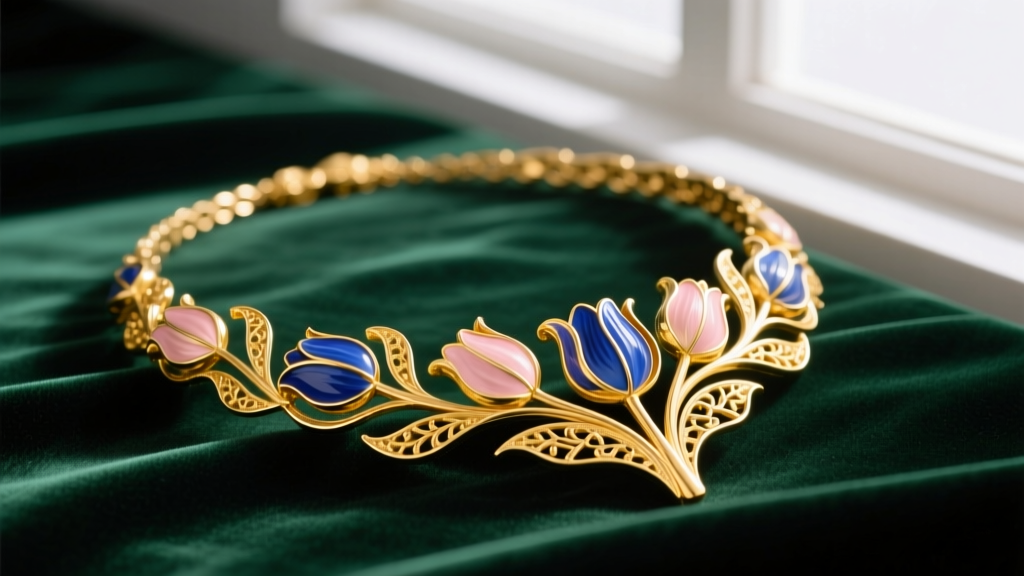
- The Tulip (Lale): The most iconic Ottoman motif, representing divine beauty and perfection. In authentic pieces, the tulip is elongated and stylized, not rounded like a Dutch tulip.
- The Cypress Tree (Selvi): Symbolizing eternity and the afterlife, often used as a central structural element in large pendants and hair ornaments.
- Cintamani: A pattern consisting of three circles and two wavy lines, originally derived from leopard spots and tiger stripes, symbolizing power and protection.
- Rumi and Hatayi: Complex, interlocking geometric (Rumi) and floral (Hatayi) arabesques that require master-level soldering to execute in gold filigree.
Understanding the Pricing: Gold Weight vs. Mesiye
Beginners are often shocked by the retail price of divan jewelry gold compared to standard gold chains. This is due to the pricing formula used by heritage jewelers, which separates the intrinsic metal value from the craftsmanship premium.
The formula is: (Total Gram Weight × Current Spot Price of the Karat) + Mesiye (Labor/Craftsmanship Fee).
In the volatile gold market of 2026, the Mesiye on a hand-woven Kazazlik necklace can sometimes equal or exceed the melt value of the gold itself. For example, a 40-gram 22k gold Divan bridal belt might contain $3,200 worth of raw gold, but the artisan labor could add another $3,500 in Mesiye. When buying, always ask the jeweler to break down the invoice into 'gold weight value' and 'labor premium.' This transparency is a hallmark of a reputable dealer and helps you understand the resale reality: if you ever melt the piece down, you only recoup the gold weight value, losing the Mesiye entirely.
Red Flags When Buying Divan-Style Gold
Because the 'Divan' aesthetic is highly sought after, the market is flooded with cast imitations. Watch out for these warning signs:
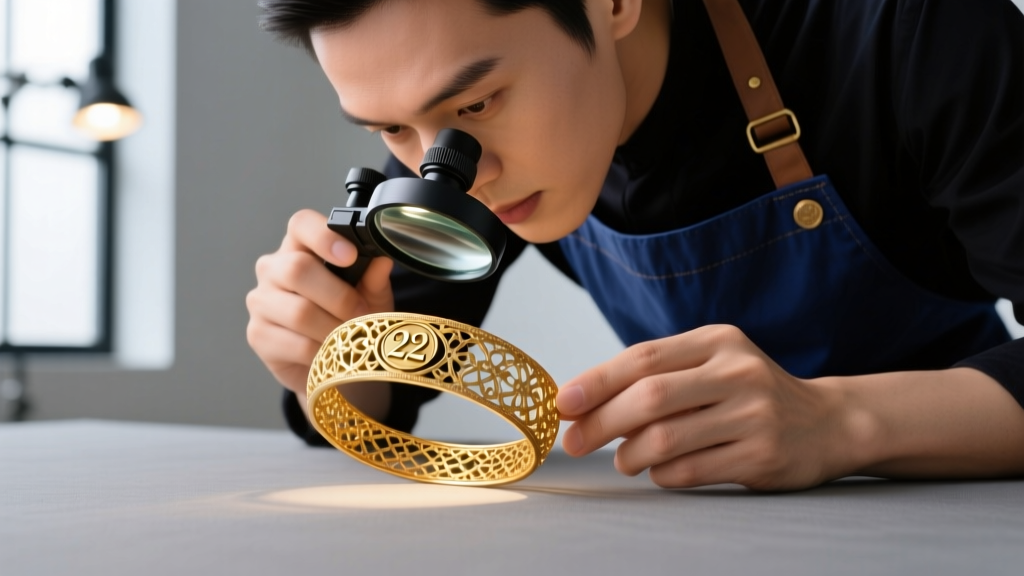
- Uniform Perfection: Hand-soldered Telkari filigree will have microscopic variations. If every spiral is mathematically identical under a loupe, it is likely 3D-printed and cast, not hand-woven.
- Hollow Backplates: Traditional court jewelry features solid or semi-solid backplates to support the wirework. Extremely lightweight, hollow-backed pieces stamped with '22k' are often modern electroformed shells that will crush under minor pressure.
- Missing Hallmarks: Authentic pieces from Turkey or the Middle East will bear specific assay marks (such as the Turkish 'Ayar' stamp). A lack of any hallmark on a purported 22k antique piece is a major red flag.
Care and Maintenance for High-Karat Filigree
Caring for divan jewelry gold requires a departure from modern cleaning habits. The intricate wirework and silk cores demand specialized maintenance to prevent catastrophic damage.
What to Avoid
Never place Kazazlik or Telkari pieces in an ultrasonic cleaner. The high-frequency vibrations can easily snap 0.2mm filigree wires or unravel silk-wrapped gold threads. Similarly, avoid commercial silver or gold dip solutions, which contain harsh acids that can strip the natural patina and weaken low-temperature solders used in historical pieces.
The Safe Cleaning Protocol
- Dust Removal: Use a soft, dry makeup brush to gently sweep dust out of the deep crevices of the filigree. Do not use compressed air, as the force can bend delicate wires.
- Surface Washing: Mix a few drops of pH-neutral baby shampoo in lukewarm distilled water. Dip a soft-bristled baby toothbrush into the solution and gently tap (do not scrub) the surface of the gold.
- Drying: Lay the piece flat on a microfiber towel and allow it to air dry completely. Do not use a hairdryer, as heat can damage any organic adhesives or silk cores hidden within the structure.
- Storage: Store divan jewelry flat in a fabric-lined box. Never hang heavy filigree necklaces on standard jewelry trees, as the gravitational pull over time will stretch and distort the 22k gold links.
By understanding the historical context, the metallurgical realities of high-karat alloys, and the specific artisanal techniques involved, you can confidently navigate the market for divan jewelry gold. Whether you are acquiring a 22k Tulip-motif bridal set or a modern 18k Kazazlik tassel earring, you are investing in a wearable piece of imperial history.


