Troubleshooting Your Jewelry Gold Set for Women: Tarnish, Fit & Care
Is your favorite jewelry gold set for women tarnishing, tangling, or causing allergies? Discover expert troubleshooting tips to restore and protect your pieces.

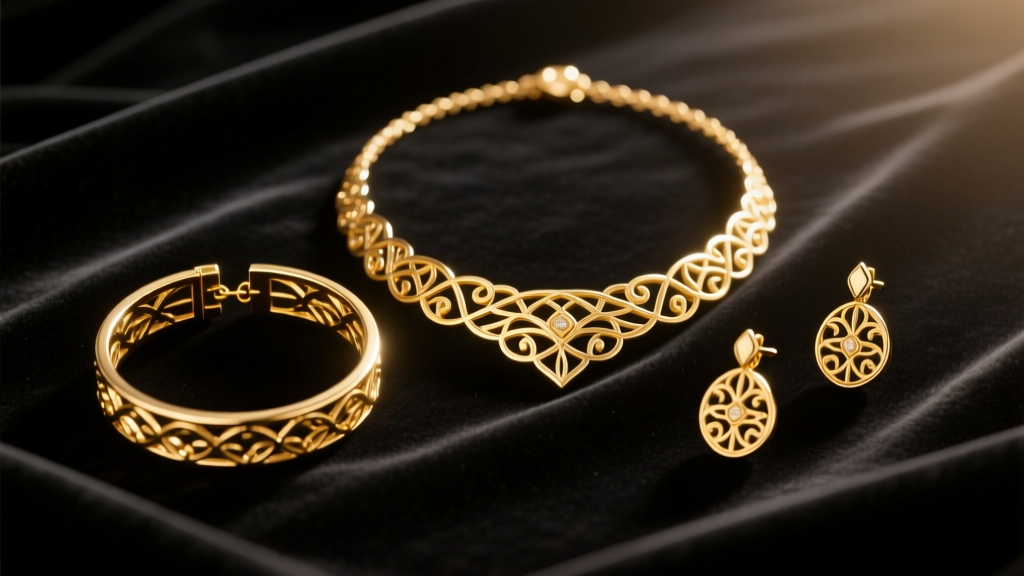
The Anatomy of a Gold Set: Why Matching Pieces Wear Differently
Investing in a coordinated jewelry gold set for women is a classic style move, but owners are often frustrated when the pieces age at vastly different rates. Within a standard three-piece set (necklace, bracelet, earrings), the environmental stressors are entirely distinct. The bracelet endures high-impact friction, repeatedly striking desks, doorframes, and keyboards. This mechanical stress causes work-hardening, making the gold alloy brittle over time and prone to micro-fractures at the jump rings. Conversely, the necklace pendant rests directly against the sternum, absorbing acidic skin pH, sweat, and body oils, while the earrings are frequently exposed to aerosolized cosmetics like hairspray and perfume. Understanding these distinct wear patterns is the first step in troubleshooting and preserving your collection.
Troubleshooting Tarnish: The Alloy Factor in 10K and 14K Gold
Pure 24-karat gold is virtually immune to tarnish, but it is far too malleable for everyday jewelry. According to the Gemological Institute of America (GIA), a durable jewelry gold set for women is typically crafted in 14K (58.3% pure gold) or 10K (41.7% pure gold). The remaining percentage consists of alloy metals—primarily copper, silver, zinc, and sometimes nickel. It is these secondary metals that oxidize and sulfide, resulting in dull, dark, or greenish patches on your jewelry.
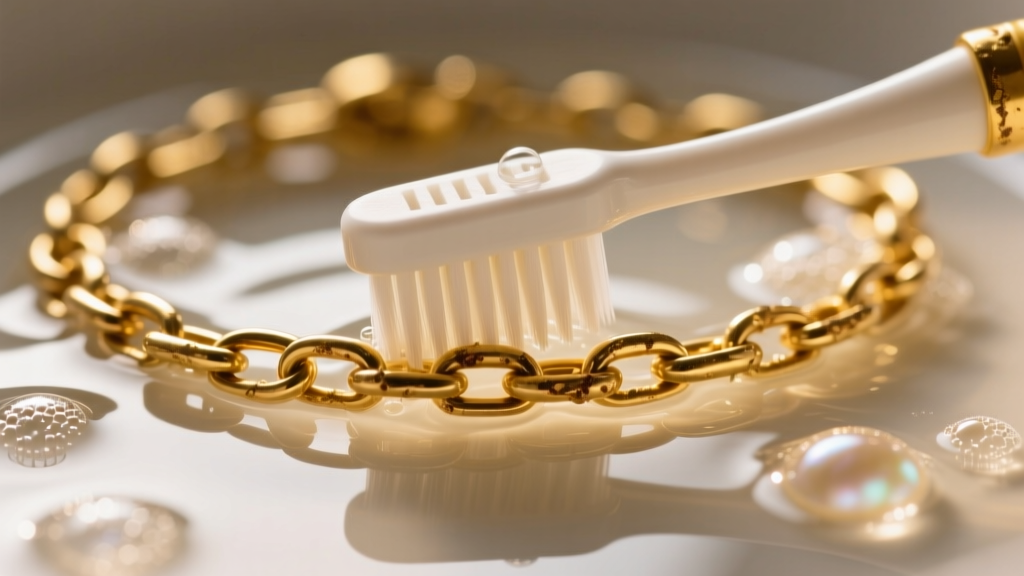
The Safe Restoration Protocol
When your set loses its luster, avoid commercial "gold dips" or toothpaste. Toothpaste contains hydrated silica with a high Relative Dentin Abrasiveness (RDA) score, which will permanently micro-scratch the surface of your gold, creating grooves where future tarnish will anchor. Instead, use this jeweler-approved method:
- The Solution: Mix 3 drops of mild, phosphate-free dish soap (like Dawn) into 1 cup of lukewarm distilled water.
- The Agitation: Submerge the set for 5 minutes to loosen sebum and cosmetic buildup.
- The Scrub: Use an extra-soft baby toothbrush to gently sweep the crevices of the chain links and clasp mechanisms.
- The Dry: Pat dry with a lint-free microfiber cloth. Never air-dry, as hard water minerals will leave stubborn spots.
Solving Clasp Failures and Chain Tangling
One of the most common points of failure in any gold set is the clasp. Many manufacturers use spring ring clasps to cut costs, but the internal steel spring is highly susceptible to tension fatigue and moisture corrosion. If your necklace constantly slips off or the bracelet is difficult to secure, upgrading the clasp is a high-ROI troubleshooting step.
| Clasp Type | Tension Failure Rate | Best Application | Upgrade Cost (Approx.) |
|---|---|---|---|
| Spring Ring | High (22% within 2 yrs) | Lightweight chains (under 2g) | $15 - $25 |
| Lobster Claw | Low (under 5%) | Medium to heavy chains (2g - 15g) | $25 - $45 |
| Magnetic | Moderate (slippage risk) | Arthritis / Accessibility needs | $30 - $60 |

Expert Tip: When upgrading to a lobster clasp, ensure your jeweler uses a laser welder to close the jump ring. Traditional torch soldering can melt the delicate links of a 1mm or 1.5mm gold chain.
Addressing Skin Irritation and "Green Skin" Syndrome
If your jewelry gold set for women is leaving dark green or black marks on your skin, or causing an itchy, red rash, you are likely experiencing a reaction to the alloy metals, not the gold itself. The green mark is typically copper oxidation reacting with the acids in your sweat. A red, itchy rash, however, points to a nickel allergy. The Mayo Clinic notes that nickel contact dermatitis is one of the most common causes of allergic skin reactions, and it is frequently present in lower-karat white and yellow gold alloys.
The Rhodium Fix: If you have a white gold set causing irritation, have it professionally rhodium-plated. Rhodium is a hypoallergenic platinum-group metal that creates a physical barrier between the nickel-containing alloy and your skin. For yellow gold, ask a bench jeweler to apply a clear, jewelry-grade UV-cured resin coating to the interior bands and chain backs.
The "Flaking" Crisis: Identifying Counterfeit or Vermeil Sets
A critical troubleshooting scenario occurs when a gold set begins to peel or flake. Solid gold never flakes. If your jewelry is peeling, it is either gold vermeil (a thick layer of gold over sterling silver) or standard gold-plated brass. To diagnose the issue, inspect the stamps. According to the Federal Trade Commission (FTC) Jewelry Guidelines, vermeil must be stamped with "925" (indicating the silver core). If your piece is flaking but stamped "14K" or "18K" with no underlying "925" or "GP" (Gold Plated) mark, you have likely purchased a counterfeit item where a base metal was illegally stamped with solid gold hallmarks. In this case, the set cannot be restored and should be retired to prevent heavy metal skin exposure.
Long-Term Storage: Preventing Micro-Scratches and Oxidation
How you store your set when not in use dictates its lifespan. Tossing a necklace, bracelet, and earrings into a single velvet-lined box guarantees tangling and micro-scratches, as the harder earring posts will scour the softer gold chains.
- Isolate: Store each piece in its own individual polyethylene zip bag. Avoid PVC plastics, which can off-gas chemicals that accelerate tarnishing.
- Neutralize: Drop a 3M anti-tarnish strip into each bag. These strips absorb airborne sulfur compounds before they can react with the copper and silver alloys in your 14K or 10K gold.
- Hang: For snake or box chains that are prone to severe knotting, hang the necklaces on a felt-lined jewelry stand rather than laying them flat, allowing gravity to keep the links aligned.
By shifting your perspective from passive wearing to active maintenance, you can ensure your gold set remains a flawless, cohesive statement piece for decades.


