2026 Gold Colored Jewelry Trends: Styling PVD, Vermeil & Solid
Discover 2026 gold colored jewelry trends. We analyze PVD coatings, gold vermeil, and styling techniques to elevate your everyday aesthetic.

The Evolution of Gold Colored Jewelry in 2026
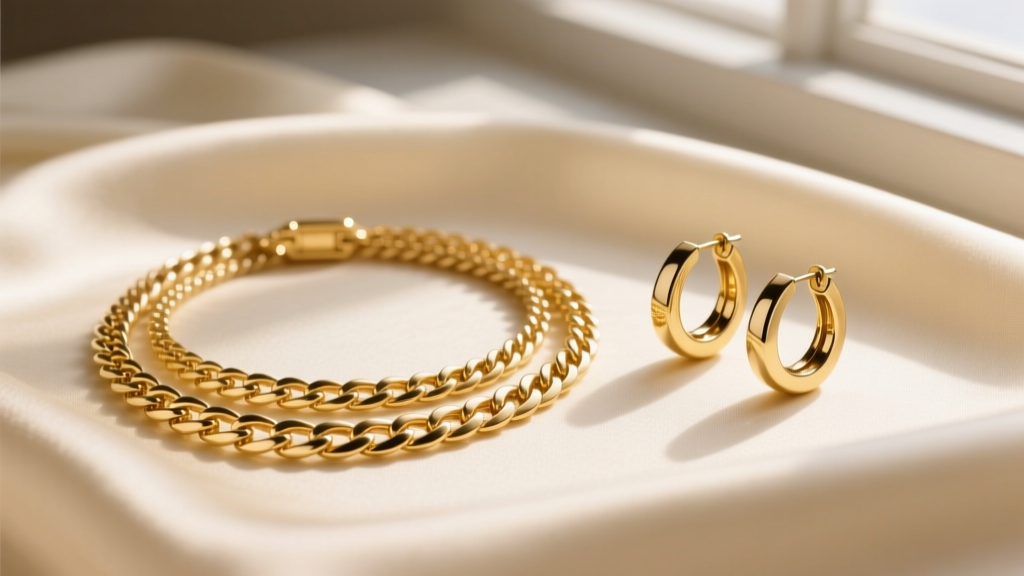
The landscape of accessorizing has fundamentally shifted. When building a curated collection, understanding the nuances of gold colored jewelry is no longer just about distinguishing between cheap costume pieces and fine jewelry. In 2026, advanced metallurgical techniques and a cultural pivot toward 'quiet luxury' have blurred the lines between solid karat gold and high-end alternatives. Today's discerning collectors are mixing solid 14k staples with advanced PVD-coated stainless steel and heavy gold vermeil to create dynamic, resilient, and highly stylized looks.
The modern approach to gold aesthetics favors warmth, texture, and intentionality. We are moving away from the hyper-polished, mirror-finish yellow gold that dominated the early 2020s. Instead, 2026 trends highlight brushed champagne tones, satin-finished rose gold, and mixed-metal stacking that treats silver and gold as complementary rather than conflicting. To navigate this landscape, you must understand the material science dictating how these pieces are made, how they wear over time, and how to style them with precision.
The Material Matrix: Decoding 'Gold Colored'
Not all gold colored jewelry is created equal. The longevity, hypoallergenic properties, and price point of a piece are entirely dependent on its base metal and the method used to apply the gold layer. Below is a comprehensive breakdown of the materials dominating the 2026 market.
| Material Type | Base Metal | Gold Layer / Thickness | Estimated Lifespan | Average Price Range |
|---|---|---|---|---|
| PVD Coated | 316L Stainless Steel | 0.1 - 0.3 microns (Titanium Nitride bond) | 5 - 10+ Years | $40 - $120 |
| Gold Vermeil | 925 Sterling Silver | 2.5+ microns (10k-18k Gold) | 2 - 5 Years | $80 - $250 |
| Gold Filled | Jeweler's Brass | 5% of total weight (12k-14k Gold) | 10 - 30 Years | $60 - $180 |
| Solid Gold | N/A (Alloyed) | Solid 14k or 18k throughout | Generational | $300 - $2,000+ |
According to the Federal Trade Commission (FTC) Jewelry Guides, terms like 'gold filled' and 'gold vermeil' are strictly regulated. Gold filled items must contain a gold layer that constitutes at least 1/20th (5%) of the total weight of the metal. Vermeil must be a minimum of 2.5 microns thick over sterling silver. Standard 'gold plated' jewelry, which often features a microscopic 0.5-micron flash over brass, is generally best avoided for everyday wear due to rapid oxidation and skin discoloration.

The PVD Revolution: Why Stainless Steel is Winning
Physical Vapor Deposition (PVD) has completely disrupted the accessible gold colored jewelry market. Unlike traditional electroplating, which uses chemical baths and electrical currents to deposit a soft layer of gold, PVD occurs in a vacuum chamber heated to roughly 300°C. A vaporized titanium nitride base is bonded to the stainless steel, followed by a top coat of 14k or 18k gold.
- Scratch Resistance: PVD coatings are significantly harder than electroplated gold, making them ideal for rings and bracelets that endure high impact.
- Sweat & Water Resilience: While you should still avoid prolonged exposure to chlorinated pools, PVD coated stainless steel will not tarnish or turn your skin green from sweat or showering.
- Hypoallergenic Base: 316L surgical stainless steel is nickel-free and highly biocompatible, making it a superior choice for sensitive skin compared to brass-based gold filled alternatives.
2026 Styling Trends: The Engineered Neckmess
The 'neckmess' trend has matured from a chaotic jumble of chains into an engineered, deliberate styling technique. The key to a successful layered gold aesthetic in 2026 is varying the chain weaves, gauges, and clasp types to create visual depth without tangling.
The Three-Tier Layering Framework
- The Choker (14-15 inches): Use a 1.2mm to 1.5mm box chain or wheat chain. These weaves lie flat and resist kinking. Secure with a lobster clasp; avoid spring-ring clasps on anything under 1.5mm as they are prone to mechanical failure.
- The Mid-Length Pendant (16-18 inches): Opt for a 2.0mm rope chain or a 2.5mm Figaro. The twisted links of a rope chain catch the light beautifully and provide enough structural integrity to hold a 3-5 gram solid gold or vermeil pendant.
- The Statement (20-22 inches): A 3.5mm to 4.5mm hollow-core Cuban link or a solid paperclip chain. This serves as the anchor piece. Ensure the clasp is a heavy-duty box clasp with a figure-eight safety catch to prevent catastrophic drops.
'The secret to modern gold styling isn't just about matching colors; it's about contrasting textures. Pairing a high-polish solid 14k gold herringbone chain with a brushed, matte-finish PVD stainless steel pendant creates a sophisticated tension that feels incredibly current.' — Editorial Director, Jewel Style Radar
Spotting Quality: Hallmarks and Diagnostics
When investing in premium gold colored jewelry, verifying the material composition is critical. The Gemological Institute of America (GIA) notes that solid gold alloys are stamped with their karatage (e.g., 14k, 18k, 585, 750). However, gold vermeil and gold filled pieces also carry specific hallmarks.
Look for stamps like '14k GF' (Gold Filled) or '925' accompanied by a maker's mark on vermeil pieces. If a piece is simply stamped '18k HGE' (Heavy Gold Electroplate), be aware that this is still a surface-level plating over a base metal core, not a solid or mechanically bonded piece. For unmarked vintage or artisan pieces, a simple neodymium magnet test can quickly identify ferrous base metals hidden beneath a gold layer, though it will not differentiate between sterling silver, brass, and copper.
Longevity and Care: Preserving the Tone
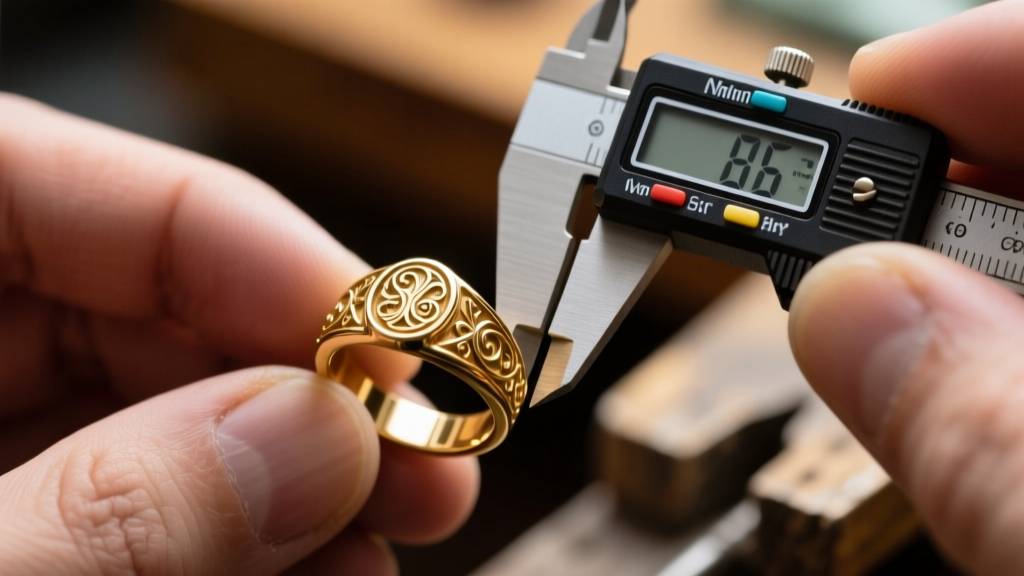
Even the most advanced gold colored jewelry requires specific maintenance protocols to preserve its luster and structural integrity. The primary enemy of gold alloys and platings is not water, but sulfur and harsh chemicals.
What to Avoid
- Chlorine: Never wear solid 14k or 18k gold, or gold vermeil, in chlorinated pools or hot tubs. Chlorine reacts violently with the copper and silver alloys in karat gold, causing 'stress corrosion cracking' that can literally cause a ring shank to snap.
- Ultrasonic Cleaners: While excellent for diamonds set in solid platinum or high-karat gold, ultrasonic vibrations can easily strip electroplated and vermeil layers, especially if the base metal has micro-porosities.
- Friction: Storing gold colored chains loosely in a drawer allows them to rub against each other, creating micro-scratches that dull the finish over time.
The Proper Cleaning Protocol
For routine cleaning of PVD, vermeil, and solid gold pieces, use a solution of warm water and a few drops of pH-neutral dish soap (avoid soaps with heavy moisturizers or exfoliants). Soak the jewelry for 3 to 5 minutes. Gently agitate with a soft-bristled baby toothbrush, paying special attention to the backs of settings and clasp mechanisms where sebum and dead skin accumulate. Rinse thoroughly under lukewarm water and dry immediately with a lint-free microfiber cloth. For solid gold, a specialized jeweler's polishing cloth infused with mild rouge can be used once a month to restore high-polish finishes, but never use these cloths on matte, brushed, or satin textures, as they will polish the texture flat.
Final Verdict: Building Your 2026 Collection
The 2026 approach to gold colored jewelry is highly pragmatic. The smartest collectors are allocating their budget strategically: investing in solid 14k or 18k gold for high-wear, structural items like signet rings, wedding bands, and everyday stud earrings, while utilizing high-quality PVD stainless steel and heavy gold vermeil for trend-driven statement pieces, oversized hoops, and complex layered necklaces. By understanding the material science and adhering to precise styling frameworks, you can curate a collection that is visually stunning, financially intelligent, and built to last.


