Mastering the Gold Jewelry Calculator for True Value Assessment
Learn how to use a gold jewelry calculator to assess melt value, understand karat purity multipliers, and avoid overpaying for retail markup.

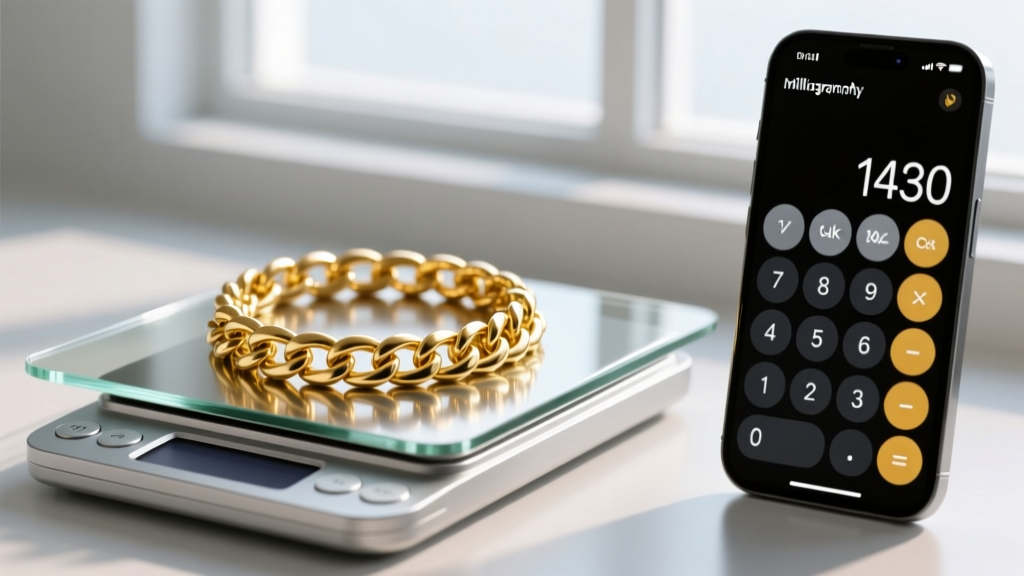
When purchasing or selling gold jewelry, emotional attachment and brand prestige often obscure the mathematical reality of the metal beneath. As we navigate the precious metals market of 2026, spot prices have seen significant volatility, making it more critical than ever to separate intrinsic melt value from retail markup. This is where a gold jewelry calculator becomes your most vital financial tool. Whether you are assessing a vintage estate piece, negotiating a scrap sale, or evaluating a retail chain, understanding how to calculate the exact precious metal content protects your budget and ensures fair market transactions.
The Anatomy of Intrinsic Value
A gold jewelry calculator is not a single monolithic app, but rather a formulaic approach that combines three critical data points: the live spot price of gold, the precise weight of the item, and its karat purity. Unlike retail pricing, which factors in design, brand heritage, and storefront overhead, intrinsic value (often called "melt value") strips the piece down to its raw elemental worth. According to the World Gold Council, understanding the baseline spot price per troy ounce is the mandatory first step before any jewelry-specific math can begin.
To use a gold jewelry calculator effectively, you must first convert the global spot price (quoted in troy ounces) into grams, as jewelry is almost universally weighed on metric scales. One troy ounce equals exactly 31.1035 grams. If the spot price of 24k gold is $2,450 per ounce, the baseline price per gram of pure gold is approximately $78.77. This figure is the anchor for all subsequent calculations.
Decoding Karat Multipliers: The Mathematical Reality
Pure gold (24k) is too malleable for everyday jewelry, meaning it is alloyed with metals like copper, silver, and zinc to increase durability and alter color. A gold jewelry calculator relies on exact decimal multipliers to account for this alloy dilution. The Gemological Institute of America (GIA) outlines the precise fractional purity of standard karats, which we translate into the following multipliers for calculation:
- 24k Gold: 99.9% pure (Multiplier: 0.999)
- 22k Gold: 91.6% pure (Multiplier: 0.916)
- 18k Gold: 75.0% pure (Multiplier: 0.750)
- 14k Gold: 58.3% pure (Multiplier: 0.583)
- 10k Gold: 41.7% pure (Multiplier: 0.417)
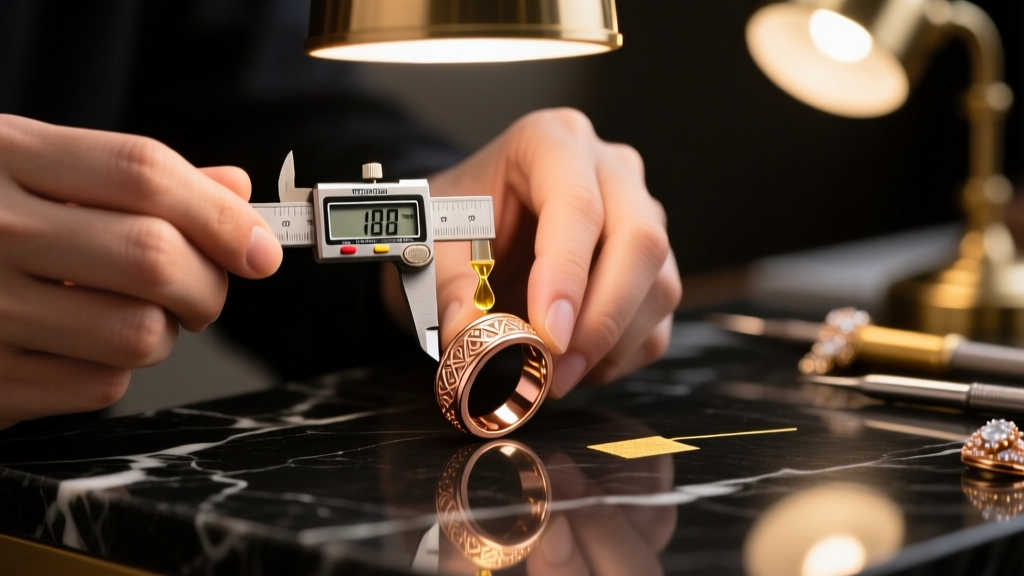
For example, if you place a 15-gram 14k yellow gold chain on a scale, the calculator dictates that only 58.3% of that weight is actual gold. Multiplying 15 grams by 0.583 yields 8.745 grams of pure gold. Multiply that by our baseline spot price of $78.77, and the intrinsic melt value of the chain is exactly $688.84. This stark mathematical truth often surprises consumers who paid $1,800 for the same chain at a mall retailer.
Melt Value vs. Retail Premium: A 2026 Market Breakdown
To truly assess budget and value, we must compare the output of the gold jewelry calculator against typical retail premiums. The table below illustrates the estimated melt value versus the average retail price for a standard 10-gram rope chain across different karats, assuming a $78.77/g pure gold baseline.
| Karat | Pure Gold Weight (10g Total) | Intrinsic Melt Value | Typical Retail Markup | Estimated Retail Price |
|---|---|---|---|---|
| 10k (41.7%) | 4.17g | $328.47 | 2.0x - 2.5x | $650 - $820 |
| 14k (58.3%) | 5.83g | $459.23 | 2.5x - 3.5x | $1,148 - $1,607 |
| 18k (75.0%) | 7.50g | $590.77 | 3.0x - 4.5x | $1,772 - $2,658 |
| 22k (91.6%) | 9.16g | $721.53 | 1.5x - 2.0x | $1,082 - $1,443 |
Note: Lower karats like 10k and 14k often carry higher retail multipliers because they are marketed heavily as durable, everyday fashion pieces. Higher karats like 22k (common in South Asian and Middle Eastern markets) are often sold closer to their melt value as investment bullion jewelry, resulting in lower percentage markups.
Step-by-Step Guide to Calculating Your Gold
If you are evaluating a potential purchase or preparing to liquidate assets, follow this rigorous framework to ensure your gold jewelry calculator inputs are flawless.
1. Procure a Milligram Scale
Do not rely on the estimated weights provided by retail tags, which are frequently rounded up. Invest in a digital jewelry scale capable of measuring to the hundredth of a gram (0.01g). A discrepancy of just 0.5 grams on an 18k piece can skew your valuation by nearly $40.
2. Verify the Live Spot Price
Gold trades 24 hours a day during the workweek. Before running your calculation, check a reliable financial terminal or authoritative source like Kitco Gold Charts to get the exact spot price down to the cent. Never use outdated "average" prices found in generic blog posts.
3. Deduct Non-Gold Elements
This is where amateur calculators fail. If your jewelry contains gemstones, enamel, or heavy steel clasps (common in hollow Italian chains), you must estimate and subtract their weight. A standard 1mm diamond weighs approximately 0.005 grams, but a cluster of turquoise or a heavy magnetic clasp can easily add 2 to 4 grams of dead weight to your reading. If you cannot remove the stones, use a specific gravity test or XRF (X-ray fluorescence) scanning at a professional assayer to isolate the gold weight.
When the Gold Jewelry Calculator Falls Short
While a gold jewelry calculator is the ultimate arbiter of melt value, it is entirely blind to craftsmanship, historical significance, and brand equity. If you input the weight of a vintage Cartier Love bracelet or a hand-forged Byzantine chain, the calculator will only return the value of the raw metal.

For mass-produced, machine-made chains (like standard curb, Figaro, or rope chains), the melt value is the primary metric for value assessment. However, for pieces featuring intricate filigree, hand-engraving, or recognized designer hallmarks, the "craftsmanship premium" can legitimately push the secondary market value to 200% or 300% above melt. In these scenarios, use the calculator to establish your absolute floor—the baseline price below which you should never sell—but consult auction archives or specialized vintage dealers to find the true ceiling.
Negotiating with Dealers Using Hard Data
When selling scrap gold to pawn shops or precious metal refiners, the gold jewelry calculator shifts from a budgeting tool to a negotiation weapon. Dealers must make a profit and cover their refining overhead, meaning they will never pay 100% of the calculated melt value. In the current market, reputable buyers offer between 75% and 85% of the intrinsic value for standard scrap, and up to 90% for large, high-purity lots (18k and above).
By walking into a buyer's office with your exact gram weight, verified karat multiplier, and the day's spot price already calculated, you eliminate the dealer's ability to lowball you with fabricated "market fees" or inaccurate karat estimates. If a dealer offers you $400 for a 14k chain that your calculator proves has a $550 melt value, you instantly recognize the offer as a 72% payout, allowing you to confidently walk away and seek a buyer offering a more standard 80% to 85% margin.
Ultimately, mastering the gold jewelry calculator transforms you from a passive consumer into an informed market participant. By anchoring your decisions in the immutable math of weight, purity, and spot pricing, you ensure that every gold acquisition or liquidation is grounded in financial reality rather than retail illusion.


