Best Gold Jewelry Holder Types for Tarnish-Free Storage & Care
Discover how the right gold jewelry holder prevents tarnish, scratches, and tangles. Expert storage and care tips to keep your solid gold pristine.

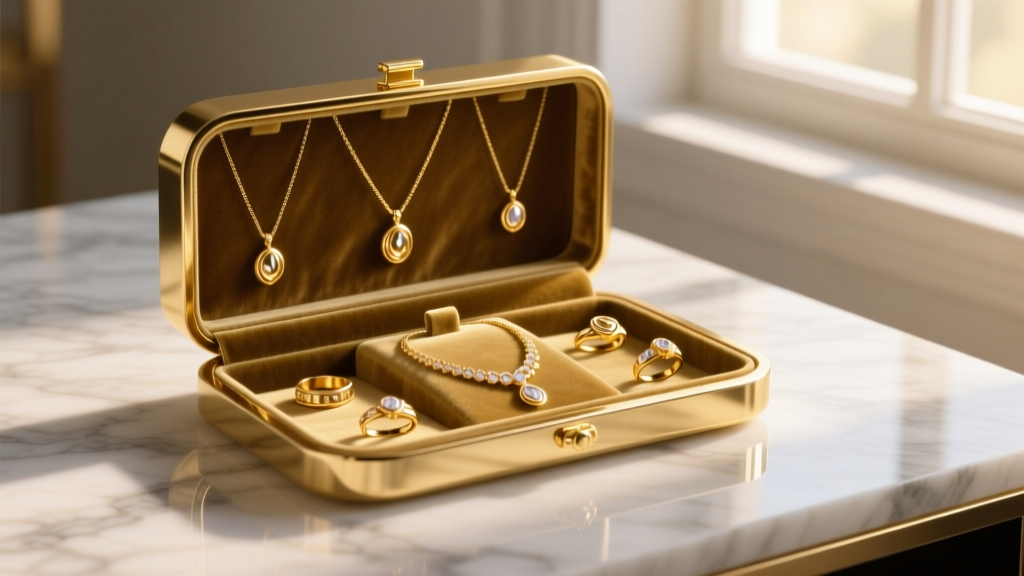
Many collectors and everyday wearers view a gold jewelry holder as a mere organizational tool—a convenient place to drop rings and necklaces at the end of the day. However, from a metallurgical and gemological perspective, proper storage is the first line of defense against environmental degradation. Gold, while highly prized for its luster and resistance to corrosion, is not impervious to damage. The alloys used to strengthen gold, the microscopic abrasions caused by improper storage, and the ambient humidity of your bedroom or bathroom all play critical roles in the longevity of your pieces.
In this comprehensive guide, we explore the science of gold preservation, evaluate the best materials for your storage solutions, and provide actionable maintenance protocols to ensure your investment remains pristine for generations.
Why Your Gold Needs a Dedicated Storage Environment
To understand why a specialized gold jewelry holder is essential, we must first look at the physical properties of gold. On the Mohs scale of mineral hardness, pure 24-karat gold ranks at a mere 2.5 to 3. This makes it softer than a copper penny and highly susceptible to scratching. To make gold durable enough for daily wear, jewelers alloy it with metals like copper, silver, zinc, and nickel, creating 18k (75% gold) and 14k (58.3% gold) variants. While these alloys increase the Mohs hardness to roughly 3.5 or 4, they remain vulnerable to micro-abrasions.
When you toss multiple pieces into a communal bowl or a generic drawer, the harder gemstones (like diamonds, which rank at 10 on the Mohs scale) and the abrasive metal edges of adjacent pieces will carve microscopic grooves into your gold. Over time, these micro-scratches accumulate, diffusing light reflection and giving your once-mirror-finish gold a dull, matte appearance. A high-quality gold jewelry holder mitigates this by providing individual, padded compartments that isolate each piece, preserving the structural integrity and polished finish of the metal.
Evaluating the Best Gold Jewelry Holder Materials
Not all storage materials are created equal. The interior lining and structural composition of your gold jewelry holder dictate how well it protects against both physical and chemical damage. Below is a comparative analysis of the most common materials used in premium storage solutions.
| Material | Pros | Cons | Best For |
|---|---|---|---|
| Pacific Cloth (Anti-Tarnish) | Actively absorbs sulfur gases; prevents alloy oxidation. | Loses efficacy after 6-12 months; requires replacement. | 14k and 18k alloyed gold pieces. |
| Polyurethane Foam | Customizable inserts; excellent shock absorption. | Can trap ambient moisture if not properly ventilated. | Heavy statement pieces and gemstone-set gold. |
| Acid-Free Tissue / Velvet | Traditional, soft, prevents surface scratching. | Does not prevent chemical tarnish or absorb moisture. | 24k pure gold and high-polish finishes. |
| Acrylic / Glass | Dust-proof, highly visible, stackable. | Hard surfaces scratch gold if unpadded; no climate control. | Frequently worn daily pieces (with padded inserts). |
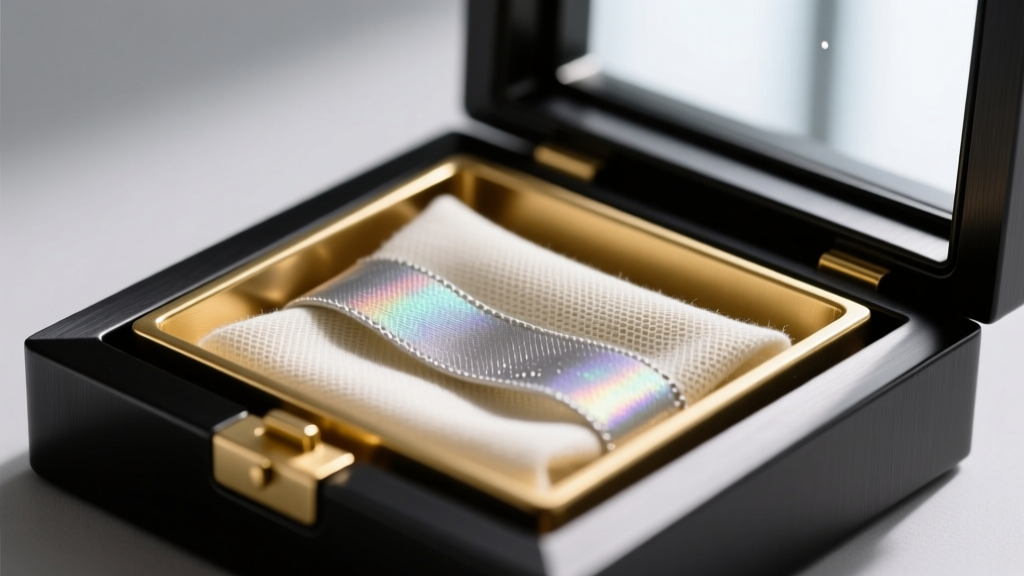
The Science of Anti-Tarnish Storage for Gold Alloys
A common misconception is that gold does not tarnish. While pure 24k gold is virtually immune to oxidation, the copper and silver alloys in 14k and 18k gold are highly reactive. According to the Gemological Institute of America (GIA), these base metals react with hydrogen sulfide and sulfur dioxide in the atmosphere to form a dark layer of silver sulfide or copper sulfide on the surface of the jewelry.
This is why your gold jewelry holder must do more than just separate pieces; it must manage the micro-climate. Sulfur gases are ubiquitous, originating from everything from industrial pollution to the natural off-gassing of certain woods, paints, and even wool carpets. Utilizing a gold jewelry holder lined with treated anti-tarnish cloth (such as Pacific Silvercloth) creates a sacrificial barrier. The cloth absorbs the sulfur gases before they can reach your gold alloys, effectively halting the chemical reaction that causes darkening.
Integrating Desiccants and Absorbers
Moisture acts as a catalyst for tarnishing. High relative humidity (RH) accelerates the chemical reactions between sulfur compounds and gold alloys. To combat this, incorporate cobalt-free silica gel packets or activated charcoal sachets into the deeper compartments of your gold jewelry holder. Aim to keep the internal RH of your storage unit below 50%. Avoid using traditional clay desiccants, as they can sometimes release absorbed moisture back into the air if the ambient temperature fluctuates.
Step-by-Step Cleaning Before Storage
Never place worn gold directly into your gold jewelry holder without cleaning it first. Human sebum, sweat, cosmetics, and lotions contain salts and acids that will slowly etch into gold alloys and degrade the finish if left to sit in a dark, enclosed space. The Jewelers of America recommends a gentle, non-abrasive cleaning routine prior to long-term storage.
- Prepare the Solution: Mix a few drops of mild, phosphate-free dish soap (like Dawn) into a bowl of lukewarm distilled water. Avoid tap water, as the chlorine and fluoride can leave microscopic mineral deposits.
- Soak and Agitate: Submerge your gold pieces for 10 to 15 minutes. This loosens trapped sebum and cosmetic residue from under prongs and inside chain links.
- Gentle Brushing: Use an extra-soft baby toothbrush to gently sweep away debris. Never use stiff bristles or toothpaste, as the abrasive silica in toothpaste will scratch 14k and 18k gold.
- Rinse and Dry: Rinse thoroughly under distilled water. Pat dry with a lint-free microfiber cloth, and allow the pieces to air-dry completely for an hour before placing them in your gold jewelry holder. Trapping moisture in a closed compartment invites tarnish.
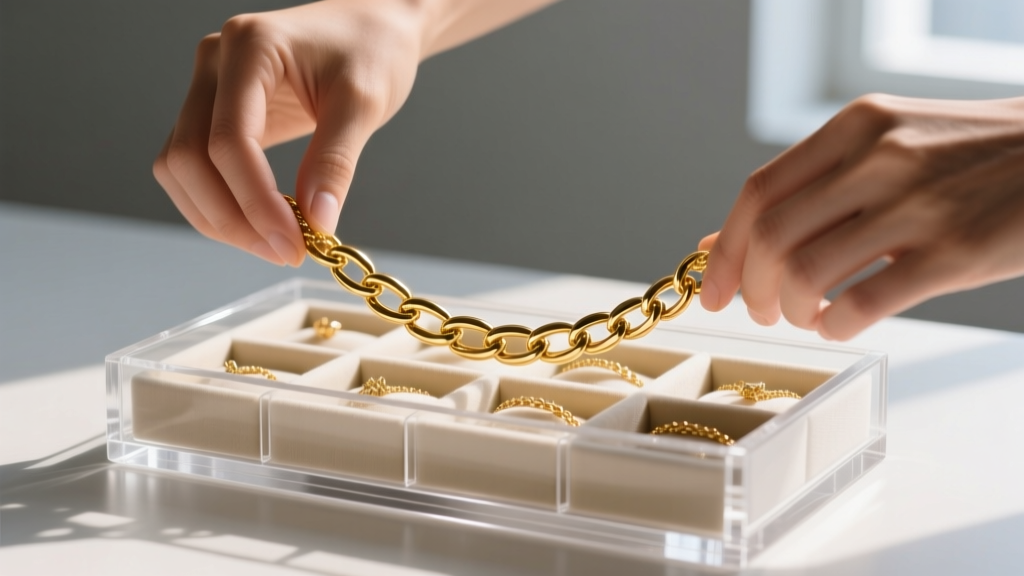
Common Storage Mistakes That Ruin Gold Finishes
Even with the best intentions, many people inadvertently damage their collections through improper storage habits. Avoid these critical errors to maintain the structural and aesthetic integrity of your gold:
- Using Rubber Bands: Never use rubber bands to secure jewelry tags or bundle chains. Rubber contains high levels of sulfur, which will cause immediate and severe blackening of 14k and 18k gold alloys upon contact.
- Bathroom Storage: Bathrooms experience extreme fluctuations in humidity and temperature due to showers and baths. Storing your gold jewelry holder in a bathroom vanity exposes your pieces to moisture spikes and aerosolized cosmetics, accelerating tarnish.
- Cardboard and Wood Boxes: Untreated wood and standard cardboard boxes emit acidic vapors and sulfur compounds as they age. If you use a wooden gold jewelry holder, ensure it is sealed with a water-based polyurethane and lined with an acid-free, anti-tarnish barrier.
- Exposure to Direct Sunlight: While gold itself won't fade, prolonged UV exposure can damage the secondary gemstones set in your gold jewelry, such as amethyst, kunzite, and emeralds, causing them to bleach or fracture.
Final Thoughts on Long-Term Gold Preservation
Investing in a high-quality gold jewelry holder is an investment in the longevity of your collection. By understanding the metallurgical vulnerabilities of gold alloys and the environmental factors that accelerate wear, you can transition from reactive cleaning to proactive preservation. Choose a storage solution that offers individual padding, incorporates anti-tarnish technology, and allows for climate control. When paired with a meticulous pre-storage cleaning routine, your gold will retain its brilliant luster, structural integrity, and heirloom value for decades to come.


