Is Gold Jewelry a Good Investment? The Resale Reality
Wondering if gold jewelry is a good investment? We break down resale values, retail markups, and how to avoid losing money on your gold purchases.

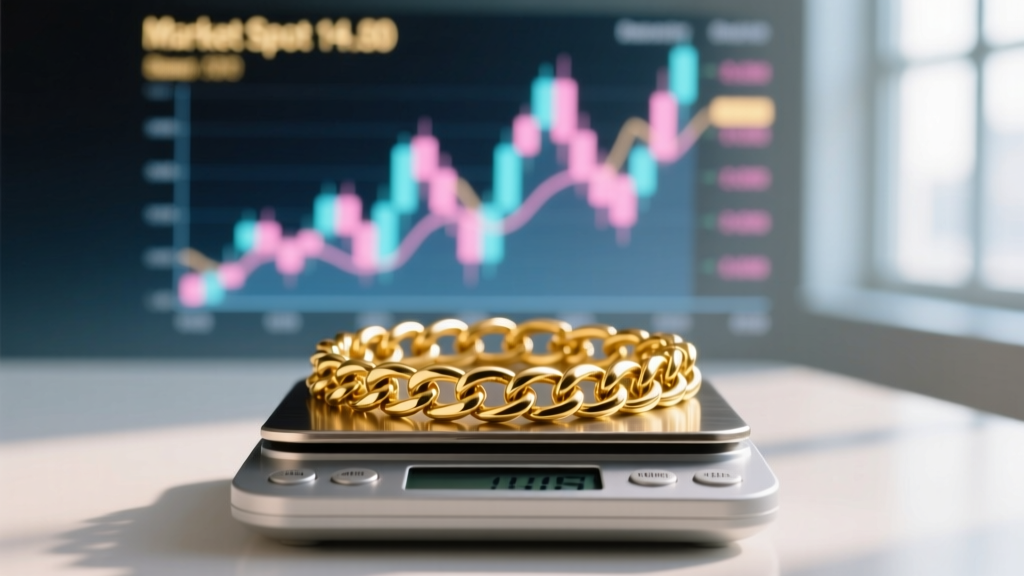
When consumers ask, is gold jewelry a good investment, they are usually trying to solve a specific financial problem: how to store wealth in a tangible, wearable asset that protects against inflation. The short answer is that gold jewelry is rarely a pure financial investment in the traditional sense. However, it can be a highly effective store of value if you understand the mechanics of retail markups, karat liquidity, and secondary market resale dynamics.
Unlike gold bullion or coins, which trade at a narrow premium over the daily spot price, jewelry carries the heavy burden of craftsmanship, design, and retail overhead. When you attempt to liquidate a piece of gold jewelry, you are almost never compensated for the artistry—you are only paid for the raw melt value of the metal. This guide troubleshoots the common pitfalls of buying gold jewelry for investment purposes and provides a concrete framework for acquiring pieces that actually hold their financial weight.
The 'Investment' Illusion: Troubleshooting Retail Markups
The most common point of failure for novice gold buyers is misunderstanding the gap between the retail price and the melt value. Let us troubleshoot a real-world scenario. Imagine you purchase a 1-troy-ounce 14k gold Cuban link chain from a high-end mall jeweler for $2,500. You feel secure knowing you own an ounce of gold. However, if you attempt to sell that chain to a precious metals dealer or pawn shop the next day, you will likely be offered roughly $1,300. Where did the other $1,200 go?
To understand this, we must break down the anatomy of a retail gold jewelry purchase. According to market data tracked by Kitco, the spot price dictates the raw material cost, but retail jewelry pricing is layered with manufacturing and branding premiums.
| Cost Component | 14k Gold Chain (1 Troy Oz) | Percentage of Total |
|---|---|---|
| Pure Gold Melt Value (58.3%) | $1,340 | 53% |
| Alloy Metals (Copper/Zinc) | $15 | 1% |
| Manufacturing, Labor & Design | $350 | 14% |
| Retail Markup & Brand Premium | $800 | 32% |
| Total Retail Price | $2,505 | 100% |
As the table illustrates, nearly half of your initial capital is instantly lost to retail markup and labor costs the moment you walk out of the store. If your primary goal is wealth preservation, paying a 86% premium over the melt value is a critical error. To solve this, investment-minded buyers must bypass traditional retail and source jewelry closer to the spot price.
Karat Confusion: Navigating Global Liquidity Issues
Not all gold is created equal, and the karat weight heavily dictates how easily you can liquidate your jewelry in different global markets. Pure gold is 24 karats (99.9% pure), but it is too soft for durable daily wear. Therefore, it is alloyed with metals like copper, silver, and zinc.
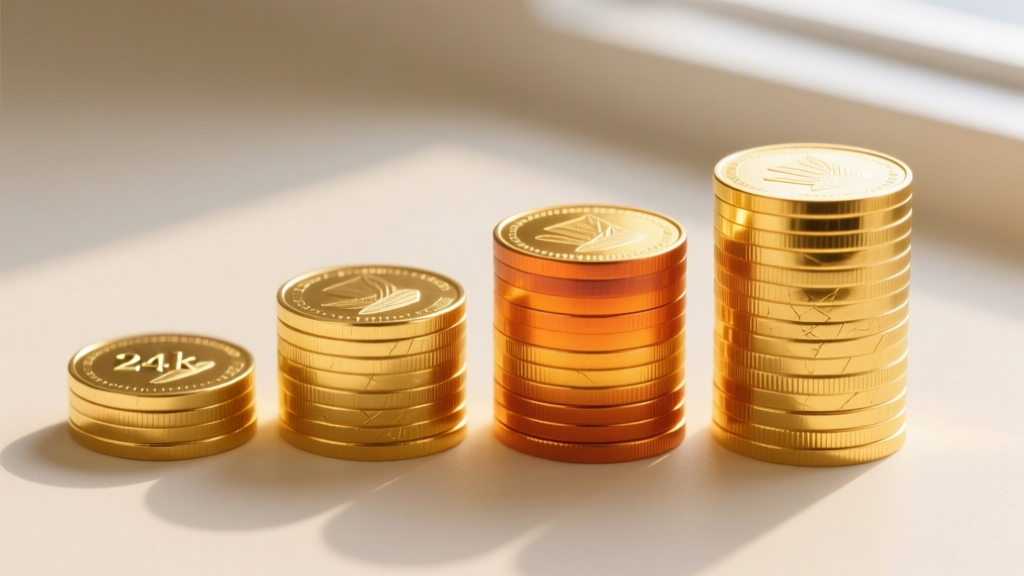
Here is a troubleshooting guide to karat liquidity:
- 24k (99.9%): The ultimate investment grade. Highly liquid in Asian and Middle Eastern markets where gold jewelry is traditionally used as generational wealth storage. However, it dents and scratches easily, making it poor for Western daily wear.
- 22k (91.6%): Standard for Indian and Southeast Asian bridal jewelry. Holds value exceptionally well and is widely accepted by bullion dealers globally.
- 18k (75.0%): The standard for high-end luxury and fine jewelry. Offers a great balance of durability and high gold content. Resale value is strong, provided the piece is not heavily branded.
- 14k (58.3%): The most common karat in the United States. While durable, it contains nearly 42% base metals. Many international bullion dealers will heavily discount or refuse to buy 14k jewelry because the refining process to extract the pure gold is less cost-effective.
- 10k (41.7%): The legal minimum to be called 'gold' in the US. From an investment standpoint, 10k gold is virtually worthless as a wealth vehicle. The refining costs often eclipse the melt value.
Troubleshooting Tip: Always remember that gold is measured in troy ounces (31.1 grams), not standard avoirdupois ounces (28.3 grams). A common mistake is weighing a piece on a standard kitchen scale and miscalculating the melt value by nearly 10%.
The Hidden Value Killers: Plated, Filled, and Hollow Gold
When acquiring gold for its intrinsic value, you must aggressively filter out deceptive manufacturing techniques that mimic the look of solid gold while offering zero melt value.
Troubleshooting Suspect Pieces
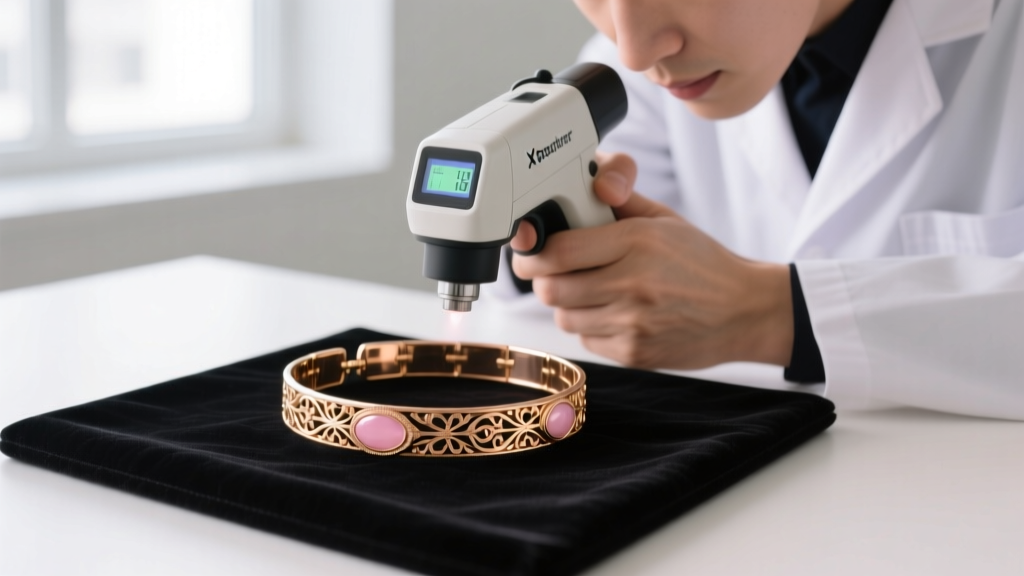
If you are evaluating an estate lot or a private sale, rely on empirical testing rather than visual inspection. The Gemological Institute of America (GIA) emphasizes that visual hallmarks can be easily forged or worn away.
- The Magnet Test: Gold is diamagnetic. If a chain clings to a strong neodymium magnet, it is either heavily plated steel or contains a steel core. Note: Some authentic chains have steel springs inside the lobster clasp, so test the links, not the clasp.
- The Specific Gravity Test: By weighing the piece in air and then suspended in water, you can calculate its density. Pure 24k gold has a specific gravity of 19.3, while 14k gold sits around 13.5. A significantly lower number indicates a hollow core or heavy base-metal plating.
- XRF Spectrometry: For high-value acquisitions, an X-Ray Fluorescence scanner provides a non-destructive, exact elemental breakdown of the piece, instantly identifying gold-filled or tungsten-core fakes.
Never purchase 'gold filled' or 'gold vermeil' with the expectation of resale value. Gold filled items consist of a brass core with a thin mechanical bond of gold that constitutes less than 5% of the total weight. The cost to chemically separate the gold from the brass exceeds the value of the gold itself.
A Problem-Solving Framework for Buying Investment Jewelry
If you are determined to wear your wealth rather than lock it in a safe, you must adopt a strict acquisition framework to minimize the retail markup penalty. Follow these rules to ensure your jewelry functions as a viable financial asset.
1. Buy by Gram Weight, Not by Design
Seek out private sellers, estate liquidations, or wholesale jewelers who price their items based on a formula: (Daily Spot Price x Purity) + Small Fabrication Premium. Avoid mall jewelers and luxury boutiques where pricing is dictated by brand prestige and seasonal fashion trends.
2. Target Heavy, Simple Geometries
Intricate filigree, gemstone settings, and complex hinges require immense labor, driving up the retail price without adding to the melt value. Instead, invest in heavy, simple geometries like plain gold bangles, thick rope chains, and solid signet rings. These pieces have low manufacturing costs relative to their weight, meaning you pay a much smaller premium over spot.
3. Avoid Hollow and Tubing Jewelry
Many modern jewelers use 'electroforming' to create massive, lightweight gold chains that look heavy but are essentially hollow gold tubes. These pieces dent easily, are nearly impossible to repair, and often contain trapped moisture or resin that skews their weight on a scale. Always demand solid, cast, or die-struck gold.
When Jewelry Actually Outperforms Bullion
There is one specific scenario where gold jewelry transcends its melt value and becomes a true appreciating investment: numismatic and signed historical pieces. According to the World Gold Council, while standard jewelry demand fluctuates with the economy, the secondary market for rare, signed luxury jewelry operates on entirely different metrics.
A vintage 18k gold bracelet from a renowned house like Cartier, Bvlgari, or Van Cleef & Arpels, particularly from a highly sought-after era like Art Deco or Retro (1930s-1940s), will sell at auction for multiples of its gold weight. In these cases, you are investing in the brand heritage, the historical provenance, and the gemological rarity, rather than the raw metal. However, this requires deep expertise in jewelry history and auction market trends, moving it out of the realm of passive gold investing and into the realm of fine art collecting.
Final Verdict: Is It Worth It?
So, is gold jewelry a good investment? If you are buying brand-new, heavily branded 14k jewelry from a retail storefront with the intention of selling it for a profit, the answer is a resounding no. You will lose 40% to 60% of your capital the moment the transaction is complete.
However, if you troubleshoot the acquisition process—buying heavy, unbranded 18k or 22k pieces near the daily melt value from estate or wholesale sources—gold jewelry becomes an excellent, wearable hedge against inflation. It allows you to store tangible wealth on your person, providing both aesthetic enjoyment and a reliable financial safety net that can be liquidated in virtually any country on Earth.


