Buying Guide: Navigating the Different Shades of Gold Jewelry
Discover how alloy metals create the different shades of gold jewelry. Our buying guide covers yellow, white, rose, and rare hues for every skin tone.

The Metallurgy Behind the Hues
Pure 24-karat gold is inherently a rich, saturated yellow. However, because 24k gold is exceptionally soft (rating just 25 on the Vickers hardness scale), it is rarely used for everyday jewelry. To create durable pieces, metallurgists alloy pure gold with other metals. It is this precise blending of secondary metals that gives birth to the different shades of gold jewelry we see on the market today. According to the Gemological Institute of America (GIA), the specific ratio of copper, silver, zinc, palladium, and nickel dictates not only the final color but also the tensile strength and tarnish resistance of the piece.
Silver adds a greenish cooling effect to the alloy, while copper introduces a reddish warming effect. When mixed in near-equal parts with gold, they maintain the classic yellow hue. Shift the ratio, and the color spectrum changes dramatically, allowing jewelers to engineer everything from pale champagne tones to deep crimson reds.
The Core Spectrum: Yellow, White, and Rose
Yellow Gold: The Classic Standard
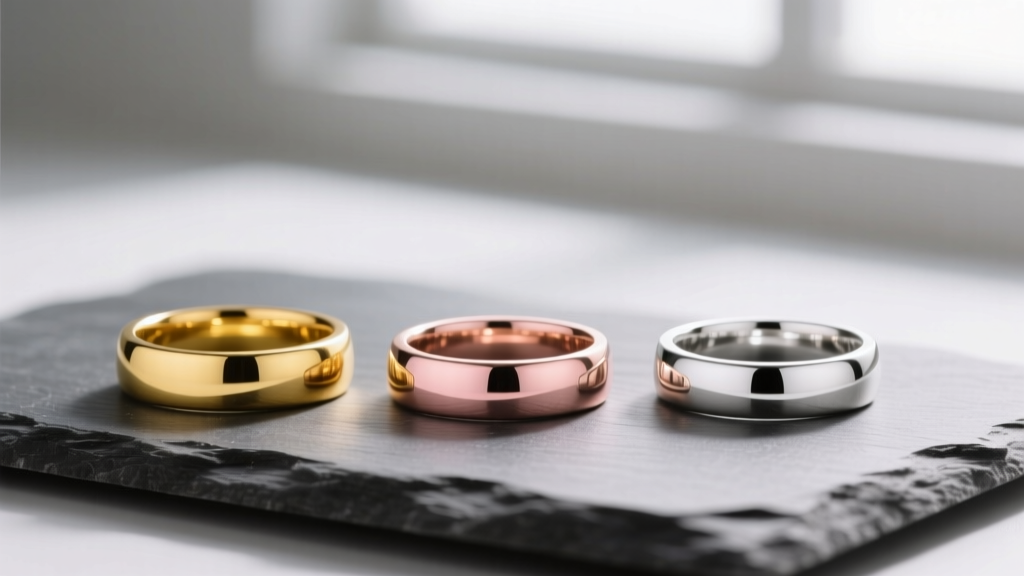
Yellow gold is created by mixing pure gold with silver, copper, and a touch of zinc. The silver adds a subtle greenish undertone, while the copper brings warmth. An 18k yellow gold alloy typically consists of 75% gold, 12.5% copper, and 12.5% silver. When shopping, note that 14k yellow gold (58.3% pure gold) will appear slightly paler and less saturated than 18k, but it offers superior scratch resistance due to the higher volume of hardening alloys.
White Gold: The Platinum Alternative
White gold does not exist in nature. It is an alloy of yellow gold mixed with white metals like palladium, nickel, or manganese. To achieve the bright, mirror-like finish consumers expect, white gold is electroplated with a microscopic layer of rhodium (usually 0.75 to 1.0 microns thick). Buyer Beware: If you have a nickel allergy, you must verify that the white gold uses a palladium base. European jewelers largely abandoned nickel in the early 2000s due to strict EU directives, but some mass-market US brands still use nickel alloys to keep costs down.
Rose Gold: The Copper Effect
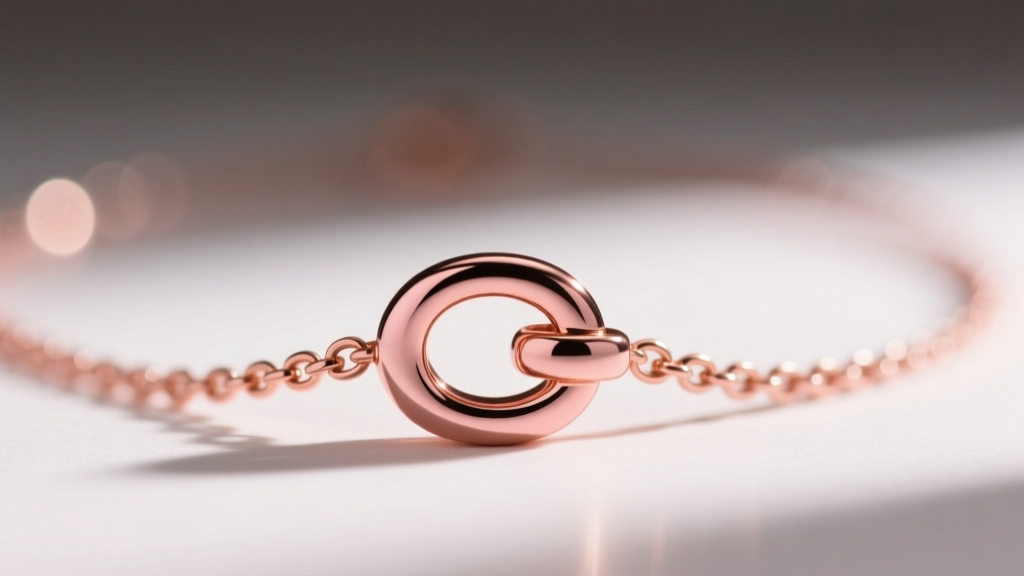
The romantic blush of rose gold comes entirely from copper. The higher the copper content, the deeper the red-pink hue. Interestingly, 14k rose gold often appears more vibrant and pink than 18k rose gold. This is because 14k contains 41.7% alloy (mostly copper), whereas 18k contains only 25% alloy, resulting in a softer, more champagne-peach tone. When evaluating the different shades of gold jewelry in the rose spectrum, always ask the jeweler for the exact copper-to-silver ratio to ensure the shade matches your preference. Note that high copper content can occasionally react with acidic sweat, leaving a harmless greenish tint on the skin that washes off easily.
Rare and Niche Shades: Green, Purple, and Black
Beyond the primary trio, master jewelers occasionally work with exotic alloys:
- Green Gold (Electrum): An alloy of gold and silver (sometimes with cadmium or zinc). It yields a subtle, warm greenish-yellow hue, often seen in vintage or artisan-crafted pieces.
- Purple Gold: Created by alloying gold with aluminum, forming an intermetallic compound (AuAl2). It contains roughly 79% gold (equivalent to 18k) but is highly brittle and usually used as a stone-like inlay rather than a structural band.
- Black Gold: Not a true alloy, but rather yellow or white gold treated via cobalt electroplating, laser oxidation, or ruthenium plating to achieve a dark, gunmetal appearance.
Karat Weight vs. Color Intensity
Understanding how karat weight impacts color saturation is crucial when comparing the different shades of gold jewelry. The table below outlines how purity shifts the visual profile and physical properties of the metal.
| Karat | Gold Purity | Yellow Gold Hue | Rose Gold Hue | Relative Durability |
|---|---|---|---|---|
| 10k | 41.7% | Pale, slightly brassy | Deep, vibrant pink | Highest (Very hard) |
| 14k | 58.3% | Warm, balanced yellow | Rose-pink, highly saturated | High (Ideal for daily wear) |
| 18k | 75.0% | Rich, buttery, saturated | Soft peach, champagne-rose | Moderate (Prone to scratching) |
| 22k | 91.6% | Deep, intense orange-yellow | Rare (Too brittle for high copper) | Low (Easily dented) |
Matching Gold Shades to Skin Undertones
While personal preference reigns supreme, color theory can help you select the most flattering shade. Identify your skin's undertone by looking at the veins on your wrist under natural light, or by holding silver and gold jewelry near your face to see which brightens your complexion:
- Warm Undertones (Greenish veins): Yellow and rose gold will amplify the natural warmth in your skin. 18k yellow gold creates a luxurious, harmonious glow that complements olive and golden complexions perfectly.
- Cool Undertones (Bluish/Purple veins): White gold and platinum-adjacent alloys provide a striking, crisp contrast. Rose gold can also offer a beautiful, unexpected pop of color against cool, rosy skin.
- Neutral Undertones (Mix of green and blue): You have the versatility to wear the entire spectrum. Mixed-metal jewelry, such as a bracelet combining 14k yellow and white gold links, is an excellent choice to highlight your adaptability.
Durability and Maintenance by Shade
The maintenance required for your jewelry is directly tied to its alloy composition. The World Gold Council notes that alloyed metals react differently to environmental factors over time.
- White Gold: Requires the highest maintenance. The rhodium plating will wear off after 1 to 3 years of daily wear, revealing the slightly yellowish-grey base metal underneath. Budget $35 to $65 per ring for professional rhodium re-plating.
- Rose Gold: Requires the lowest maintenance. Copper does not tarnish easily in standard environments, and the metal's inherent hardness means it resists micro-scratches better than yellow or white gold. It actually develops a beautiful, subtle patina over decades.
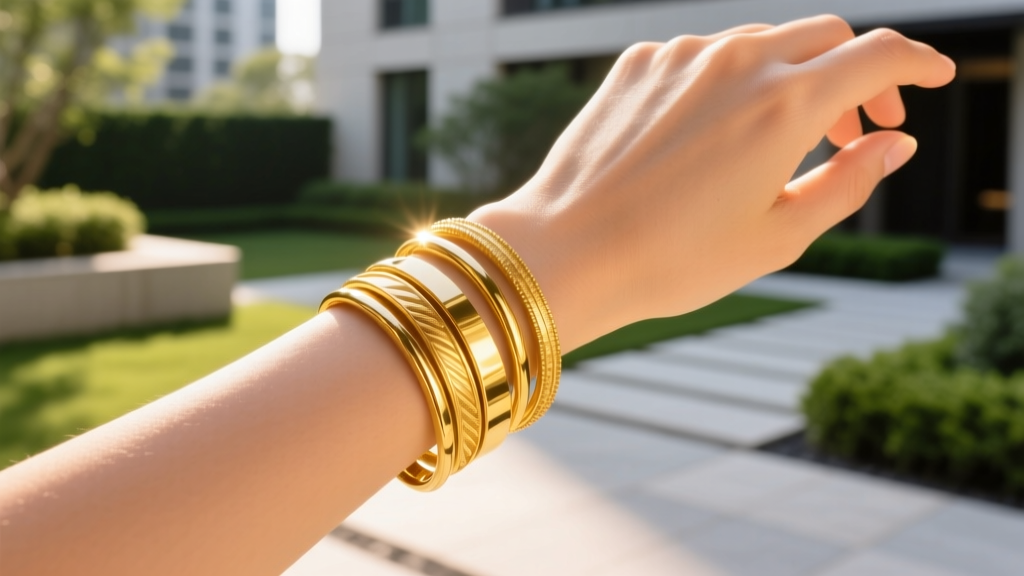
- Yellow Gold: Requires moderate maintenance. It doesn't need plating, but higher-karat yellow gold (18k and above) will accumulate micro-scratches, giving it a matte finish over time. Professional polishing can restore the mirror shine, but it removes a microscopic layer of metal each time.
Final Buying Checklist
When evaluating the different shades of gold jewelry at the counter or online, run through this quick checklist:
- Check the Hallmark: Look for 14k, 18k, 585, or 750 stamped in an inconspicuous area.
- Ask About the Base (White Gold): Explicitly ask if the white gold is nickel-free or palladium-based if you have sensitive skin.
- Evaluate the Lighting: Always view rose and yellow gold in natural sunlight. Store halogen lighting artificially warms up yellow gold, making lower-karat pieces look richer than they actually are.
- Inquire About Plating: If buying white gold, ask the jeweler how many microns of rhodium are applied. A thickness of at least 0.75 microns is essential for longevity.
By understanding the metallurgy and maintenance behind these beautiful alloys, you can confidently invest in pieces that will retain their beauty and structural integrity for a lifetime.


