How to Make Gold Jewelry: Cost Analysis and Value Assessment
Discover the true cost of DIY goldsmithing. We analyze tooling, alloying, and melt loss to determine if making your own gold jewelry saves money.

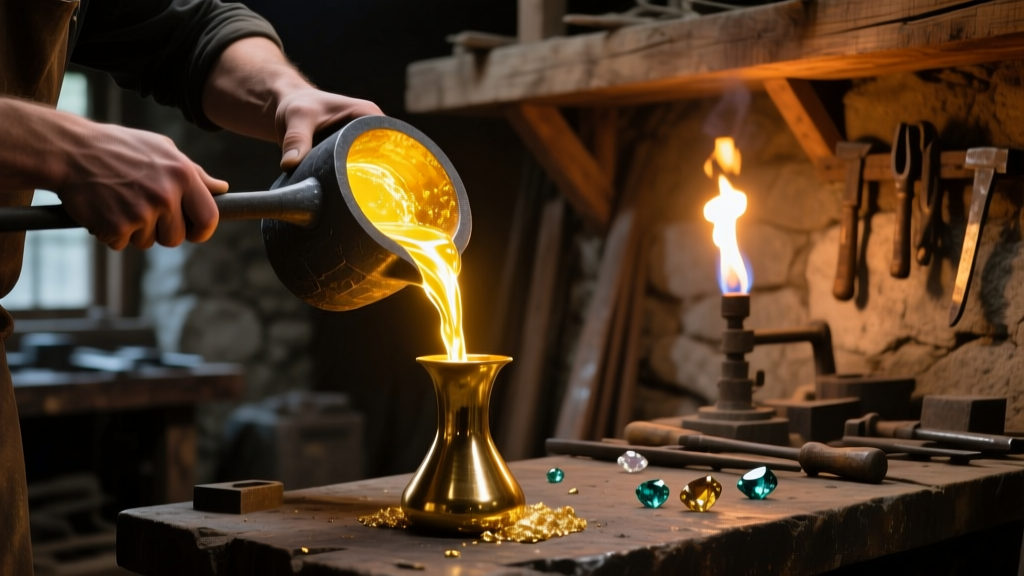
The Reality of DIY Goldsmithing in Today's Market
When browsing retail jewelry cases, the markup on gold pieces can be staggering. It is common to see a simple 14k gold band retailing for $600 when the raw melt value of the metal is barely $150. This massive discrepancy leads many enthusiasts and aspiring artisans to ask a fundamental question: how to make gold jewelry at home, and is it actually cheaper than buying it?
From a budget and value assessment perspective, the answer is not a simple yes or no. While the retail markup on commercial jewelry is undeniably high, the economics of small-scale, independent goldsmithing involve complex variables. Spot gold prices fluctuate daily—as tracked by authoritative market resources like Kitco—and the capital expenditure required to set up a safe, functional casting and fabrication bench is substantial. To determine if DIY gold jewelry making offers genuine financial value, we must break down the initial tooling costs, material economics, and the hidden losses that silently eat into your budget.
Initial Tooling vs. Retail Markup: The Break-Even Point
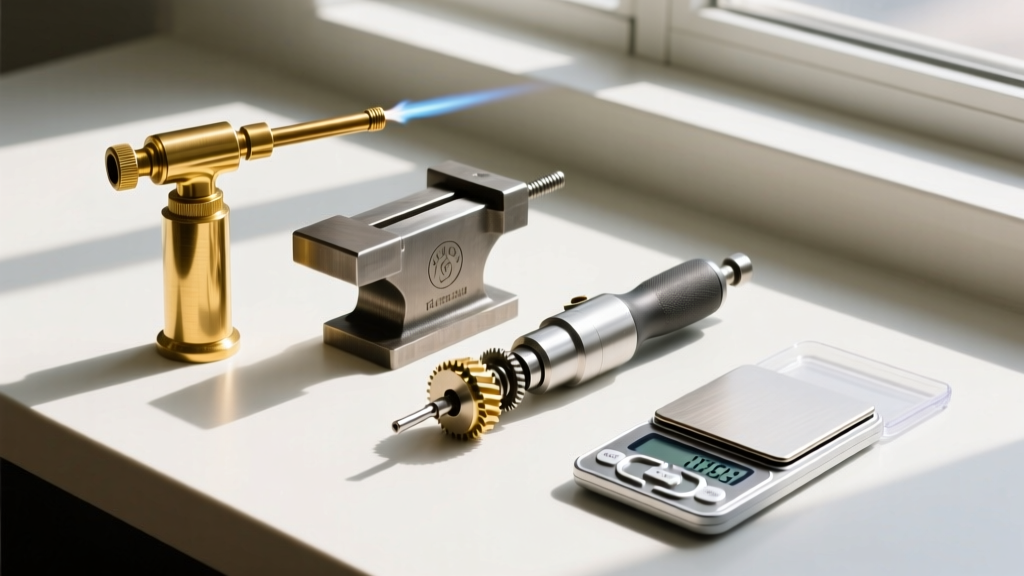
You cannot safely or effectively melt and cast gold using household kitchen equipment. Gold requires temperatures exceeding 1,948°F (1,064°C) for pure 24k, and specialized equipment to prevent oxidation and porosity. Setting up a proper jewelry bench is a capital-intensive endeavor. Below is a realistic breakdown of the essential equipment required for a beginner-to-intermediate lost-wax casting and fabrication setup.
| Equipment Category | Specific Tool / Item | Estimated Cost (USD) | Value Assessment |
|---|---|---|---|
| Melting & Casting | Smith Acetylene Torch System | $280 - $350 | Essential. Propane struggles to cleanly melt gold alloys over 10g. |
| Melting & Casting | Graphite Crucibles & Casting Flasks | $60 - $90 | Consumables. Graphite degrades over time and must be replaced. |
| Fabrication | Flex Shaft Rotary Tool (e.g., Foredom) | $180 - $250 | Essential for drilling, setting, and detailed polishing. |
| Fabrication | Manual Rolling Mill | $300 - $600 | Optional early on, but vital for reducing scrap and sizing wire. |
| Measurement | Digital Milligram Scale (0.01g) | $40 - $80 | Crucial for precise alloying and tracking melt losses. |
| Safety & Bench | Leather Apron, Bench Pin, Ventilation | $150 - $250 | Non-negotiable. Gold dust and fumes require strict capture methods. |
The Break-Even Analysis: A fully functional, safe home goldsmithing bench will cost between $1,200 and $2,000 before you purchase a single gram of gold. If you are making a standard 5-gram 14k gold ring that retails for $400 but costs $120 in raw materials, your 'savings' per ring is $280. Therefore, you must successfully cast, finish, and sell (or personally value) at least 5 to 7 rings just to reach the break-even point on your tooling investment.
Material Economics: Scrap, Grain, and Alloying
Understanding how to make gold jewelry requires a deep dive into metallurgy. Very few small-scale jewelers buy pre-alloyed 14k or 18k casting grain because it carries a premium and limits your color control. Instead, the most cost-effective method is purchasing pure 24k gold grain or refining scrap, and manually alloying it with master metals.
Calculating the True Cost of 14k and 18k Alloys
To create standard 14k yellow gold, the alloy must be exactly 58.5% pure gold. The remaining 41.5% is typically a blend of silver and copper. According to supplier data from Rio Grande, a leading jewelry supplier, purchasing pure 24k casting grain alongside pure silver and copper shot is the industry standard for bench jewelers.
- 14k Yellow Gold Ratio: 58.5% Gold, 25% Silver, 16.5% Copper.
- 18k Yellow Gold Ratio: 75% Gold, 12.5% Silver, 12.5% Copper.
- Rose Gold Adjustments: Increase copper to 20%+ and reduce silver to achieve the pink hue, which actually lowers the overall material cost slightly due to copper's low price.
By buying pure metals and alloying them yourself, you save roughly 5% to 8% on material costs compared to buying pre-mixed karat grains. However, this requires precise calculation and the use of a borax-based flux to prevent the copper from oxidizing and creating brittle, porous castings.
The Hidden Costs: Failures, Porosity, and Refining Losses
The most overlooked factor in the budget assessment of DIY gold jewelry is material loss. Gold is notoriously soft and malleable, meaning every time you file, sand, or polish a piece, microscopic particles of gold are stripped away.
'In a professional studio, we expect a 1% to 2% melt loss due to oxidation and dross. However, fabrication and polishing losses can account for up to 15% of the original metal weight if sweeps are not meticulously managed.' — Industrial Refining Standards
The Economics of Sweeps: To mitigate this, professional jewelers use leather aprons and specialized bench fans to capture 'sweeps' (gold dust). As a home jeweler, you must collect this dust and periodically send it to a precious metal refiner. Refiners typically charge a processing fee and take a percentage of the recovered yield. If you lose 15% of a $500 gold casting to filing dust, and the refiner charges a 10% processing fee, your hidden cost per piece increases by nearly $80. Furthermore, casting failures such as severe porosity or incomplete fills (due to improper flask burnout temperatures) can result in ruined castings that must be pickled in acid, re-melted, and cast again, compounding your time and material degradation.
The Verdict: A Value Assessment Framework
So, does learning how to make gold jewelry make financial sense for your budget? Use this decision framework to assess the value proposition for your specific situation:
When DIY Goldsmithing Offers High Value:
- You have access to inherited or scrap gold: Melting down old, broken, or unfashionable family heirlooms into modern designs bypasses the spot-price purchase cost entirely, making the labor and tooling highly cost-effective.
- You are producing in micro-batches: If you plan to cast the same ring design 20 times using a vulcanized rubber mold and wax injection, the per-unit cost plummets, easily beating retail pricing.
- You value bespoke customization: If you want a highly specific, heavy-signet 22k piece that retail jewelers would charge a massive custom-fabrication premium for, doing it yourself saves thousands.
When Buying Retail is the Better Budget Choice:
- You only need one or two simple pieces: The $1,500+ bench setup cost cannot be amortized over a single wedding band. You are better off buying from a direct-to-consumer wholesale jeweler.
- You are working with white gold: White gold requires rhodium plating and complex nickel or palladium alloys that are incredibly difficult to mix and cast cleanly on a beginner home bench without specialized induction melters.
Ultimately, making your own gold jewelry is rarely a shortcut to cheap, fast accessories. It is a capital-intensive craft where the true 'value' is found in material upcycling, total creative control, and the long-term amortization of your bench tools over hundreds of hours of meticulous craftsmanship.


