How to Test Jewelry for Gold: 5 Proven Methods to Spot Fakes
Learn how to test jewelry for gold at home and with professionals. Discover acid, magnet, and hallmarks checks to verify authenticity and karat purity.

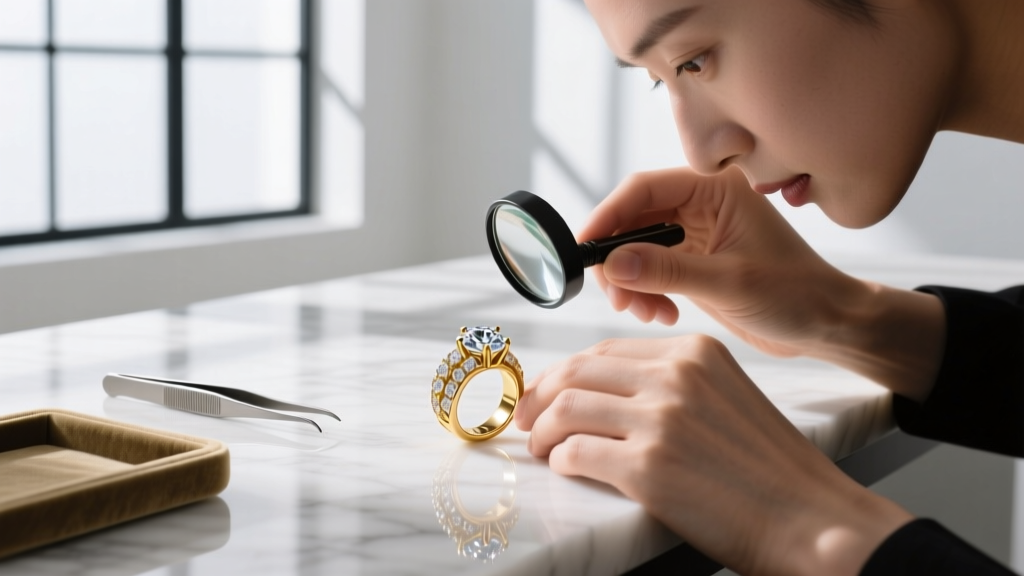
With gold prices reaching historic highs in 2026, the market has seen a parallel surge in sophisticated counterfeit jewelry. Modern manufacturing techniques allow bad actors to create gold-plated, gold-filled, and even tungsten-cored pieces that look, feel, and weigh exactly like solid gold. If you are buying secondhand, inheriting a piece, or simply auditing your own collection, knowing how to test jewelry for gold is no longer optional—it is a financial necessity. While visual inspection is the first step, it is never enough. This comprehensive troubleshooting guide breaks down the exact methodologies used by pawnbrokers, jewelers, and gemologists to separate genuine gold alloys from deceptive fakes.
Method 1: Decoding Hallmarks and Stamps (The First Line of Defense)
The fastest way to begin your authentication process is by examining the hallmark. According to the Federal Trade Commission (FTC) Jewelry Guides, any piece of gold jewelry sold in the United States must be accurately stamped with its karat purity. However, a stamp is the easiest thing for a counterfeiter to forge. You must know what to look for beyond the standard numbers.
| Stamp | Meaning | Authenticity Indicator |
|---|---|---|
| 10K, 14K, 18K, 24K | Solid gold purity (41.7% to 99.9% gold) | Requires further testing; easily faked. |
| 14KP, 18KP | "Plumb" gold (exact karat, no tolerance) | Usually authentic, common in vintage US pieces. |
| GF, 1/20 14K GF | Gold Filled (thick layer bonded to base metal) | Not solid gold; has some scrap value but minimal. |
| HGE, RGP | Heavy Gold Electroplate / Rolled Gold Plate | Costume jewelry; zero intrinsic gold value. |
| 925 with Gold Color | Vermeil (Gold plated over Sterling Silver) | Valuable as silver, but not solid gold. |
Troubleshooting Tip: If a piece is stamped "14K" but the stamp looks blurred, uneven, or stamped over another mark, treat it as highly suspicious. Genuine manufacturers use precision laser or hydraulic stamping.
Method 2: The Magnet Test (Quick but Inconclusive)
Gold is a diamagnetic metal, meaning it is entirely non-magnetic. If your jewelry is violently pulled toward a magnet, it contains ferromagnetic metals like iron, nickel, or cobalt, and is definitively not solid gold.
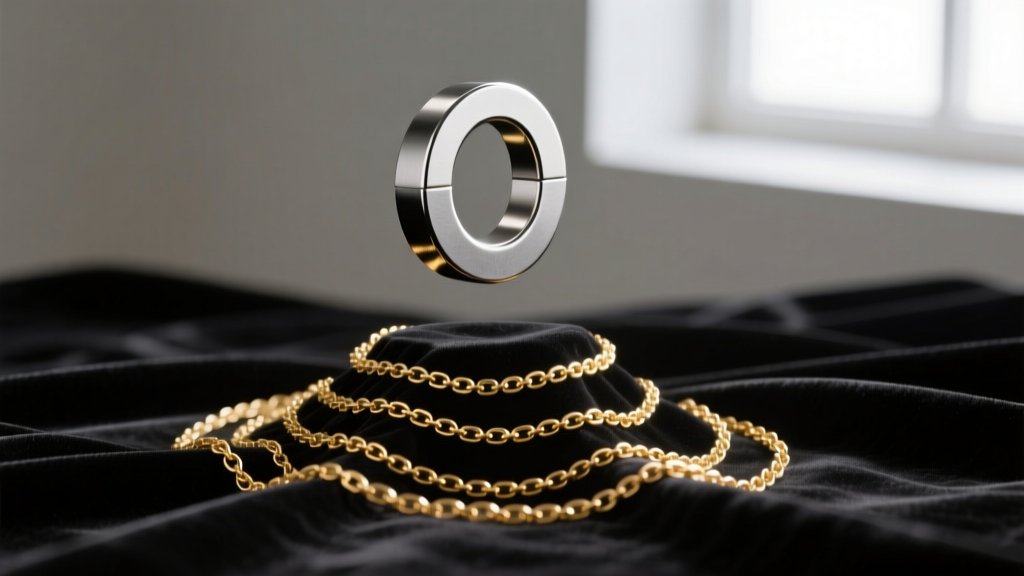
How to Perform the Magnet Test Correctly
- Use a strong rare-earth neodymium magnet, not a weak refrigerator magnet.
- Hold the magnet near the chain or ring and observe the reaction.
- Slide the magnet down a gold chain; a fake chain will stick, while real gold will allow the magnet to slide freely.
The False Positive Trap: Many genuine gold necklaces and bracelets feature steel spring rings or lobster clasps. The internal spring mechanism is magnetic. Furthermore, white gold alloys often contain nickel, which can exhibit a very faint paramagnetic pull. Therefore, a lack of magnetic attraction does not prove the piece is gold; it only proves it isn't iron or steel.
Method 3: The Ceramic Streak Test (High Risk, High Reward)
This is a destructive test and should only be used on items you own and are willing to slightly damage. By dragging the jewelry across an unglazed ceramic plate (like the unglazed bottom of a porcelain coffee mug), you can observe the color of the streak left behind.
- Genuine Gold: Leaves a distinct, shiny golden-yellow streak.
- Pyrite (Fool's Gold) or Brass: Leaves a dark greenish-black or brown streak.
- Gold Plated over Copper: Will leave a copper-colored or reddish streak once the thin plating is scratched through.
Warning: This will permanently scratch your jewelry. Never use this on antique, numismatic, or high-polish finish pieces.
Method 4: Nitric Acid Testing (The Professional Standard)
For decades, the acid test has been the gold standard for pawn shops and jewelers. It relies on the chemical principle that gold is a noble metal and does not easily react with nitric acid, whereas base metals like copper, brass, and silver will dissolve or change color upon contact.
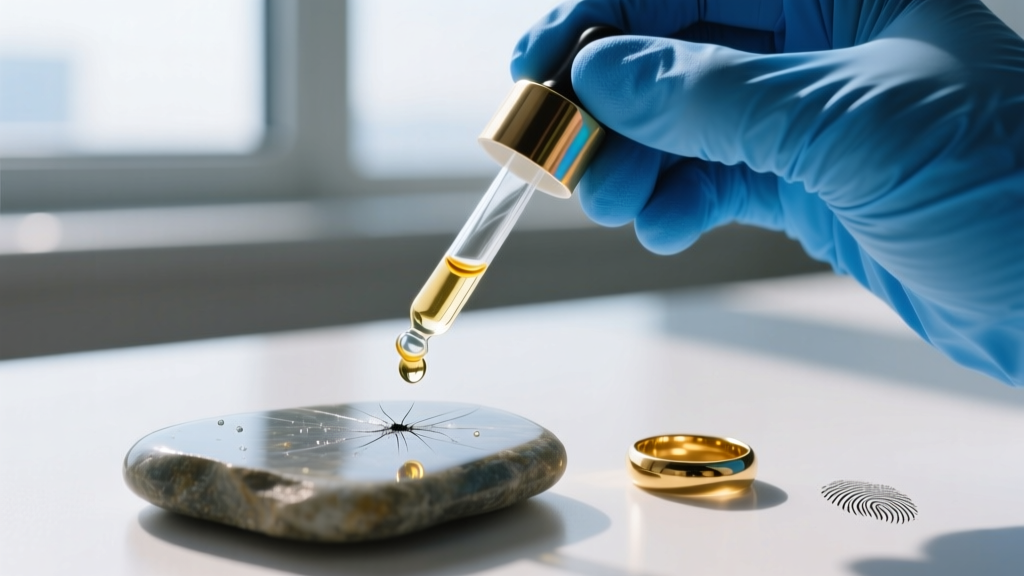
Step-by-Step Acid Testing Protocol
- Prep the Stone: Obtain a black siliceous testing stone. Wear nitrile gloves and safety glasses.
- Make a Scratch: Rub the jewelry firmly against the stone to leave a visible metallic streak. If testing a chain, use a jeweler's file to cut through the outer plating layer to reach the core.
- Apply the Acid: Place a single drop of nitric acid (or a specific karat testing solution) directly onto the streak.
- Observe the Reaction: Watch for 10 to 15 seconds.
Acid Reaction Color Chart
- No Reaction / Streak Remains Bright: The metal is equal to or higher than the karat of the acid used.
- Milky / Slight Green: The metal is a lower karat than the acid (e.g., testing 10k gold with 14k acid).
- Bright Green / Fizzing: The item is base metal (brass, copper) or heavily gold-plated. The acid is eating the core.
- Orange / Brownish: Indicates high-purity gold (18k to 22k) reacting to specific aqua regia mixes.
For deeper insights into chemical testing safety and procedures, the Gemological Institute of America (GIA) provides extensive guidelines on handling precious metal assays.
Method 5: Troubleshooting Advanced Deceptions (Tungsten and Lead)
As testing methods have improved, so have counterfeits. The two most common advanced deceptions in 2026 involve tungsten and lead.
The Tungsten Core Deception
Tungsten has a specific gravity of 19.25 g/cm³, which is nearly identical to pure gold (19.32 g/cm³). Counterfeiters will cast a tungsten blank and electroplate it with a thick layer of 14k or 18k gold. This fake will pass the weight test, the dimensions test, and even the surface acid test if the plating is thick enough.
The Solution: You must perform a deep file test. Use a jeweler's triangular file to cut a deep notch into the shank of a ring or the clasp of a chain, ensuring you penetrate at least 1-2 millimeters below the surface. Apply 18k acid to the deep notch. If it fizzes green, you have a tungsten or brass core.
The Specific Gravity (Water Displacement) Test
If you want to test a coin or a solid cast piece without damaging it, use the Specific Gravity (SG) test. You need a precise digital scale (0.01g accuracy), a cup of water, and a string.
- Weigh the item in the air (e.g., 20.00g).
- Suspend the item in water using the string, ensuring it doesn't touch the bottom or sides, and weigh it again (e.g., 18.95g).
- Calculate the difference (20.00 - 18.95 = 1.05g).
- Divide the air weight by the difference (20.00 / 1.05 = 19.04).
An SG of 19.04 suggests roughly 22k to 24k gold. An SG around 13.0 to 15.0 indicates 14k gold (due to lighter alloy metals like copper and silver). An SG of 10.5 usually means you are holding sterling silver, not gold.
When to Rely on Electronic Gold Testers and XRF Scanners
Consumer-grade electronic gold testers (which measure electrical conductivity) are highly prone to false positives, especially on gold-filled items or heavily polished silver. They are not recommended for serious troubleshooting.
For absolute, non-destructive certainty, professional jewelers use X-Ray Fluorescence (XRF) spectrometers. An XRF scanner bombards the item with X-rays and reads the fluorescent emissions to determine the exact elemental composition of the metal down to the decimal point. While an XRF machine costs between $15,000 and $30,000, any reputable local jeweler or precious metal refinery will perform an XRF scan for free or a nominal fee if you are looking to sell or appraise the item.
Final Verdict: Trust, but Verify
Knowing how to test jewelry for gold requires a layered approach. Start with the visual hallmark inspection, move to the magnet test to weed out cheap iron fakes, and use the acid test or specific gravity test to confirm the core material. Never rely on a single method, especially when dealing with high-value estate pieces or secondary market purchases. When in doubt, bypass the at-home chemistry and take the piece to a certified gemologist or a trusted local assay office for an XRF analysis.


