JCPenney Gold Jewelry Care: Cleaning & Maintenance Tips
Learn expert cleaning and maintenance tips for your JCPenney gold jewelry. Discover how to safely care for 10k, 14k, plated, and vermeil pieces.

JCPenney has long been a trusted destination for accessible fine jewelry and trendy fashion accessories. Whether you invested in a timeless 14k gold wedding band from their fine jewelry counter or picked up a chic gold-plated layered necklace from the Worthington or St. John's Bay collections, proper maintenance is critical to preserving your pieces. Department store jewelry spans a wide spectrum of metallurgical compositions, meaning a one-size-fits-all cleaning approach can lead to irreversible damage. This comprehensive guide breaks down the exact care, maintenance, and cleaning protocols required to keep your JCPenney gold jewelry looking brilliant for decades.
Decoding Your JCPenney Gold Jewelry Composition
Before applying any cleaning solution, you must identify the exact material of your jewelry. JCPenney typically categorizes its gold offerings into three distinct tiers, each with unique vulnerabilities:
- Solid 10k and 14k Gold: Found primarily in the fine jewelry section (often featuring diamonds or genuine gemstones). 10k gold contains 41.7% pure gold and 58.3% alloy metals like copper, silver, and zinc. This high alloy content makes it highly durable but prone to surface oxidation (tarnish). 14k gold (58.3% pure gold) offers a richer color and better tarnish resistance while maintaining structural integrity.
- Gold Vermeil: Often found in mid-tier fashion collections. Vermeil consists of a thick layer of gold (minimum 2.5 microns) plated over a sterling silver base. It is more durable than standard plating but will eventually wear down to the silver beneath if scrubbed aggressively.
- Gold-Plated Fashion Jewelry: Typically featuring a brass or base-metal core with a microscopic 'flash' plating of gold (often less than 0.5 microns). These pieces are highly susceptible to moisture, friction, and chemical degradation.
The Step-by-Step Cleaning Protocol for Solid 10k and 14k Gold
Solid gold pieces from JCPenney's fine counter accumulate a combination of sebum, dead skin cells, and cosmetic residues, particularly under the gallery wires and prongs. This buildup not only dulls the gold but also blocks light from entering diamonds and cubic zirconia, making them appear lifeless.
The Distilled Water Soak Method
Tap water often contains trace amounts of chlorine and hard minerals that can react with the copper alloys in 10k gold over time. Always opt for distilled water for your fine jewelry.
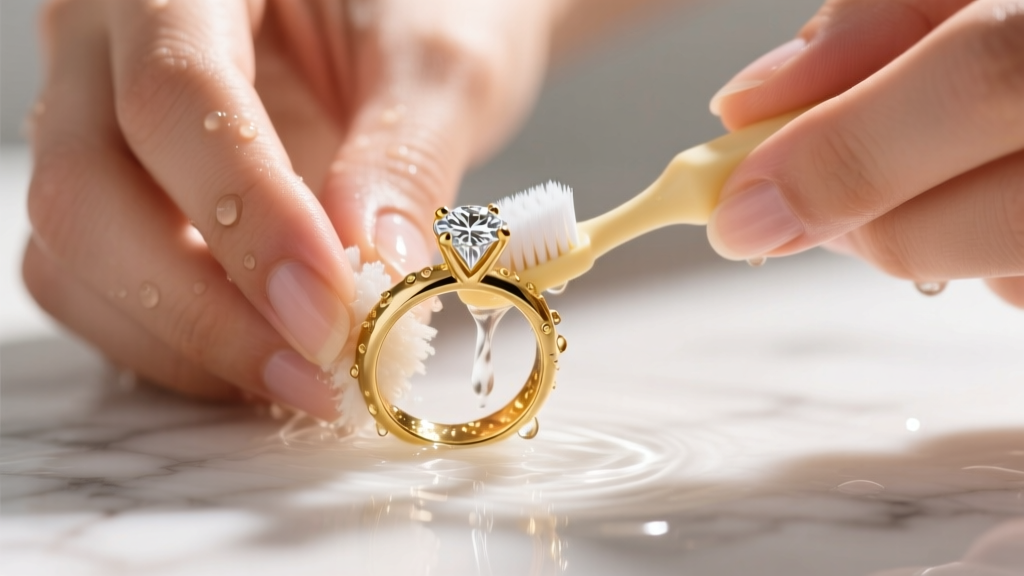
- Prepare the Solution: Mix one cup of warm distilled water with four drops of a mild, phosphate-free dish soap (such as Dawn Platinum). Avoid soaps with heavy moisturizers or exfoliating beads.
- Soak: Submerge your solid gold rings, bracelets, or pendants for 15 to 20 minutes. This softens the hardened oils trapped in the crevices.
- Agitate Gently: Using a brand-new, extra-soft baby toothbrush, gently brush the underside of the stones and the intricate milgrain details. Brush in small circular motions, never aggressively back-and-forth, which can bend delicate prongs.
- Rinse and Dry: Rinse under a gentle stream of warm distilled water. Pat dry with a lint-free microfiber cloth, ensuring no moisture remains in the clasp mechanisms.
Specialized Care for Gold-Plated and Vermeil Fashion Pieces
The cleaning rules change drastically when dealing with JCPenney's fashion jewelry lines. Because the gold layer is exceptionally thin, soaking these pieces in water or soap will accelerate the delamination of the gold from the base metal.
For gold-plated brass or gold vermeil, adopt a 'dry-first' maintenance routine. After every wear, wipe the piece down with a clean, dry microfiber polishing cloth to remove acidic sweat and body oils. If a deeper clean is absolutely necessary, dampen a cotton swab with a tiny amount of rubbing alcohol, carefully wipe the metal (avoiding any glued-in crystals or porous stones like turquoise), and immediately buff it dry. Never use commercial silver dips or ultrasonic cleaners on vermeil, as the chemical stripping agents will remove the gold layer entirely, leaving you with a dull, oxidized silver or brass base.
Cleaning Methods by JCPenney Jewelry Type
| Material Type | Base Composition | Recommended Cleaning Method | Ultrasonic Safe? | Cleaning Frequency |
|---|---|---|---|---|
| Solid 14k Gold | 58.3% Gold, 41.7% Alloy | Warm distilled water & mild dish soap soak | Yes (if no fragile gems) | Bi-weekly |
| Solid 10k Gold | 41.7% Gold, 58.3% Alloy | Soap soak, followed by a specialized gold polishing cloth | Yes (with caution) | Weekly (prone to tarnish) |
| Gold Vermeil | Sterling Silver base, 2.5+ micron gold | Dry microfiber wipe; spot clean with damp cloth only | No | After every wear |
| Gold Plated (Fashion) | Brass/Base Metal, flash plated | Dry wipe only; avoid all liquids and chemicals | No | After every wear |
Critical Mistakes That Ruin Department Store Gold
According to the Gemological Institute of America (GIA), improper home cleaning is the leading cause of premature degradation in commercial gold jewelry. Avoid these common pitfalls:
- The Toothpaste Myth: Toothpaste contains silica and baking soda, which are highly abrasive. Scrubbing your 14k gold JCPenney ring with toothpaste will create micro-scratches across the surface, permanently dulling the mirror-like finish and creating grooves where future dirt will accumulate.
- Ultrasonic Cleaners and Fracture-Filled Diamonds: Many mid-tier department store diamonds are 'fracture-filled' with a glass-like resin to improve their apparent clarity. Placing these stones in an ultrasonic cleaner—or exposing them to harsh ammonia-based cleaners—will cloud the resin, turning a seemingly brilliant diamond into a milky, opaque stone.
- Chlorine Exposure: Never wear your 10k or 14k solid gold jewelry in a swimming pool or hot tub. Chlorine reacts violently with the copper and zinc alloys in gold, causing 'stress corrosion cracking.' This can cause the prongs holding your center stone to become brittle and snap without warning.
Troubleshooting: Why Is My 10k Gold Turning My Finger Green?
A frequent complaint among buyers of accessible 10k gold jewelry is the dreaded 'green finger' effect. This is not a sign that your jewelry is fake; rather, it is a basic chemical reaction. The high copper content in 10k gold reacts with the acids in your sweat, as well as chemicals found in hand sanitizers, lotions, and household cleaners, creating copper chloride—a green salt that transfers to your skin.
The Fix: To prevent this, coat the inside band of your 10k gold ring with a thin layer of clear nail polish, creating a barrier between the copper alloy and your skin. Alternatively, remove your rings before applying lotions or using acidic cleaning products around the house. If the gold itself has developed a dark, tarnished film, use a dedicated jeweler's rouge cloth to gently buff the oxidation away without removing any actual gold.
Professional Maintenance and Protection Plans
While home care is essential for daily brilliance, it cannot replace professional bench work. If you purchased a fine jewelry piece from JCPenney, it likely came with an optional Jewelry Protection Plan. Jewelers of America recommends having fine gold pieces professionally inspected every six months. A bench jeweler will use a microscope to check for prong wear, re-tip any thinning claws securing your gemstones, and perform a high-speed buffing to remove deeper scratches that a home polishing cloth cannot address. Utilizing your protection plan for annual ultrasonic cleaning and rhodium re-plating (for white gold pieces) ensures your investment remains structurally sound and visually stunning for a lifetime.


