Selecting a Jewelry Cleaner: White Gold Technical Guide
Discover the metallurgical science behind choosing the right jewelry cleaner for white gold, covering rhodium care, ultrasonic limits, and pH safety.

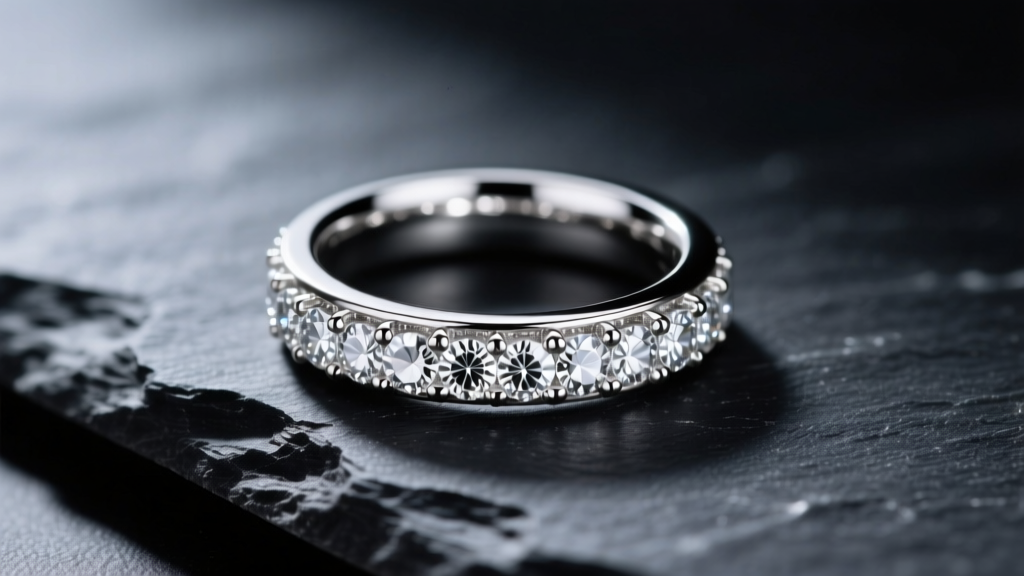
White gold is not a naturally occurring elemental metal; it is a sophisticated metallurgical alloy that requires highly specific maintenance protocols. When searching for an effective jewelry cleaner white gold enthusiasts must understand that standard commercial cleaning solutions can actively degrade the metal's surface. Unlike yellow gold, which relies solely on its alloyed composition for color, white gold depends on a microscopic surface plating of rhodium to achieve its brilliant, reflective white finish. This technical deep dive explores the chemistry, physics, and material science required to safely clean white gold jewelry without compromising its structural integrity or optical properties.
The Metallurgy of White Gold: Why Standard Cleaners Fail
To select the correct cleaning modality, one must first understand the substrate. White gold is typically alloyed with nickel, palladium, or silver to bleach the natural yellow hue of pure gold. According to the Gemological Institute of America (GIA), the resulting alloy is still slightly yellowish or grayish, necessitating an electroplated layer of rhodium—a platinum-group metal with exceptional reflectivity and a Vickers hardness of up to 800 HV.
Rhodium Plating Vulnerabilities
Rhodium plating on commercial jewelry typically ranges from 0.75 to 1.0 microns in thickness. Many off-the-shelf jewelry cleaners contain harsh alkaline compounds or ammonia. While ammonia is excellent for cutting through sebum and cosmetic buildup on diamonds, prolonged exposure to high-pH ammonia solutions can cause microscopic pitting in the rhodium layer. Over time, this accelerates the wear-through rate, exposing the yellowish base alloy beneath and necessitating premature re-plating.
The Nickel vs. Palladium Alloy Factor
The base alloy dictates chemical sensitivity. Nickel-alloyed white gold (common in 14k and 18k European and American markets) is highly susceptible to stress corrosion cracking when exposed to chlorine or bleach-based cleaners. The chlorine reacts with the nickel atoms at the grain boundaries of the metal, leading to catastrophic prong failure. Palladium-alloyed white gold is more chemically inert but is softer (lower Vickers hardness), making it more prone to micro-scratching from abrasive polishing pastes often mistakenly included in multi-step cleaning kits.
Technical Breakdown of Cleaning Modalities
Professional jewelers utilize three primary cleaning modalities. Understanding the physical mechanics of each is critical for home and bench use.
Ultrasonic Cavitation (40kHz vs. 80kHz)
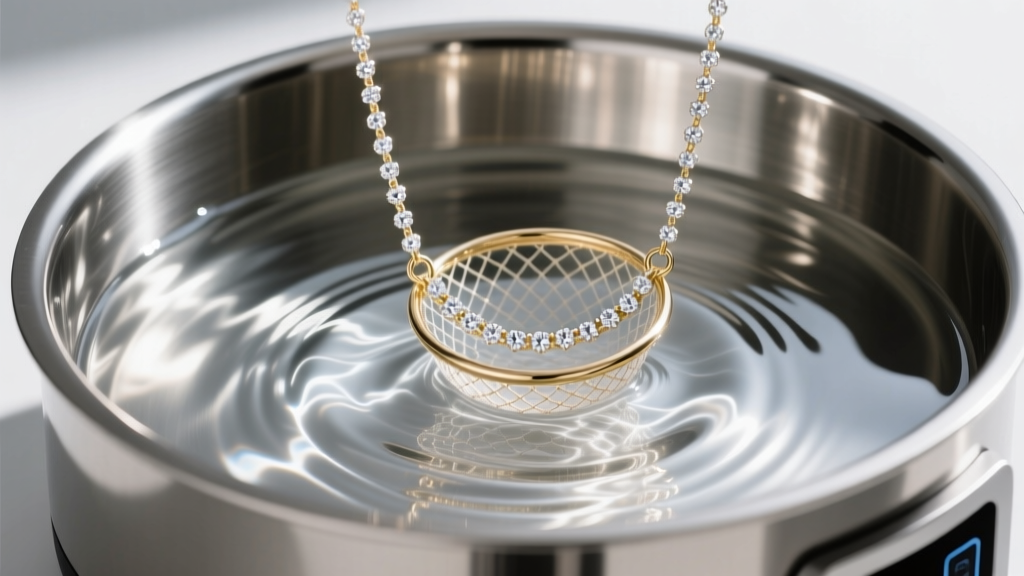
Ultrasonic cleaners use high-frequency sound waves to create microscopic vacuum bubbles in a fluid medium. When these bubbles collapse against the jewelry surface (cavitation), they generate localized shockwaves that dislodge particulate matter.
- 40kHz Frequency: The industry standard. Excellent for solid white gold castings and heavy soil removal. However, the larger cavitation bubbles can exert enough mechanical force to loosen pave-set diamonds if the prongs are already worn below 0.15mm thickness.
- 80kHz Frequency: Generates smaller, gentler cavitation bubbles. This is the required frequency for cleaning white gold jewelry featuring micro-pave settings, tension settings, or fracture-filled diamonds, which can shatter under 40kHz acoustic pressure.
Chemical Solvents and pH Thresholds
For white gold, the ideal chemical cleaner should rely on mild non-ionic surfactants rather than harsh alkalines. The optimal pH range for a white gold cleaning solution is between 7.0 and 8.5. Crucially, you must avoid any cleaner containing thiourea. Thiourea is a powerful tarnish-removing agent commonly found in silver dips. If a silver dip is used on white gold, the thiourea will chemically strip the rhodium plating almost instantly, leaving a dull, irreversible matte finish.
Comparative Analysis: Cleaning Methods for White Gold
The following matrix evaluates common cleaning methods against the specific vulnerabilities of white gold alloys and rhodium plating.
| Cleaning Modality | Rhodium Safety | Pave Setting Safety | Best Use Case |
|---|---|---|---|
| Mild Surfactant (pH 7-8) | Excellent | Excellent | Daily/Weekly maintenance, heavily soiled pave rings |
| Ammonia-Based Dip | Poor (Degrades over time) | Good | Quick diamond brilliance restoration (solids only) |
| Ultrasonic (40kHz) | Excellent | Poor (Risk of stone loss) | Heavy sebum removal on solid cast bands, plain chains |
| Ultrasonic (80kHz) | Excellent | Excellent | Professional cleaning of micro-pave and fragile settings |
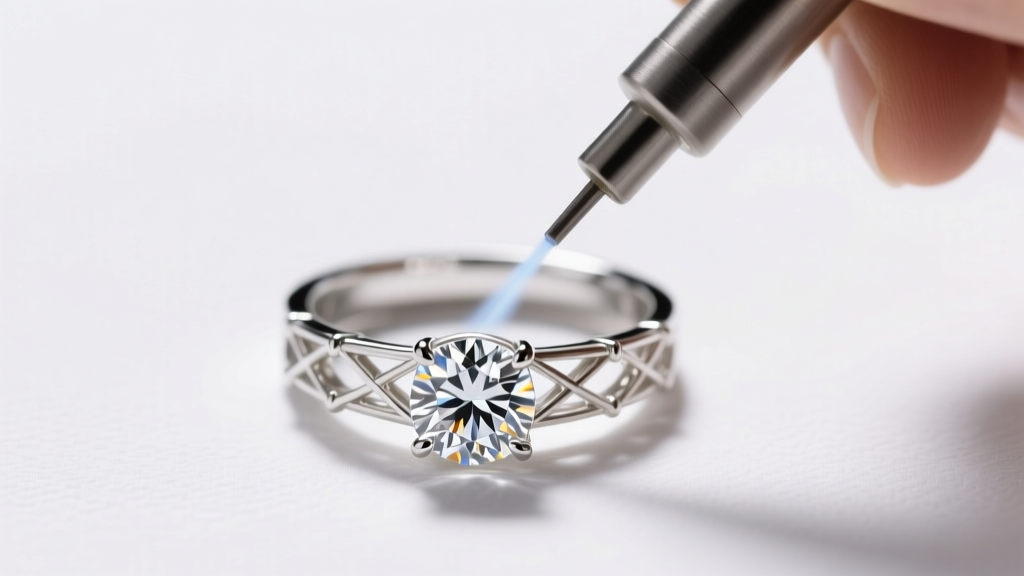
| High-Pressure Steam | Excellent | Moderate (Thermal shock risk) | Final polishing prep, blasting debris from gallery wires |
| Silver Dip (Thiourea) | Destructive | N/A | NEVER use on white gold |
Step-by-Step Laboratory-Grade Home Cleaning Protocol
For routine maintenance of white gold jewelry at home, bypass commercial chemical dips entirely. The Jewelers of America recommends a mechanical and mild chemical approach to preserve the rhodium layer while achieving optical clarity in gemstones.
- Solution Preparation: Mix 3 parts distilled water with 1 part mild, phosphate-free dish detergent (pH ~7.5). Distilled water prevents hard water calcium deposits from adhering to the metal during the drying phase.
- Thermal Activation: Heat the solution to approximately 40°C (104°F). This temperature is sufficient to soften cosmetic waxes and sebum without causing thermal shock to included gemstones like emeralds or opals (which should never be submerged).
- Agitation: Submerge the white gold piece for exactly 3 to 5 minutes. Use an ultra-soft baby toothbrush (bristle diameter < 0.1mm) to gently agitate the pavilion (underside) of the diamonds. Never scrub the white gold shank or bezel directly, as trapped silica dust in the brush can cause micro-marring on the rhodium.
- Rinsing: Rinse under a gentle stream of lukewarm distilled water. Ensure the drain is securely plugged.
- Drying: Use a lint-free microfiber cloth or a localized blast of compressed air to remove water droplets. Air-drying will leave mineral rings on the rhodium surface.
Expert Warning: Never use toothpaste or baking soda pastes on white gold. These substances have a Mohs hardness of 3 to 4, which is softer than rhodium (Mohs 6) but hard enough to create a cloudy network of micro-scratches that diffuses light and ruins the mirror finish.
When to Seek Professional Electrolytic Cleaning
Home protocols are sufficient for organic buildup (lotions, skin oils, dust). However, if your white gold jewelry has developed a stubborn, dark oxidation layer in the recessed gallery wires—often caused by sulfur compounds in the environment reacting with the copper or silver content in the base alloy—chemical surfactants will fail. In these instances, a professional jeweler must use an electrolytic cleaning tank. This process passes a low-voltage direct current through an alkaline solution, creating hydrogen gas bubbles directly on the cathode (the jewelry), which mechanically lifts inorganic oxides without abrasive contact. Always verify that your jeweler inspects the prong integrity under 10x magnification before subjecting the piece to ultrasonic or electrolytic cleaning, as the cavitation and gas generation can easily dislodge a stone held by a compromised prong.


