Material Guide to Gold Jewelry on Men: Karats, Alloys, and Wear
Discover the best karats and alloys for gold jewelry on men. Compare 10k, 14k, and 18k durability, scratch resistance, and daily wear properties.


The Physical Reality of Men's Gold Jewelry
The market for gold jewelry on men has evolved far beyond simple wedding bands and heirloom watches. Today, men are wearing gold chains, signet rings, and heavy bracelets as daily staples. However, the physical demands placed on men's jewelry are vastly different from women's. Men are more likely to grip heavy tools, lift iron at the gym, type aggressively on mechanical keyboards, and expose their hands to harsh chemicals or abrasive surfaces. Because of this, understanding the metallurgy, karat purity, and structural integrity of gold is not just an academic exercise—it is the difference between a lifelong accessory and a bent, snapped, or deeply scratched disappointment.
Pure gold is a remarkably soft, malleable metal. To survive the rigors of a man's daily routine, gold must be alloyed with other metals. This guide breaks down the exact material properties, hardness scales, and structural requirements you need to know before investing in men's gold jewelry.
The Metallurgy of Men's Gold: Why Pure Gold Fails
To understand why karat matters, we must look at the Mohs scale of mineral hardness and the Vickers Hardness (HV) test. 24-karat gold (99.9% pure) has a Mohs hardness of roughly 2.5 to 3, making it about as hard as a human fingernail. Its Vickers Hardness sits at a mere 25 HV. If you were to wear a 24k gold ring while lifting a steel dumbbell or turning a steel wrench, the gold would deform, gouge, and lose mass almost immediately.
To create durable jewelry, metallurgists alloy pure gold with metals like copper, silver, zinc, nickel, and palladium. These base metals introduce crystalline lattice disruptions that drastically increase the tensile strength and scratch resistance of the final piece. According to the Gemological Institute of America (GIA), the specific ratio of these alloying metals dictates not only the karat but also the color, brittleness, and long-term wearability of the jewelry.
Karat Breakdown: Hardness, Alloy Composition, and Use Cases
10k Gold (41.7% Gold): The Utilitarian Workhorse
10k gold is the lowest karat that can legally be sold as "gold" in the United States. With a Vickers Hardness of approximately 160 HV to 180 HV (depending on the copper-to-silver ratio), it is the most scratch-resistant and rigid gold alloy available. For men who work in construction, mechanics, or heavy landscaping and refuse to take off their wedding bands, 10k gold is highly practical. The trade-off is a noticeably paler yellow hue and a higher risk of skin irritation due to the high copper and nickel content.
14k Gold (58.3% Gold): The Daily Driver Standard
14k gold hits the ultimate sweet spot for men's everyday jewelry. It boasts a Vickers Hardness of around 140 HV, providing excellent resistance to the micro-abrasions caused by steering wheels, desk edges, and gym equipment. It retains a rich, warm yellow color while offering enough structural rigidity to hold intricate prong settings for diamonds or gemstones. For men's Cuban link chains and signet rings, 14k is the undisputed industry standard for daily wear.
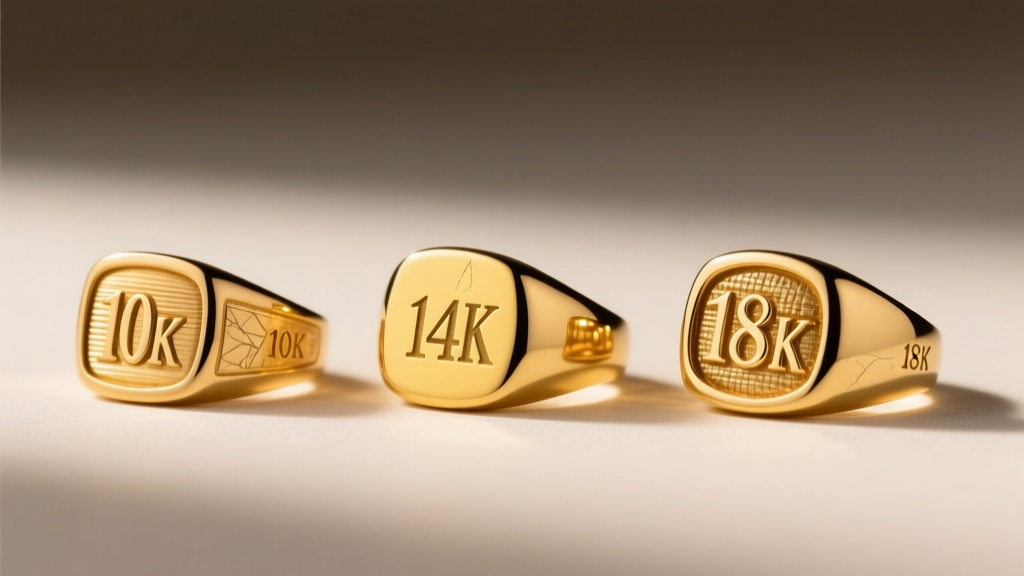
18k Gold (75.0% Gold): The Luxury Statement
18k gold is highly prized for its deep, saturated yellow color and hypoallergenic properties (as it contains fewer base metals). However, its Vickers Hardness drops to roughly 125 HV. It is significantly more prone to developing a "patina"—a network of micro-scratches that gives the metal a matte, vintage look over time. 18k is best reserved for men who work in office environments, wear their jewelry primarily for evening events, or view their pieces as heirloom investments rather than utilitarian accessories.
Material Comparison Table: Vickers Hardness & Tensile Strength
The following data illustrates how alloy composition directly impacts the physical resilience of gold jewelry on men. Note that exact numbers vary slightly based on the specific foundry's alloy recipe (e.g., adding a trace of boron or silicon can alter hardness).
| Karat | Gold Purity | Approx. Vickers Hardness (HV) | Tensile Strength | Best Men's Use Case |
|---|---|---|---|---|
| 10k | 41.7% | 160 - 180 HV | Very High | Manual labor rings, heavy-duty chains |
| 14k | 58.3% | 135 - 150 HV | High | Daily wear rings, bracelets, pendants |
| 18k | 75.0% | 115 - 130 HV | Moderate | Office wear, luxury watches, heirlooms |
| 22k | 91.6% | 60 - 80 HV | Low | Investment pieces, occasional wear only |
| 24k | 99.9% | 25 HV | Very Low | Not recommended for functional men's wear |
Construction Methods: Solid, Filled, and Vermeil
When shopping for gold chains or bracelets, men will encounter various construction methods. Understanding these is critical to avoiding buyer's remorse.
- Solid Gold: The only viable option for men's rings and bracelets. Friction from wrists and fingers will wear through plating in a matter of months. A solid 14k gold Cuban link chain can withstand over 60 lbs of tensile force if the links are properly soldered.
- Gold-Filled (1/20 14k): A thick layer of 14k gold mechanically bonded to a brass core. This is acceptable for men's necklaces worn over t-shirts, as the friction is minimal. However, it is entirely unsuitable for rings or bracelets.
- Gold Vermeil / Plated: A microscopic layer of gold (often less than 0.5 microns) over sterling silver or brass. For men's jewelry, plated pieces are a trap. The natural oils, sweat, and physical abrasion from a man's daily routine will strip the plating, leaving a dull, oxidized base metal beneath.
Color Alloys and Skin Chemistry
The color of gold is dictated by its alloying metals, which also dictate how the metal interacts with a man's skin chemistry and lifestyle.
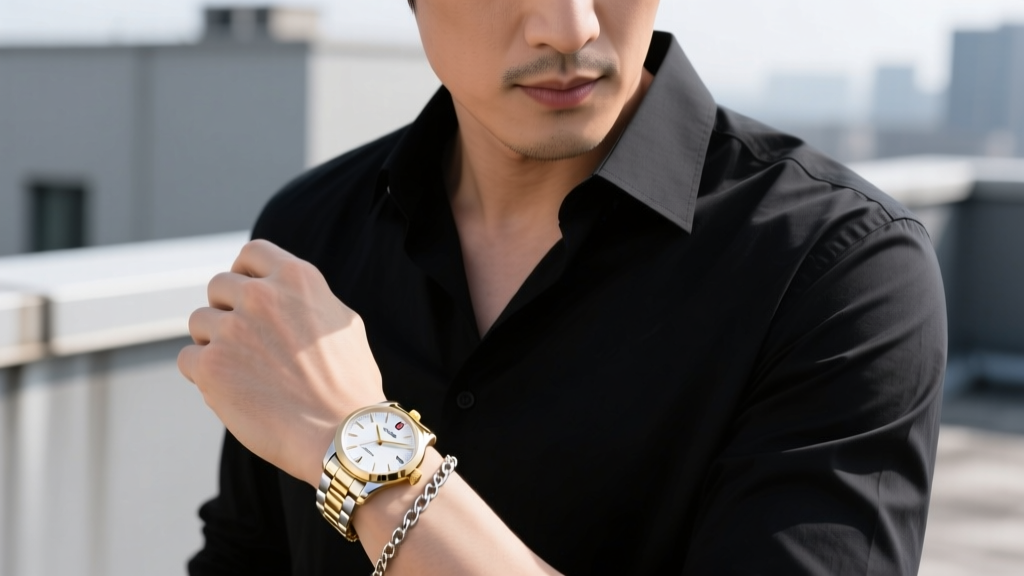
Yellow Gold
Alloyed primarily with silver and copper. It is the most low-maintenance option. When yellow gold scratches, the metal is merely displaced, not lost. A jeweler can easily polish it back to a high shine without removing significant mass.
White Gold
White gold is created by alloying yellow gold with bleaching metals like nickel, palladium, or manganese. Nickel white gold is harder and more durable, making it great for men's rings, but it causes contact dermatitis in roughly 10-15% of the population. Palladium white gold is hypoallergenic but softer. Crucially, all white gold is plated with rhodium to achieve a bright, chrome-like finish. Men must be prepared to have their white gold jewelry re-plated every 12 to 18 months, as the friction from daily wear will inevitably reveal the pale yellowish-gray base metal underneath.
Rose Gold
Rose gold gets its pinkish hue from a high copper content (sometimes up to 20% or more in 14k alloys). Copper is an incredibly strong metal, making rose gold slightly more durable and scratch-resistant than yellow or white gold of the same karat. However, copper can oxidize and react with acidic sweat, sometimes leaving a harmless but annoying greenish tint on the skin of men with highly acidic body chemistry.
Actionable Buying Framework for Men's Gold
Use this decision matrix to select the right material properties based on your specific lifestyle and the type of jewelry you are purchasing:
- The Heavy Lifter / Manual Laborer: Opt for 10k or 14k yellow gold. Ensure ring shanks are at least 1.8mm to 2.2mm thick to prevent the band from bending into an oval shape under heavy grip pressure. Avoid white gold to eliminate rhodium maintenance.
- The Office Professional / Gym-Goer: 14k gold is your standard. For chains, aim for a minimum width of 3mm to 4mm (like a Figaro or Cuban link) to ensure the links can support the weight of a pendant without snapping at the clasp.
- The Collector / Executive: 18k gold is appropriate for signet rings, luxury dress watches, and pieces worn in low-impact environments. The rich patina that 18k gold develops over time is highly sought after by collectors and adds character to vintage-style men's jewelry.
Ultimately, the best gold jewelry on men is the kind that aligns with their physical reality. By prioritizing Vickers hardness, proper shank thickness, and smart alloy selection over sheer karat purity, you ensure that your gold jewelry remains a resilient, lifelong asset rather than a fragile liability.


