Pure Gold Jewelry Properties: 24K vs 18K & 14K Alloys Compared
Discover the material properties of pure gold jewelry. Compare 24K, 18K, and 14K hardness, durability, and best use cases for lasting wear.

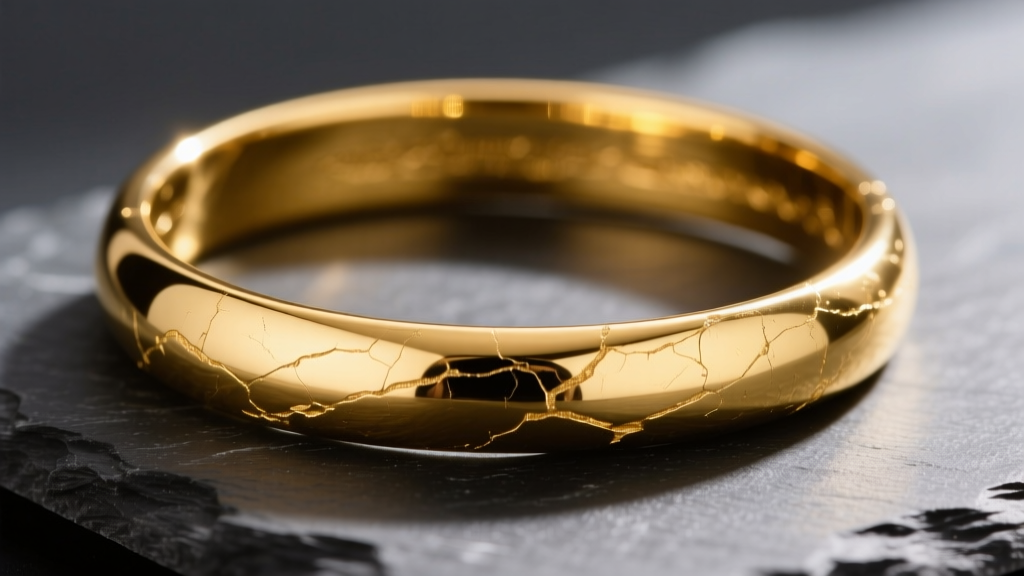
The Metallurgical Reality of Pure Gold Jewelry
When discussing pure gold jewelry, we are fundamentally talking about 24-karat gold, which consists of 99.9% elemental gold (Au). From a metallurgical perspective, pure gold possesses a face-centered cubic (FCC) crystal lattice structure. This specific atomic arrangement allows the planes of atoms to slide past one another with minimal resistance, granting the metal its legendary malleability and ductility. In fact, a single ounce of pure gold can be drawn into a wire 50 miles long or hammered into a sheet covering 100 square feet.
However, this same FCC structure is precisely why pure gold jewelry is notoriously soft. On the Mohs scale of mineral hardness, pure gold sits at a mere 2.5 to 3—roughly the same hardness as a human fingernail. While its nobility ensures it will never tarnish, oxidize, or corrode, its structural vulnerability dictates that pure gold jewelry must be engineered, worn, and maintained entirely differently than its alloyed counterparts.
Hardness and Durability: 24K vs. 18K vs. 14K
To make gold viable for daily wear, metallurgists introduce alloy metals like copper, silver, zinc, and palladium. These foreign atoms create 'lattice strain' within the gold's crystal structure, effectively locking the atoms in place and drastically increasing the metal's hardness and tensile strength. According to the Gemological Institute of America (GIA), the karat system measures this purity, with 24 parts being the maximum.
| Karat | Gold Content | Vickers Hardness (HV) | Tensile Strength (MPa) | Primary Alloy Mix (Yellow) | Best Use Case |
|---|---|---|---|---|---|
| 24K | 99.9% | 25 - 30 HV | ~120 MPa | None (Pure Au) | Investment, cultural heirlooms, occasional wear |
| 22K | 91.6% | 45 - 55 HV | ~200 MPa | Copper, Silver | Traditional bridal jewelry, heavy bangles |
| 18K | 75.0% | 120 - 135 HV | ~350 MPa | Copper, Silver, Zinc | High-end engagement rings, luxury watches |
| 14K | 58.3% | 140 - 160 HV | ~450 MPa | Copper, Silver, Zinc | Everyday rings, active lifestyle jewelry |
As the data illustrates, dropping from 24K to 18K doesn't just change the color; it increases the Vickers Hardness by a factor of four to five. This is the difference between a ring that bends when you grip a steering wheel and one that withstands decades of manual labor.
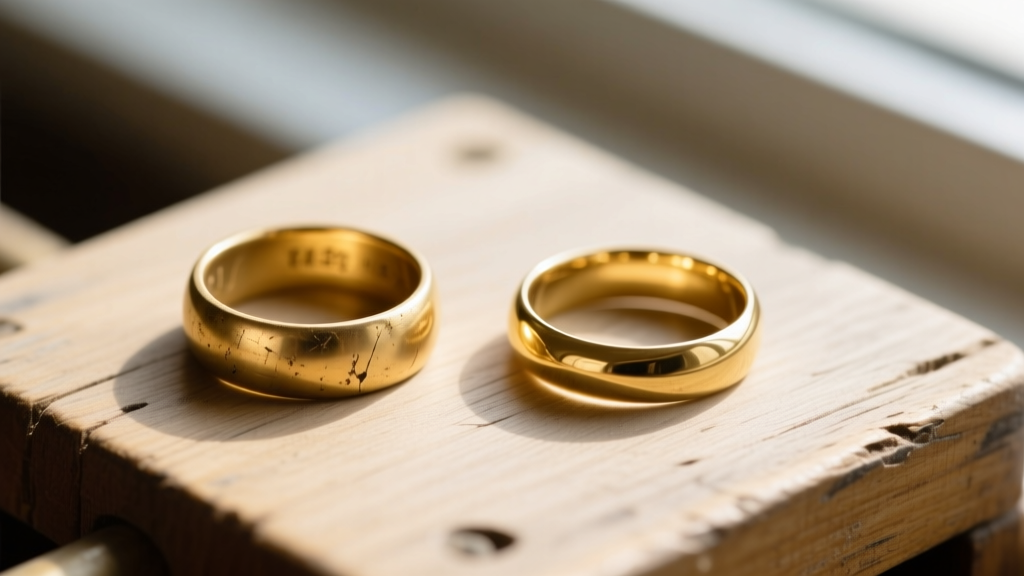
Why Pure Gold Jewelry Requires Specific Design Engineering
Jewelers cannot use the same architectural blueprints for pure gold jewelry that they use for 14K or 18K pieces. The failure modes of 24K gold are entirely unique, requiring specific design interventions to prevent catastrophic stone loss or structural failure.
The Problem with Prong Settings
Never set a high-value diamond or gemstone in a pure gold prong setting. Because 24K gold lacks 'springback' (elastic memory), if a prong is snagged on clothing, it will lift and remain lifted. Unlike 14K gold, which might bend slightly and hold the stone, a 24K prong will yield permanently, leading to immediate stone loss. Instead, master jewelers use closed bezels or flush/gypsy settings, where the gold is burnished entirely around the gemstone's girdle, relying on the metal's malleability to create a tight, permanent seal.
Shank Thickness and Width
A standard 14K gold wedding band might feature a shank (the bottom part of the ring) that is 1.5mm thick and 2.0mm wide. If you cast that exact same ring in 24K pure gold, it will eventually bend into an oval shape from the simple pressure of holding a coffee mug. For pure gold jewelry rings, the shank must be engineered to be at least 2.5mm thick and 3.0mm wide to provide adequate structural mass.
'Designing for 24-karat gold is an exercise in mass and geometry. You cannot rely on the tensile strength of the metal; you must rely on the sheer volume of the metal to resist deformation.' — Master Bench Jeweler
Cultural and Investment Contexts for 24K Gold
In Western markets, 14K and 18K are the standards for fine jewelry, heavily marked up for brand prestige and design. However, in East Asian, Middle Eastern, and South Asian markets, pure gold jewelry (and 22K gold) is viewed primarily as a liquid asset and a store of generational wealth.
Pricing and 'Making Charges'
When purchasing pure gold jewelry in markets like India, China, or the UAE, the pricing model is entirely transparent and tied to the global spot price. According to data tracked by the World Gold Council, the intrinsic value of the metal is the primary cost driver. Consumers pay the daily spot price of gold plus a 'making charge' (the labor cost to craft the piece), which typically ranges from 5% to 15% for simple bangles and chains. This contrasts sharply with Western retail jewelry, where a 14K gold piece might be sold at a 300% to 500% markup over its melt value. Consequently, pure gold jewelry remains a highly efficient vehicle for wealth preservation in emerging economies.
Care, Maintenance, and Failure Modes
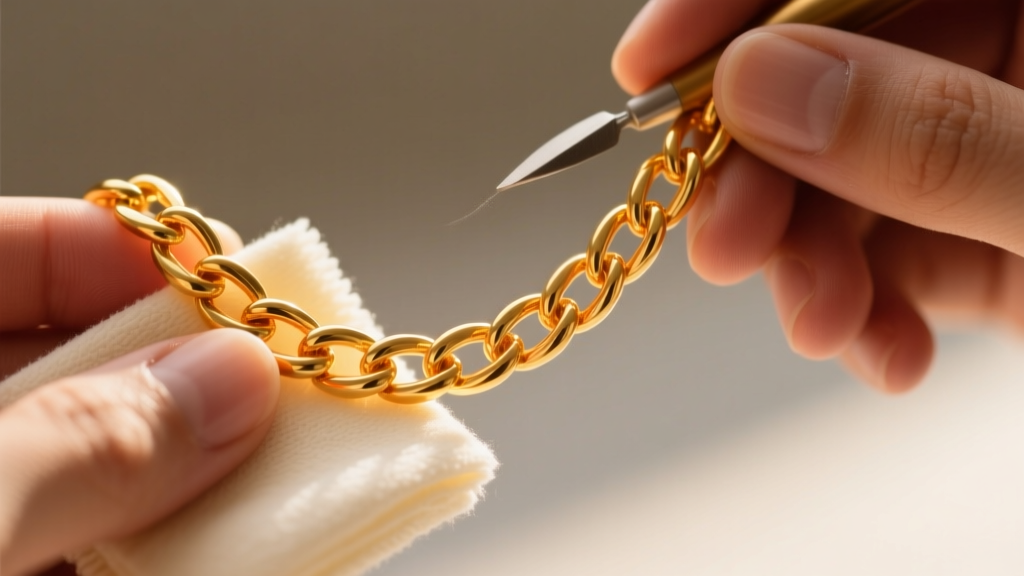
Caring for pure gold jewelry requires a paradigm shift. You are not protecting the metal from chemical damage—gold is entirely immune to household acids, chlorine, and sulfur. You are protecting it from physical displacement.
- Abrasive Polishing: Avoid motorized polishing wheels with harsh rouge compounds. Because 24K gold is so soft, aggressive polishing will remove significant metal weight and round off sharp, intentional design edges. Use only soft microfiber cloths and mild soap.
- Ultrasonic Cleaners: While the gold itself can handle ultrasonic vibrations, pure gold jewelry often features bezel-set porous stones (like jade, turquoise, or opals) which are traditional in Asian 24K designs. The high-frequency vibrations can fracture these delicate gems.
- Storage: Never store pure gold jewelry in a communal jewelry box. The 24K pieces will easily be scratched by harder metals, diamonds, or even 14K gold pieces. Wrap each item individually in acid-free tissue paper or soft flannel pouches.
- Resizing Limitations: Resizing a pure gold ring is risky. The soldering process requires heating the metal, and because 24K gold has a lower melting point and higher thermal conductivity than alloys, it is very easy to accidentally melt or warp the entire shank during sizing.
Final Verdict: Choosing the Right Karat for Your Lifestyle
Choosing between pure gold jewelry and alloyed gold comes down to a strict assessment of your lifestyle, aesthetic preferences, and financial goals. If you are seeking an everyday engagement ring, a watch case, or a piece of jewelry meant to withstand the rigors of an active lifestyle, 14K or 18K gold is the only scientifically sound choice. The alloyed metals provide the necessary Vickers hardness to protect gemstones and maintain structural integrity over decades of friction and impact.
However, if you are purchasing a piece for cultural significance, as a liquid financial asset, or as an heirloom bangle or necklace that will be worn only on special occasions, pure gold jewelry is unmatched. Its deep, saturated orange-yellow hue is visually distinct from paler 14K alloys, and its untarnishable, hypoallergenic nature makes it a masterpiece of natural metallurgy. By respecting its physical limitations and engineering designs that accommodate its softness, you can enjoy the ultimate luxury of wearing the earth's most noble metal in its purest form.


