Gold Care Guide: Tips From A Reno City Gold & Jewelry Buyer
Learn expert gold cleaning, maintenance, and storage tips to maximize resale value, straight from a top Reno City gold & jewelry buyer.

The Appraisal Impact: Why Condition Dictates Your Premium
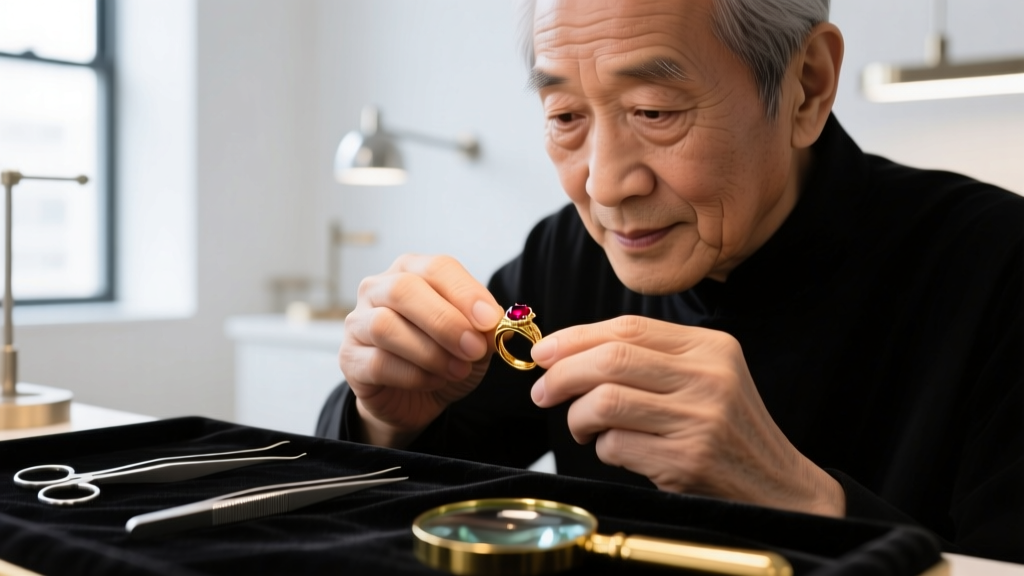
When you sit down at the counter of a reputable reno city gold & jewelry buyer, the offer you receive is rarely based on the raw melt value alone. In the current 2026 market, where gold spot prices have seen historic volatility and overall upward momentum, professional buyers actively seek out pieces that can be resold on the secondary retail market rather than sent to the refinery. The difference between a "scrap" offer and a "resale premium" offer can be anywhere from 15% to 40% of the item's intrinsic metal value.
Condition is the primary differentiator. Buyers meticulously evaluate the structural integrity of the shank, the wear on the prongs, and the presence of chemical degradation. A ring with a thinning shank or porous prongs requires immediate bench work, and the buyer will deduct the cost of that labor (often $50 to $150) from your payout. Proper care and maintenance are not just about keeping your jewelry beautiful; they are about protecting your financial asset.
The Chemical Enemies: Understanding Gold Alloy Degradation
Pure 24k gold is virtually indestructible by environmental factors, but it is too soft for daily wear. The gold jewelry you own is an alloy—mixed with copper, silver, zinc, or nickel to provide tensile strength. It is these secondary metals that are vulnerable to chemical attacks.
Chlorine and Stress Corrosion Cracking
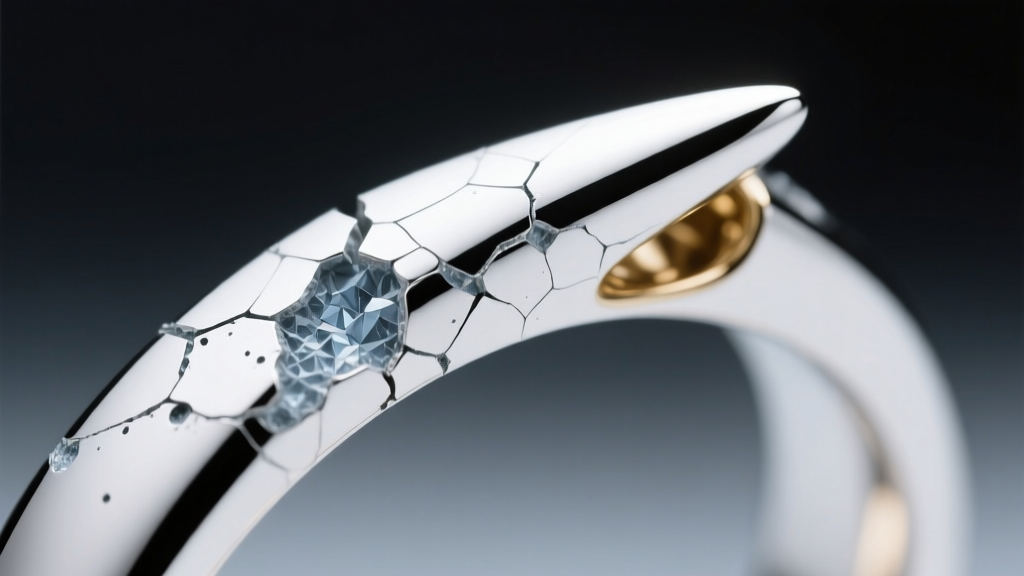
Chlorine is the single greatest threat to gold alloys. When exposed to chlorinated pool water or harsh household bleach, the alloying metals (particularly copper and silver) react to form metal chlorides. This leads to a metallurgical failure known as stress corrosion cracking. The microscopic cracks form at the points of highest tension—usually the base of the prongs holding your gemstones. According to GIA's comprehensive guide to gold, repeated chlorine exposure can cause a ring's prongs to snap off entirely with minimal physical force, instantly downgrading the piece from "resalable" to "scrap" in the eyes of a buyer.
Sulfur and Tarnish
Lower-karat gold (10k and 14k) contains higher percentages of copper and silver, making it susceptible to sulfur compounds in the air, sweat, and certain foods. This results in a dark, oxidized tarnish layer. While tarnish can be removed, severe oxidation that penetrates the microscopic pores of the metal requires aggressive polishing, which strips away gold weight.
The Professional Cleaning Protocol (What Not To Do)
Many well-intentioned owners ruin the resale value of their gold by using abrasive "hacks" found online. Toothpaste, baking soda pastes, and hard-bristled brushes are catastrophic for gold. Gold ranks at 2.5 to 3 on the Mohs scale of hardness. Toothpaste contains silica and calcium carbonate (Mohs 3 to 4), which will leave deep, permanent micro-scratches across the surface of the metal, destroying the factory polish and requiring professional refinishing.
The Safe At-Home Wash Formula
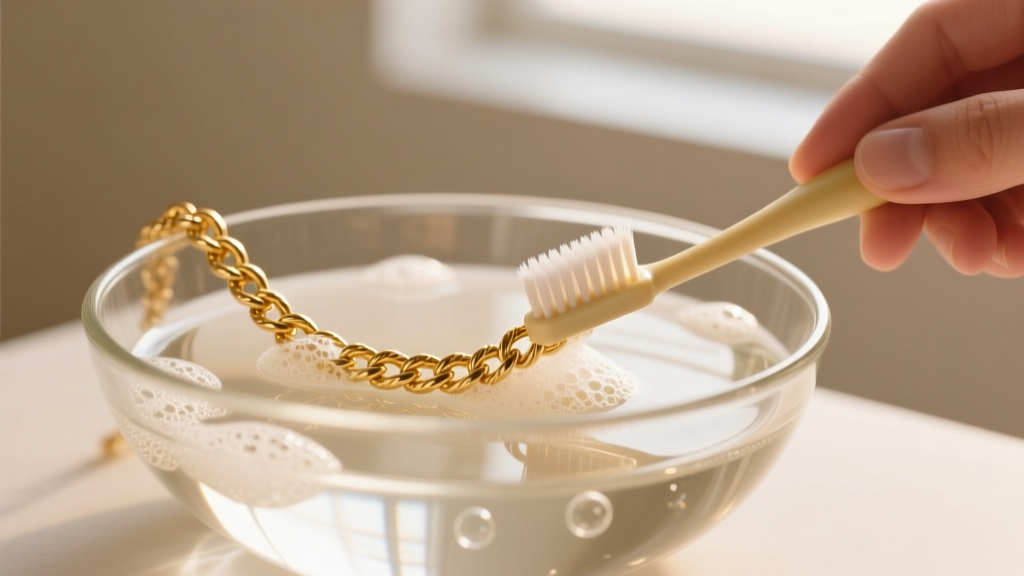
To safely lift sebum, dead skin cells, and environmental grime without scratching the alloy, follow this exact protocol used by estate jewelry appraisers:
- The Solution: Mix 1 cup of warm distilled water (tap water contains minerals that can leave hard water spots) with 3 drops of a mild, phosphate-free dish detergent (like Dawn).
- The Soak: Submerge the gold jewelry for exactly 15 minutes. This loosens the hardened sebum trapped under the gallery wire and behind gemstone culets.
- The Agitation: Use a brand-new, ultra-soft baby toothbrush. Gently sweep the bristles in one direction along the shank and carefully around the prong tips. Never scrub in aggressive circles.
- The Rinse & Dry: Rinse under a gentle stream of lukewarm distilled water. Pat dry with a lint-free microfiber cloth. Do not use paper towels, as wood pulp fibers will cause microscopic marring on high-polish 18k and 24k gold.
Polishing vs. Cleaning: The Weight Loss Trap
Cleaning removes foreign matter; polishing removes metal. Every time a jeweler uses a rouge wheel or an abrasive polishing cloth, they are stripping away a microscopic layer of the gold alloy. Over a decade, a heavily polished ring can lose up to 5% to 8% of its total gram weight. When a buyer weighs your item on a calibrated digital scale, that lost weight represents lost money. Preserve the original patina and factory finish whenever possible, and only seek professional bench polishing if the piece has deep, visible gouges.
Structural Maintenance: Karat Durability & Care Frequency
Different karats require entirely different maintenance schedules based on their tensile strength and scratch resistance. The Federal Trade Commission Jewelry Guidelines dictate how gold purity is stamped and sold, but understanding the physical reality of these purities is crucial for long-term care.
| Gold Karat | Purity % | Primary Alloy Metals | Durability Profile | Maintenance & Inspection Frequency |
|---|---|---|---|---|
| 10k Gold | 41.7% | Copper, Silver, Zinc | Highly durable, scratch-resistant, but prone to oxidation and tarnish. | Clean monthly; inspect for tarnish and structural stress annually. |
| 14k Gold | 58.5% | Copper, Silver, Zinc | The industry standard. Excellent balance of hardness and color retention. | Clean bi-weekly; professional prong check every 12 months. |
| 18k Gold | 75.0% | Copper, Silver, Palladium | Softer, develops a natural patina over time, prone to surface marring. | Clean weekly; avoid heavy impact; inspect prongs every 6 months. |
| 24k Gold | 99.9% | None (Pure Gold) | Extremely soft, dents and bends easily, immune to tarnish. | Store separately; never wear during physical activity; wipe with soft cloth. |
Storage & Environmental Hazards
How you store your gold when it is not on your body directly impacts its condition when you eventually decide to sell. Tossing multiple gold chains or rings into a single velvet pouch guarantees a tangle of micro-scratches. Furthermore, white gold alloys (which are mixed with nickel or palladium and plated with rhodium) are particularly susceptible to friction wear. If the rhodium plating is rubbed off due to poor storage, the buyer will have to factor in the cost of re-rhodium plating ($35 to $75) before making an offer.
- Use Individual Pouches: Store every piece in its own soft, anti-tarnish flannel pouch to prevent metal-on-metal friction.
- Control Humidity: Store your jewelry box in a climate-controlled room. Bathrooms are the worst environment due to extreme humidity fluctuations and aerosolized cosmetics.
- Silica Gel Packets: Drop a fresh silica gel packet into your jewelry safe or drawer to absorb ambient moisture and slow the oxidation of copper-heavy 10k and 14k alloys.
Your Pre-Appraisal Preparation Checklist
If you are preparing to visit a buyer to liquidate an estate piece or upgrade your collection, follow this 48-hour checklist to ensure you command the highest possible premium:
- Perform the Safe Wash: Use the distilled water and mild soap method to remove all lotions, oils, and dirt. Buyers use bright halogen or LED bench lights; hiding grime is impossible and looks deceptive.
- Do Not Polish: Leave the scratches and patina alone. Let the buyer assess the true state of the metal. Over-polishing raises red flags about hidden damage or altered hallmarks.
- Check the Hallmarks: Use a magnifying glass to locate the karat stamp (e.g., 14K, 585, 750) and the maker's mark. Clean out the stamp area with a wooden toothpick so the buyer can easily verify authenticity.
- Gather Documentation: Compile any original receipts, GIA grading reports, or historical appraisals. Provenance and verified gemstone weights can push a buyer to offer a premium above the standard secondary market rate.
By treating your gold jewelry as a tangible financial asset rather than a mere accessory, you preserve its structural integrity and its market value. When the time comes to sell, a meticulously maintained piece will always command the respect—and the highest payout—from any professional buyer.


