How To Wash Gold Jewelry At Home Without Ruining Trendy Finishes
Learn how to wash gold jewelry at home safely. Expert care guide for matte, hammered, and vermeil finishes to preserve modern 2026 trends.

The 2026 Shift: Why Your Gold Cleaning Routine Needs an Update
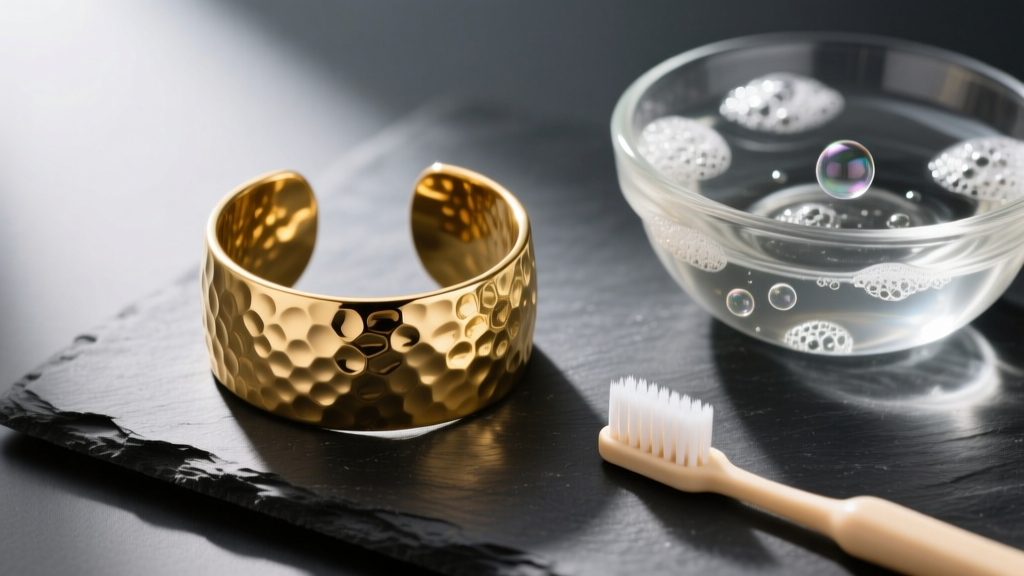
The landscape of gold jewelry has fundamentally shifted. While the high-polish, mirror-finish gold of the early 2010s remains a classic staple, the dominant trends of 2026 heavily feature tactile, organic, and intentionally imperfect textures. Think hammered 14k gold cuffs, brushed satin-finish signet rings, Florentine engraving, and mixed-metal oxidized accents. This evolution in style means that the aggressive cleaning methods of the past are now actively detrimental to your most fashionable pieces. Knowing how to wash gold jewelry at home is no longer just about removing lotion buildup; it is about preserving the microscopic grooves, matte patinas, and delicate vermeil layers that define contemporary design.
According to the Gemological Institute of America (GIA), gold is a remarkably soft metal. On the Mohs scale of mineral hardness, pure 24k gold sits at a mere 2.5 to 3. Even when alloyed into 14k or 18k gold for durability, it remains highly susceptible to micro-abrasions. When you apply outdated cleaning hacks to modern textured gold, you risk polishing away the very matte or hammered effects the jeweler spent hours perfecting. This guide bridges the gap between metallurgical science and current style trends, ensuring your curated stack remains pristine without losing its designer edge.
The Core Method: How to Wash Gold Jewelry at Home Safely
For standard solid 14k and 18k gold pieces without delicate gemstone pavé or intentional oxidation, the baseline cleaning protocol remains remarkably simple. However, precision in your choice of materials is what separates a professional-level clean from a damaging one.
The Step-by-Step Baseline Wash
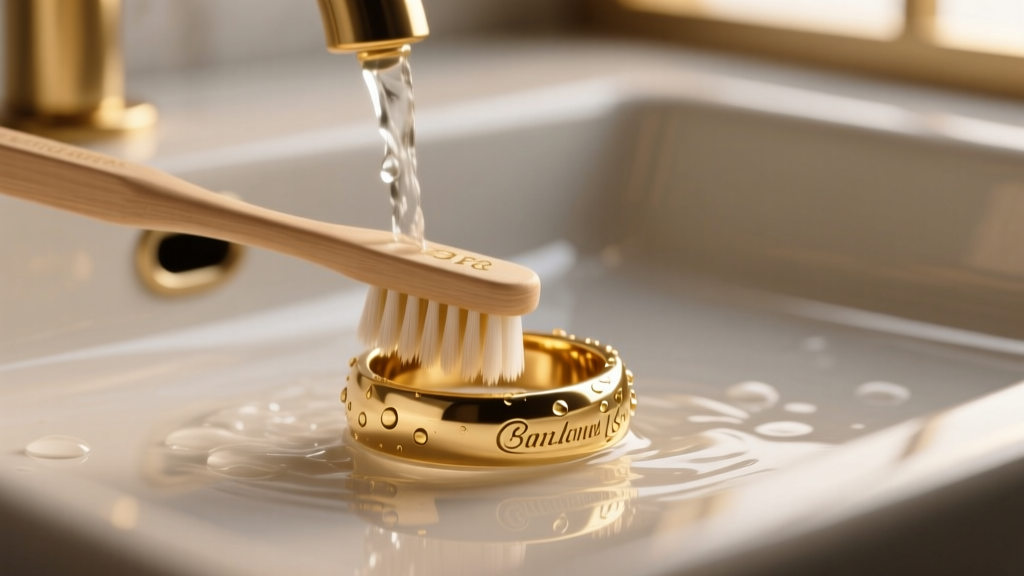
- The Solution: Mix three drops of a mild, phosphate-free dish soap (original blue Dawn is the industry standard due to its neutral pH and excellent lipid-cutting properties) into a bowl of lukewarm water. Never use hot water, as extreme temperature shifts can fracture tension-set stones or compromise epoxy adhesives in trend-driven cluster rings.
- The Soak: Submerge your solid gold jewelry for exactly 10 to 15 minutes. This allows the surfactants to break down sebum, dead skin cells, and cosmetic residues trapped in chain links and under bezel settings.
- The Agitation: Use an ultra-soft baby toothbrush (with a hardness rating of 'extra soft'). Gently sweep the bristles across the gold in one direction. Do not scrub in tight circles, as this can create microscopic swirl marks on high-polish surfaces.
- The Rinse: Rinse under a gentle stream of lukewarm tap water. Ensure your drain is securely plugged or use a mesh strainer bowl to prevent catastrophic losses.
Trend-Specific Cleaning Protocols
Because modern jewelry design embraces a wide variety of surface treatments, a one-size-fits-all approach is a recipe for disaster. Below is a decision framework for washing the most popular gold finishes dominating the current market.
| Finish / Material | 2026 Trend Context | Approved Cleaning Agent | Tool | Critical Warning |
|---|---|---|---|---|
| Hammered / Textured | Organic, artisanal cuffs and bands | Mild dish soap + water | Soft cotton swabs | Never use stiff brushes; bristles can snag or polish down the raised 'hammer' marks. |
| Matte / Satin | Minimalist signet rings, geometric studs | Mild dish soap + water | Fingertips only | Brushing a matte finish will create localized shiny spots, ruining the uniform satin effect. |
| Gold Vermeil | Chunky chain necklaces, layered stacks | Soap + water (No soaking)|||
| Florentine Engraved | Vintage-revival cross pendants, detailed bands | Mild dish soap + water | Extra-soft baby brush | Dirt gets trapped in the crosshatch lines; use a wooden toothpick gently, never metal. |
What to Avoid: The 'CleanTok' Disasters
Social media is rife with DIY jewelry cleaning hacks that make for satisfying video content but spell disaster for your gold. As a style and trend analyst, I frequently see expensive, trend-forward pieces ruined by well-intentioned but chemically flawed methods. Here is the science behind why you must avoid these viral trends:
Gold may not tarnish, but the alloy metals mixed with it (like copper and silver in 14k gold) certainly can. However, treating tarnish with abrasives is the wrong approach for modern textured jewelry.
The Baking Soda and Foil Myth
While the aluminum foil and baking soda method creates an ion-exchange reaction that safely removes tarnish from silver, it is entirely unnecessary and potentially harmful for gold. Baking soda (sodium bicarbonate) has a Mohs hardness of about 9. Gold is 2.5 to 3. Scrubbing gold with baking soda is essentially sanding it with microscopic rocks. You will strip away the top layer of your 18k gold vermeil and permanently dull the mirror polish of your solid gold hoops.
The Toothpaste Trick
Toothpaste contains hydrated silica and calcium carbonate—both of which are deliberate abrasives designed to scrub enamel. Enamel is a 5 on the Mohs scale; gold is much softer. Using toothpaste will leave thousands of micro-scratches across your gold, creating a cloudy, lackluster appearance that requires professional re-polishing to fix.
Ultrasonic Cleaners for Hollow Gold
Ultrasonic cleaners use high-frequency sound waves (typically 35-45 kHz) to create cavitation bubbles that blast dirt away. While excellent for solid diamond settings, the 2026 trend of lightweight, hollow-tube gold jewelry (often used to create massive, oversized hoop earrings at an accessible price point) cannot withstand these vibrations. The acoustic shockwaves can easily dent, warp, or even crack hollow gold structures.
Preserving the Patina: When 'Dirty' is Actually 'Designer'
One of the most critical aspects of modern gold care is knowing when not to clean your jewelry. Many high-end designers are currently utilizing intentional oxidation and darkened patinas to highlight the intricate details of Florentine engraving, granulation, and milgrain edges. This darkening is usually achieved through chemical treatments like liver of sulfur applied to the alloy metals in the gold.
If you aggressively wash or use commercial 'gold dip' liquid cleaners on these pieces, you will strip the intentional antiquing, leaving the piece looking flat, overly bright, and distinctly cheap. For antiqued or patinated gold trends, simply wipe the high-contact areas (like the back of a ring band) with a dry, lint-free microfiber cloth to remove skin oils, and leave the recessed, darkened areas completely untouched.
Drying and Storage for Layered Stacks
The final step in how to wash gold jewelry at home is arguably the most overlooked: the drying and storage process. Air-drying gold jewelry leads to hard water spots, particularly if you live in an area with high mineral content in your tap water. These calcium deposits can etch into the surface of softer gold alloys over time.
The Microfiber Protocol
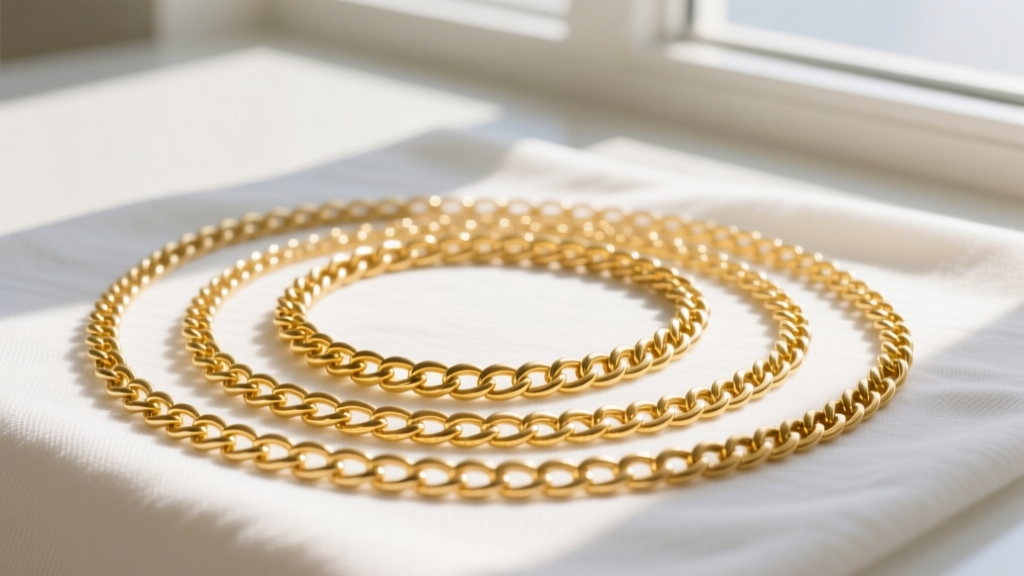
Immediately after rinsing, pat the jewelry dry using a clean, lint-free optical microfiber cloth. Avoid paper towels or tissues at all costs; wood pulp fibers are surprisingly abrasive and can leave micro-scratches on high-polish 18k gold. Furthermore, paper towels leave behind tiny lint fibers that become hopelessly tangled in the links of delicate 2026 trend-staples like paperclip and rope chains.
Storage to Prevent Trend-Fatigue Scratches
Once completely dry, store your pieces individually. The current trend of wearing multiple layered necklaces and stacked rings often leads to a tangled, scratched mess in a communal jewelry box. Because gold scratches itself easily, a diamond-accented gold pendant bouncing around in a drawer will easily gouge the surface of a neighboring solid gold band. Utilize individual soft flannel pouches or a lined jewelry box with dedicated compartments to ensure your freshly cleaned, trend-forward pieces remain pristine until you are ready to style them again.
For more comprehensive guidelines on maintaining precious metals, refer to Blue Nile's jewelry care guidelines, which echo the necessity of gentle, non-abrasive cleaning routines for all karat weights. By adapting your home washing routine to respect the specific finish and construction of your jewelry, you protect both your financial investment and your curated aesthetic.


