Before and After Tarnished Gold Plated Jewelry: Causes & Fixes
Discover the metallurgy behind before and after tarnished gold plated jewelry, comparing base metals, micron thickness, and professional restoration fixes.

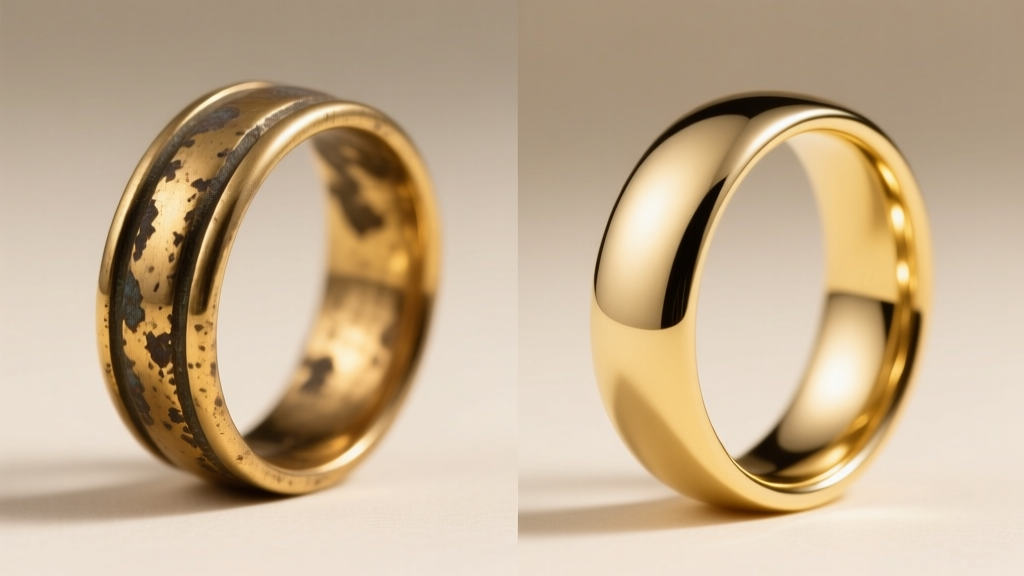
When consumers search for before and after tarnished gold plated jewelry, they are usually looking for a miraculous restoration or trying to understand why their favorite pieces have suddenly turned black, green, or dull. The visual contrast between a pristine, gleaming gold-plated ring and its tarnished, degraded state just months later can be jarring. However, to truly understand this transformation, we must look past the surface and dive into the metallurgy, electrochemistry, and material science of gold plating.
Pure gold is a noble metal; it does not react with oxygen, moisture, or sulfur under normal environmental conditions. Therefore, when your gold jewelry tarnishes, the gold itself is not degrading. Instead, you are witnessing the underlying base metal oxidizing and bleeding through microscopic pores in the plated layer. In this comprehensive guide, we will dissect the material properties that cause this phenomenon, compare different plating standards, and explore the realistic options for restoring your jewelry.
The Electrochemistry of Tarnish: Why Gold Plated Jewelry Fails
To understand the 'before and after' degradation of plated jewelry, we must examine how gold plating is applied. Electroplating involves using an electrical current to reduce dissolved metal cations so that they form a coherent metal coating on an electrode (the base jewelry piece). While this creates a beautiful exterior, the gold layer is not a solid, impermeable shield.
At a microscopic level, electroplated gold is porous. These microscopic pinholes expose the base metal to the environment. When moisture, sweat (which contains salts and lactic acid), and atmospheric sulfur come into contact with the base metal through these pores, a galvanic reaction occurs. The base metal oxidizes, and the resulting corrosive compounds migrate to the surface, creating the dark or greenish spots we recognize as tarnish. According to the Gemological Institute of America (GIA), the longevity of gold-plated jewelry is entirely dependent on the thickness of this gold layer and the reactivity of the substrate beneath it.
Flash Plating vs. Vermeil vs. HGE: A Material Comparison
Not all gold plating is created equal. The Federal Trade Commission (FTC) Jewelry Guides strictly regulate the terminology used to describe gold overlays. The thickness of the gold, measured in microns (µm), dictates how long it will take for the base metal to oxidize and tarnish.
| Plating Type | Minimum Gold Thickness | Standard Base Metal | Tarnish Susceptibility | Expected Lifespan |
|---|---|---|---|---|
| Flash / Wash Plating | < 0.175 µm | Brass, Copper, Nickel | Extremely High | 1 - 6 Months |
| Gold Plated (Standard) | 0.175 µm - 0.5 µm | Brass, Stainless Steel | High | 6 - 18 Months |
| Gold Vermeil | 2.5 µm | Sterling Silver (925) | Moderate (Silver Sulfide) | 2 - 5 Years |
| Heavy Gold Electroplate (HGE) | 2.5 µm - 5.0+ µm | Brass, Bronze, Silver | Low | 5 - 10+ Years |
As the table illustrates, flash-plated items possess a gold layer so thin that it wears away through simple friction, leaving the highly reactive brass or copper base completely exposed to the elements. Vermeil and HGE offer significantly more protection due to their thicker micron counts, delaying the inevitable oxidation process.
Decoding Failure Modes: Base Metal Reactions
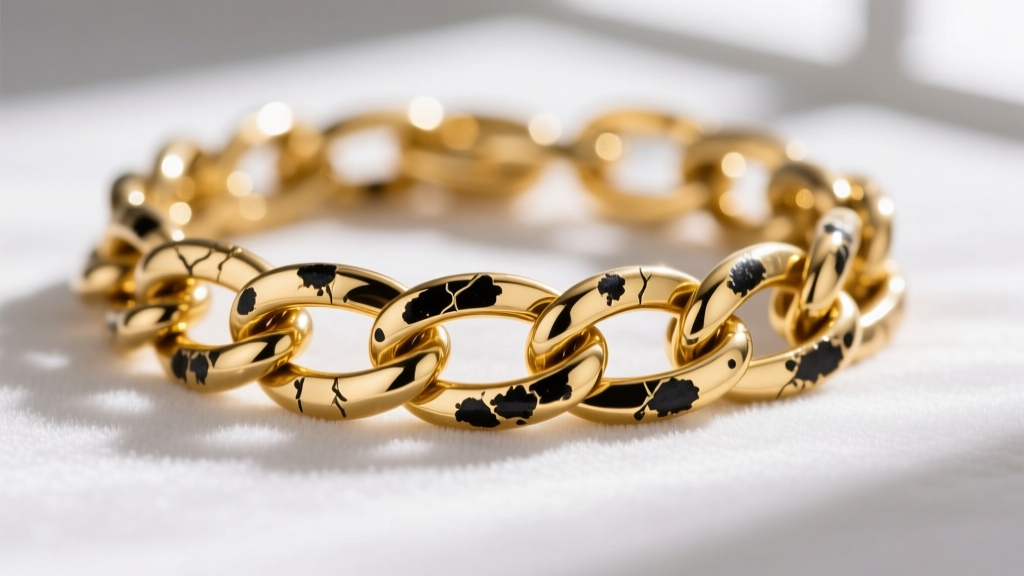
When analyzing before and after tarnished gold plated jewelry, the color of the tarnish provides a direct clue about the base metal used by the manufacturer. Different alloys react differently to environmental stressors:
- Green/Black Smudging (Brass & Copper Bases): Brass is an alloy of copper and zinc. When the copper oxidizes, it creates copper chloride and copper carbonate (verdigris). This is the culprit behind the dreaded 'green skin' effect and the dark, muddy patches that appear on cheap gold-plated rings and bangles.
- Black Spotting (Sterling Silver Bases): Gold vermeil uses a sterling silver base. Silver does not turn green, but it reacts heavily with sulfur in the air and in human sweat to form silver sulfide. This manifests as distinct, localized black spots that seem to 'bleed' through the gold layer from the microscopic pores.
- Flaking and Peeling (Nickel Underplates): Many mass-produced items use a strike layer of nickel to create a smooth surface for the gold to adhere to. If the jewelry is exposed to moisture, the nickel can corrode and expand, causing the rigid gold layer above it to crack, flake, and peel off entirely, revealing a dull, grayish-white metal beneath.
The Restoration Reality: Can You Fix It?
Once the base metal has oxidized and the tarnish has breached the surface, standard jewelry polishing cloths will not solve the problem. In fact, aggressively polishing tarnished gold-plated jewelry will only accelerate the wear, stripping away the remaining microscopic gold layer and exposing more raw base metal.
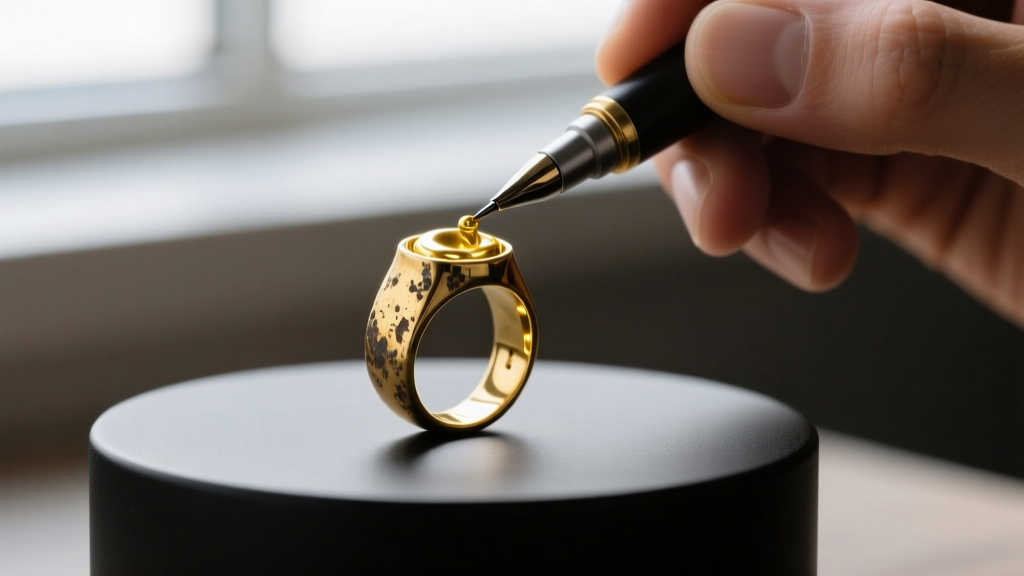
Professional restoration is the only viable path for high-sentiment or expensive pieces. The process involves several meticulous steps:
- Chemical Stripping: The jeweler uses a specialized chemical bath or electrolytic stripping solution to remove the remaining gold and the oxidized layer of the base metal.
- Surface Preparation: The piece is polished to a mirror finish. Any pitting caused by deep galvanic corrosion must be sanded out, which can alter the sharp edges or engravings on the original design.
- Replating: The item is submerged in a fresh gold plating solution. Professional jewelers typically apply a heavy gold electroplate (at least 2.5 to 3.0 microns) to ensure the 'after' result lasts significantly longer than the original factory plating.
The cost for professional replating generally ranges from $45 to $135 per piece, depending on the surface area and the karat of the gold solution used (e.g., 14k vs. 24k). For inexpensive fast-fashion jewelry, this cost often exceeds the replacement value of the item.
Advanced Preventative Material Science
If you want to preserve the 'before' state of your gold-plated jewelry for as long as possible, you must intervene in the electrochemical process. Modern jewelry manufacturing has introduced several preventative technologies:
Nano-Ceramic and E-Coatings
Many high-end plated jewelry brands now apply a clear, hypoallergenic nano-ceramic or electrophoretic (e-coat) layer over the gold. This invisible polymer barrier seals the microscopic pores in the gold, preventing oxygen and sulfur from reaching the base metal. While these coatings eventually wear off from friction, they can extend the tarnish-free lifespan of a piece by 200% to 300%.
Proper Micro-Climate Storage
Storing plated jewelry in a humid bathroom is a guarantee for rapid oxidation. To halt the chemical reaction, store your pieces in airtight ziplock bags equipped with activated charcoal or silver anti-tarnish strips. These strips absorb atmospheric sulfur and moisture, effectively starving the oxidation process of its required catalysts.
Conclusion
The stark contrast seen in before and after tarnished gold plated jewelry is not a defect of the gold itself, but a predictable outcome of material science and electrochemistry. By understanding the micron thickness of your jewelry, identifying the base metal, and employing modern preventative barriers, you can make informed purchasing decisions and significantly extend the brilliant lifespan of your favorite gold-plated accessories.


