Black Pearl Jewelry Buying Guide: What To Look For
Discover how to buy authentic black pearl jewelry. Learn to spot dyed fakes, understand Tahitian grading, and find the best value.

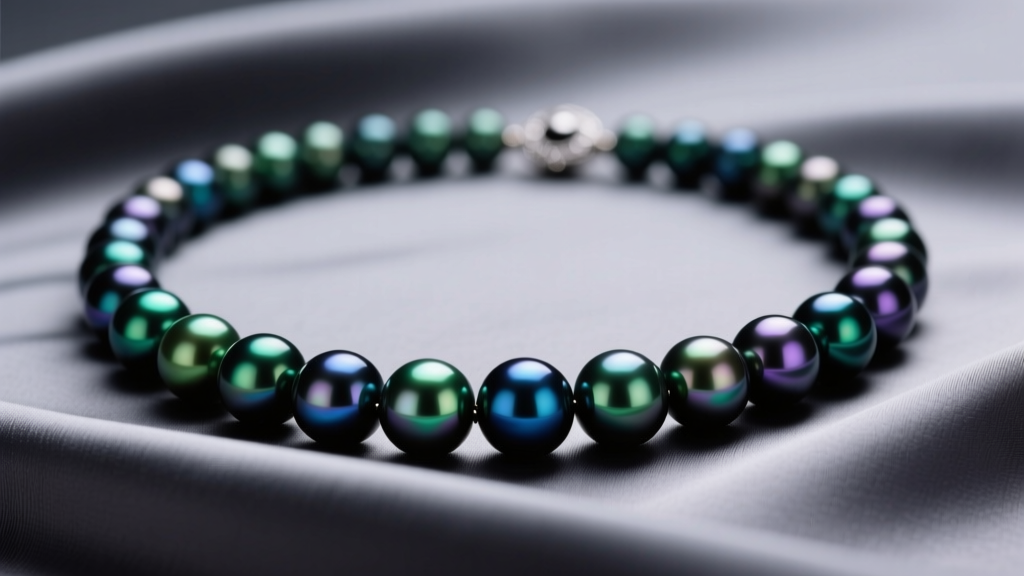
The Reality of "Black" Pearls: Tahitian vs. Dyed Alternatives
When consumers search for black pearl jewelry, they often envision a perfectly spherical, jet-black gemstone with a mirror-like shine. However, in the gemological world, a truly "jet black" pearl is almost always the result of artificial dyeing or irradiation. Authentic dark pearls—cultivated primarily in the lagoons of French Polynesia from the Pinctada margaritifera oyster—are rarely pitch black. Instead, they exhibit a rich, dark charcoal or deep grey body color accompanied by a mesmerizing play of overtones.
If you encounter a strand of perfectly uniform, pitch-black pearls priced under $500, you are likely looking at dyed freshwater pearls or silver-nitrate-treated Akoya pearls. True Tahitian pearls derive their dark nacre from the natural pigments of the black-lipped oyster. Understanding this fundamental difference is the first step in navigating the market and ensuring you pay for genuine gemological value rather than chemical treatments.
The Pinctada Margaritifera Oyster and Export Laws
The Pinctada margaritifera oyster is uniquely capable of producing dark nacre, ranging from silver-grey to deep eggplant. To protect the reputation of their primary export, the government of French Polynesia enforces strict quality controls. Historically, any Tahitian pearl with a nacre thickness of less than 0.8mm was legally barred from export and destroyed. While recent regulations have shifted slightly to allow market forces to dictate lower-grade sales, the 0.8mm benchmark remains the gold standard for high-quality black pearl jewelry.
According to the Gemological Institute of America (GIA), nacre thickness directly correlates with a pearl's luster, durability, and overtone visibility. A thick nacre allows light to penetrate and refract through the aragonite crystals, creating the signature "glow from within" that defines premium Tahitian pearls. Thin-nacre pearls, often produced by rushed cultivation cycles, appear chalky and are prone to peeling over time.
Decoding the Grading Scales: A-D vs. AAA-A
When shopping for black pearl jewelry, you will encounter two primary grading systems. The A-D system is the traditional Tahitian government standard, while the AAA-A system is widely used by American and international retailers. Here is how they translate to real-world quality:
- Grade A / AAA (Top 10%): Flawless on at least 90% of the surface. The remaining 10% may have only one or two minor blemishes. These pearls possess exceptional, mirror-like luster and are reserved for high-end solitaire pendants and luxury strands.
- Grade B / AA (Top 30%): Flawless on 70% of the surface. Minor surface variations or calcification spots are visible upon close inspection but do not detract from the overall brilliance. This is the sweet spot for value-conscious buyers seeking beautiful, durable jewelry.
- Grade C / A (Top 60%): Noticeable blemishes, rings, or mottling across the surface. Luster is moderate. These are frequently used in multi-pearl designs where the setting or surrounding diamonds can mask imperfections.
- Grade D: Heavy blemishing, dull luster, and structural vulnerabilities. Reputable jewelers rarely stock Grade D pearls, as they lack the structural integrity for long-term wear.
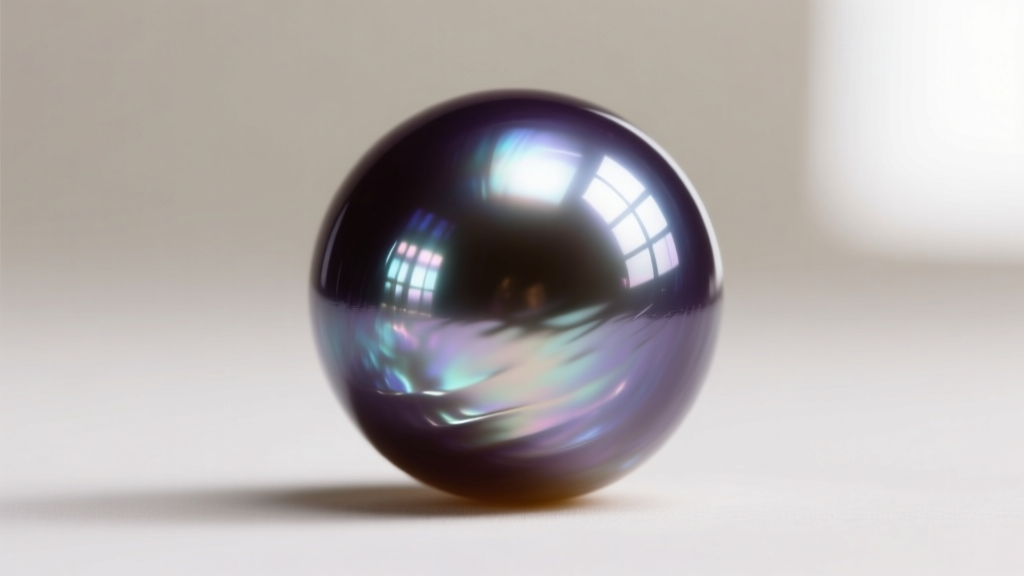
The Magic of Overtones: What Drives the Price?
The body color of a Tahitian pearl is merely the canvas; the overtone is the masterpiece. The GIA's comprehensive pearl description guide notes that overtone rarity heavily dictates market pricing. The most coveted overtone is Peacock—a complex, shifting blend of green, purple, and pink that mimics the feathers of the namesake bird. Other valuable overtones include Aubergine (purple-green), Pistachio (yellowish-green), and Silver (cool, steely grey). When evaluating a strand, look for overtone consistency. A necklace where every pearl shifts from green to purple uniformly commands a massive premium over a mismatched strand.
Black Pearl Jewelry Pricing Matrix (2026 Estimates)
Pricing for dark pearls scales exponentially with size and luster quality. Below is a realistic retail pricing matrix to help you benchmark offers from both boutique and online jewelers.
| Pearl Type & Size | Grade | Estimated Retail Price (USD) | Best Use Case |
|---|---|---|---|
| 8-9mm Tahitian (Solitaire) | AAA / A | $250 - $450 | Everyday stud earrings, minimalist pendants |
| 10-11mm Tahitian (Solitaire) | AAA / A | $600 - $1,200 | Statement rings, luxury drop pendants |
| 9-10mm Tahitian (18" Strand) | AA / B | $3,500 - $6,000 | Classic necklace, heirloom gifts |
| 12-14mm Tahitian (18" Strand) | AAA / A | $15,000 - $35,000+ | Investment-grade collections, red carpet |
| 8-9mm Dyed Freshwater (Strand) | N/A | $150 - $300 | Fashion jewelry, temporary wear |
Forensic Detection: How to Spot Dyed Pearls
Unscrupulous sellers often pass off dyed freshwater or Akoya pearls as Tahitian gems. Because chemical dyeing has become highly sophisticated, you must look for specific failure modes. The most reliable method is the drill hole inspection. When a pearl is submerged in silver nitrate or organic dyes, the chemical pools in the drill hole, creating a dark, concentrated ring that contrasts sharply with the lighter inner nacre. Use a 10x jeweler's loupe to examine the hole; if you see a sharp, dark line or powdery dye residue, walk away.
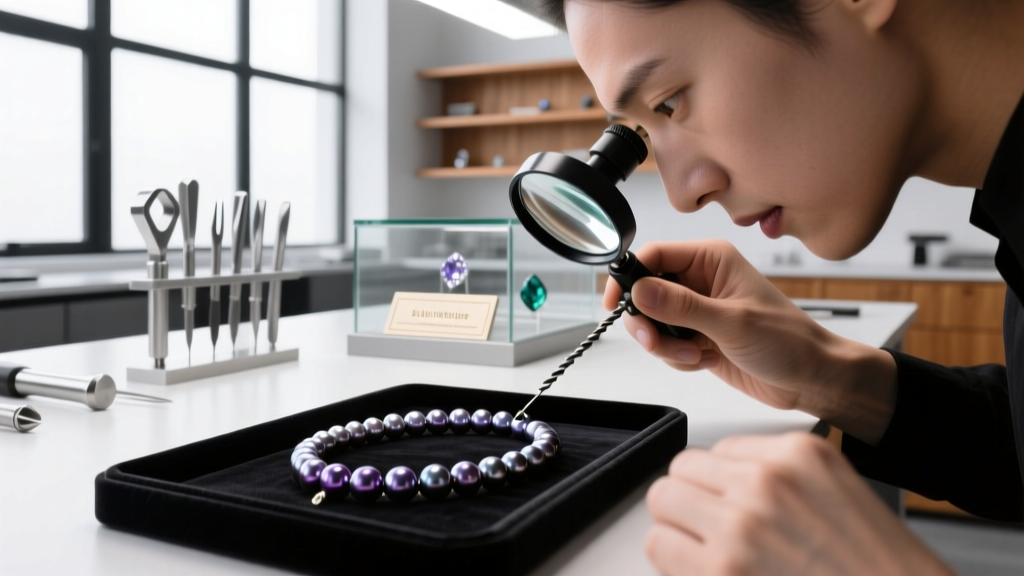
Another practical test is the tooth test. Gently rub the pearl against the biting edge of your front tooth. Authentic nacre is composed of microscopic aragonite platelets, which feel distinctly gritty or sandy. Imitation glass or plastic pearls coated in dark paint will feel perfectly smooth. While this doesn't differentiate between dyed and natural pearls, it instantly eliminates cheap glass imitations from your consideration.
Long-Term Care for Dark Nacre
Dark pearls are organic gems, scoring a mere 2.5 to 3.0 on the Mohs hardness scale. Their porosity makes them highly susceptible to chemical damage. Perfumes, hairsprays, and acidic skin oils can degrade the nacre over time, causing the pearl to lose its luster and turn dull or yellowish. Always follow the "last on, first off" rule: put your black pearl jewelry on after applying cosmetics, and wipe it gently with a soft, damp microfiber cloth before storing it. Never store pearls in airtight plastic bags or safety deposit boxes for extended periods, as the lack of ambient humidity can cause the nacre to crack and dehydrate.
Final Verdict: Sourcing Authentic Pieces
Investing in black pearl jewelry is a pursuit of natural artistry. By prioritizing nacre thickness, demanding authentic Tahitian origins over dyed alternatives, and scrutinizing overtone consistency, you can acquire pieces that retain their beauty and value for generations. Always request a certificate of authenticity or a detailed gemological report from reputable dealers to ensure your dark pearls are as genuine as they are breathtaking.


