Emerald and Pearl Jewelry: A Beginner's Styling and Care Guide
Discover how to buy, style, and care for emerald and pearl jewelry. Learn about gemstone hardness, metal pairings, and pricing.

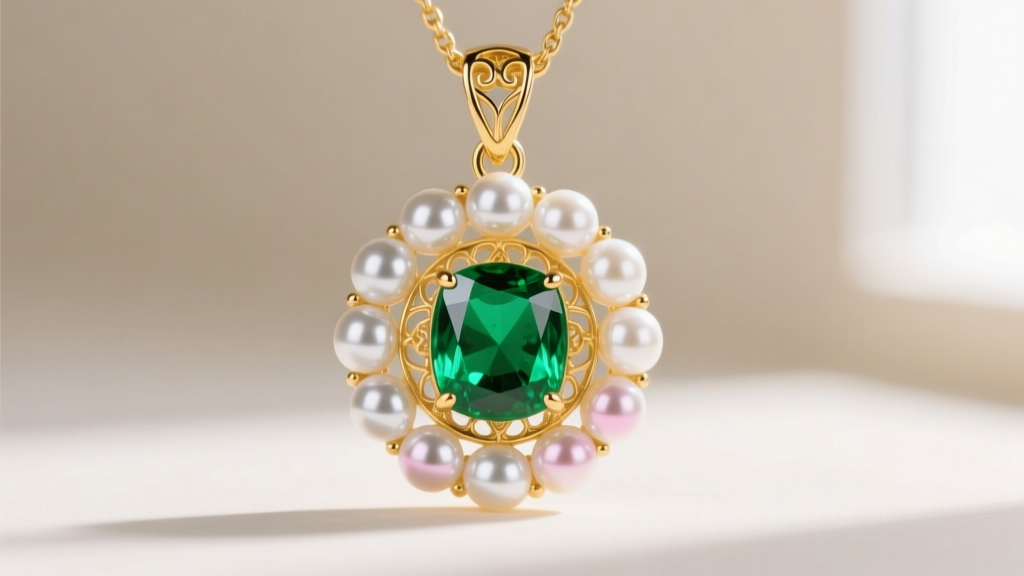
Combining the deep, verdant greens of emeralds with the soft, iridescent luster of pearls creates a striking visual contrast that has captivated jewelry lovers for centuries. However, pairing these two distinct gemstones requires more than just an eye for aesthetics; it demands an understanding of their unique physical properties. Whether you are looking at a vintage Art Deco brooch or a modern minimalist pendant, emerald and pearl jewelry represents a unique intersection of mineral and organic beauty.
This beginner-friendly guide will walk you through the gemological realities, styling frameworks, and essential care protocols you need to know before investing in or wearing these exquisite combinations.
The Allure of the Mineral and Organic Pairing
Emeralds are a variety of the mineral beryl, colored by trace amounts of chromium or vanadium. Pearls, conversely, are organic gems created by living mollusks. When set together, the sharp, geometric facets of a cut emerald contrast beautifully with the smooth, spherical curves of a pearl. Historically, this pairing was heavily favored during the Art Deco period of the 1920s and 1930s, where the stark color contrast was used to create bold, geometric statement pieces. Today, contemporary jewelers use this combination to balance the 'coolness' of the green with the 'warmth' of the pearl's orient.
Understanding Durability: Mohs Scale and Vulnerabilities
The most critical factor for any beginner to understand about emerald and pearl jewelry is the vast discrepancy in their durability. While both are considered precious gems, they react very differently to daily wear and tear.
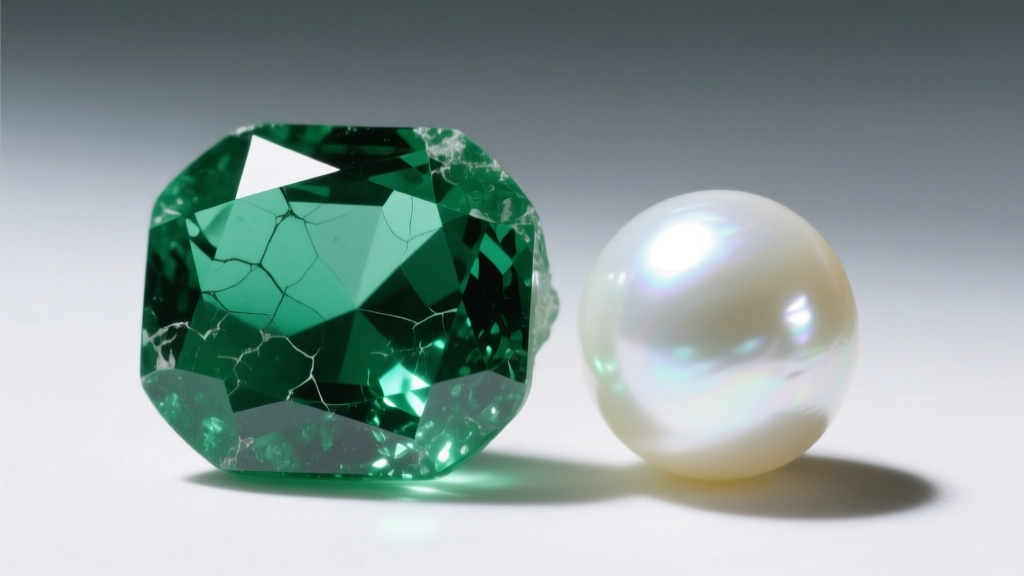
According to the Gemological Institute of America (GIA), emeralds rank between 7.5 and 8 on the Mohs scale of hardness. However, hardness only measures resistance to scratching. Emeralds are notoriously brittle and heavily included (internal fractures known as 'jardin'). A hard knock against a table edge can easily chip an emerald's corner. Pearls are even more delicate, ranking between 2.5 and 4.5 on the Mohs scale, making them highly susceptible to scratching from everyday dust and metals.
| Property | Emerald (Beryl) | Cultured Pearl (Akoya/South Sea) |
|---|---|---|
| Mohs Hardness | 7.5 - 8.0 | 2.5 - 4.5 |
| Toughness | Poor (Brittle, prone to chipping) | Fair to Good (Can peel or crack) |
| Chemical Sensitivity | Sensitive to heat, pressure, and harsh solvents | Highly sensitive to acids, cosmetics, and perfumes |
| Common Treatments | Cedar oil or resin fracture filling | Bleaching, dyeing, or maeshori (polishing) |
Selecting the Right Metal and Setting
Because both stones have specific vulnerabilities, the metal setting in emerald and pearl jewelry must serve a protective function as well as an aesthetic one.
- 18k Yellow Gold: The traditional choice. The warm, rich yellow of 18k gold enhances the green of the emerald while providing a warm backdrop that makes white pearls appear creamier and more lustrous.
- Platinum or 18k White Gold: Offers a stark, modern contrast. White metals make the green of the emerald appear cooler and more vivid, while emphasizing the bright white body color of high-grade Akoya pearls.
- Bezel vs. Prong Settings: For the emerald, a bezel or semi-bezel setting is highly recommended to protect the vulnerable corners from chipping. Pearls are typically set using a peg-and-cup mechanism with jewelry epoxy, rather than prongs, to avoid crushing the nacre.
Styling Frameworks: Necklines and Color Theory
Styling emerald and pearl jewelry requires an understanding of color theory and proportion. The deep green and bright white combination is inherently formal and high-contrast, meaning it can easily overwhelm delicate outfits if not balanced correctly.
Daytime and Office Wear
For everyday wear, opt for smaller, more subtle pieces. A delicate 14k gold chain featuring a single 4mm round emerald flanked by two 5mm freshwater pearls is perfect for a blouse with a V-neck or scoop neckline. The V-neck draws the eye downward, elongating the neck and allowing the jewelry to sit flat against the skin without tangling in fabric.
Evening and Formal Events
For black-tie events, larger statement pieces are appropriate. A choker or collar necklace featuring alternating emerald baguettes and 8mm South Sea pearls pairs beautifully with a strapless or off-the-shoulder gown. The bare skin provides a neutral canvas that allows the high-contrast jewelry to take center stage without competing with busy patterns or high collars.

The Golden Rules of Cleaning and Storage
Cleaning emerald and pearl jewelry is where most beginners make costly mistakes. The treatments used on emeralds and the organic nature of pearls mean that standard jewelry cleaning methods can be disastrous.
Warning: Never use an ultrasonic cleaner or a steam cleaner on emerald and pearl jewelry. Ultrasonic vibrations can shatter the internal fractures of an emerald and strip away its oil treatment, while steam can melt the epoxy securing the pearl and cause the nacre to craze or peel.
Instead, follow this safe cleaning protocol:
- Prepare a Mild Solution: Mix a few drops of pH-neutral, fragrance-free dish soap (like Dawn) into a bowl of lukewarm—not hot—water.
- Gentle Wiping: Dip a microfiber cloth or a very soft, clean makeup brush into the solution. Gently wipe the surface of the emerald and the pearl. Do not scrub.
- Rinse Quickly: Dampen a separate cloth with plain distilled water and wipe away any soapy residue. Avoid submerging the entire piece in water, especially if the pearls are strung on silk thread.
- Air Dry: Lay the piece flat on a dry towel in a well-ventilated area. Store it only when completely dry.
Always practice the "last on, first off" rule. Put your emerald and pearl jewelry on after applying makeup, perfume, and hairspray, and remove it immediately upon returning home to prevent chemical exposure to the nacre and oil treatments.
Pricing Expectations and Grading Tiers
When shopping for emerald and pearl jewelry, pricing varies wildly based on the origin and quality of the stones. Understanding these tiers will help you budget effectively and avoid overpaying for inferior gems.
Entry-Level ($200 - $800)
At this price point, expect to see commercial-grade Zambian or Brazilian emeralds (often heavily included and lighter in tone) paired with AA-grade freshwater pearls. The metal is typically 10k or 14k gold, or gold vermeil. These pieces are excellent for everyday wear where the risk of damage is higher, as the financial stakes are lower.
Mid-Range ($1,000 - $4,500)
This tier features well-saturated Colombian or high-grade Zambian emeralds with good clarity and minor oil treatments, set alongside AAA-grade Akoya pearls known for their mirror-like luster and sharp reflections. Settings are usually solid 14k or 18k gold with secure bezel or halo designs. This is the sweet spot for high-quality, durable fine jewelry.
Investment & High Jewelry ($5,000 - $20,000+)
Investment pieces feature unheated, untreated Colombian emeralds (certified by labs like GRS or Gübelin) with exceptional 'Muzo green' color, paired with AAA-grade South Sea or Tahitian pearls measuring 12mm or larger. These pieces are crafted in 18k gold or platinum, often featuring pavé diamond accents, and are intended for formal wear and long-term collection.
By understanding the delicate balance of hardness, the necessity of protective settings, and the strict cleaning protocols, you can confidently wear and maintain your emerald and pearl jewelry for decades. For further reading on gemstone durability and organic gem care, the GIA Pearl Guide and resources from the American Gem Society are excellent next steps for any jewelry enthusiast.


