Understanding Platinum Jewelry Markings: Beginner Guide
Learn to identify authentic platinum jewelry markings. This beginner guide breaks down hallmarks, purity stamps, and how to spot fakes.

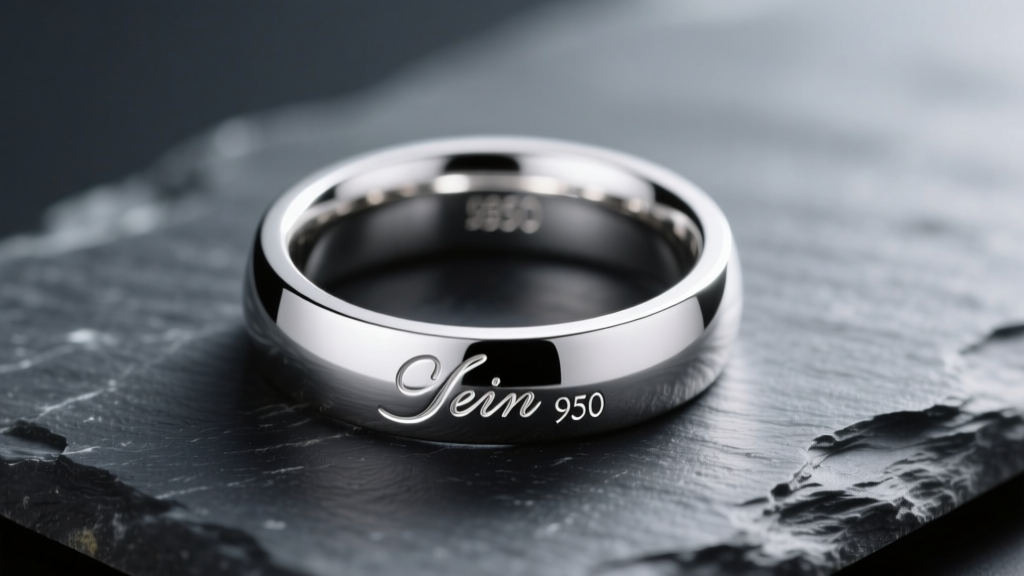
Why Platinum Jewelry Markings Matter
When investing in fine jewelry, platinum represents the pinnacle of durability, prestige, and metal density. However, its high value and silvery-white appearance make it a prime target for misrepresentation, often being confused with white gold, palladium, or even heavily rhodium-plated silver. For beginners navigating the luxury market, understanding platinum jewelry markings is your first and most critical line of defense. These microscopic stamps, often hidden inside the shank of a ring or on the clasp of a heavy chain, serve as a legal guarantee of the metal's purity and origin. According to the Gemological Institute of America (GIA), platinum is 60% denser than 14-karat gold, meaning a genuine platinum piece will feel noticeably heavy in the hand. But weight alone is not enough; the hallmark is the ultimate proof of authenticity.
The FTC Standard: What Qualifies as 'Platinum'?
In the United States, the rules governing precious metal stamps are strictly enforced. According to the Federal Trade Commission (FTC) Jewelry Guides, a piece can only be stamped with the words 'Platinum', 'Plat.', or 'Pt.' without any numerical qualifiers if it contains at least 950 parts per thousand (95%) pure platinum. Furthermore, the remaining 5% must consist of other Platinum Group Metals (PGMs) like iridium, ruthenium, or palladium. If a piece falls below this 95% threshold, the stamp must include the exact purity number, such as '900 Pt.' or '850 Plat.'. This legal framework ensures that consumers are not tricked into paying premium prices for heavily alloyed metals that lack the hypoallergenic and tarnish-resistant properties of high-purity platinum.
Decoding Purity Numbers and Alloy Codes
Pure platinum (99.9%) is relatively soft and malleable, making it unsuitable for everyday jewelry that must withstand impacts and secure diamond prongs. Therefore, it is alloyed with other metals to increase hardness and durability. When you inspect platinum jewelry markings, you will frequently see a combination of numbers and letters. The numbers represent the purity, while the letters indicate the specific alloy used.
The Alloy Metals: Iridium, Ruthenium, and Cobalt
The choice of alloy drastically changes the metal's working properties and its long-term wear. Iridium (Ir) is the most traditional alloy, creating a malleable metal that is easy for bench jewelers to resize and repair. Ruthenium (Ru) creates a much harder, more scratch-resistant metal, but it is brittle and difficult to cast or resize. Cobalt (Co) offers excellent casting properties and a bright white luster, but it introduces a unique magnetic property that often confuses beginners (more on this later). Below is a breakdown of the most common stamps you will encounter in the market today.
| Stamp / Marking | Purity | Common Alloy | Best Use Case |
|---|---|---|---|
| 950 Pt / Pt950 | 95.0% | Iridium or Ruthenium | Modern engagement rings, high-end luxury watches |
| 900 Plat / 900 Pt | 90.0% | Iridium (10%) | Vintage American jewelry (pre-1990s), antique estate pieces |
| 850 Pt | 85.0% | Copper or Cobalt | Intricate cast designs, vintage European pieces |
| Pt950/Ir | 95.0% | Iridium (5%) | Hand-forged wedding bands, easily resizable settings |
| Pt950/Ru | 95.0% | Ruthenium (5%) | Die-struck durable bands, scratch-resistant daily wear |
International Hallmark Variations
If you are buying vintage or imported jewelry, the markings will look vastly different from standard American stamps. International hallmarking systems are deeply rooted in centuries-old guild traditions and government assay offices.
The UK Assay System
In the United Kingdom, the Hallmarking Act of 1973 mandates that all platinum jewelry over 0.5 grams must be tested and stamped by an independent government assay office. A full UK platinum hallmark is a complex sequence of symbols. It includes the sponsor's mark (the maker's initials), the traditional fineness symbol (an orb with a 'Pt' cross inside), the millesimal fineness mark (e.g., 950), the assay office symbol (such as the London Leopard's Head or the Birmingham Anchor), and an optional date letter indicating the exact year of manufacture. You can verify these historic symbols via resources provided by The London Assay Office.
Japanese and European Standards
Japan has a unique historical preference for Pt900 (90% platinum, 10% alloy), which was the standard for decades due to its ideal balance of hardness and malleability for securing high-carat diamonds. Therefore, 'Pt900' is one of the most common platinum jewelry markings found in Japanese estate jewelry. In contrast, European countries like Germany and France often use a head of a dog or an eagle in profile alongside the numbers '950' to denote platinum that has passed strict state-controlled assaying.
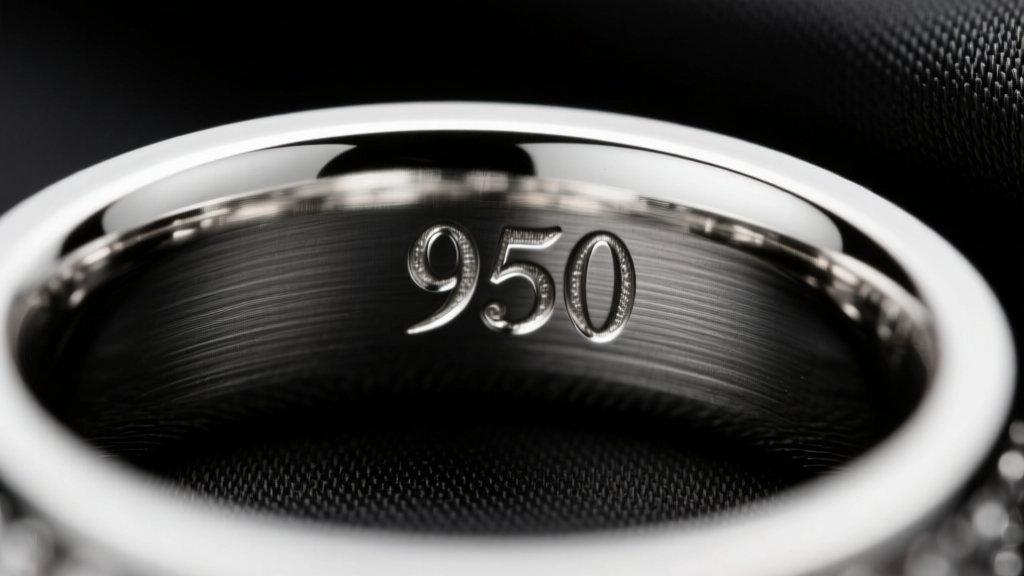
How to Verify Authenticity (and Avoid the Magnet Trap)
While a 10x jeweler's loupe is essential for reading microscopic stamps, physical testing is sometimes necessary when markings are worn away or suspicious. However, beginners must be aware of the 'magnet trap'. A common myth is that genuine platinum is completely non-magnetic. While pure platinum is paramagnetic (meaning it does not attract a magnet), modern platinum rings alloyed with cobalt (stamped 950Pt/Co) are slightly ferromagnetic. If a strong rare-earth magnet pulls slightly on your ring, it does not automatically mean it is fake white gold or steel; it could simply be a cobalt-alloyed platinum piece. Here is a practical checklist for verifying authenticity:
- The Weight Test: Platinum is exceptionally dense. A platinum ring will weigh approximately 60% more than an identically sized 14k white gold ring.
- The Loupe Inspection: Look for crisp, deeply struck stamps. Fakes often have shallow, laser-etched, or blurry markings that lack the sharp edges of a traditional steel punch stamp.
- The Acid Test: Professional jewelers use a specialized platinum testing acid that turns dark yellow or orange on genuine platinum, while it will dissolve or turn green on white gold or silver.
- The Heat Test: Platinum has an incredibly high melting point (3,215°F). A jeweler can heat the metal with a torch; genuine platinum will not discolor or oxidize, whereas white gold will turn black and require re-polishing.
Will Polishing Erase Your Hallmarks?
A frequent concern among new collectors is whether routine maintenance will destroy the very markings that prove their jewelry's value. Polishing removes a microscopic layer of metal to smooth out scratches and restore the mirror finish. Over decades of aggressive polishing, stamps can indeed become shallow and illegible. To preserve your hallmarks, always instruct your bench jeweler to polish around the stamp area or use a light, high-speed buffing technique rather than heavy sanding. If a vintage piece's stamp has already faded into obscurity, a master engraver can often re-stamp the metal using the original assay dies, provided the metal purity can be independently verified via X-ray fluorescence (XRF) testing first.
Expert Tip: Never buy a 'stamped' platinum piece from an unverified online seller without requesting a macro-photograph of the inner shank. Counterfeiters often buy cheap 925 silver rings and use handheld engraving tools to carve 'Pt950' into the metal. Genuine factory stamps have uniform depth, sharp corners, and consistent baseline alignment.

Understanding platinum jewelry markings transforms you from a passive buyer into an informed collector. By recognizing the subtle differences between a 950Pt/Ir hand-forged band and a Pt900 Japanese estate piece, you can accurately assess value, anticipate repair costs, and ensure your investment stands the test of time.


