Understanding the 925 Jewelry Stamp: A Technical Guide
Discover the metallurgy behind the 925 jewelry stamp. Learn expert authentication techniques, hallmark history, and how to spot counterfeit silver.

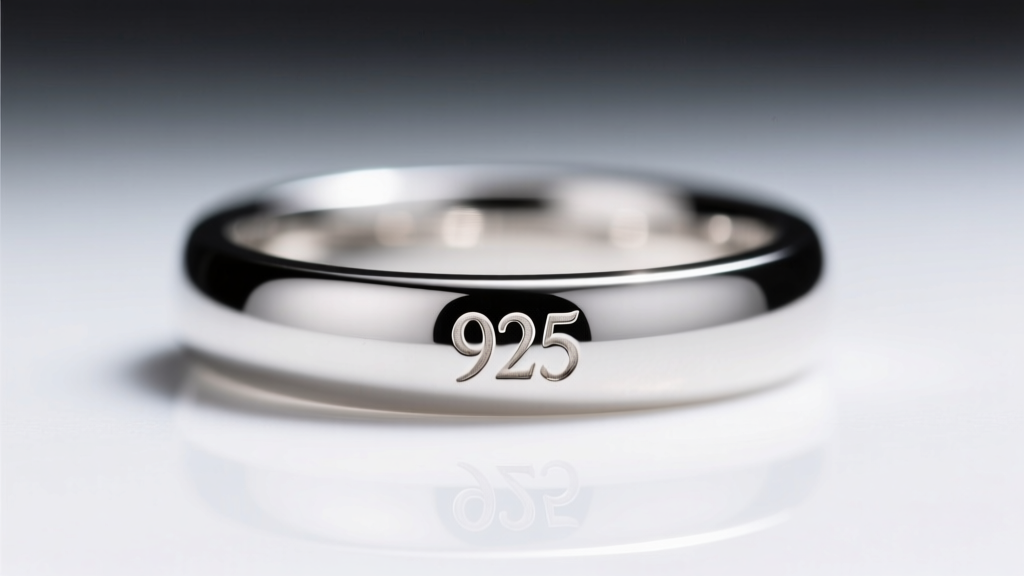
The 925 jewelry stamp is arguably the most recognized hallmark in the global precious metals market. To the average consumer, it is a simple guarantee of quality. However, to metallurgists, gemologists, and master jewelers, this tiny impression represents a complex intersection of elemental chemistry, international trade law, and manufacturing precision. As counterfeiters develop increasingly sophisticated methods to replicate these marks, relying on visual inspection alone is no longer sufficient.
This expert deep dive explores the technical realities of sterling silver, the microscopic anatomy of authentic hallmarks, and the advanced, non-destructive testing protocols required to verify precious metal purity in a modern market saturated with deceptive alloys.
The Metallurgical Reality of 925 Sterling Silver
Fine silver (99.9% purity) is too malleable for functional jewelry; it bends, scratches, and loses structural integrity under daily wear. To achieve the necessary durability, pure silver is alloyed with other metals. The 925 jewelry stamp legally certifies that the piece contains exactly 92.5% pure silver by weight, with the remaining 7.5% composed of alloying elements.
Historically, copper has been the standard alloying agent. The addition of 7.5% copper dramatically increases the Vickers hardness (HV) of the metal from roughly 25 HV (fine silver) to 65-75 HV (standard sterling). However, this copper-silver phase diagram introduces a well-known manufacturing flaw: fire-stain. When heated in oxygen-rich environments, the copper in the alloy oxidizes, forming cuprous oxide (Cu2O) beneath the surface, which appears as a stubborn purple-grey shadow after polishing.
Modern Alloy Innovations
To combat fire-stain and tarnish, modern metallurgists have developed advanced sterling alloys that still legally qualify for the 925 stamp:
- Argentium Silver: Replaces a portion of the copper with germanium. This creates a transparent germanium dioxide layer on the surface, rendering the metal highly tarnish-resistant and eliminating fire-stain. It can also be precipitation-hardened to over 130 HV.
- Continuum Silver: Utilizes a proprietary blend of copper and other metals (often including small amounts of zinc or tin) to achieve a hardness and color profile that closely mimics 14k white gold, while maintaining the 92.5% silver threshold.
Anatomy of a Genuine 925 Jewelry Stamp
Authenticating a piece begins with a 10x or 20x triplet loupe examination of the hallmark itself. The method used to apply the 925 jewelry stamp leaves distinct microscopic signatures that differentiate genuine manufacturing from aftermarket counterfeiting.
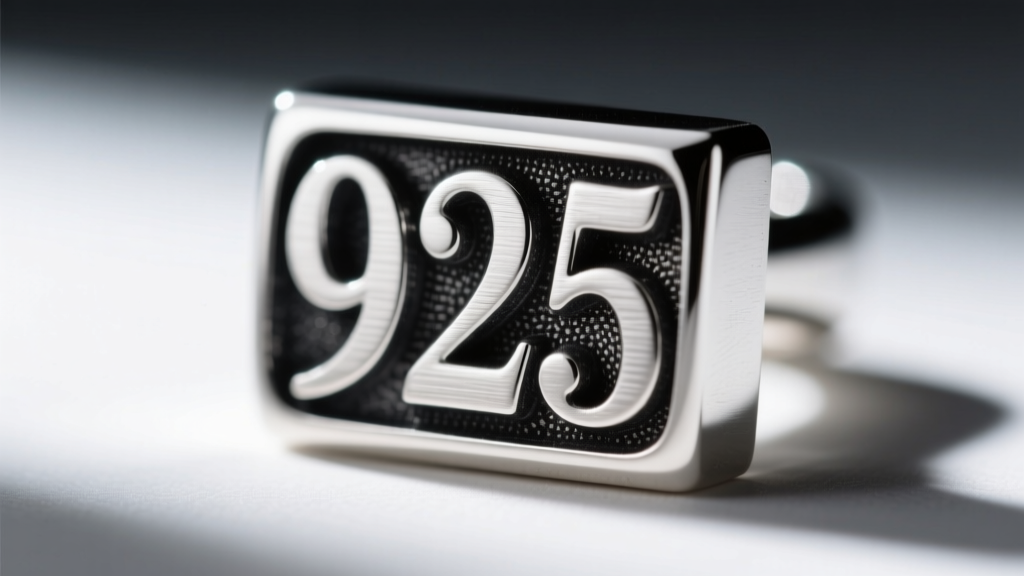
Struck Punch Stamps vs. Laser Etching
Traditional struck stamps are applied using a hardened steel punch and a mallet or hydraulic press. Under magnification, a genuine struck stamp exhibits metal displacement. The impact compresses the surrounding silver, often creating a microscopic raised lip or a subtle 'compression zone' around the perimeter of the numbers. The floor of the stamp will match the polish of the surrounding metal or show consistent tooling marks.
Conversely, laser-etched stamps are increasingly common in modern CAD/CAM jewelry manufacturing. Lasers vaporize the metal, leaving a trench with perfectly uniform depth. Under high magnification, laser-etched marks often display microscopic horizontal striations (from the laser's raster path) and may trap polishing compounds or dark oxidation in the grooves, which contrasts with the bright surrounding silver.
The Counterfeit Crisis: Faked Stamps on Base Metals
The proliferation of e-commerce has led to a surge in base-metal jewelry fraudulently stamped with the 925 hallmark. The most common culprits are brass (copper-zinc) and cupronickel (copper-nickel) alloys, which are heavily plated with a microscopically thin layer of pure silver to pass initial visual and chemical swab tests.
Expert Warning: The traditional 'magnet test' is fundamentally flawed for advanced counterfeits. While silver is diamagnetic (non-magnetic), austenitic stainless steel and certain copper-nickel alloys are also non-magnetic. A lack of magnetic attraction does not confirm the presence of a genuine 925 jewelry stamp.
Hydrostatic Specific Gravity Testing
The most reliable non-destructive field test for verifying the core metal of a piece is measuring its specific gravity (SG). Sterling silver has a known SG of approximately 10.36 g/cm³. Counterfeit base metals fall significantly short of this density.
| Material Composition | Specific Gravity (g/cm³) | Common Deceptive Use |
|---|---|---|
| Genuine 925 Sterling Silver | 10.30 - 10.40 | N/A (Authentic) |
| Yellow Brass (Cu-Zn) | 8.40 - 8.70 | Heavy vintage-style chains |
| Cupronickel (Cu-Ni) | 8.90 - 9.00 | Silver-plated flatware & rings |
| Tibetan 'Silver' (Zinc Alloy) | 7.10 - 7.30 | Costume pendants & charms |
To perform this test, jewelers use a hydrostatic balance. The item is weighed in the air, then suspended in distilled water. The formula SG = Weight in Air / (Weight in Air - Weight in Water) yields the density. If a heavy chain stamped '925' yields an SG of 8.5, it is unequivocally brass, regardless of the hallmark.
Advanced Authentication Protocols Beyond the Stamp
For high-value estates, wholesale purchasing, and forensic gemology, visual and hydrostatic tests are supplemented with elemental analysis. According to the Gemological Institute of America (GIA), relying solely on surface marks is insufficient for modern silver verification due to the thickness of modern electroplating techniques.
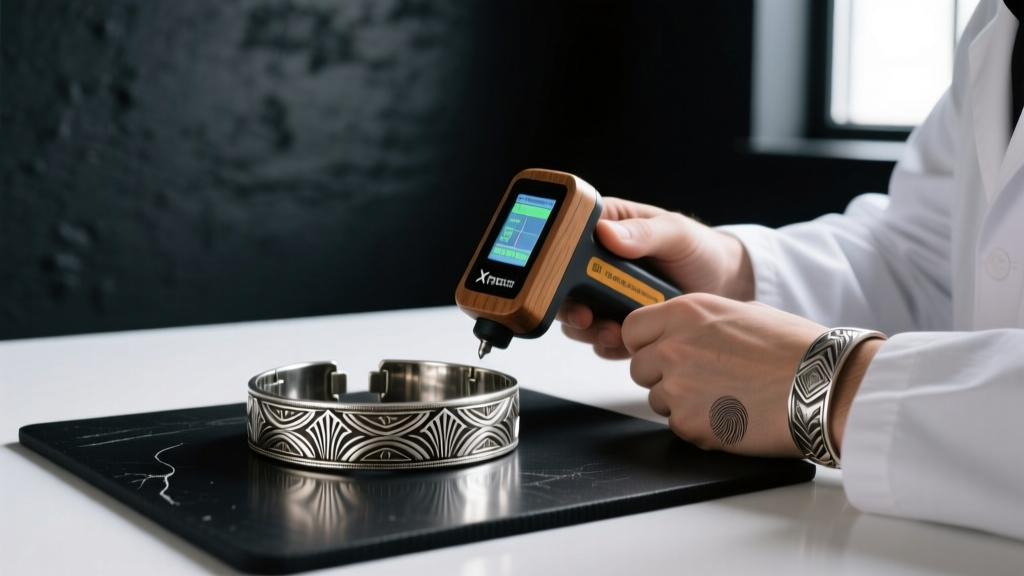
X-Ray Fluorescence (XRF) Spectrometry
XRF analyzers bombard the metal with X-rays, causing the atoms to emit secondary fluorescent X-rays that are unique to each element. This provides an exact percentage breakdown of the alloy (e.g., 92.6% Ag, 7.1% Cu, 0.3% Zn).
The Plating Interference Problem: Standard XRF guns only penetrate a few microns into the metal. A counterfeit piece plated with 5 microns of pure silver will read as '999 Fine Silver' on a surface scan. To bypass this, expert appraisers will either use a 'thick plating' algorithm setting on the XRF software or perform a micro-file notch in an inconspicuous area to test the un-plated core substrate.
International Hallmarking Variations
The legal enforcement of the 925 jewelry stamp varies drastically by jurisdiction, a critical detail for international buyers and antique appraisers.
- The United States: Under the Federal Trade Commission (FTC) Jewelers' Guides, if a piece is stamped '925', it must meet that fineness threshold. However, the US does not mandate a maker's mark or an independent assay office stamp, making the system largely self-policed and vulnerable to overseas fraud.
- The United Kingdom: The UK Hallmarking Act 1973 requires independent verification. A genuine piece will feature the 925 stamp alongside a Sponsor's Mark (maker), an Assay Office Mark (e.g., a leopard's head for London), and a traditional fineness symbol (the lion passant). The London Assay Office maintains strict, legally binding oversight of these marks.
- Continental Europe: Many European nations use a profile-based pictorial hallmark system (such as the Minerva head in France or the Diana head in Germany) alongside numerical millesimal marks like '925' or '935'.
Conclusion: The Expert Mindset
The 925 jewelry stamp is a vital piece of data, but it is not an absolute guarantee of authenticity in an unregulated global market. True expertise requires looking past the stamp to evaluate the piece's metallurgical behavior, structural density, and microscopic manufacturing signatures. By combining traditional loupe inspection with hydrostatic weighing and an understanding of international hallmarking laws, collectors and professionals can confidently navigate the complexities of modern silver authentication.


