Expert Guide to Cleaning Solder Silver Jewelry Safely
Learn how to safely clean and maintain solder silver jewelry. Discover expert tips to protect vulnerable seams, prevent joint tarnish, and ensure longevity.

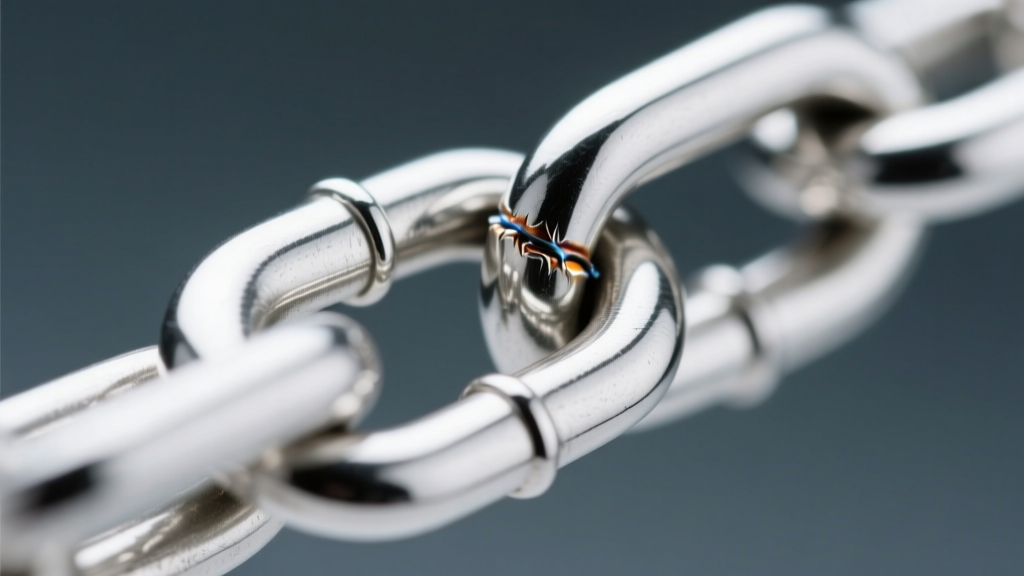
Silver jewelry is rarely cast as a single, continuous piece. From the delicate links of a sterling silver chain to the structural shank of a cast ring, most complex silver pieces rely on soldered joints to hold their components together. When it comes to care, maintenance, and cleaning, these soldered seams are the most vulnerable points on the entire piece. Understanding how to properly clean and maintain solder silver jewelry is critical to preventing structural failure, galvanic corrosion, and unsightly seam tarnish.
The Metallurgy of Soldered Silver Seams
To understand why soldered joints require specialized care, you must first understand the metallurgy of silver solder. Standard sterling silver is an alloy composed of 92.5% pure silver and 7.5% copper. However, you cannot use sterling silver to solder sterling silver; the solder must have a lower melting point than the base metal to prevent the entire piece from melting during assembly.
To achieve this lower melting point, metallurgists add elements like zinc, tin, and sometimes cadmium (in vintage pieces) to the silver-copper base. According to technical data from Rio Grande Jewelry Supply, silver solders are categorized by their melting points and silver content:
- Hard Solder: Contains roughly 80% silver. Melts at around 1,450°F (788°C). Highly durable and closely matches the color of sterling silver.
- Medium Solder: Contains roughly 70% silver. Melts at around 1,300°F (704°C). A balance of workability and strength.
- Easy Solder: Contains roughly 60% silver or less, with higher zinc and tin content. Melts below 1,200°F (649°C). Highly prone to tarnishing and chemical etching.
Because the solder alloy differs chemically from the 925 sterling silver base, a microscopic galvanic cell is created at the seam. When exposed to moisture and oxygen, this dissimilar metal pairing accelerates localized tarnishing and corrosion exactly where the joint is located.
Why Soldered Joints Tarnish and Fail Faster
Have you ever noticed a dark, stubborn line wrapping around a ring shank or a blackened spot on a chain link that won't polish away? This is localized galvanic corrosion. The copper and zinc in the solder oxidize at a different rate than the surrounding sterling silver. Furthermore, the flux used during the soldering process can leave behind microscopic glassy residues if not properly pickled in an acid bath by the jeweler. These residues trap moisture against the metal, leading to chronic tarnish at the seam.
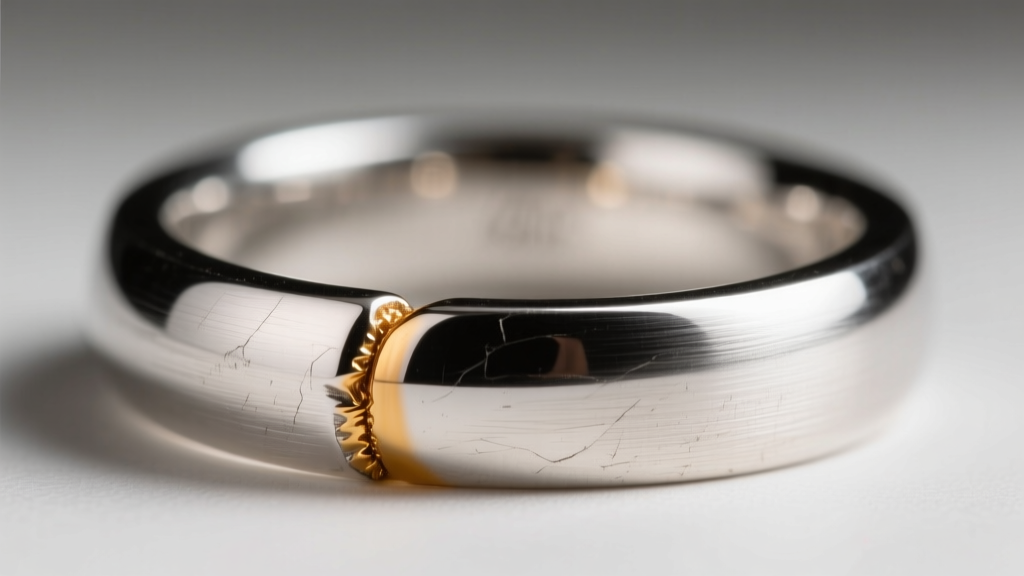
Beyond tarnish, soldered joints are the primary failure points for mechanical stress. 'Easy' solders, which are frequently used for quick repairs or attaching charm jump rings, are inherently more brittle. Improper cleaning techniques can introduce micro-fractures into these brittle seams, eventually leading to a catastrophic snap.
Safe Cleaning Protocols for Solder Silver Jewelry
The golden rule for cleaning solder silver jewelry is to use the least aggressive method required to remove oils and surface sulfides. Harsh chemicals that might safely clean a solid cast pendant can severely damage a soldered chain.
The Mild Detergent Method
For routine maintenance, a mild, phosphate-free dish soap (like Dawn) mixed with lukewarm water is the safest approach. The Gemological Institute of America (GIA) consistently recommends mild soap and water as the safest baseline for all precious metals. Use a baby toothbrush with extra-soft bristles to gently agitate the soapy water around the soldered seams. Rinse thoroughly with distilled water to prevent hard water mineral deposits from settling into the microscopic pores of the solder joint, and dry immediately with a microfiber cloth.
Cleaning Agents: What to Use and What to Avoid
Not all silver cleaners are created equal. The chemical composition of commercial silver cleaners can wreak havoc on the zinc and copper present in silver solder. Below is a decision framework for evaluating cleaning agents on soldered pieces.
| Cleaning Agent | Safety for Solder | Metallurgical Impact & Risks |
|---|---|---|
| Mild Dish Soap & Water | Highly Safe | Removes sebum and environmental dirt without reacting with the zinc/copper in the solder alloy. |
| Baking Soda Paste | Moderate Risk | Abrasive. Can scratch the softer solder alloy faster than the harder sterling silver, creating uneven wear at the seam. |
| Thiourea Liquid Dips | Dangerous | Chemically strips tarnish but selectively etches zinc from the solder, leaving the joint porous, brittle, and prone to snapping. |
| Ultrasonic Cleaners | Conditional | Safe for 'Hard' solder. High-frequency cavitation can shake loose 'Easy' solder joints or expose hidden porosity in the seam. |
| Silver Polishing Cloths | Safe | Impregnated with micro-abrasives and anti-tarnish agents. Safe for seams, but avoid snagging the cloth on rough solder burrs. |
The Dangers of Chemical Dips and Ultrasonics
Commercial liquid silver dips rely on thiourea and acidic compounds to instantly dissolve silver sulfide (tarnish). While they make the bulk of the sterling silver look brilliantly white in seconds, they are notoriously destructive to solder silver jewelry. Research presented at the Santa Fe Symposium on Jewelry Manufacturing Technology highlights how acidic thiourea solutions can cause selective leaching. The acid attacks the zinc and copper in the solder alloy, effectively hollowing out the joint from the inside. The piece may look clean, but the structural integrity of the solder is permanently compromised.
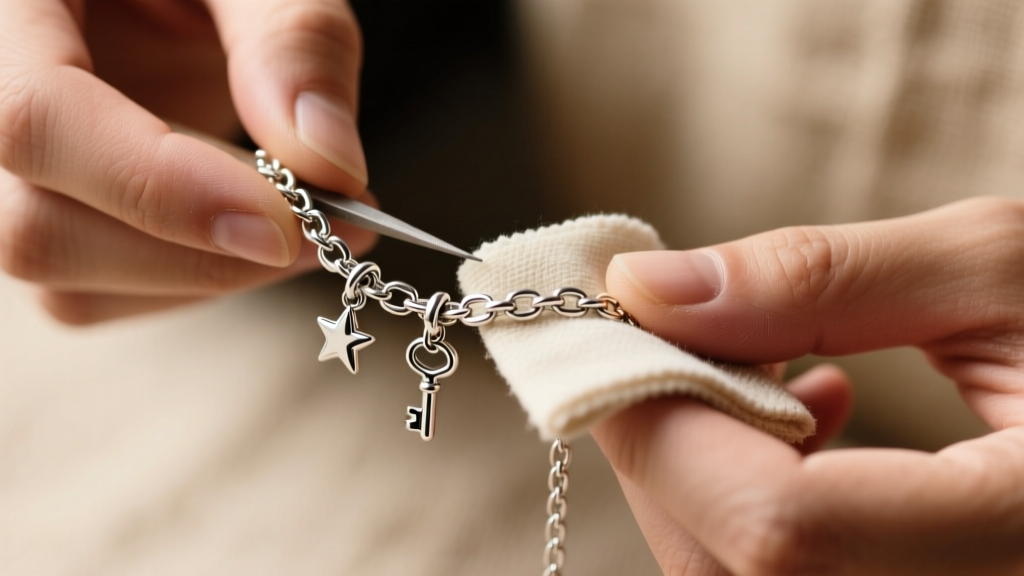
Similarly, ultrasonic cleaners use high-frequency sound waves to create microscopic cavitation bubbles in a cleaning solution. While excellent for blasting dirt out of diamond settings, the intense localized shockwaves can fracture a compromised solder joint. If a chain link or ring shank has a microscopic hairline fracture in the solder, an ultrasonic bath will often cause the piece to break apart entirely.
Daily Maintenance and Preventative Storage
Preventing tarnish at the soldered seams is vastly superior to trying to clean it once it has deeply oxidized. Implement these preventative measures to protect your soldered pieces:
- Chlorine Avoidance: Never wear soldered silver jewelry in swimming pools or hot tubs. Chlorine reacts violently with the copper and zinc in the solder, causing stress corrosion cracking. A soldered ring shank can snap cleanly in half after just one exposure to highly chlorinated water.
- Anti-Tarnish Storage: Store pieces in airtight polyethylene bags with 3M anti-tarnish strips. The strips absorb airborne hydrogen sulfide before it can react with the vulnerable solder seams.
- Chalk or Silica Gel: If using a jewelry box, place a small piece of silica gel or untreated chalk in the compartment to absorb ambient humidity, starving the galvanic corrosion process at the solder joints.
Recognizing Early Signs of Solder Fatigue
Even with meticulous care, soldered joints endure mechanical fatigue. Inspect your solder silver jewelry monthly using a 10x jeweler's loupe. Look for a dark line that does not polish away, a visible 'step' or ridge where the solder is wearing faster than the base metal, or a slight clicking sound when you gently flex a chain link or ring shank. If you notice any of these signs, cease cleaning the piece immediately and take it to a professional bench jeweler for a laser weld or a fresh hard-solder repair.
Expert Insight: When having a piece repaired, specifically request that the jeweler use 'Hard' or 'IT' grade solder for structural joints like ring shanks and heavy chain links. While it requires more skill and higher heat to apply, the higher silver content makes the joint vastly more resistant to future tarnish and chemical cleaning damage.
By respecting the unique metallurgical properties of silver solder and avoiding harsh, abrasive, or highly acidic cleaning methods, you can ensure that your solder silver jewelry remains structurally sound and beautifully polished for generations.


