How to Clean Silver and Turquoise Jewelry Safely: An Expert Guide
Learn how to clean silver and turquoise jewelry safely. Expert technical guide on removing silver tarnish without damaging porous stones.

The Material Science: Why Silver and Turquoise Clash in the Bath
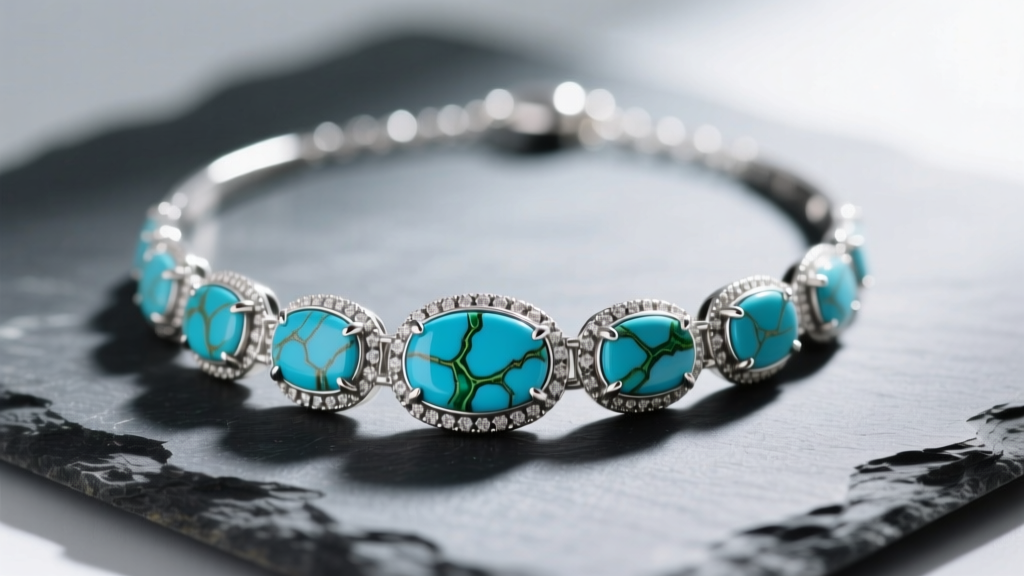
Cleaning mixed-material jewelry requires a deep understanding of gemological and metallurgical properties. When searching for how to clean silver and turquoise jewelry, you are essentially navigating a chemical minefield. Sterling silver and turquoise have fundamentally opposing vulnerabilities, making standard jewelry cleaning protocols not just ineffective, but actively destructive.
Sterling silver (92.5% silver, 7.5% copper) tarnishes due to a chemical reaction between the copper alloy and atmospheric sulfur or moisture, forming a dark layer of silver sulfide (Ag2S). Removing this requires mild abrasion or chemical reduction. Turquoise, conversely, is a hydrated copper aluminum phosphate with a Mohs hardness of just 5 to 6. According to the Gemological Institute of America (GIA), turquoise is inherently porous. Even stabilized turquoise—which has been infused with epoxy or resins to improve durability—remains highly sensitive to harsh solvents, sudden temperature changes, and prolonged moisture exposure.
The core challenge is applying tarnish-removing friction and chemistry to the silver shank, bezel, or bail without allowing those same agents to penetrate the microscopic pores of the turquoise cabochon.
The Forbidden Cleaning Methods: What to Avoid at All Costs
Before detailing the correct protocol, we must eliminate the dangerous myths circulating in amateur jewelry care guides. The Jewelers of America explicitly warns against using aggressive chemical baths on porous organic and semi-precious stones.
- Ultrasonic Cleaners: The high-frequency cavitation bubbles create microscopic shockwaves that can easily fracture turquoise along its natural matrix veins. Furthermore, the heat generated by the ultrasonic bath can melt or cloud the resins used in stabilized stones.
- The Aluminum Foil and Baking Soda Bath: While this electrolytic reduction method is miraculous for pure silver chains, the boiling water and alkaline environment will permanently alter the color of natural turquoise, often turning it a sickly, chalky green.
- Commercial Silver Dips (Ammonia/Thiourea based): These acids strip the natural waxes and oils from the turquoise surface, leaving it brittle, discolored, and prone to catastrophic cracking.
- Steam Cleaners: The sudden thermal shock will cause the water molecules trapped inside the turquoise's crystalline structure to expand, shattering the stone from the inside out.
Step-by-Step Technical Cleaning Protocol
To safely clean your pieces, you must separate the mechanical cleaning of the stone from the chemical polishing of the metal. Gather the following materials: distilled water (never tap water, as chlorine and fluoride can stain the matrix), pH-neutral dish soap, untreated microfiber cloths, cotton swabs, wooden toothpicks, and a high-quality treated silver polishing cloth (such as a Sunshine cloth).
Phase 1: Dry Particulate Removal
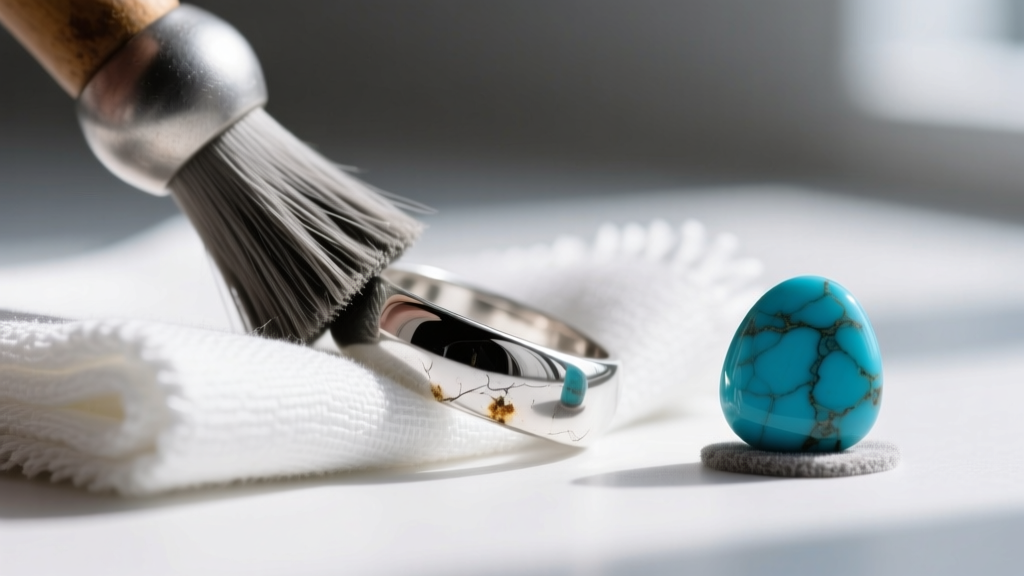
Never introduce water to a dusty turquoise stone. Dust contains microscopic silica particles (Mohs 7) that will scratch the turquoise (Mohs 5-6) if rubbed. Use a clean, ultra-soft makeup brush or a specialized jewelry dusting brush to gently sweep away loose particulate matter from the stone and the silver bezel gaps.
Phase 2: Targeted Aqueous Cleaning (Stone Only)
Mix a single drop of pH-neutral dish soap into a bowl of lukewarm distilled water. Dampen a microfiber cloth—do not soak it—and gently wipe the surface of the turquoise. This removes skin oils, lotions, and acidic sweat that degrade the stone over time. Immediately dry the stone with a separate, bone-dry microfiber cloth. Never let water pool in the bezel setting.
Phase 3: Silver Polishing (Metal Only)
Once the turquoise is completely dry and protected, take your treated silver polishing cloth. Fold the cloth to create a firm edge and gently buff the exposed sterling silver. The micro-abrasives and tarnish-inhibiting chemicals in the cloth will lift the silver sulfide without requiring liquid solvents. Keep the cloth at least one millimeter away from the turquoise to avoid transferring polishing compounds onto the porous stone.
Advanced Bezel Cleaning: The Tight Gap Problem
The most common failure point in silver and turquoise jewelry is the bezel gap—the microscopic crevice where the silver lip meets the edge of the cabochon. Tarnish loves to accumulate here, but polishing cloths cannot reach it, and liquid polishes will wick into the stone via capillary action.
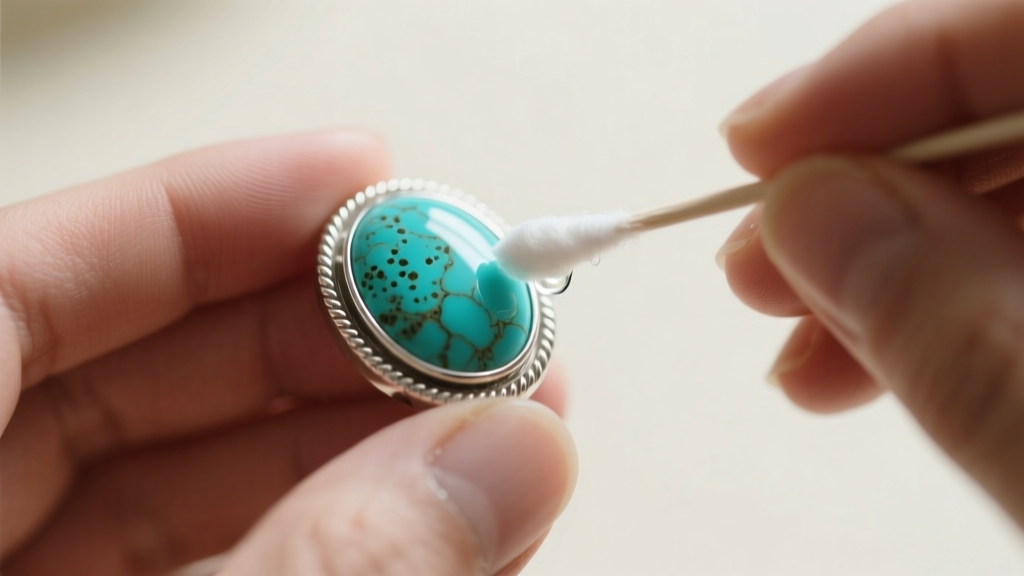
To solve this, use a wooden toothpick or a tightly wound cotton swab. Apply a minuscule amount of liquid silver polish (like Wright's Silver Cream) only to the very tip of the wooden toothpick. Carefully trace the silver bezel edge, applying gentle pressure to lift the tarnish. The wood is softer than silver and will not scratch the metal, while the precision prevents the polish from touching the turquoise. Wipe the lifted tarnish away immediately with a dry cotton swab before it can dry or migrate.
Silver and Turquoise Cleaning Methods Comparison Chart
Use this technical matrix to evaluate cleaning methods based on their metallurgical and gemological safety profiles.
| Cleaning Method | Effect on 925 Sterling Silver | Effect on Turquoise (Natural/Stabilized) | Expert Verdict |
|---|---|---|---|
| Ultrasonic Bath | Critical risk of fracture and resin clouding | NEVER USE | |
| Electrolytic Reduction (Foil/Baking Soda) | Perfect chemical reduction | Alkaline damage, color shift, matrix staining | NEVER USE |
| Ammonia-based Silver Dips | Instant tarnish removal | Strips oils, causes chalkiness and micro-cracking | NEVER USE |
| Treated Polishing Cloths | Excellent mechanical polishing | Safe if kept strictly off the stone surface | HIGHLY RECOMMENDED |
| pH-Neutral Soap & Distilled Water | Poor tarnish removal, good degreasing | Safe for surface oil removal if dried instantly | RECOMMENDED (Stone Only) |
Long-Term Storage and Tarnish Prevention
Because you cannot aggressively clean turquoise-set silver, prevention is your primary maintenance strategy. Silver sulfide forms when silver is exposed to sulfur compounds and humidity. By controlling the micro-environment of your storage, you can reduce the need for cleaning to once a year or less.
- Anti-Tarnish Strips: Place 3M anti-tarnish strips in your jewelry boxes. These strips contain copper-based polymers that aggressively absorb atmospheric sulfur and hydrogen sulfide gases before they can reach your sterling silver.
- Moisture Control: Include small silica gel desiccant packets in your storage areas. Lowering the relative humidity drastically slows the oxidation and sulfide formation process on the copper alloy within the sterling silver.
- Isolate from Sulfur Sources: Never store turquoise and silver jewelry in cardboard boxes, wool felt pouches, or near rubber bands. These materials off-gas sulfur compounds that will rapidly blacken the silver bezels.
- Pacific Silvercloth: For high-value squash blossom necklaces or heavy cuff bracelets, wrap the pieces in Pacific Silvercloth. This specialized flannel is embedded with microscopic silver particles that act as a sacrificial anode, absorbing tarnish-causing gases and protecting your jewelry.
Summary and Expert Verdict
Mastering how to clean silver and turquoise jewelry safely requires patience and precision. By abandoning the temptation of quick-fix chemical dips and ultrasonic machines, you preserve both the structural integrity of the porous stone and the brilliant luster of the sterling silver. Stick to dry dusting, targeted distilled water wiping for the stone, and meticulous mechanical polishing for the metal. With proper storage utilizing anti-tarnish technology and desiccants, your pieces will remain vibrant, structurally sound, and ready to wear for generations.


