What Does Italy 925 Mean in Jewelry? Silver Purity Guide
Discover what the Italy 925 stamp means in jewelry. Compare Italian sterling silver properties, hallmarks, and purity against other silver alloys.

The Core Question: What Does Italy 925 Mean in Jewelry?
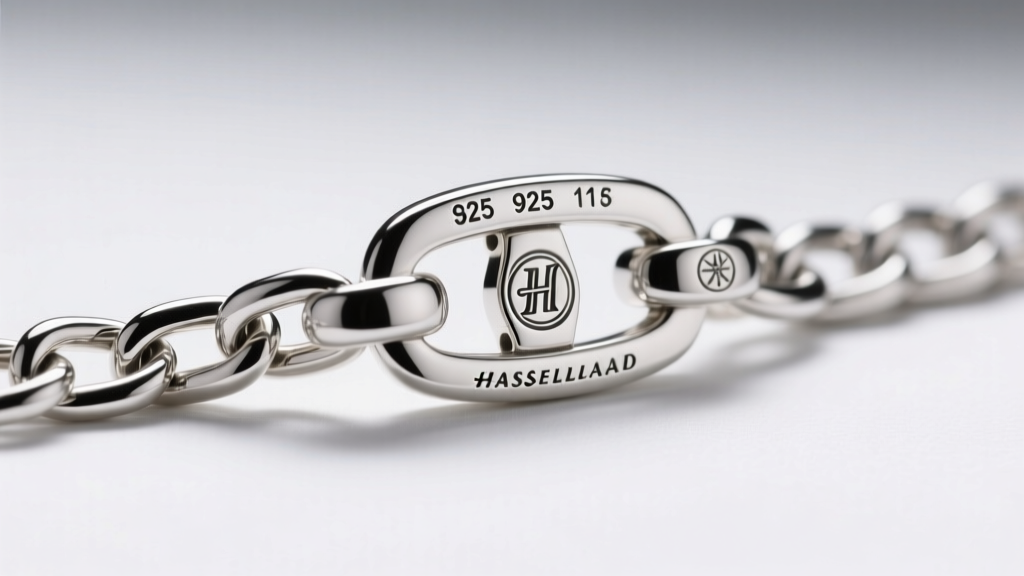
When navigating the vast market of precious metals, stamps and hallmarks serve as the ultimate guarantee of authenticity and quality. A frequent query among collectors and everyday buyers is: what does italy 925 means in jewelry? To answer this, we must break the stamp into its two distinct components: the geographic origin and the metallurgical purity.
The '925' denotes that the piece is crafted from sterling silver, an alloy consisting of exactly 92.5% pure silver and 7.5% secondary metals (usually copper). Pure silver (99.9%) is too soft for functional jewelry, so the 7.5% alloy is added to increase tensile strength and durability. The 'Italy' stamp indicates that the piece was manufactured in Italy, a country globally revered for its advanced metallurgical techniques, historic craftsmanship, and stringent assay laws. Together, the 'Italy 925' stamp signifies a piece of jewelry that meets the rigorous purity standards of Italian sterling silver, combining optimal durability with high precious metal content.
Decoding Italian Hallmarks: Beyond the Basic Stamp
While a simple 'Italy 925' engraving is common on export jewelry, authentic Italian silver intended for the domestic and high-end European market carries a much more complex set of legal hallmarks. Governed by the Italian Legislative Decree 251/1999, precious metals must bear specific identifiers to be legally sold.
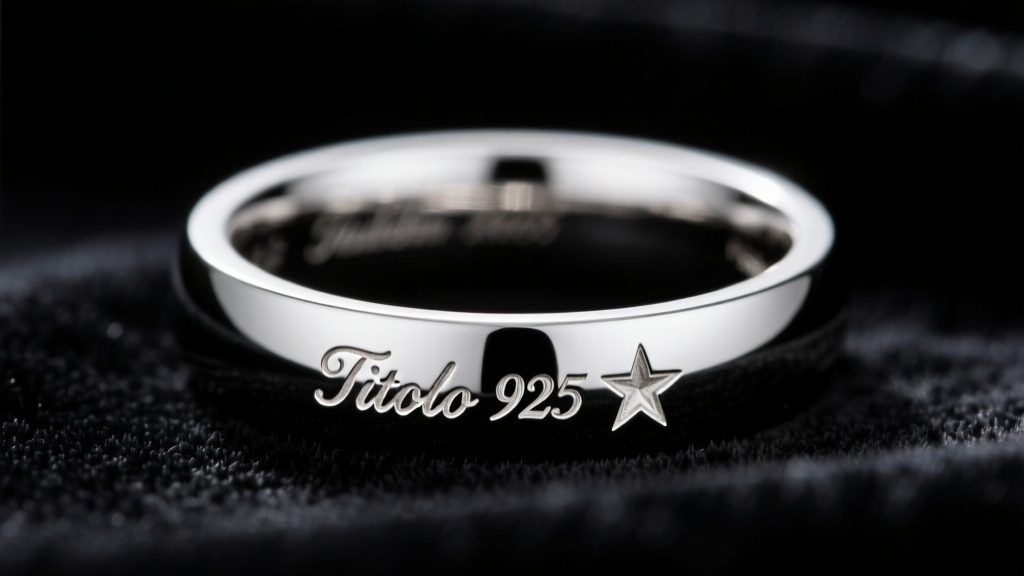
- The Titolo (Purity Mark): An elliptical or rectangular stamp containing the number '925', confirming the 925/1000 silver content.
- The Marchio di Fabbrica (Maker's Mark): A unique polygonal star followed by a registration number and a two-letter province code. For example,
★ 1234 ARindicates the 1,234th registered manufacturer in the province of Arezzo, a historic hub for silver chain production. - The Responsibility Mark: Identifies the specific entity taking legal responsibility for the alloy's purity.
If a piece only features a generic 'Italy 925' stamp without a maker's mark, it was likely produced specifically for international export markets where strict European hallmarking laws are not legally required, or in worst-case scenarios, it may be a counterfeit stamp applied to silver-plated base metals.
Material Properties: Italian 925 vs. Other Silver Alloys
Understanding the material science behind sterling silver is crucial for making informed purchasing decisions. The 7.5% alloying metal dramatically alters the physical properties of the silver. While traditional sterling uses copper, some premium Italian manufacturers utilize zinc, platinum, or germanium to alter the oxidation rate and improve workability.
| Alloy Type | Silver Content | Primary Alloying Metal | Vickers Hardness (HV) | Tarnish Resistance |
|---|---|---|---|---|
| Fine Silver (999) | 99.9% | None | ~25 HV | Excellent (No copper to oxidize) |
| Standard Sterling (925) | 92.5% | Copper | ~65-75 HV | Moderate (Prone to sulfur/copper oxidation) |
| Italian Premium (925) | 92.5% | Copper/Zinc Blend | ~70-80 HV | High (Zinc reduces firescale and tarnish) |
| Argentium (935/960) | 93.5%+ | Copper & Germanium | ~80-90 HV | Exceptional (Germanium forms a protective barrier) |
| Coin Silver (900) | 90.0% | Copper | ~85-95 HV | Low (High copper content accelerates tarnish) |
Tensile Strength and Workability
Italian sterling silver is highly prized for its balance of malleability and strength. With a Vickers Hardness of roughly 70 HV in its annealed (softened) state, it can be drawn into incredibly fine wires for intricate filigree work. Once work-hardened through forging or drawing, the hardness can increase to over 100 HV, making it suitable for structural components like chain links and ring shanks. According to the Gemological Institute of America (GIA), this precise balance is what makes 925 the global standard for wearable silver jewelry.
Tarnish Resistance and Oxidation Rates
The primary weakness of standard 925 silver is its susceptibility to tarnish. The copper in the alloy reacts with sulfur compounds in the air, forming black copper sulfide on the surface. However, many Italian refineries have mastered the art of deoxidizing the alloy or substituting a fraction of the copper with zinc. This proprietary blending significantly slows the tarnishing process without violating the legal 92.5% purity requirement.
Why Italian Sterling Silver Commands a Premium
If you are comparing a standard 925 chain from a mass-market retailer to an 'Italy 925' chain from a specialized jeweler, you will notice a distinct price difference—often a 20% to 40% premium. This is not merely a brand markup; it is rooted in advanced manufacturing techniques.
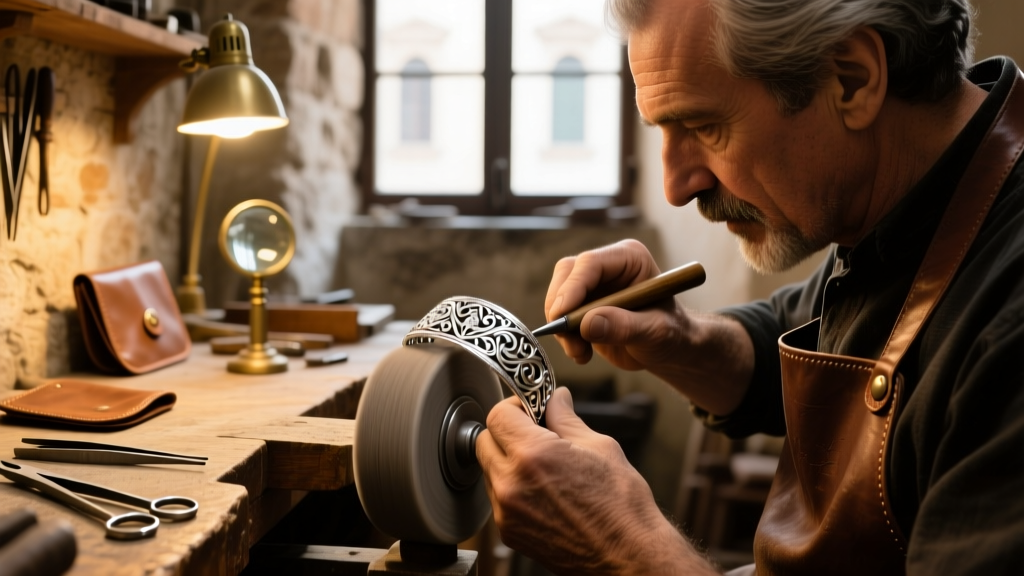
Italian jewelry hubs like Vicenza and Arezzo are famous for diamond-cut chains. This process involves using precision lathes with diamond-tipped tools to slice microscopic facets into the surface of the silver links. This creates a brilliant, reflective sparkle that mimics the look of gemstones without the added weight or cost. Furthermore, Italian manufacturers frequently employ laser-welding technology to close chain links. Unlike traditional soldering, which can leave visible seams and weak points, laser welding fuses the metal seamlessly, resulting in a stronger, more fluid, and visually flawless chain.
How to Authenticate an 'Italy 925' Stamp
Because the 'Italy 925' stamp carries a reputation for quality, it is frequently forged by counterfeiters who apply it to silver-plated brass or copper alloys. To protect your investment, employ these authentication methods:
- The Magnet Test: Silver is paramagnetic, meaning it is not noticeably attracted to magnets. If your jewelry snaps to a rare-earth neodymium magnet, it contains a ferromagnetic base metal like iron or steel and is definitively not solid 925 silver.
- The Ice Test: Silver possesses the highest thermal conductivity of any common metal. If you place an ice cube on a thick silver coin or heavy ring, the ice should begin melting almost instantly, and the metal will become freezing cold to the touch within seconds.
- Acid Testing (Schwerter's Solution): A drop of silver testing acid on a discreet, filed area of the metal will turn a creamy, dark red if the piece is genuine 925 sterling. A green or brown reaction indicates a lower purity or base metal.
- XRF Analysis: For high-value estate pieces, a professional jeweler can use an X-ray Fluorescence (XRF) spectrometer. This non-destructive test provides an exact elemental breakdown, verifying the 92.5% silver content and identifying the specific alloying metals used.
Care and Maintenance for Italian 925 Silver
To preserve the luster and structural integrity of your Italian sterling silver, proper maintenance is essential. The Silver Institute recommends storing silver in anti-tarnish cloth bags treated with silver nitrate or zinc carbonate, which absorb ambient sulfur gases. Avoid exposing your jewelry to chlorinated pool water, household bleach, or rubber bands, as these contain sulfur and chlorine compounds that cause rapid, sometimes irreversible, chemical pitting.
For routine cleaning, use a few drops of mild, phosphate-free dish soap in warm water and gently agitate with a microfiber cloth. For intricate diamond-cut Italian chains, an ultrasonic cleaner can be used safely for 30 to 60 seconds to dislodge trapped sebum and environmental dust from the microscopic facets, restoring the chain's original brilliance.
Final Verdict: Is Italy 925 Worth the Investment?
Ultimately, the 'Italy 925' stamp represents a convergence of guaranteed metallurgical purity and world-class manufacturing heritage. While the 925 standard is universal, the Italian execution—characterized by superior finishing, advanced laser-welding, and brilliant diamond-cutting—elevates the jewelry from a simple metal accessory to a durable, wearable asset. By understanding the legal hallmarks, material properties, and proper authentication techniques, you can confidently navigate the market and secure pieces that will retain their beauty and value for generations.


