How-To: Custom Silver at Lucidos Fine Jewelry Sterling Heights
Master the step-by-step process of commissioning custom 925 sterling silver jewelry, guided by the expert standards of elite local bench jewelers.

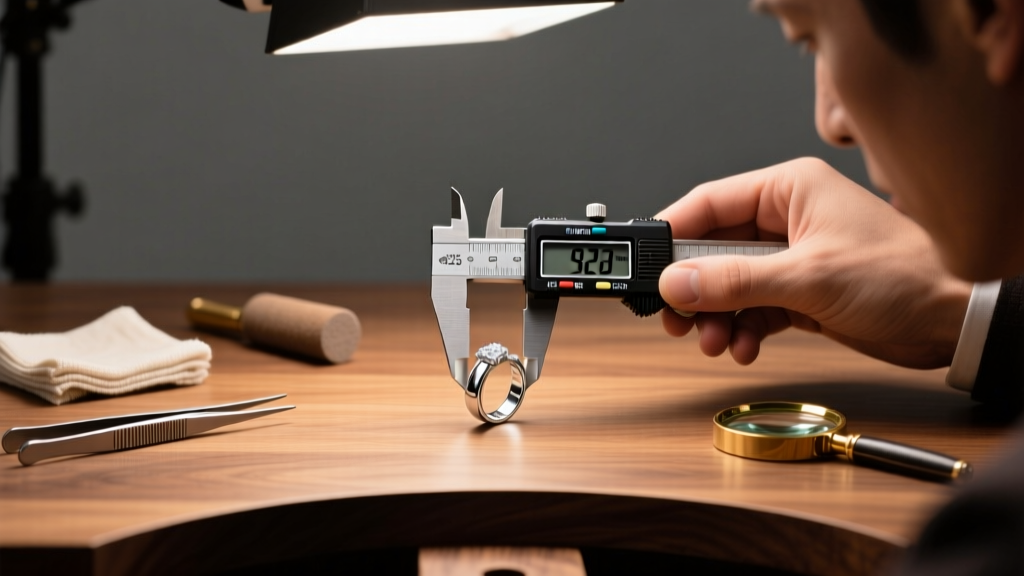
Commissioning a bespoke piece of sterling silver jewelry is an intimate process that bridges artistic vision with metallurgical science. While mass-produced 925 silver floods the e-commerce market, true collectors and bridal couples seek out master bench jewelers who understand the nuances of alloy behavior, casting porosity, and structural integrity. When evaluating where to take your custom concepts, researching established regional benchmarks is crucial. For instance, the meticulous bench standards, transparent client consultations, and rigorous quality control processes observed at Lucidos Fine Jewelry Sterling Heights provide an excellent masterclass in what consumers should demand from a high-end local silversmith.
Whether you are redesigning a family heirloom or drafting a modern signet ring from scratch, navigating the custom silver process requires a baseline understanding of jewelry fabrication. Below is your comprehensive, step-by-step guide to commissioning fine silver jewelry like an industry insider.
Step 1: Defining Your Silver Purity and Alloy Needs
The first step in any custom commission is selecting the correct silver alloy. Pure silver (999) is highly ductile and tarnish-resistant, but it is far too soft for everyday structural wear. Standard sterling silver (925) introduces 7.5% copper to increase hardness, but this copper content is exactly what causes the metal to react with sulfur in the air, creating black silver sulfide (tarnish). For modern custom pieces, many elite jewelers now offer advanced alloys like Argentium, which replaces some copper with germanium to drastically alter the metal's physical properties.
| Alloy Type | Composition | Hardness (Vickers) | Shrinkage Rate | Best Application |
|---|---|---|---|---|
| 999 Fine Silver | 99.9% Ag | 25 HV (Soft) | 1.75% | Bezel wire, enameling, intricate wire-wrapping |
| 925 Sterling | 92.5% Ag, 7.5% Cu | 65 HV | 1.25% - 1.5% | Everyday rings, durable chains, structural cuffs |
| Argentium 935 | 93.5% Ag, Ge, Cu | 130 HV (Hardened) | 1.25% | Tarnish-resistant bridal, laser-welded assemblies |
According to data from Rio Grande Jewelry Supply, Argentium silver can be heat-hardened in a standard kiln to nearly double the Vickers hardness of traditional sterling, making it an exceptional choice for custom prong settings and thin, durable shanks that resist bending.
Step 2: The Consultation and CAD Wax Carving Process
Once the alloy is chosen, the design moves into the prototyping phase. Today, most custom silver jewelry begins in Computer-Aided Design (CAD) software, where the jeweler calculates exact gram weights, stone seat depths, and gallery clearances. However, for highly organic or sculptural pieces, traditional hand-carving from a block of jeweler's wax remains the gold standard.
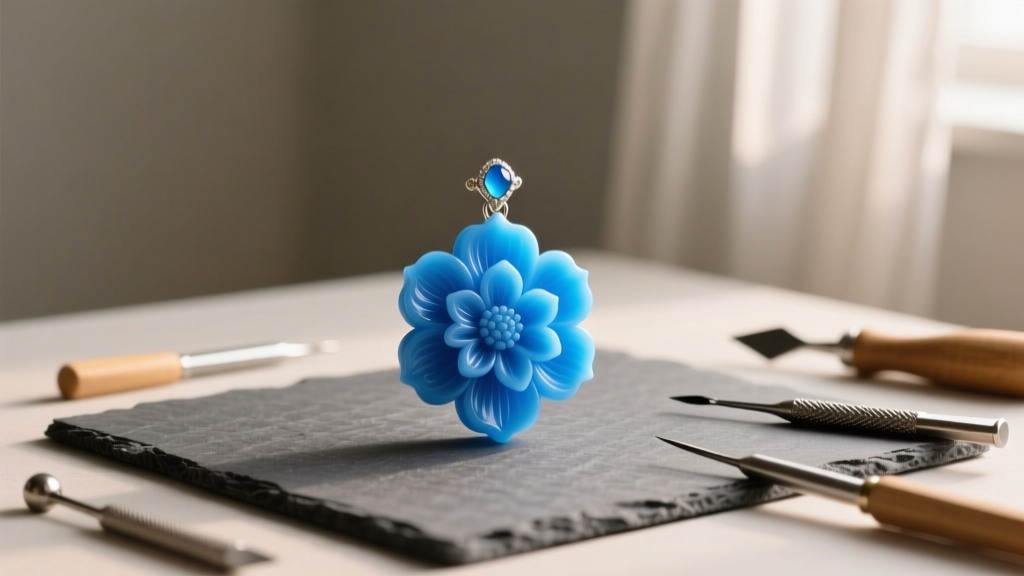
During this step, a master jeweler will discuss sprue placement—the channel through which molten silver will eventually flow into the mold. Improper sprue placement leads to turbulent metal flow, causing gas porosity. Furthermore, the jeweler must scale the wax model up by approximately 1.25% to 1.5% to account for the natural shrinkage that occurs when sterling silver cools from its 1640°F (893°C) melting point back to room temperature.
Step 3: Evaluating the Casting, Porosity, and Finish
After the wax is burned out in a high-temperature kiln and the molten silver is centrifugally or vacuum-cast into the flask, the raw casting (the "tree") is cut free. This is where the distinction between a commercial factory and a fine local bench jeweler becomes glaringly apparent.
Identifying and Preventing Porosity
Porosity manifests as tiny pinholes on the surface of the silver. Gas porosity looks like scattered, spherical bubbles and is caused by trapped oxygen or hydrogen during the melt. Shrinkage porosity appears as jagged, angular voids, usually near the thickest parts of the casting or the sprue attachment point. A reputable jeweler will inspect the raw casting under 10x magnification. If structural porosity is detected, the piece is scrapped and recast rather than filled with silver solder, which would compromise the ring's long-term integrity.
The Multi-Stage Polishing Protocol
Once the sprue is filed flush, the piece undergoes a multi-stage finishing process. First, the silver is tumbled in a magnetic tumbler with stainless steel shot to work-harden the surface and burnish hard-to-reach crevices. Next, the jeweler uses a buffing wheel loaded with Tripoli, a mild abrasive compound that cuts away file marks and scratches. Finally, a soft muslin wheel is used with Red Rouge (iron oxide) to bring the silver to a flawless, mirror-like luster. If the client requests tarnish resistance, a micro-thin layer of rhodium (typically 0.05 to 0.1 microns) or an eco-friendly e-coating is applied via electroplating.
Step 4: Hallmarking and Authenticity Verification
A genuine custom commission must be properly hallmarked. The Gemological Institute of America (GIA) notes that while the "925" stamp indicates the legal minimum for sterling silver in the United States, it does not identify the maker. Elite jewelers will stamp both the purity mark (925) and their registered Maker's Mark or trademark. This dual-stamping acts as a lifelong guarantee of the metal's quality and the artisan's accountability.
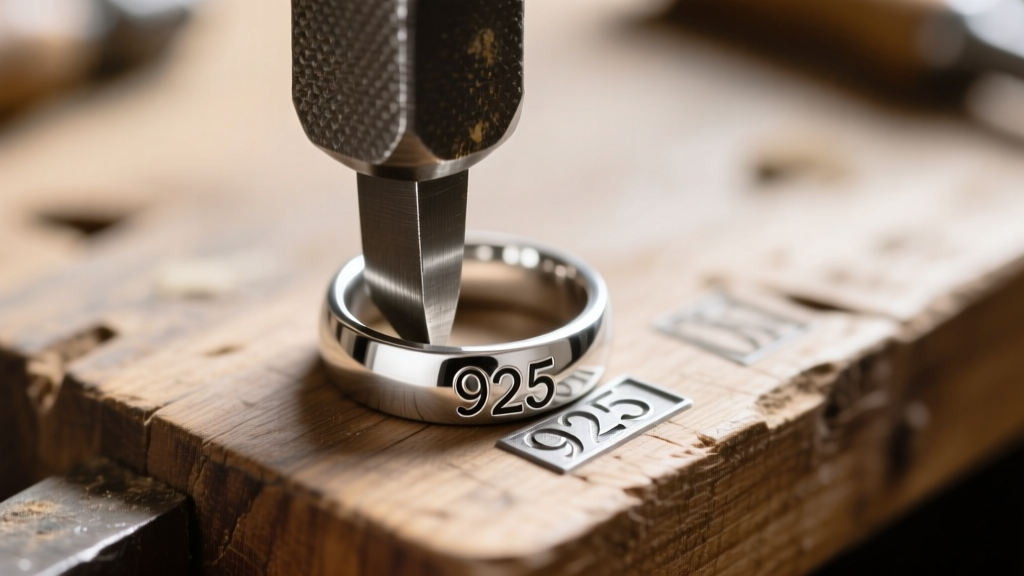
When inspecting your finished piece, use a jeweler's loupe to check the inner band or the back of the pendant bail. The hallmark should be crisp, deeply struck, and perfectly aligned. Blurry, shallow, or laser-etched hallmarks on heavy cast pieces are often indicative of overseas mass-production rather than authentic bench craftsmanship.
Step 5: Long-Term Care and Ultrasonic Maintenance
The final step of the commissioning process is establishing a maintenance protocol with your jeweler. Sterling silver requires specific care to maintain its structural brilliance and surface finish.
- Chemical Storage: Store your custom silver in an airtight polyethylene bag alongside a 3M anti-tarnish strip. These strips contain copper-based scavengers that actively absorb hydrogen sulfide gas from the enclosed air, preventing the chemical reaction that causes blackening.
- Mechanical Cleaning: Avoid commercial silver dips, which utilize harsh thiourea acids that can strip oxidized patinas and damage porous gemstones like turquoise or opals. Instead, use a few drops of phosphate-free dish soap, warm water, and an extra-soft baby toothbrush to gently agitate dirt from under the gallery.
- Ultrasonic Warnings: While ultrasonic cleaners are excellent for plain silver chains, the high-frequency cavitation can easily shatter fracture-filled diamonds, loosen tension-set stones, or crack emeralds. Always consult your bench jeweler before placing a custom gemstone ring into an ultrasonic tank.
By understanding these five critical steps, you transform from a passive buyer into an informed collaborator. Whether you are working with a renowned local establishment or a private studio artisan, demanding transparency in alloy selection, casting integrity, and hallmarking ensures your custom sterling silver piece will endure as a structural and artistic triumph for generations.


