Best Homemade Silver Cleaner for Jewelry: Material Safety Guide
Discover the chemistry behind the best homemade silver cleaner for jewelry. Compare material safety for .925 sterling, fine silver, and plated pieces.

When searching for the best homemade silver cleaner for jewelry, most guides offer a superficial list of pantry ingredients without explaining the underlying chemical reactions. As jewelry metallurgists and gemologists know, silver is a reactive transition metal. The 'tarnish' you see is not dirt; it is a complex chemical compound called silver sulfide. Applying the wrong acidic or abrasive homemade solution can permanently alter the crystalline structure of your jewelry, strip rhodium plating, or cause micro-pitting in porous alloys.
In this comprehensive material comparison, we evaluate the most popular DIY cleaning methods through the lens of metallurgical properties, comparing their efficacy and safety across fine silver, sterling silver, and silver-plated substrates.
The Chemistry of Tarnish and Material Degradation
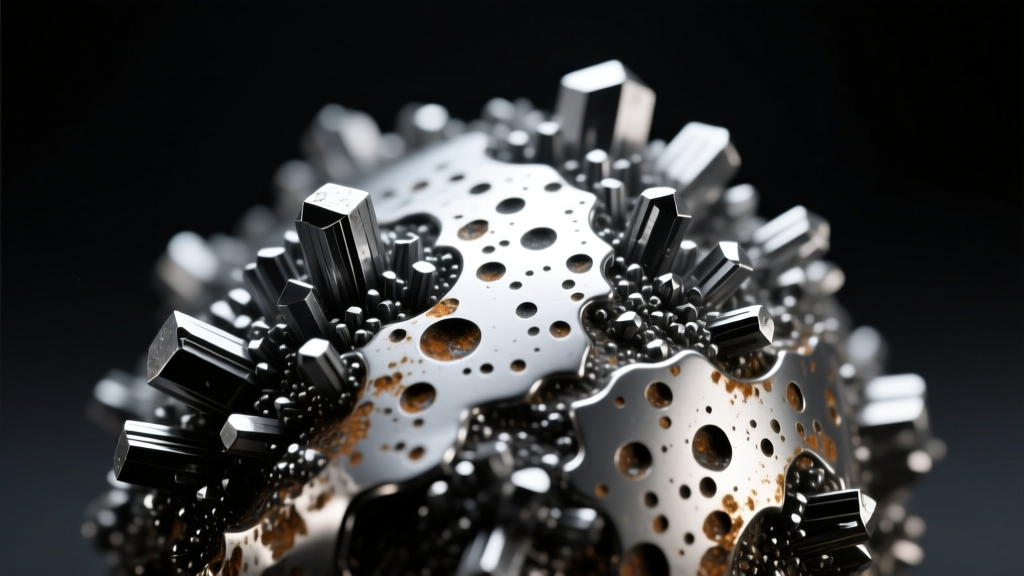
Silver tarnish occurs when elemental silver (Ag) reacts with hydrogen sulfide (H2S) in the atmosphere to form silver sulfide (Ag2S). This creates a dark, dull layer on the surface. According to the Smithsonian Institution, the rate of this reaction accelerates in high-humidity environments or when silver is exposed to sulfur-rich materials like wool, rubber, and certain cosmetics.
To remove this layer, a cleaner must either mechanically abrade the sulfide layer, chemically dissolve it using acids, or electrochemically reduce it back into elemental silver. The method you choose must align with the specific metallurgical properties of your jewelry piece.
Fine Silver (.999) vs. Sterling Silver (.925)
Fine silver is 99.9% pure silver. It is highly malleable, hypoallergenic, and remarkably resistant to tarnish because it lacks alloyed metals. Sterling silver, the industry standard for jewelry, is 92.5% silver and 7.5% copper. This copper addition provides necessary tensile strength but introduces a secondary vulnerability: copper oxidation. When evaluating a homemade silver cleaner for jewelry, you must account for how the solution interacts with both the silver sulfide and the copper oxide present in .925 alloys.
Evaluating 4 Popular Homemade Silver Cleaners
Not all DIY recipes are created equal. Below is a metallurgical breakdown of the four most common household cleaning methods, analyzing their chemical properties and material compatibility.
1. The Aluminum Foil and Baking Soda Bath (Electrochemical Reduction)
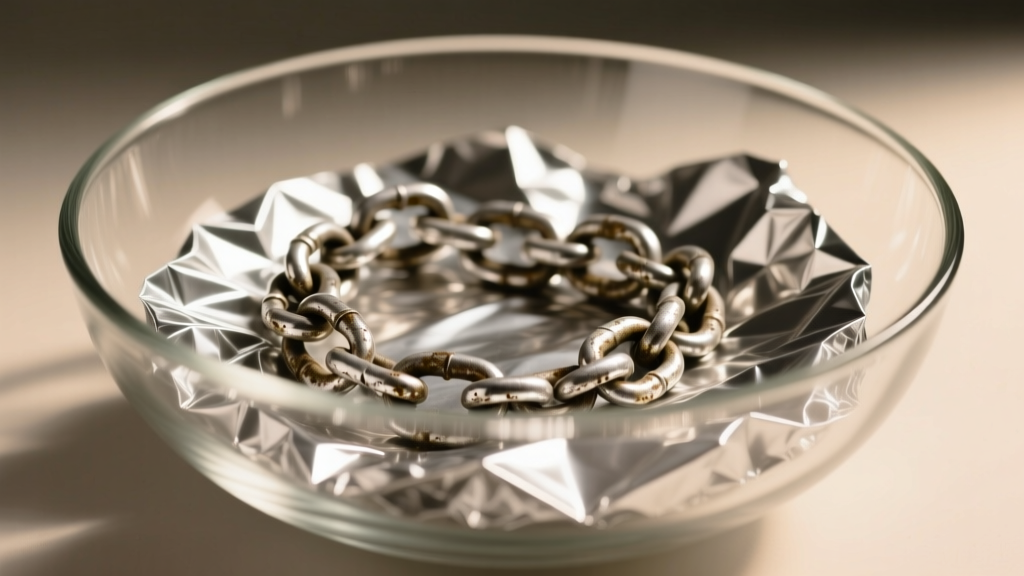
This is widely considered the safest and most effective homemade silver cleaner for jewelry. By lining a bowl with aluminum foil and adding hot water and sodium bicarbonate (baking soda), you create a galvanic cell. Aluminum is more anodic (has a higher oxidation potential) than silver. In the presence of an electrolyte (the baking soda solution), the aluminum sacrifices itself, pulling the sulfur atoms away from the silver sulfide and converting it back into pure silver.
- Chemical Action: Electrochemical reduction (Ion exchange).
- Material Safety: Excellent for solid .925 sterling and .999 fine silver.
- Risk Factor: Can strip intentional oxidized patinas (antiquing) and may damage porous gemstones like turquoise or opals if the water is too hot.
2. Lemon Juice and Salt (Acidic Chelation)
Lemon juice contains citric acid (pH ~2.0), while salt (sodium chloride) acts as a mild abrasive and electrolyte. The acid dissolves copper oxide and silver sulfide, but it does so by stripping microscopic layers of the metal itself.
- Chemical Action: Acidic dissolution and chelation.
- Material Safety: Poor for silver-plated jewelry; acceptable for heavily tarnished solid sterling if rinsed immediately.
- Risk Factor: Prolonged exposure causes micro-pitting and surface etching. It will instantly destroy rhodium plating and damage pearl or coral inlays.
3. White Toothpaste (Mild Abrasive)
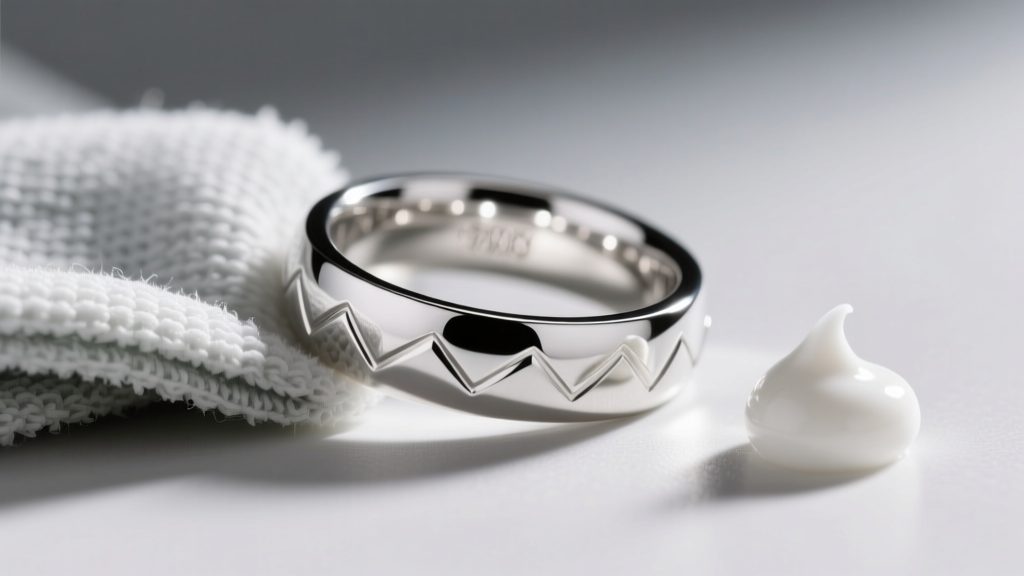
Toothpaste relies on hydrated silica to clean teeth. On the Relative Dentin Abrasivity (RDA) scale, standard toothpastes range from 70 to 100. While this is safe for dental enamel, it is far too aggressive for high-polish silver.
- Chemical Action: Mechanical abrasion.
- Material Safety: Only suitable for matte-finish solid silver or heavily scratched items requiring buffing.
- Risk Factor: Leaves micro-scratches on mirror-polished .925 sterling. Will completely strip gold vermeil or rhodium plating down to the base metal.
4. Ketchup (Weak Acid + Abrasive)
Ketchup contains acetic acid (from vinegar) and citric acid (from tomatoes), combined with a viscous, slightly abrasive physical texture. It operates similarly to lemon juice but with a lower acid concentration.
- Chemical Action: Weak acidic dissolution.
- Material Safety: Moderate for solid sterling; unsafe for plated items.
- Risk Factor: The high sugar and sodium content can leave a sticky residue that traps moisture in intricate filigree work, accelerating future tarnish if not ultrasonically rinsed.
Material Compatibility Matrix
Use this decision framework to select the correct homemade silver cleaner for jewelry based on your specific material grade and finish.
| Cleaner Type | .999 Fine Silver | .925 Sterling (High Polish) | Silver-Plated Brass/Copper | Oxidized/Antiqued Silver | Rhodium-Plated Sterling |
|---|---|---|---|---|---|
| Aluminum + Baking Soda | Safe | Highly Effective | Safe (Brief soak) | Unsafe (Strips patina) | Safe |
| Lemon Juice + Salt | Safe | Risk of Etching | Unsafe (Strips plating) | Unsafe | Unsafe |
| White Toothpaste | Unsafe (Scratches) | Unsafe (Micro-scratches) | Unsafe (Strips plating) | Safe (for spot cleaning) | Unsafe |
| Ketchup | Safe | Moderate Risk | Unsafe | Unsafe | Unsafe |
Commercial Dips vs. Homemade Electrochemical Baths
Many jewelers advise against commercial liquid silver dips, and for good reason. As noted by Gemological Institute of America (GIA) literature on metal care, most commercial dips rely on thiourea, a highly toxic, carcinogenic chemical that instantly dissolves silver sulfide. While effective, thiourea leaves the silver surface highly porous and chemically active, causing the jewelry to re-tarnish much faster than before.
Conversely, the aluminum and baking soda bath does not dissolve the silver; it converts the tarnish back into elemental silver. This preserves the structural integrity of the metal, leaves a smoother surface finish, and significantly delays the onset of future tarnish. For deep, historical tarnish on antique silver collectibles and jewelry, the electrochemical method remains the gold standard for conservation.
The Perfect Protocol: Safest Electrochemical Bath for .925 Sterling
To maximize the efficacy of the aluminum foil method without risking thermal shock to gemstone inclusions, follow this precise metallurgical protocol:
- Preparation: Line a glass or ceramic bowl (never use a metal bowl, which will disrupt the galvanic cell) with heavy-duty aluminum foil, shiny side up.
- Electrolyte Mix: Add 2 tablespoons of baking soda (sodium bicarbonate) per quart of water. Avoid washing soda (sodium carbonate) for jewelry, as its higher pH can degrade porous stone settings.
- Temperature Control: Heat the water to exactly 190°F (88°C). Do not use rolling boiling water (212°F), as rapid temperature changes can fracture heat-sensitive gems like emeralds or opals.
- Immersion: Ensure every piece of jewelry physically touches the aluminum foil. This completes the electrical circuit. You will immediately smell a faint sulfur (rotten egg) odor as the Ag2S converts back to Ag.
- Timing: Leave light tarnish for 2 minutes; heavy, black tarnish for up to 5 minutes.
- Neutralization: Remove with wooden tongs, rinse thoroughly in distilled water to remove alkaline residue, and buff dry with a clean microfiber cloth.
By understanding the chemical properties of your jewelry's alloy, you can safely utilize a homemade silver cleaner for jewelry that restores brilliance without compromising the metallurgical integrity of your most cherished pieces.


