What Does 925 on Jewelry Mean? A Metallurgist's Deep Dive
Discover what does 925 on jewelry mean from a metallurgical perspective. Learn about alloy compositions, hallmarking laws, and advanced authenticity testing.

The Metallurgical Definition of 925 Silver
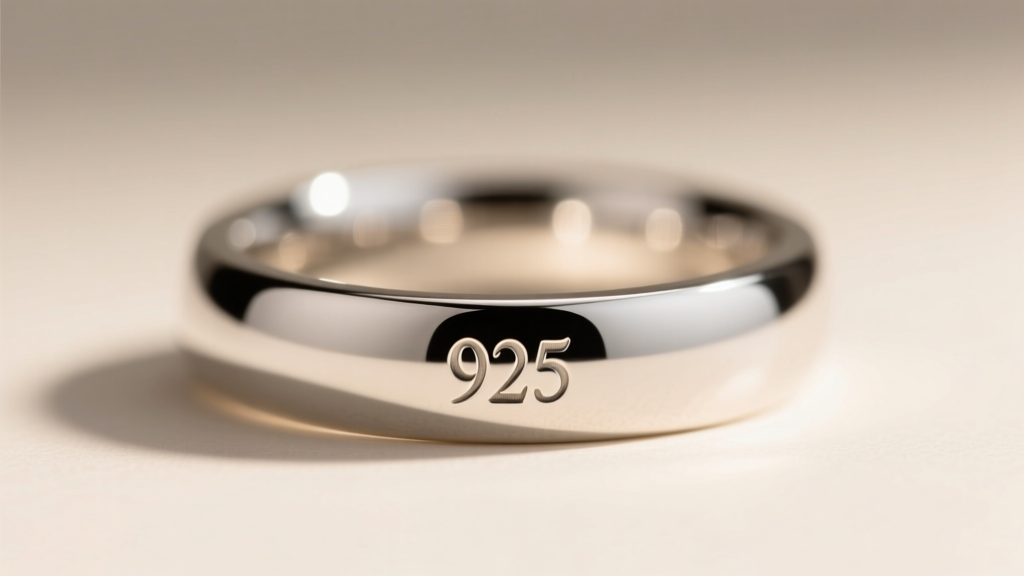
When evaluating precious metals, the stamp "925" is the universal standard for sterling silver. But to truly understand what does 925 on jewelry mean, we must look past the jewelry counter and into the metallurgical laboratory. The number 925 represents the millesimal fineness of the alloy, indicating that the piece consists of exactly 92.5% pure silver by weight. The remaining 7.5% is composed of base metals, most traditionally copper.
Pure silver, often stamped as 999 or "fine silver," possesses a Vickers hardness (HV) of approximately 25. While this makes it exceptionally malleable and highly resistant to tarnish, it is structurally inadequate for functional jewelry. A prong setting crafted from 999 silver would bend under minimal lateral pressure, resulting in catastrophic gemstone loss. By alloying the silver to reach a 925 composition, the Vickers hardness increases to a range of 65 to 75 HV. This specific ratio represents the metallurgical "sweet spot," providing the necessary tensile strength and structural rigidity for daily wear while retaining the brilliant luster and hypoallergenic properties of pure silver.
Why Pure Silver Fails: The Mechanics of Alloying
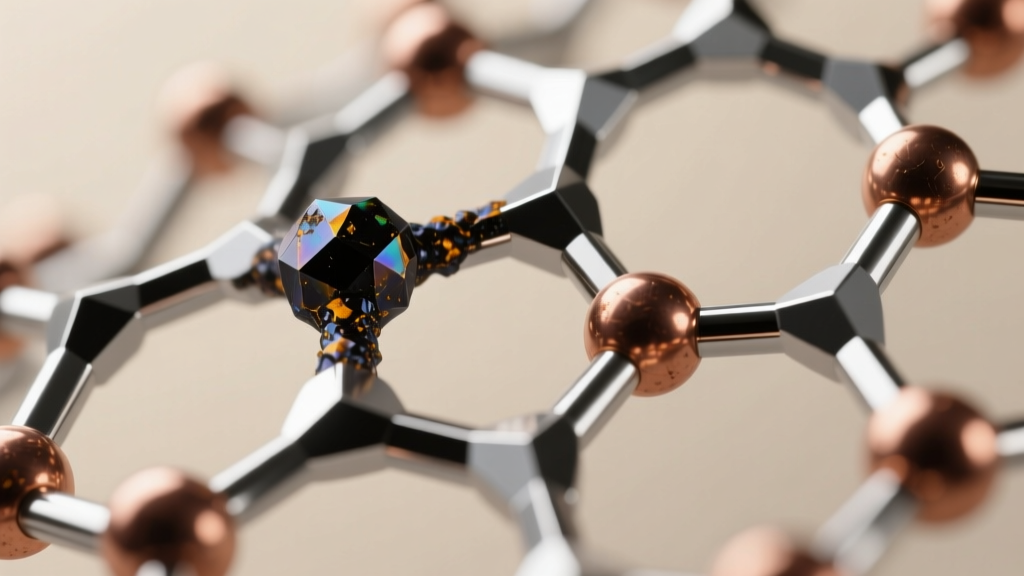
The addition of copper to silver creates a substitutional solid solution. Because the atomic radii of silver (144 pm) and copper (128 pm) are relatively close, copper atoms seamlessly integrate into the face-centered cubic (FCC) crystal lattice of the silver. This lattice distortion is what impedes dislocation movement within the metal, fundamentally increasing its yield strength and hardness.
The Copper Problem: Galvanic Corrosion and Tarnish
While copper solves the structural deficit of pure silver, it introduces a chemical vulnerability. Pure silver does not react with oxygen or moisture at room temperature. However, the 7.5% copper in 925 sterling silver is highly reactive to atmospheric sulfur compounds, specifically hydrogen sulfide (H2S). When H2S contacts the copper atoms at the surface of the alloy, it initiates a galvanic reaction that forms copper sulfide (Cu2S) and silver sulfide (Ag2S). This manifests as the familiar yellowish-brown to black tarnish layer. According to the Gemological Institute of America (GIA), this surface corrosion is strictly a cosmetic issue and does not compromise the structural integrity of the underlying alloy, but it necessitates regular maintenance.
Modern Alternatives: Argentium and Deoxidized Alloys
In recent years, metallurgists have developed advanced 925 alloys to mitigate the inherent tarnishing issues of the traditional silver-copper binary system. The most prominent of these is Argentium silver. By replacing a fraction of the copper with the metalloid germanium (Ge), the alloy forms a transparent, self-healing layer of germanium dioxide (GeO2) on its surface when exposed to oxygen. This passivation layer acts as an impermeable barrier against sulfur compounds, rendering the metal highly tarnish-resistant without requiring toxic rhodium plating.
| Alloy Designation | Composition | Vickers Hardness (HV) | Tarnish Resistance | Primary Use Case |
|---|---|---|---|---|
| 999 Fine Silver | 99.9% Ag | ~25 HV | Excellent | Investment bars, bezel wire |
| 925 Traditional Sterling | 92.5% Ag, 7.5% Cu | 65-75 HV | Poor (Requires polishing) | Standard rings, chains, settings |
| 925 Argentium | 92.5% Ag, Cu, Ge | 70-85 HV | Exceptional | High-end wedding bands, low-maintenance pieces |
| 900 Coin Silver | 90.0% Ag, 10.0% Cu | 80-90 HV | Very Poor | Vintage flatware, historical artifacts |
Hallmarking Laws and the "925" Stamp
The application of the 925 stamp is governed by strict international trade laws, though enforcement varies wildly by jurisdiction. In the United States, the National Stamping Act mandates that any item bearing a quality mark like "925" or "Sterling" must also bear the registered trademark of the manufacturer or importer. If a piece is stamped 925 but lacks a maker's mark, it is technically in violation of US federal law, though this is rarely enforced on imported fast-fashion jewelry.
Conversely, the United Kingdom operates under the Hallmarking Act 1973. In the UK, a simple "925" stamp applied by the manufacturer is legally insufficient for items weighing over 7.78 grams. The piece must be assayed and stamped by one of the official government assay offices (London, Birmingham, Sheffield, or Edinburgh). The London Assay Office applies a multi-part hallmark that includes the sponsor's mark, the millesimal fineness mark (925), the Assay Office mark, and the date letter. Understanding these legal distinctions is crucial for authenticating vintage and international pieces.
Advanced Authenticity Testing: Beyond the Magnet
The ubiquitous "magnet test" is virtually useless for authenticating 925 silver. Silver is diamagnetic, meaning it is slightly repelled by magnetic fields, but this effect is too weak to be felt by hand. Furthermore, counterfeiters routinely use non-magnetic base metals like brass, copper, or austenitic stainless steel as cores for heavy silver plating. To accurately verify the 925 composition, professionals rely on chemical and spectrometric analysis.
Schwerter's Solution (Acid Testing)
For rapid, semi-destructive testing, jewelers use Schwerter's solution—a mixture of potassium dichromate and nitric acid. A small file is used to cut through any surface plating, and a drop of the acid is applied to the exposed metal. The resulting color change indicates the fineness:
- Bright Red: 999 Fine Silver
- Blood Red / Crimson: 925 Sterling Silver
- Brown: 800 Silver
- Green: Brass or Copper base metal
- Yellow: Lead or Tin
X-Ray Fluorescence (XRF) Spectrometry
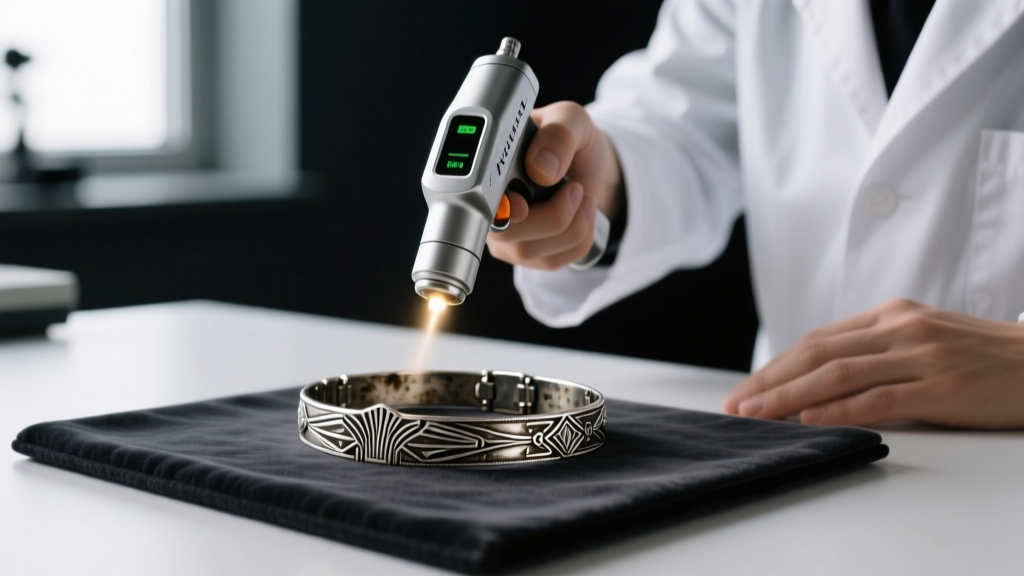
For non-destructive, laboratory-grade verification, XRF spectrometry is the gold standard. An XRF analyzer fires primary X-rays at the jewelry, ejecting inner-shell electrons from the atoms. As outer-shell electrons drop down to fill the vacancies, they emit secondary fluorescent X-rays at energy levels specific to each element. A 925 sterling silver piece will display a dominant Silver (Ag) K-alpha peak at approximately 22.1 keV, alongside a smaller Copper (Cu) K-alpha peak at 8.0 keV. While XRF units cost upwards of $15,000, they provide exact elemental breakdowns in seconds, instantly identifying sophisticated fakes like silver-plated tungsten or cadmium-laced alloys.
Specific Gravity and Density Testing
Using the Archimedes principle, you can calculate the specific gravity (SG) of a piece to verify its 925 composition without chemicals. Pure silver has a density of 10.49 g/cm³, and pure copper is 8.96 g/cm³. The theoretical density of a 92.5/7.5 alloy is roughly 10.36 g/cm³. However, due to microscopic porosity introduced during the casting process, genuine cast 925 sterling silver typically yields an SG between 10.28 and 10.33 g/cm³. If a piece tests at 8.5 g/cm³, it is likely brass; if it tests at 7.8 g/cm³, it is steel. The World Jewellery Confederation (CIBJO) recognizes specific gravity testing as a valid preliminary sorting method for precious metals.
Expert Insight: Never rely solely on the visual presence of a "925" stamp when purchasing from unverified secondary markets. Counterfeiters possess the exact same steel hallmarking punches used by legitimate manufacturers. Always cross-reference the stamp with a secondary physical test, such as specific gravity or localized acid testing on an inconspicuous area.
Summary Framework for Buyers
Understanding what does 925 on jewelry mean requires recognizing it as a precise metallurgical formula rather than just a marketing term. It represents a 92.5% silver and 7.5% alloy matrix engineered to balance the brilliant luster of precious metal with the mechanical durability required for functional wear. Whether you are evaluating traditional copper-alloyed sterling, modern germanium-enhanced Argentium, or vintage assay-marked artifacts, applying rigorous testing methodologies ensures your investments are backed by genuine elemental science.


