How Do You Tell If Jewelry Is Real Silver? 5 Expert Tests
Learn how do you tell if jewelry is real silver with 5 expert tests. Discover hallmark guides, magnet checks, and acid testing for 925 sterling.

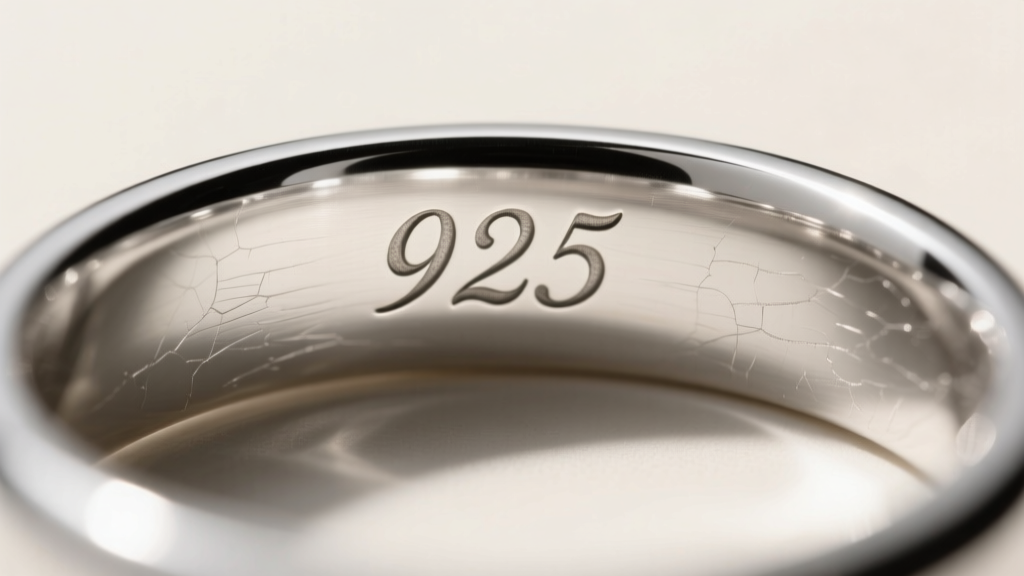
When navigating estate sales, vintage markets, or online auctions, the question inevitably arises: how do you tell if jewelry is real silver? The secondary jewelry market is saturated with sophisticated imitations, silver-plated base metals, and "nickel silver" alloys that contain absolutely zero actual silver. Relying solely on visual luster is a novice mistake, as modern rhodium plating and high-polish aluminum alloys can easily deceive the untrained eye.
To accurately authenticate silver jewelry, you must understand its metallurgical properties and employ a systematic testing framework. This guide bypasses generic internet myths and provides actionable, science-backed methodologies used by gemologists and precious metal appraisers to verify silver authenticity.
The Metallurgy of Silver: Understanding the Alloys
Before testing, you must understand what you are looking for. Pure silver (Ag) is a transitional metal with an atomic number of 47. In its purest form, known as fine silver (99.9%), it is exceptionally malleable but too soft for functional jewelry, prone to severe scratching and deformation.
To solve this, metallurgists created sterling silver, an alloy comprising 92.5% pure silver and 7.5% secondary metals (usually copper). This specific ratio, often stamped as "925," provides the necessary tensile strength for rings, chains, and clasps while retaining the precious metal's inherent value and luster. According to the Gemological Institute of America (GIA), sterling silver remains the global benchmark for fine silver jewelry.
Conversely, imposters often use German silver (also known as nickel silver). Despite the name, this is a copper-nickel-zinc alloy containing 0% silver. It mimics the color of real silver but lacks its thermal properties, density, and chemical reactivity.
Visual & Hallmark Inspection: The First Line of Defense
The authentication process always begins with a 10x or 20x jeweler's loupe. You are looking for specific assay marks that indicate purity. However, hallmarks can be forged, so they are a starting point, not a guarantee.
Common Purity Stamps
- 925 / .925 / STER: Indicates standard sterling silver (92.5% Ag).
- 999 / FS: Indicates fine silver (99.9% Ag), usually reserved for bezels, pure silver bullion jewelry, or specific artisan wire-wrapping.
- 935 / 960: Indicates Argentium silver, a modern alloy containing germanium for extreme tarnish resistance. It is highly valued in contemporary jewelry making.
International Assay Marks
If you are evaluating antique or European pieces, numerical stamps may be absent. Instead, look for pictorial hallmarks regulated by government assay offices. The UK Assay Office mandates the Lion Passant (a walking lion in profile) for sterling silver. French silver often bears the Minerva head profile. If a piece lacks these in regions where they are legally required, treat it with extreme suspicion.
The Clasp Trick Warning: A common deception in the vintage market involves attaching a genuine 925 sterling silver lobster clasp to a cheap, silver-plated copper chain. Always test the links and jump rings, not just the clasp.
Non-Destructive Physical Tests for Home Verification
If you cannot damage the piece, you must rely on the unique physical properties of elemental silver. These tests exploit silver's specific gravity, magnetic permeability, and thermal conductivity.
1. The N52 Neodymium Magnet Test
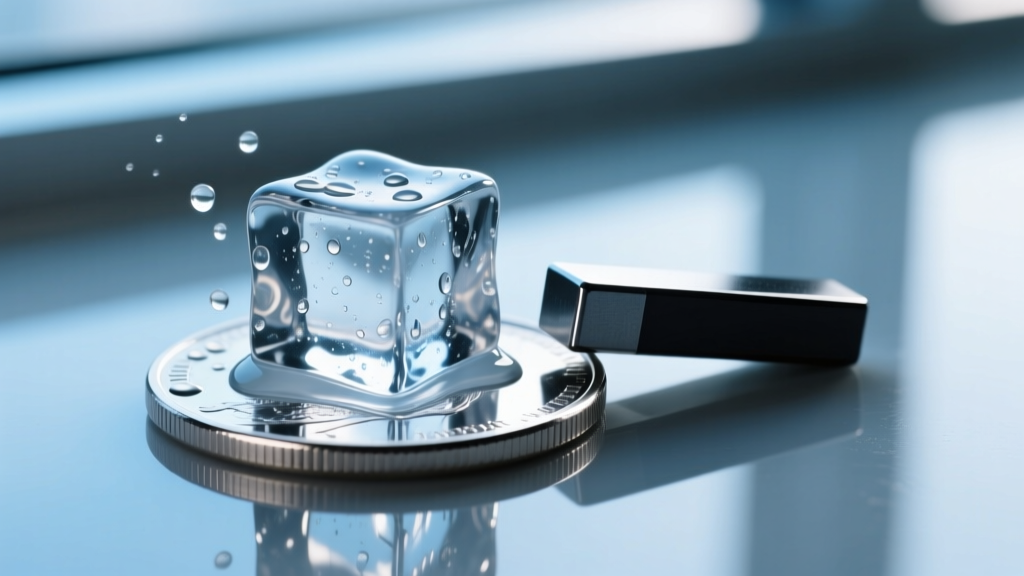
Silver is paramagnetic, meaning it exhibits only a negligible, practically unnoticeable attraction to magnetic fields. To perform this test, you need a strong N52-grade neodymium magnet. Slide the magnet down a silver chain or hold it to a heavy silver ring. If the piece snaps to the magnet, clings, or creates noticeable drag, it contains ferromagnetic metals like iron, steel, or high concentrations of nickel. Note: A lack of magnetic attraction does not guarantee silver (copper and aluminum are also non-magnetic), but magnetic attraction guarantees it is fake.
2. The Thermal Conductivity (Ice) Test
Silver possesses the highest thermal conductivity of any metal on the periodic table, measured at approximately 429 W/(m·K). To test this, place an ice cube on the suspected silver item at room temperature. Real silver will instantly draw heat from the surrounding environment, causing the ice to melt rapidly and the silver to become freezing cold to the touch within seconds. Base metals like stainless steel or brass will melt the ice at a significantly slower, standard rate.
3. The Olfactory (Smell) Test
Pure silver and sterling silver are virtually odorless. However, the copper, brass, and nickel used in fake jewelry react with the oils and sweat on your skin to produce a distinct, sulfurous "metallic" or "penny-like" odor. Vigorously rub the piece between your palms to generate friction and heat, then smell it. A strong metallic scent immediately exposes a copper or brass core.
Chemical & Advanced Testing for Absolute Certainty
When physical tests yield ambiguous results—especially with heavily rhodium-plated pieces that mask thermal and olfactory cues—chemical testing becomes necessary.
The Nitric Acid Scratch Test
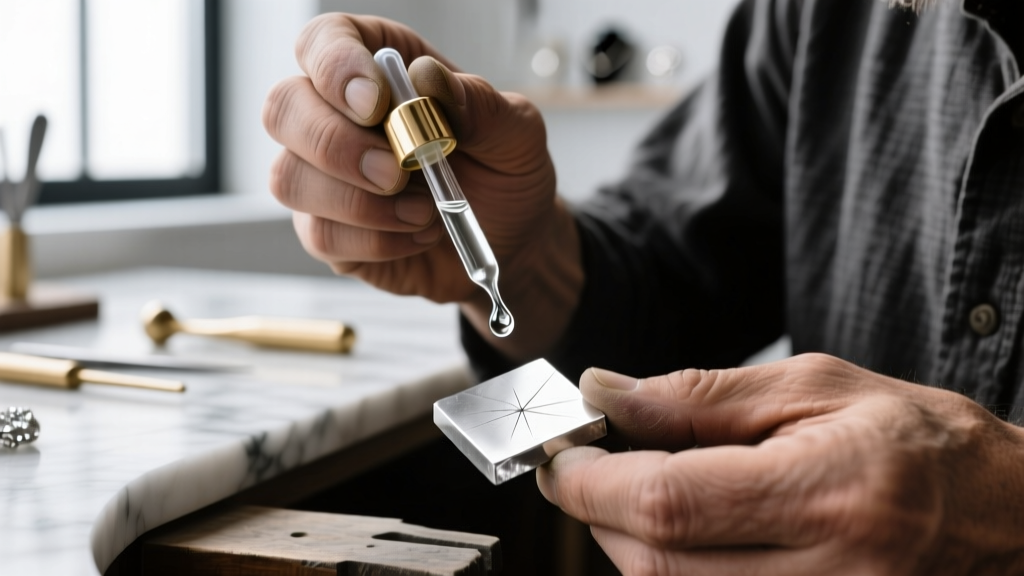
This is the definitive test used by pawn shops and refiners, though it requires caution. You will need a jeweler's testing stone and a specialized silver testing acid (a diluted solution of nitric acid and potassium dichromate).
- Rub the jewelry firmly against the stone to leave a visible metallic streak. (Pro tip: Do this in an inconspicuous area to avoid ruining a polished finish).
- Apply a single drop of the testing acid to the streak.
- Observe the immediate color reaction.
- Creamy / Light Red: Confirms 925 Sterling Silver.
- Dark Red / Blood Red: Confirms 999 Fine Silver.
- Green: Indicates a copper or brass base metal.
- Blue: Indicates a nickel alloy (German silver).
Material Comparison Chart: Silver Alloys vs. Imposters
Understanding how real silver compares to common fakes streamlines the authentication process. The table below outlines the critical material properties used by The Silver Institute and metallurgists to differentiate genuine articles from counterfeits.
| Material | Composition | Magnetic Response | Thermal Conductivity | Tarnish Profile |
|---|---|---|---|---|
| 925 Sterling | 92.5% Ag, 7.5% Cu | None (Paramagnetic) | Extremely High | Black/Dark Gray Sulfides |
| 999 Fine Silver | 99.9% Ag | None (Paramagnetic) | Maximum | Very Slow Tarnish |
| Argentium (935) | 93.5% Ag, Ge, Cu | None (Paramagnetic) | Very High | Highly Resistant |
| German Silver | Cu, Ni, Zn (0% Ag) | Weak to Moderate | Low | Green/White Oxidation |
| Silver-Plated Brass | Brass core, thin Ag coat | None | Moderate (Brass core) | Flaking / Green Wear |
Troubleshooting Tarnish and Patina
Many buyers mistakenly believe that tarnish is a sign of fake jewelry. In reality, tarnish is one of the strongest indicators of real silver. When the 7.5% copper in sterling silver reacts with sulfur compounds in the atmosphere, it forms silver sulfide, presenting as a dark, yellowish, or black patina.
When evaluating a tarnished piece, look closely at the high-friction areas (like the edges of a ring or the links of a chain). If the dark tarnish is rubbing off to reveal a green or copper-colored underlayer, you are looking at silver-plated brass. If the piece is exhibiting red or brown flaking, it is rusting steel or iron. Genuine solid silver will remain uniformly silver-colored beneath the tarnish layer, easily restored to a high mirror polish with a specialized jeweler's rouge or a mild baking soda and aluminum foil electrolyte bath.
By combining hallmark inspection with thermal, magnetic, and chemical testing, you can confidently answer the question of how do you tell if jewelry is real silver, ensuring your investments are backed by genuine precious metal value.


