How to Clean Silver Jewelry at Home: An Expert's Chemical Guide
Learn how to clean silver jewelry at home using safe electrochemistry. Expert guide to removing tarnish without damaging 925 sterling or soft gemstones.

The Chemistry of Tarnish: Why Silver Turns Black
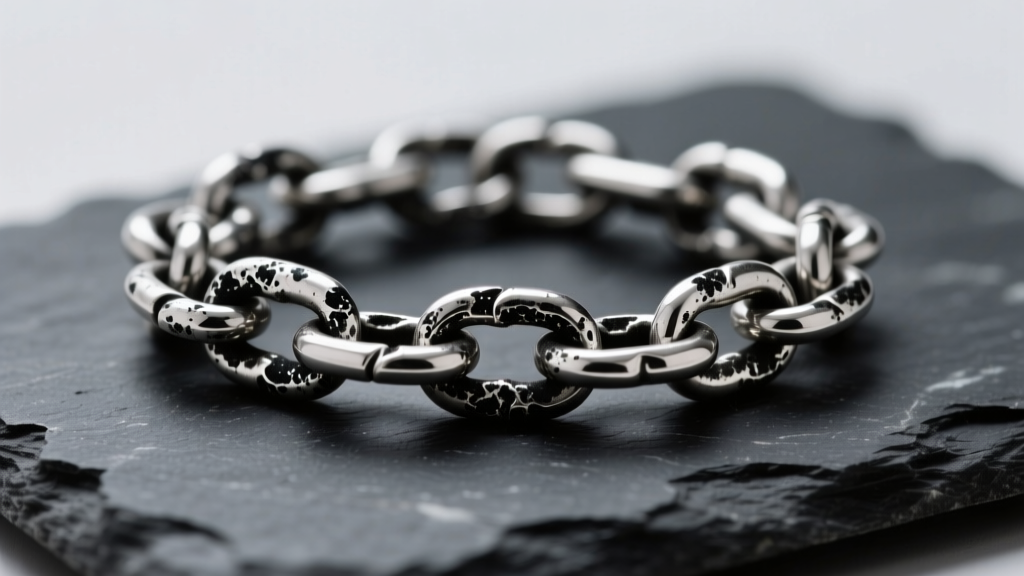
To understand how to clean silver jewelry at home effectively, you must first understand what you are actually cleaning. A common misconception is that silver 'rusts' or oxidizes in the same way iron does. In reality, pure silver does not react with oxygen at room temperature. Instead, the black, yellow, or dull gray film on your 925 sterling silver is silver sulfide (Ag2S). This forms when silver reacts with hydrogen sulfide (H2S) gas present in the atmosphere, which originates from industrial pollution, volcanic activity, and even everyday household items like eggs, wool, and rubber bands.
Furthermore, 925 sterling silver contains 7.5% copper to increase its hardness. This copper introduces a secondary variable: galvanic micro-cells. In high-humidity environments, the copper can undergo localized galvanic corrosion, accelerating the tarnishing process and sometimes leaving a greenish residue on the skin. Understanding this electrochemical reality is the first step toward mastering silver care without relying on destructive, abrasive hacks.
Electrochemical Reduction: The Aluminum Foil Method
The most scientifically sound way to clean silver jewelry at home without removing microscopic layers of the precious metal is through electrochemical reduction. This method reverses the chemical reaction that created the tarnish, converting silver sulfide back into pure silver and transferring the sulfur to an aluminum anode.
The Chemical Equation
When aluminum (which is higher on the galvanic series and more reactive than silver) is placed in an electrolyte solution with tarnished silver, a redox reaction occurs:
3Ag2S + 2Al → 6Ag + Al2S3
The aluminum sacrifices itself, pulling the sulfur atoms away from the silver. The result is pristine silver and aluminum sulfide, which remains dissolved or suspended in the water.
Step-by-Step Protocol
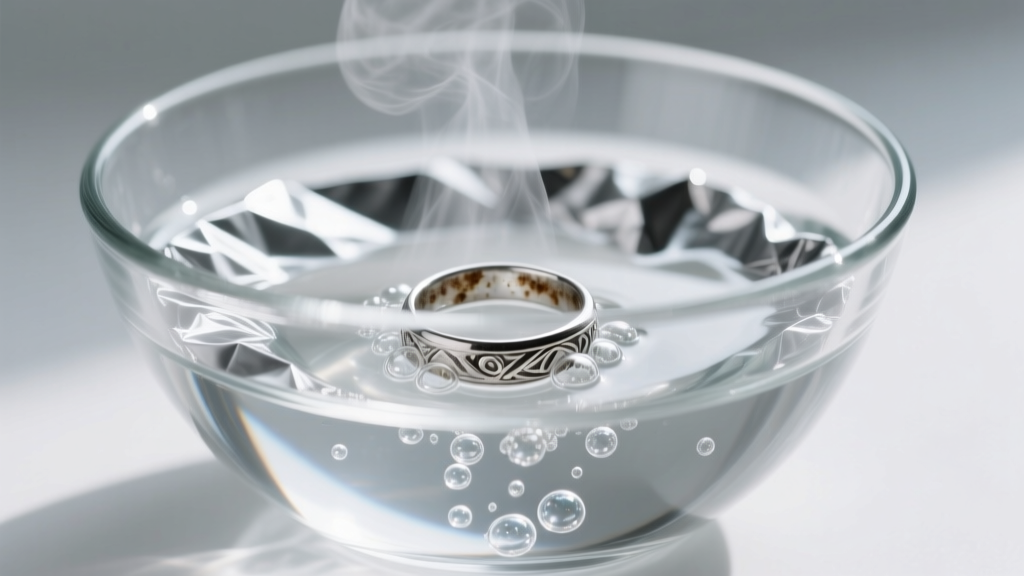
- Prepare the Cell: Line a glass or ceramic bowl with heavy-duty aluminum foil, shiny side up. Ensure the silver will make direct physical contact with the foil.
- Create the Electrolyte: Boil water and add 1 tablespoon of baking soda (sodium bicarbonate) and 1 tablespoon of non-iodized salt per liter of water. The salt increases the ionic conductivity of the solution.
- Submerge: Pour the hot solution into the foil-lined bowl. Using silicone tongs, place the silver jewelry into the water, ensuring it touches the aluminum foil.
- Observe: You will see bubbling and smell a distinct 'rotten egg' odor (hydrogen sulfide gas being released). Leave the piece for 2 to 5 minutes depending on the severity of the tarnish.
- Rinse and Dry: Remove the jewelry, rinse thoroughly under distilled water to remove alkaline residue, and pat dry with a microfiber cloth.
Critical Gemstone Warnings
While this method is miraculous for plain metal chains and solid silver bands, it is highly destructive to porous and organic gemstones. The alkaline electrolyte and high heat will permanently damage materials like turquoise, opal, pearl, lapis lazuli, and malachite. According to the Gemological Institute of America (GIA), organic gems are highly sensitive to both heat and changes in pH, which can cause them to crack, lose their luster, or dissolve entirely. If your silver jewelry features these stones, you must rely on localized mechanical cleaning instead.
Methodology Comparison: Chemical vs. Mechanical Cleaning
Not all tarnish requires a chemical bath. Below is a technical comparison of the primary methods for maintaining sterling silver, categorized by their mechanism of action and risk profile.
| Method | Mechanism | Best For | Risk Level |
|---|---|---|---|
| Electrochemical (Foil) | Redox reaction (Ion transfer) | Heavy, uniform tarnish on plain metal | Low (High for porous stones) |
| Micro-Abrasive Cloths | Mechanical removal (Friction) | Light tarnish, localized spotting | Medium (Removes intentional patina) |
| Commercial Silver Dips | Chemical dissolution (Thiourea) | Intricate filigree, quick fixes | High (Toxic, strips antique finish) |
| Ultrasonic Cleaners | Cavitation (Sound waves) | Diamond or sapphire-set silver | High (Can shatter emeralds/opals) |
Advanced Mechanical Cleaning and Polishing
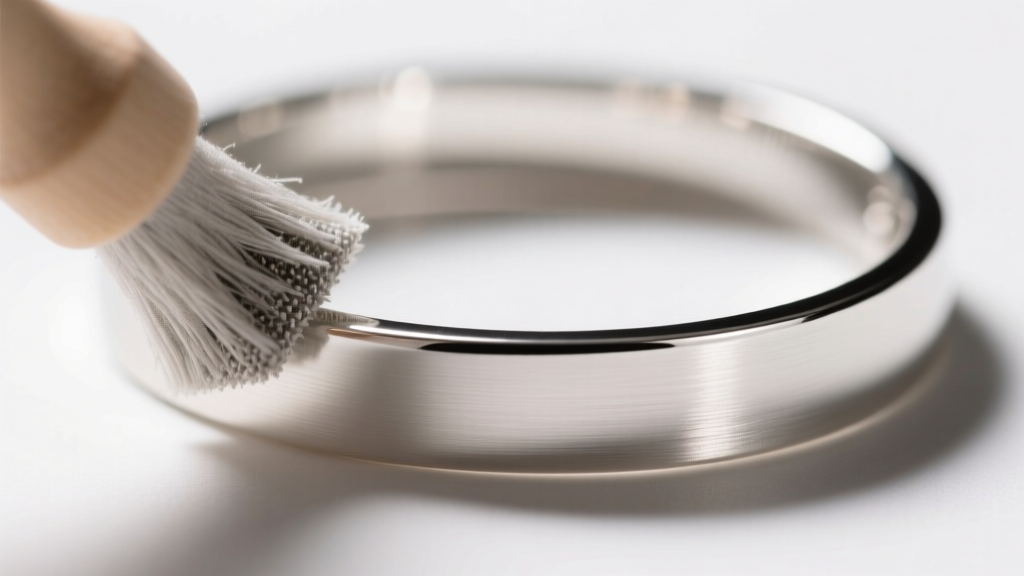
When electrochemical reduction is not an option due to gemstone settings, mechanical cleaning is your safest alternative. However, you must avoid random household abrasives. Professional jewelers use impregnated polishing cloths, such as the widely respected Sunshine Cloth. These cloths are embedded with microscopic jeweler's rouge (iron oxide) or aluminum oxide particles that are fine enough to polish the silver without leaving deep, visible micro-scratches.
Preserving Intentional Oxidation
Many contemporary and artisan silver pieces feature intentional oxidation (often called 'antiquing' or 'blackening'), where the jeweler uses liver of sulfur to deliberately turn the recessed areas of a design black. This creates visual contrast and depth. Submerging these pieces in an aluminum foil bath or using aggressive polishing cloths will strip the dark patina from the recesses, ruining the designer's intended aesthetic. For oxidized silver, use only a soft, untreated flannel cloth and gently rub only the high-polish raised surfaces.
Destructive Myths Debunked by Material Science
The internet is saturated with 'life hacks' for cleaning silver that violate basic material science. Here is why you must avoid them:
The Toothpaste Myth: Toothpaste contains hydrated silica as an abrasive. On the Mohs hardness scale, silica is a 7, while silver is a mere 2.5 to 3. Scrubbing silver with toothpaste is equivalent to sanding a hardwood floor with a belt sander; it will permanently frost the surface and destroy mirror finishes.
Similarly, making a thick paste out of baking soda and water and scrubbing it with a toothbrush creates deep, swirling micro-scratches. While baking soda is an excellent electrolyte when dissolved in hot water for the foil method, it is a terrible abrasive for direct mechanical scrubbing.
The Danger of Commercial Thiourea Dips
Many commercial 'instant' silver dips rely on thiourea, a highly toxic organosulfur compound that rapidly dissolves silver sulfide. While effective, thiourea is a known carcinogen and leaves a micro-porous surface on the silver that actually accelerates future tarnishing if not neutralized and rinsed perfectly. Conservation professionals, as noted in guidelines by the American Institute for Conservation (AIC), strongly advise against routine use of thiourea dips for heirloom or high-value jewelry.
Post-Cleaning Passivation and Archival Storage
Cleaning your silver is only half the battle; preventing the hydrogen sulfide from returning is the other. Once your silver is chemically reduced and polished, you must control its micro-environment.
- Relative Humidity (RH): Tarnishing requires moisture to facilitate the chemical reaction. Store your silver in an environment where RH is maintained below 50%. Use reusable silica gel desiccant packets in your jewelry boxes.
- Activated Carbon and Zinc: Place 3M Anti-Tarnish strips or specialized silver storage bags (which contain embedded zinc or copper particles) inside your storage containers. These act as sacrificial anodes, absorbing ambient H2S gases before they can reach your jewelry.
- Avoid Sulfur Sources: Never store silver in cardboard boxes, unbleached cotton, or rubber-lined drawers, as these materials off-gas sulfur compounds over time.
By treating your sterling silver not just as an accessory, but as a reactive chemical element, you can maintain its structural integrity and brilliant luster for generations. Understanding how to clean silver jewelry at home through the lens of chemistry ensures that your pieces remain pristine without falling victim to abrasive internet myths.


