How to Clean Silver Sterling Jewelry: Expert Metallurgical Guide
Master how to clean silver sterling jewelry with our expert metallurgical guide. Discover precise chemical methods and safe polishing techniques.

The Metallurgy of Tarnish: Why Sterling Silver Oxidizes
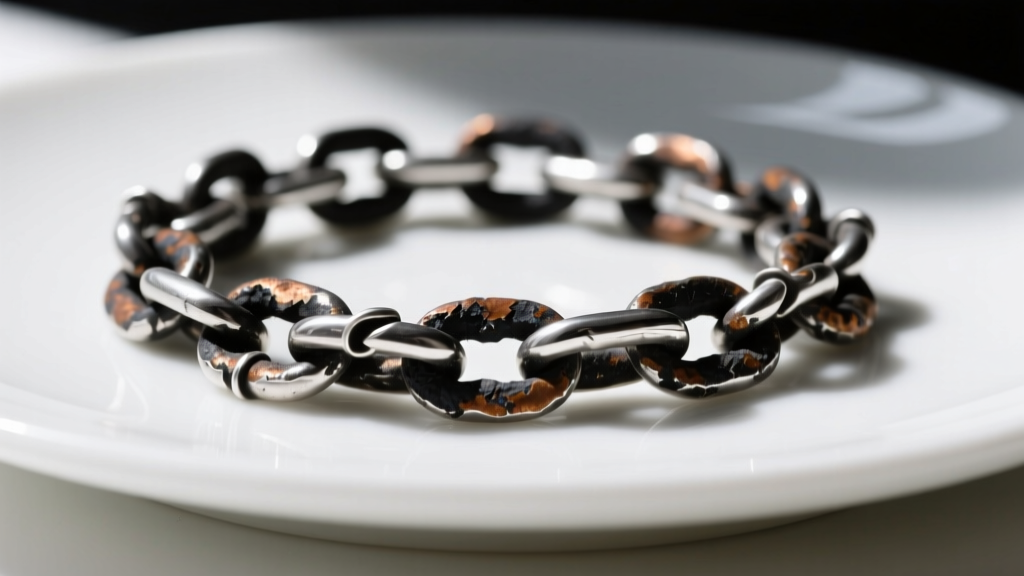
To understand how to clean silver sterling jewelry effectively, one must first understand the metallurgical mechanics of tarnish. Sterling silver is an alloy composed of 92.5% pure silver (Ag) and 7.5% secondary metals, predominantly copper (Cu). Pure silver is highly inert and resistant to oxidation; however, the copper alloyed into the 925 matrix is highly reactive to atmospheric sulfur compounds.
When exposed to hydrogen sulfide (H₂S) and sulfur dioxide (SO₂)—gases commonly present in urban pollution, industrial emissions, and even natural body chemistry—the copper atoms at the surface level undergo a redox reaction. This forms copper sulfide (Cu₂S) and silver sulfide (Ag₂S). Initially, this sulfide layer presents as a faint yellowish hue, progressing to brown, and ultimately culminating in a black, matte finish as the sulfide layer thickens to several micrometers. Effective cleaning requires either chemically reversing this sulfide bond or mechanically abrading the damaged surface layer.
Chemical vs. Mechanical Cleaning: A Technical Comparison
Selecting the correct cleaning methodology depends on the jewelry's topography, gemstone inclusions, and desired surface finish. Below is a technical comparison of standard cleaning vectors.
| Method | Mechanism of Action | Material Loss (Microns) | Risk Profile |
|---|---|---|---|
| Electrochemical (Foil) | Galvanic reduction (Ion transfer) | 0.0 (Converts sulfide back to Ag) | High for porous gems & oxidized finishes |
| Mechanical Polishing | Abrasive shearing (Micro-scratching) | 0.5 - 2.5 per session | Loss of hallmarks, engraving, and crisp edges |
| Commercial Dips | Chemical complexation (Thiourea) | 0.1 - 0.5 | Micro-pitting, accelerated re-tarnishing |
| Ultrasonic Cavitation | Acoustic micro-implosions | 0.0 (Removes loose debris only) | Fracture propagation in stones, prong loosening |
Step-by-Step Electrochemical Reduction (The Foil Method)
The most scientifically sound method for removing heavy tarnish without sacrificing base metal is electrochemical reduction. This process utilizes a galvanic cell to convert silver sulfide back into elemental silver.
The Chemical Protocol
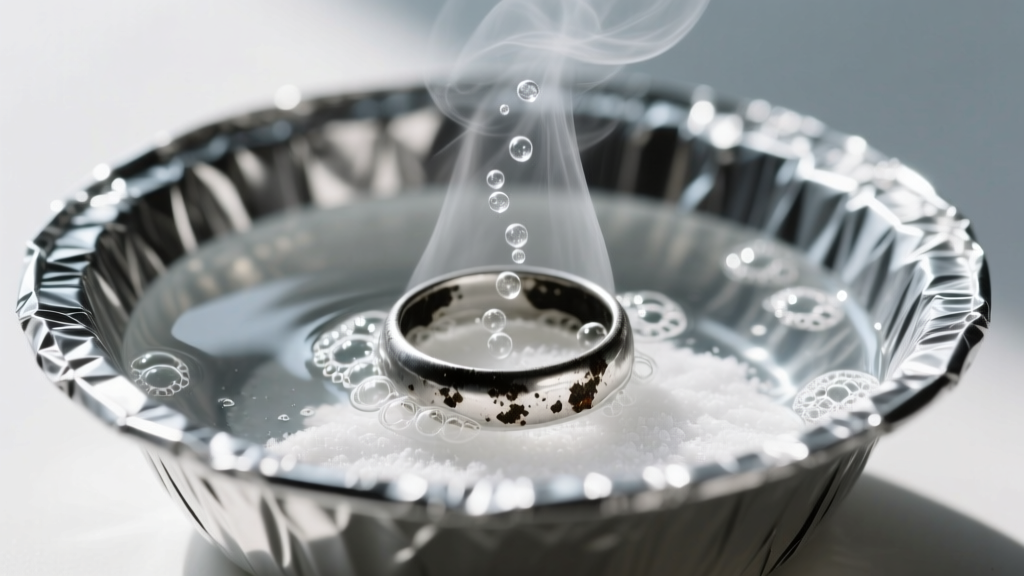
- Prepare the Anode: Line a glass or ceramic vessel (never use metal bowls, which will short the circuit) with heavy-duty aluminum foil, shiny side up. Aluminum has a standard electrode potential of -1.66V, making it a highly effective sacrificial anode compared to silver (+0.80V).
- Create the Electrolyte: Add 1 tablespoon of sodium bicarbonate (NaHCO₃) per liter of water. The alkaline solution facilitates ion transport.
- Thermal Activation: Pour boiling water into the vessel. The reaction kinetics require temperatures above 80°C (176°F) to proceed efficiently.
- Galvanic Contact: Submerge the sterling silver jewelry, ensuring it makes direct physical contact with the aluminum foil. This physical connection is mandatory for electron transfer.
- Observation: Within 60 to 120 seconds, the dark Ag₂S layer will reduce back to elemental silver. You will observe micro-bubbling (hydrogen gas off-gassing) and detect a distinct sulfuric odor (rotten eggs) as the sulfide bonds break.
Expert Note: Always rinse the jewelry in distilled water immediately after the bath to halt the alkaline reaction, and dry with a microfiber cloth to prevent water-spot mineralization.
Crucial Contraindications for Electrochemical Baths
While chemically elegant, this method is strictly contraindicated for specific jewelry categories. Never use electrochemical reduction on antiqued or oxidized silver. The galvanic bath cannot differentiate between unintentional atmospheric tarnish and intentional factory-applied liver of sulfur (potassium sulfide) patinas used to highlight engravings. Furthermore, the high-alkaline, high-temperature environment will severely damage porous gemstones such as turquoise, malachite, lapis lazuli, and opals, causing irreversible hydration fractures and color leaching.
Mechanical Polishing: Abrasive Gradients and Surface Loss
When dealing with localized tarnish or jewelry with mixed media (e.g., silver set with pearls), mechanical polishing is required. However, silver is a remarkably soft metal, ranking just 2.5 to 3 on the Mohs hardness scale. Consequently, mechanical cleaning inherently involves surface removal.
Professional jewelers utilize varying gradients of abrasives. For consumer-grade polishing cloths, the fabric is typically impregnated with micro-abrasives like calcium carbonate (Mohs 3) or jeweler's rouge (iron oxide). When you rub a tarnished chain with a polishing cloth, you are physically shearing off the top 0.5 to 2.0 microns of the sulfide layer, along with a microscopic layer of the underlying silver.
The Danger of Over-Polishing
Repeated aggressive mechanical polishing leads to cumulative material loss. Over a decade of weekly polishing, a delicate 1mm silver chain can lose up to 15% of its structural cross-section, drastically reducing its tensile strength and increasing the likelihood of chain snap. Furthermore, aggressive use of motorized rotary tools with felt buffing wheels and coarse rouge will round off sharp geometric edges, blur milgrain detailing, and completely erase shallow laser-engraved hallmarks. Always reserve mechanical polishing for high-wear areas and utilize the lowest abrasive grit necessary to achieve the desired luster.
Commercial Silver Dips: The Thiourea Hazard
Many consumers opt for commercial liquid silver dips due to their instantaneous results. According to metallurgical analyses cited by the Silver Institute, the active ingredient in most commercial dips is thiourea (CH₄N₂S) suspended in a mild hydrochloric acid base. Thiourea acts as a complexing agent, binding to silver ions and pulling the sulfide layer into solution.
While fast, this method is highly aggressive. The acidic nature of the dip can cause micro-pitting on the silver's surface, creating microscopic craters that actually increase the surface area and trap future atmospheric sulfur, leading to accelerated re-tarnishing. If a commercial dip must be used, the jewelry requires extensive neutralization—soaking in a mild baking soda solution followed by a prolonged distilled water rinse—to ensure no acidic residue remains in the microscopic crevices of the casting.
Ultrasonic Cleaners: Frequency Parameters and Risks
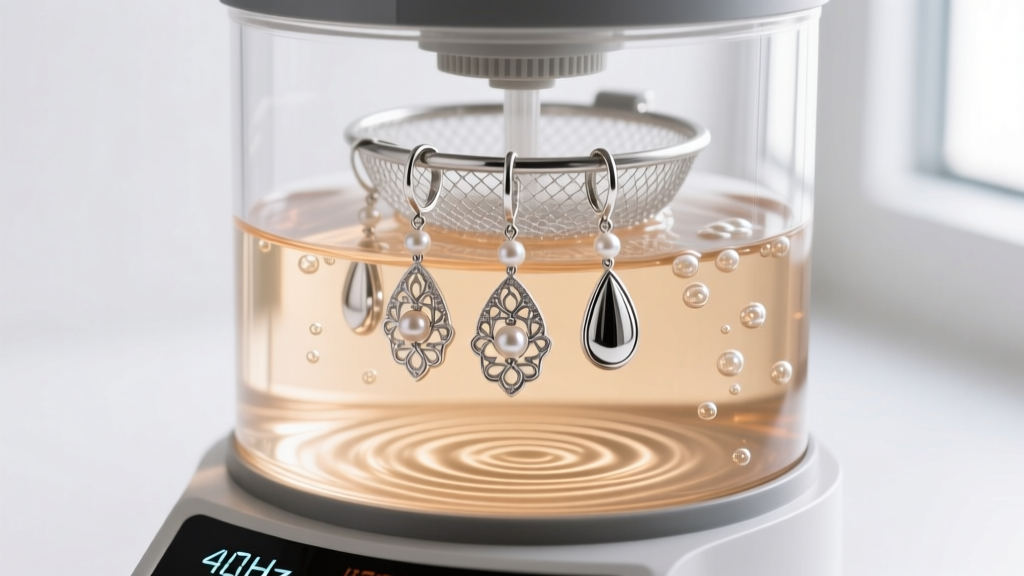
Ultrasonic cleaners do not remove chemical tarnish (sulfides); rather, they excel at removing sebum, cosmetic buildup, and environmental particulates trapped in intricate filigree and under gallery wires. These machines operate by generating high-frequency sound waves that create microscopic vacuum bubbles in the cleaning fluid—a process known as cavitation. When these bubbles collapse against the metal surface, they generate localized shockwaves exceeding 1,000 atmospheres of pressure.
For sterling silver, a frequency of 40kHz is standard and provides sufficient cavitation energy to dislodge debris without damaging the metal. However, ultrasonic cleaners pose severe risks to the gemstone settings often found in silver jewelry. The high-frequency vibrations can easily shatter brittle stones like emeralds, tanzanite, and opals. Furthermore, if a stone has been fracture-filled with resin or oil (common with rubies and emeralds), the ultrasonic cavitation will strip the filler, leaving the stone cloudy and structurally compromised. According to the Gemological Institute of America (GIA), ultrasonic cleaning should be strictly limited to plain metal pieces or jewelry set exclusively with hard, non-porous, and untreated stones like diamonds or solid sapphires.
Preventative Storage: Vapor Corrosion Inhibitors (VCI)
From a metallurgical standpoint, preventing the formation of silver sulfide is vastly superior to removing it. Tarnish requires two elements: sulfur and moisture. By controlling the micro-environment of your jewelry storage, you can halt the oxidation process entirely.
- Vapor Corrosion Inhibitors (VCI): Utilize 3M Anti-Tarnish Strips or equivalent VCI technology. These strips contain copper-based scavengers that preferentially react with atmospheric H₂S, effectively pulling sulfur out of the enclosed air before it can reach your sterling silver.
- Relative Humidity (RH) Control: Moisture acts as a catalyst for the sulfide reaction. Store silver in an environment where RH is maintained below 50%. Incorporating silica gel desiccant packets inside sealed polyethylene zip-locks is highly effective.
- Sacrificial Storage Textiles: Products like Pacific Silvercloth are embedded with microscopic silver and zinc particles. These particles act as sacrificial anodes, tarnishing themselves to protect the jewelry stored within, effectively neutralizing sulfur gases upon contact.
By combining precise electrochemical reduction for heavy tarnish, careful mechanical abrasion for localized polishing, and stringent VCI storage protocols, you can preserve the structural integrity and optical brilliance of your 925 sterling silver jewelry for generations.


