How to Tell if Jewelry is Real Silver: 2026 Authentication Guide
Discover how to tell if jewelry is real silver with expert authentication tests, hallmarks, and 2026 market trends to avoid counterfeit sterling pieces.

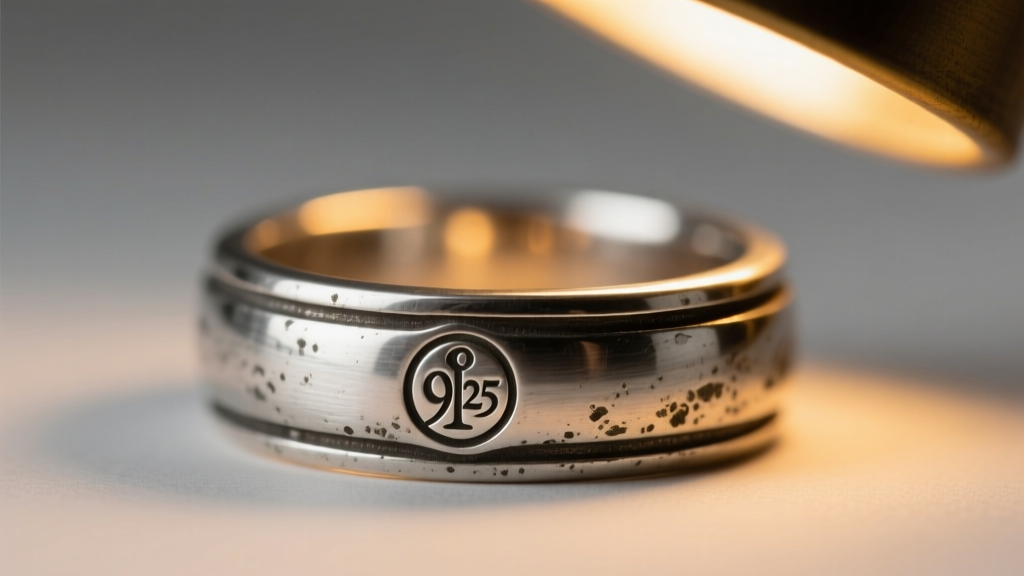
As we navigate the 2026 jewelry landscape, the surge in online artisan marketplaces and vintage resale platforms has brought a corresponding rise in sophisticated counterfeits. For collectors, thrifters, and everyday buyers, knowing how to tell if jewelry is real silver is no longer just a niche skill—it is an absolute necessity. Modern electroplating techniques and deceptive alloy blends like "Tibetan silver" or "nickel silver" (which contain zero actual silver) can easily fool the untrained eye. This comprehensive guide moves beyond basic internet myths, providing you with metallurgical facts, precise at-home testing frameworks, and professional verification methods to authenticate your silver pieces with confidence.
The 2026 Silver Market: Why Counterfeits Are Surging
The global silver price rally over the last few years has made scrap and counterfeit silver highly lucrative for bad actors. In 2026, we are seeing a massive influx of "white metal" alloys from overseas being stamped with fraudulent 925 marks. These pieces often feature a thick copper or brass core coated with a microscopic layer of rhodium or silver flash. While they pass a basic visual inspection and even some superficial scratch tests, they fail entirely under metallurgical scrutiny. According to the Federal Trade Commission (FTC) Jewelry Guides, it is illegal to misrepresent the metallic composition of jewelry, yet enforcement in cross-border e-commerce remains notoriously difficult. Understanding the physical properties of silver is your best defense against these market deceptions.
Decoding Hallmarks: The First Line of Defense
Before applying any physical tests, always inspect the piece for a hallmark. However, be warned: stamps can be faked. A hallmark should be evaluated for depth, font consistency, and placement. Genuine stamps are usually struck with a steel punch, resulting in clean, deep impressions with sharp edges. Laser-etched or blurry stamps are immediate red flags.
| Hallmark | Meaning | Common Applications & Notes |
|---|---|---|
| 925 / STER / Sterling | 92.5% Pure Silver, 7.5% Copper | The global standard for durable jewelry. The copper adds necessary tensile strength. |
| 999 / FS | 99.9% Fine Silver | Extremely soft. Used mostly for bezel wire in stone setting or investment bullion. Rarely used for structural rings. |
| 800 | 80% Pure Silver, 20% Alloy | Common in vintage European and Middle Eastern pieces. Tarnishes faster than 925 due to higher copper content. |
| 958 | 95.8% Britannia Silver | Historically used in British hollowware and some high-end modern artisan jewelry. Softer than 925. |
| EPNS / SP / Plate | Electroplated / Silver Plate | Base metal core with a thin silver coating. Not solid silver. Will eventually wear through to the brass or copper beneath. |
Non-Destructive At-Home Authentication Tests
If a piece lacks a hallmark, or if you suspect a counterfeit stamp, you must rely on the inherent physical properties of silver. The Gemological Institute of America (GIA) notes that silver possesses unique thermal, magnetic, and acoustic signatures that are nearly impossible for counterfeit alloys to replicate perfectly.
1. The Neodymium Magnet and Lenz's Law Test
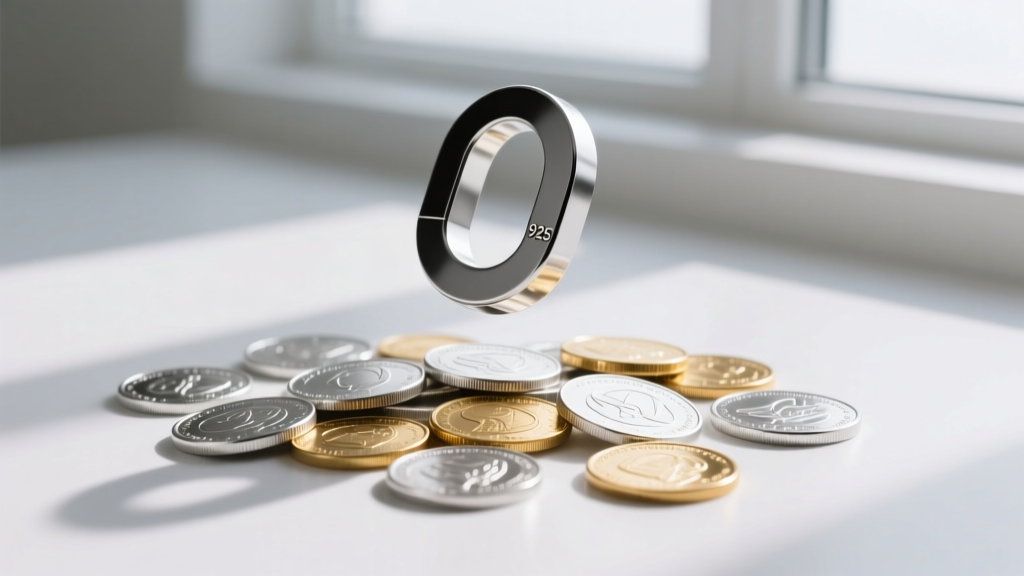
Silver is paramagnetic, meaning it exhibits a very weak, almost unnoticeable attraction to magnetic fields. It is absolutely not ferromagnetic. If a necklace chain or ring clasp sticks firmly to a magnet, it contains iron, steel, or nickel and is not solid silver. However, the true test involves Lenz's Law. Take a high-grade N52 neodymium magnet and tilt a thick silver coin or bangle at a 45-degree angle. Slide the magnet down the surface. Because silver is highly conductive, the moving magnetic field induces eddy currents in the metal, creating a subtle braking effect. The magnet should slide down slowly, as if moving through syrup. On a silver-plated copper or brass fake, the magnet will slide down instantly at normal gravitational speed.
2. The Thermal Conductivity (Ice Cube) Test
Silver has the highest thermal conductivity of any common metal, measuring approximately 429 W/m·K. This means it transfers heat incredibly fast. Place an ice cube directly on the silver item at room temperature. The ice should begin to melt almost instantaneously, significantly faster than it would on a countertop or a piece of stainless steel. Furthermore, the silver piece itself will become painfully cold to the touch within seconds as it rapidly draws heat from your skin into the ice. Base metals like brass or nickel silver will not produce this rapid thermal exchange.
3. The Acoustic Ping Test
When struck gently with another piece of silver or a wooden mallet, 925 sterling silver produces a distinct, high-pitched, sustained ringing sound (typically resonating between 1000 Hz and 1200 Hz). Base metals, zinc alloys, and silver-plated items will emit a dull, short-lived "thud" or a low-pitched clank. This test is particularly effective for heavy silver bangles, coins, and solid chain links.
The Acid Test: Proceed with Caution
For definitive at-home chemical verification, jewelers use silver testing acid (a mixture of nitric and muriatic acids). Warning: This is a destructive test that will leave a tiny, permanent mark, so perform it on an inconspicuous area like the inside of a ring band or the back of a pendant clasp.
- File a small notch: Use a jeweler's file to scratch through the top layer. This is crucial to bypass any silver plating.
- Apply one drop of acid: Observe the color change immediately.
- Creamy / Brick Red: Confirms 925 Sterling Silver.
- Dark Brown / Greenish-Brown: Indicates 800 Silver or a lower purity alloy.
- Bright Green: The item is base metal (copper, brass, or nickel) and potentially silver-plated.
Always neutralize the acid immediately with a baking soda and water solution to prevent further etching of the metal.
Trend Alert: Authenticating "Oxidized" and "Antiqued" Silver
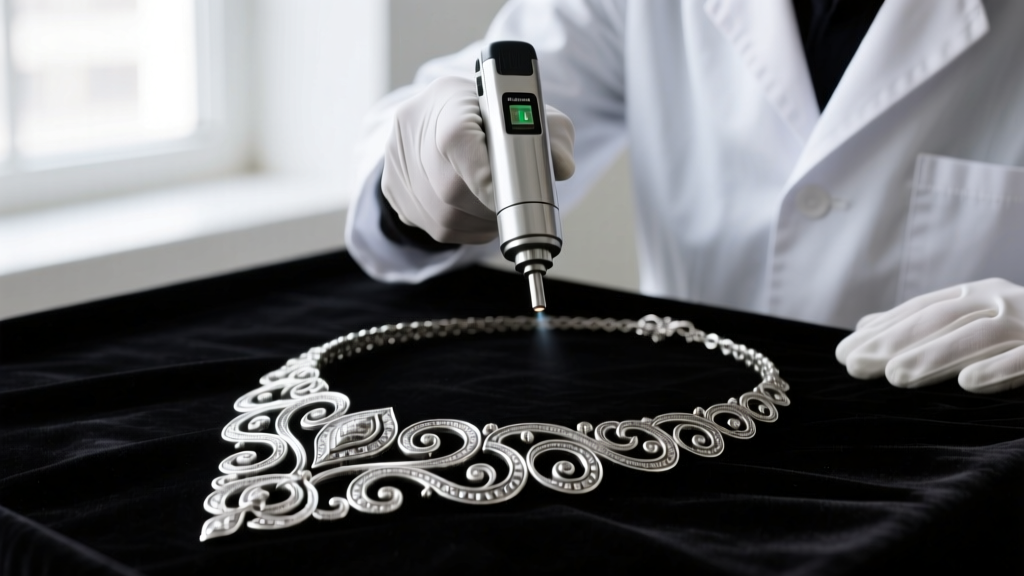
A major trend in 2026 is neo-gothic and artisan-crafted "oxidized" silver, where pieces are intentionally blackened to highlight intricate filigree and textures. Counterfeiters mimic this by painting base metals with flat black enamel or acrylic washes. To tell the difference, examine the wear points. Genuine chemical oxidation (achieved using liver of sulfur) sits deep in the crevices and recesses, while the high, polished contact points remain bright silver. If the "tarnish" is flaking off, appears uniformly painted over raised edges, or reveals a stark white or yellowish metal underneath when scratched, you are looking at a painted fake. Real silver tarnish is a chemical layer of silver sulfide that integrates with the surface, not a topical coating.
Professional Verification: XRF Scanners
If you are investing in high-value vintage lots, estate jewelry, or heavy silver chains, at-home tests may not be enough. Professional jewelers and pawn shops utilize X-Ray Fluorescence (XRF) spectrometers. An XRF scanner bombards the metal with X-rays and reads the fluorescent emissions to determine the exact elemental breakdown of the alloy down to a fraction of a percent. This non-destructive test will instantly reveal if a piece is a 925 sterling core, a silver-plated tungsten fake, or a complex cadmium-laced white metal alloy. While purchasing an XRF gun is cost-prohibitive for consumers (ranging from $15,000 to $30,000), many local assay offices and certified gemologists offer XRF scanning services for a nominal fee of $15 to $30 per item.
Expert Takeaway: Never rely on a single method to authenticate silver. A counterfeit piece might pass the visual hallmark test and even the weight test, but it will inevitably fail the thermal conductivity or XRF elemental analysis. Cross-reference your findings using at least two distinct testing frameworks before finalizing any high-value silver acquisition.


