Best Jewelry Cleaner for Silver: Chemical vs Ultrasonic Guide
Discover the best jewelry cleaner for silver. Compare chemical dips, ultrasonic frequencies, and electrolysis for safe 925 sterling care.

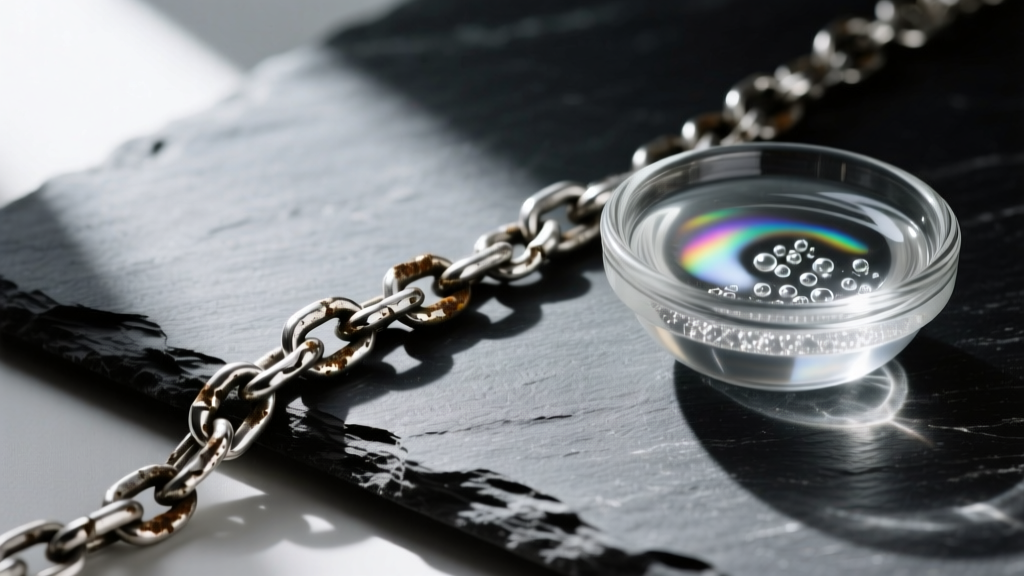
When searching for the ideal jewelry cleaner for silver, consumers are bombarded with quick-fix liquid dips, high-tech ultrasonic machines, and DIY home remedies. However, treating 925 sterling silver requires a fundamental understanding of metallurgy and surface chemistry. Using the wrong cleaning agent can strip intentional patinas, degrade rhodium flash-plating, or cause irreversible micro-pitting in the copper alloy. This comprehensive guide breaks down the exact mechanisms of commercial, mechanical, and electrolytic silver cleaners to help you maintain your collection without causing long-term metallurgical damage.
The Chemistry of Tarnish: Why Silver Needs Specific Cleaners
Unlike iron, silver does not rust or oxidize in the traditional sense. The dark, blackish-gray layer that forms on sterling silver is silver sulfide (Ag2S). This occurs when the silver reacts with hydrogen sulfide gas present in the atmosphere, which is emitted by common household items like rubber bands, wool, latex paint, and even certain foods like eggs and onions. Furthermore, the 7.5% copper alloy in 925 sterling silver is highly susceptible to copper oxide formation, which presents as a reddish-brown tarnish.
A proper jewelry cleaner for silver must either mechanically ablate the sulfide layer, chemically reduce it back into pure silver, or use surfactants to lift environmental oils that trap sulfur against the metal. According to the Gemological Institute of America (GIA), understanding the difference between surface dirt and chemical tarnish is the first step in selecting a non-destructive cleaning protocol.
Evaluating Commercial Jewelry Cleaner for Silver Options
The commercial market is dominated by three primary categories of silver cleaners. Each operates on a completely different chemical or mechanical principle, and their safety profiles vary drastically depending on the specific finish of your jewelry.
| Cleaner Type | Active Mechanism | Best Used For | Risk to Oxidized Finishes | Gemstone Safety |
|---|---|---|---|---|
| Liquid Dips | Chemical reduction (Thiourea/Acids) | Heavily tarnished, plain chains | Extreme (Strips patina instantly) | Poor (Etches porous stones) |
| Foaming Washes | Mild surfactants & saponins | Light dirt, oils, daily wear | Low (Safe for most finishes) | High (Safe for most gems) |
| Polishing Cloths | Micro-abrasion (Jeweler's Rouge/Calcium Carbonate) | Moderate tarnish, high-polish surfaces | Medium (Will gradually rub off patina) | Medium (Can scratch soft cabs) |
The Danger of Thiourea-Based Dips
Many instant liquid silver dips rely on thiourea combined with a mild acid (like sulfuric or hydrochloric acid) to instantly strip silver sulfide. While visually impressive, the National Center for Biotechnology Information (PubChem) notes that thiourea is a known toxic compound and potential carcinogen. Beyond health concerns, these dips leave a microscopically rough surface on the silver, which actually accelerates future tarnishing by increasing the surface area exposed to the air. They should only be used as a last resort on solid, ungemmed, non-oxidized silver chains.
Ultrasonic Cleaners: Frequencies and Cavitation
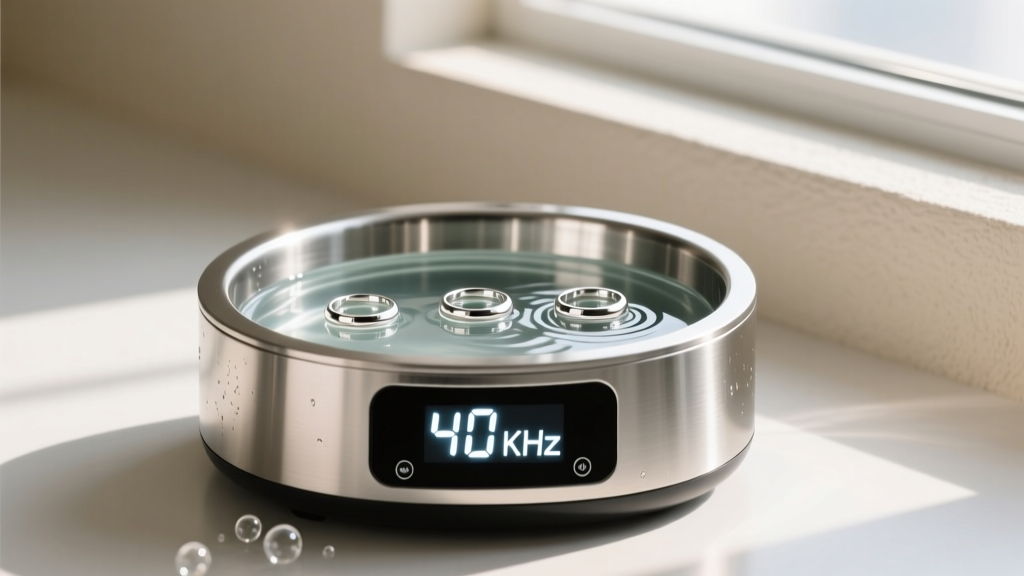
Ultrasonic cleaners use high-frequency sound waves to create microscopic vacuum bubbles in a liquid solution. When these bubbles collapse against the silver surface (a process called cavitation), they blast away dirt and light tarnish. For a jewelry cleaner for silver to be effective and safe ultrasonically, the frequency must be carefully calibrated.
- Optimal Frequency: 40 kHz to 45 kHz. Frequencies below 35 kHz create larger, more violent bubbles that can cause micro-pitting on soft sterling silver.
- Wattage: 35W to 50W is sufficient for jewelry tanks (under 1 Liter).
- Solution: Use a few drops of ammonia-free dish soap in warm distilled water. Never use bleach or chlorine-based cleaners in an ultrasonic tank, as chlorine causes irreversible stress-corrosion cracking in sterling silver alloys.
The Gemstone Danger Zone
Ultrasonic waves travel through the gemstone setting and can shatter stones with internal inclusions or low Mohs hardness. Never use an ultrasonic jewelry cleaner for silver pieces set with opals, emeralds, turquoise, lapis lazuli, pearls, or amber. The vibrations will fracture the stones or strip their natural oils.
The Electrolytic Bath: A Zero-Abrasion Alternative
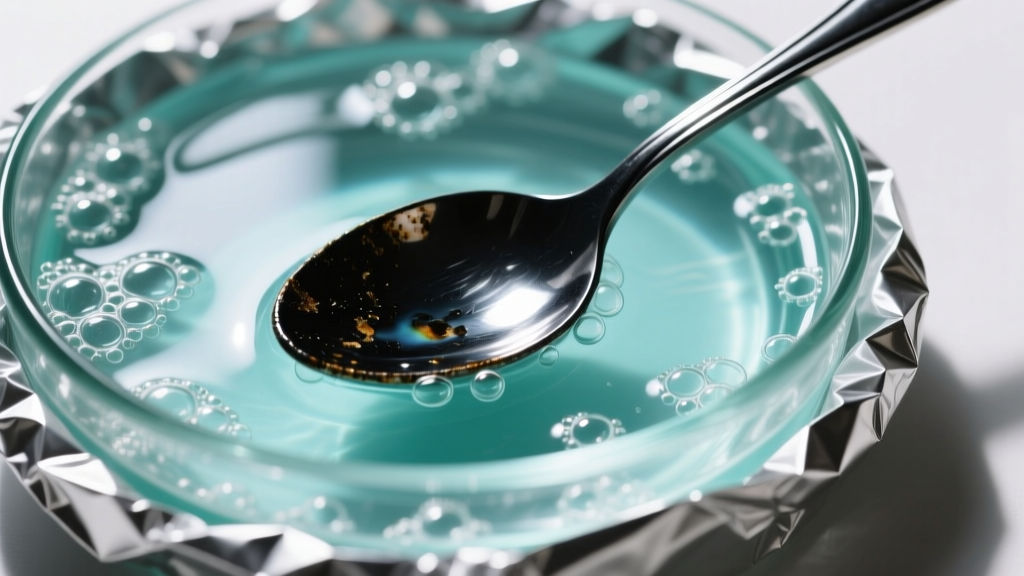
For heavily tarnished silver pieces with intricate filigree where polishing cloths cannot reach, an electrolytic bath is the safest and most scientifically sound method. This process uses a redox (reduction-oxidation) reaction to convert silver sulfide back into pure silver without removing any base metal.
Step-by-Step Electrolysis Protocol
- Prepare the Anode: Line a glass or ceramic baking dish with heavy-duty aluminum foil, shiny side up. The aluminum will act as the sacrificial anode.
- Create the Electrolyte: Add 2 tablespoons of sodium bicarbonate (baking soda) and 1 tablespoon of non-iodized salt per liter of water.
- Apply Heat: Pour boiling water (approx. 95°C) into the dish. Heat is critical as it increases ion mobility in the electrolyte solution.
- Submerge the Silver: Place the tarnished silver in the water, ensuring it physically touches the aluminum foil. This completes the electrical circuit.
- The Reaction: You will smell a faint sulfur (rotten egg) odor as the silver sulfide transfers to the aluminum. The chemical equation is: 3Ag2S + 2Al → 6Ag + Al2S3.
- Rinse and Dry: Remove the silver after 3-5 minutes, rinse thoroughly in distilled water, and dry immediately with a microfiber cloth to prevent water spots.
Special Protocols for Oxidized and Rhodium-Plated Silver
Not all sterling silver is meant to be bright white. Modern jewelry frequently utilizes specialized finishes that require entirely different cleaning methodologies.
Oxidized (Blackened) Silver
Oxidized silver has been intentionally treated with liver of sulfur (potassium sulfide) to create dark, antique-looking patinas in the recesses of the design. Never use liquid dips, ultrasonic cleaners, or the electrolytic bath on oxidized silver. These methods will strip the intentional patina, leaving the piece looking flat and unnaturally bright. To clean oxidized silver, use only a mild surfactant (like diluted castile soap), a soft-bristled baby toothbrush, and lukewarm water. Dry immediately and avoid polishing the recessed areas.
Rhodium-Plated Sterling Silver
To prevent tarnish and mimic the look of white gold, many jewelers flash-plate sterling silver with rhodium. This plating is incredibly thin—typically between 0.1 and 0.5 microns. Abrasive polishing cloths and chemical dips will wear through this plating in a matter of weeks, exposing the yellowish-gray sterling underneath. Clean rhodium-plated silver exactly as you would clean white gold: with a gentle foaming wash and a soft lint-free cloth.
Preventative Storage and Maintenance
The best jewelry cleaner for silver is the one you rarely have to use. By controlling the environment in which your silver is stored, you can halt the formation of silver sulfide before it begins. Store your pieces in airtight polyethylene zip-lock bags alongside anti-tarnish strips (which contain activated carbon and silver nitrate to absorb atmospheric sulfur). Keep your jewelry away from humid environments like bathrooms, and always remove silver rings and bracelets before swimming in chlorinated pools or handling household cleaning chemicals. By combining proper storage with the precise, science-backed cleaning methods outlined above, your sterling silver collection will retain its structural integrity and brilliance for generations.


