Decoding Every Marking for Silver on Jewelry for True Value
Learn how to read every marking for silver on jewelry to assess true market value, avoid overpaying for fakes, and spot hidden vintage gems.

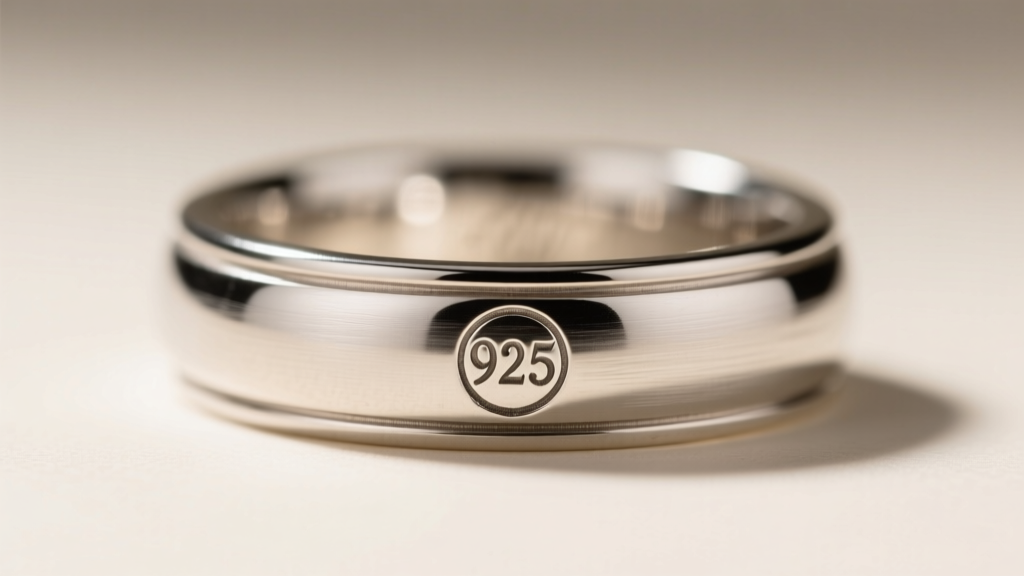
When navigating the secondary market, estate sales, or even modern boutique collections, understanding the true value of a piece hinges entirely on its hallmarks. A single marking for silver on jewelry can be the difference between a $20 thrift store bargain and a $2,000 numismatic treasure. However, the landscape of silver stamps is fraught with deceptive terminology, international variations, and outright counterfeits designed to separate budget-conscious buyers from their money. As a savvy collector or value-driven shopper, you must look beyond the surface shine and decode the metallurgical and historical data stamped into the metal.
This comprehensive value assessment guide breaks down the hierarchy of silver markings, exposes common traps that inflate prices artificially, and provides a concrete framework for calculating the true return on investment (ROI) for your silver jewelry purchases in 2026 and beyond.
The Hierarchy of Silver Markings and Their Market Value
Not all silver is created equal, and the market assigns drastically different premiums based on purity and workability. The most common
| Marking | Purity | Typical Market Premium | Best Value Use Case |
|---|---|---|---|
| .999 / Fine | 99.9% | Low (Close to spot melt) | Investment bullion jewelry, bezels |
| .925 / Sterling | 92.5% | Medium to High | Everyday wear, artisan vintage pieces |
| .900 / Coin | 90.0% | High (Numismatic) | US vintage flatware, repurposed coin rings |
| .800 / European | 80.0% | Medium (Historical) | Antique continental jewelry, tea sets |
According to the Silver Institute, sterling silver remains the global standard for jewelry due to the 7.5% copper alloy that provides necessary tensile strength. However, from a strict budget perspective, .800 European silver often sells at a discount compared to .925, despite frequently featuring superior antique craftsmanship. Recognizing an '.800' stamp allows value hunters to acquire intricate Victorian or Edwardian pieces at a lower price-per-gram than modern sterling equivalents.
Deceptive Markings: How to Avoid Overpaying for Fakes
The most critical skill in budget assessment is identifying markings that mimic precious metals but contain zero actual silver. Unscrupulous sellers often use ambiguous terminology to inflate prices. If you see the following stamps, walk away or negotiate the price down to base-metal scrap levels.
The 'German Silver' and 'Nickel Silver' Trap
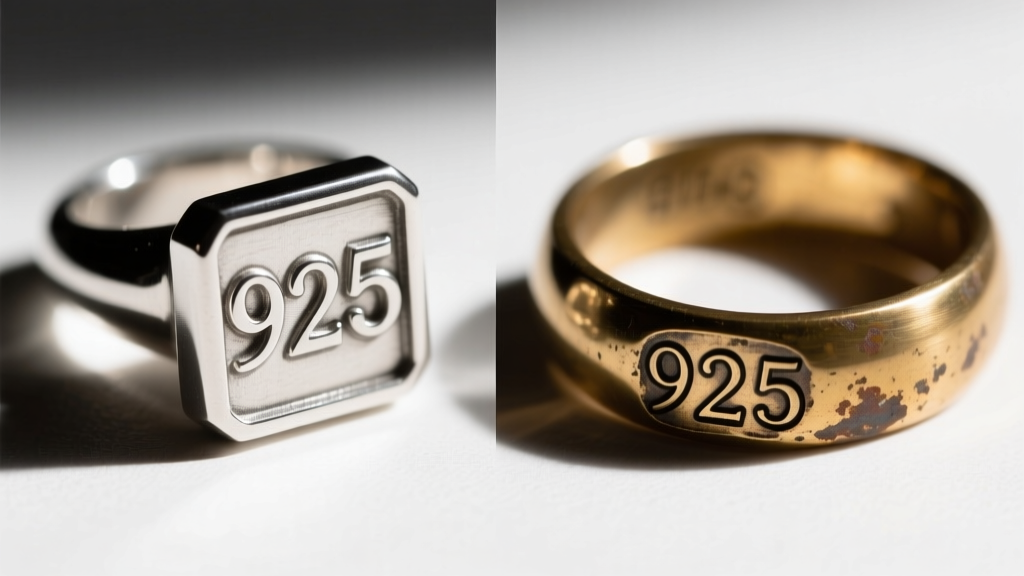
Despite the name, German Silver (also stamped as Alpaca, Nickel Silver, or Argentan) contains absolutely no elemental silver. It is an alloy of copper, nickel, and zinc. These pieces are frequently sold at flea markets with a heavy patina that mimics oxidized sterling. A genuine
EPNS and Silver-Plated Illusions
Electroplated Nickel Silver (EPNS) or 'Silver on Copper' marks indicate a microscopic layer of silver over a base core. While antique EPNS pieces from makers like Sheffield or Rogers hold minor historical value (typically $10–$30), they possess zero melt value. Budget buyers should never pay a per-gram premium for plated items, regardless of how ornate the filigree work appears.
International Hallmarks: Finding Value in Vintage & Imported Pieces
For the advanced value hunter, international hallmarks are the key to unlocking massive ROI. While American silver is typically marked with a simple '925' or 'Sterling', European and Latin American silver utilizes complex pictorial hallmarks that guarantee purity and trace the piece to a specific era and maker. The UK Assay Office maintains one of the most rigorous hallmarking systems in the world, providing a layer of consumer protection that adds inherent market trust and value.
- The UK Lion Passant: A striding lion in a shield shape guarantees .925 sterling purity. Pieces bearing this mark alongside a date letter and city mark (like an anchor for Birmingham) command a 20-40% premium over unbranded modern sterling due to verified provenance.
- The French Minerva Head: Stamped in profile, this indicates a minimum of .800 purity (often .950 for first standard). French silver is highly sought after for its heavy, substantial casting and intricate repoussé work.
- Mexican Taxco Eagles: Mid-century Mexican silver (1948–1979) features an eagle stamp with a number indicating the specific maker. Recognizing these marks allows buyers to identify highly collectible Taxco modernist pieces that can sell for thousands, far exceeding their silver melt value.
The 'Unmarked' Silver Dilemma: Is It Worth the Risk?
At estate sales, you will frequently encounter heavy, tarnished chains, bangles, and rings with no visible
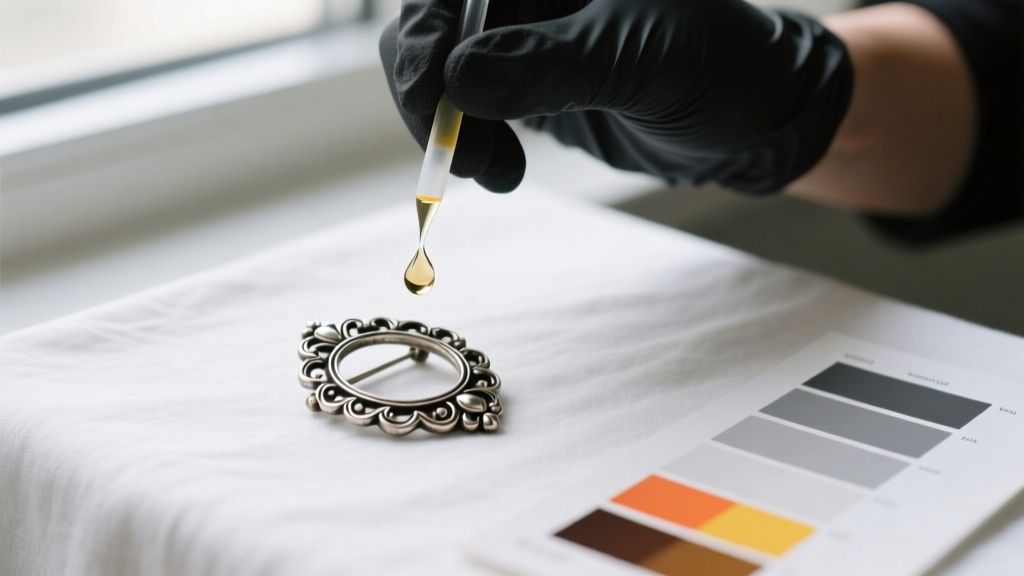
Professional jewelers rely on X-ray Fluorescence (XRF) spectrometers, which cost upwards of $15,000, to verify alloys non-destructively. For the budget-conscious buyer, a $15 silver acid testing kit is the ultimate ROI tool. By filing a tiny, discreet notch into the metal and applying a drop of nitric acid testing solution, you can read the chemical reaction:
- Dark, Blood Red: Confirms .925 Sterling Silver.
- Brown/Chocolate: Indicates .800 or lower purity silver.
- Green: Base metal (copper, brass, or nickel). The piece is either entirely fake or heavily silver-plated.
Pro-Tip for Estate Sales: Always carry a small jeweler's file and a magnet. Silver is diamagnetic. If a heavy 'unmarked' chain sticks to a rare-earth magnet, it contains a steel or iron core, saving you from a costly impulse purchase.
Actionable Checklist for Assessing Silver Jewelry Value
To ensure you are paying a fair market price based on the
- Locate and Magnify: Use a 10x jeweler's loupe to find the stamp. Check the inside of ring bands, the backs of clasps, and the posts of earrings. Authentic stamps are crisp, evenly struck, and perfectly aligned.
- Verify the Maker's Mark: A '925' stamp next to a recognizable maker's mark (e.g., 'T&Co' for Tiffany, or a specific Taxco eagle number) adds numismatic value. A '925' stamp next to a generic, modern manufacturer code means you should only pay based on the daily spot melt price plus a small labor premium.
- Calculate Melt vs. Retail: Weigh the piece in grams. Multiply the weight by 0.925 (for sterling), then multiply by the current spot price of silver per gram. If the seller's asking price is more than 2.5x the melt value for a generic, unbranded piece, it is overpriced.
- Inspect for Wear Points: On rings and bracelets, check high-friction areas. If you see brass or copper bleeding through a '925' stamp, you are looking at a counterfeit stamp applied to a plated base-metal item.
Ultimately, mastering the interpretation of silver hallmarks transforms jewelry shopping from a gamble into a calculated investment. By prioritizing verified purity, understanding international pictorial marks, and ruthlessly filtering out deceptive base-metal terminology, you secure genuine heirloom quality while strictly protecting your budget.


