Silver Dollar Pawn and Jewelry: Silver Grade Comparison
Discover how to evaluate silver grades, compare alloy properties, and test authenticity when visiting a silver dollar pawn and jewelry shop.

Walking into a silver dollar pawn and jewelry establishment offers a unique glimpse into the secondary market for precious metals. Unlike pristine retail boutiques, pawn environments present a raw, unfiltered cross-section of silver jewelry, flatware, and bullion from various eras and global manufacturers. For both buyers seeking undervalued treasures and sellers looking to liquidate assets, understanding the precise metallurgical properties of silver is non-negotiable. As we navigate the 2026 precious metals market, characterized by fluctuating spot prices and an influx of sophisticated counterfeit alloys, the ability to distinguish between varying grades of silver is a critical skill.
This comprehensive guide breaks down the material properties, chemical behaviors, and professional testing methodologies used to evaluate silver. Whether you are examining a Victorian-era teapot or a modern minimalist ring, mastering these concepts will ensure you accurately assess intrinsic value and structural integrity.
The Metallurgy of Pawnshop Silver: Beyond the Shine
Pure silver (Ag, atomic number 47) is a transition metal prized for its unparalleled electrical conductivity, reflectivity, and malleability. However, in its purest form, silver is far too soft for functional jewelry or durable hollowware. It possesses a Mohs hardness of just 2.5, meaning it can be easily scratched by a copper penny or warped by manual pressure. To solve this, metallurgists alloy silver with other metals—most commonly copper—to enhance its structural properties.
According to the Gemological Institute of America (GIA), the specific ratio of silver to its alloying metals dictates the piece's classification, durability, and ultimately, its melt value on the pawnshop scale. The presence of copper introduces a trade-off: it dramatically increases tensile strength but also introduces a vulnerability to oxidation and tarnish.
Comparing Core Silver Grades: 999 vs. 925 vs. 900
When evaluating inventory at a silver dollar pawn and jewelry counter, you will predominantly encounter three distinct grades of silver. Each possesses unique mechanical properties and market applications.
| Silver Grade | Purity (Parts per Thousand) | Vickers Hardness (HV) | Primary Use Case | Pawnshop Valuation Metric |
|---|---|---|---|---|
| Fine Silver (999) | 99.9% Ag | ~25 HV | Bullion, investment coins, bezel wire | Direct spot melt value (minus minimal refining fee) |
| Sterling Silver (925) | 92.5% Ag, 7.5% Cu | ~65 HV | Fine jewelry, luxury flatware, hollowware | 92.5% of spot melt; retail premium for branded pieces |
| Coin Silver (900) | 90.0% Ag, 10.0% Cu | ~75 HV | Pre-1965 US currency, antique American flatware | 90.0% of spot melt; high numismatic premium for rare dates |
Fine silver is virtually immune to heavy tarnishing due to the absence of reactive copper, making it ideal for long-term vault storage. Sterling silver, the global standard for jewelry, offers the perfect equilibrium between workability and durability. Coin silver, heavily prevalent in American antiques, contains slightly more copper, giving it a marginally warmer hue and increased resistance to denting, as noted in historical archives by the United States Mint.
Material Properties That Dictate Longevity and Value
Hardness and Wear Resistance
The Vickers Hardness (HV) scale is the industry standard for measuring a metal's resistance to permanent indentation. While fine silver (25 HV) will quickly lose its polish and develop a patina of micro-scratches from daily wear, sterling silver (65 HV) can withstand the friction of rings and bracelets. Some modern jewelry manufacturers utilize Argentium silver, a proprietary alloy that replaces a portion of the copper with germanium. This increases the hardness to roughly 75 HV while simultaneously eliminating firescale during the soldering process.
Tarnish Susceptibility and Copper Oxidation
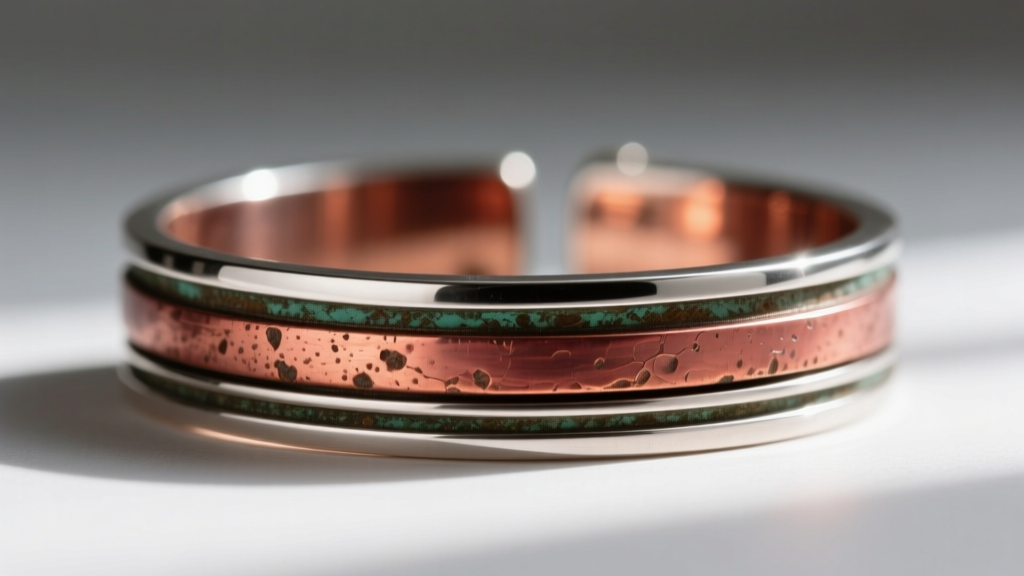
Tarnish on sterling silver is not a flaw; it is a predictable chemical reaction. The copper within the 7.5% alloy reacts with sulfur compounds in the atmosphere (specifically hydrogen sulfide) to form copper sulfide, which manifests as a yellow, brown, or black film. In a pawn environment, heavy tarnish can actually serve as a rudimentary authenticity indicator. Silver-plated items often exhibit a different wear pattern, where the tarnish reveals a starkly contrasting base metal like brass or nickel beneath the surface.
In-Store Testing: How Professionals Verify Metals
Reputable buyers at a silver dollar pawn and jewelry shop do not rely solely on hallmarks, which can be easily forged. They employ a triad of scientific testing methods to verify material composition.
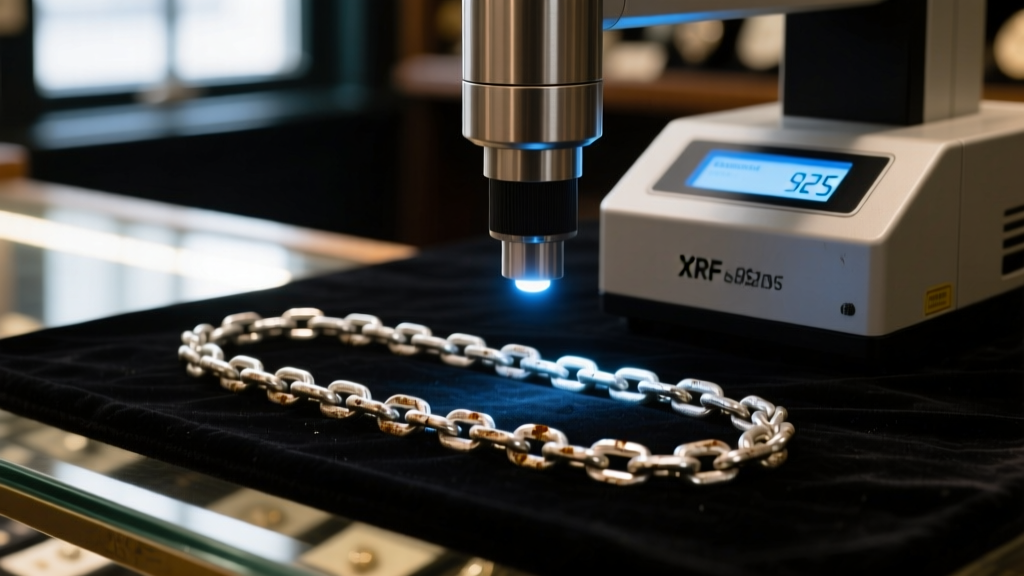
- X-Ray Fluorescence (XRF) Spectrometry: The gold standard for non-destructive testing. Modern handheld XRF analyzers fire X-rays into the metal and measure the fluorescent energy emitted, providing an exact elemental breakdown (e.g., 92.6% Ag, 7.4% Cu) in seconds.
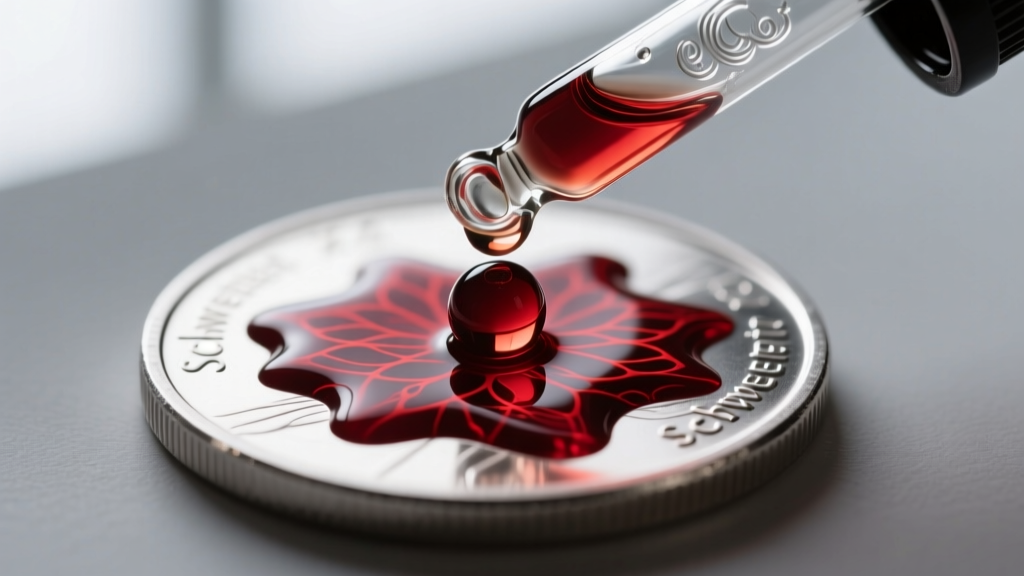
- Schwerter's Solution (Acid Testing): A chemical reagent made of potassium dichromate and nitric acid. When applied to a filed notch on the metal, it produces specific color reactions: bright dark red for fine silver, dark red for sterling, and brown or green for lower-grade alloys or base metals.
- Specific Gravity (SG) Testing: Pure silver has an exact SG of 10.49. By weighing the item in the air and then suspended in distilled water, testers can calculate its density. This is highly effective for detecting tungsten or lead cores hidden beneath thick silver plating.
The Trap of Silver-Plated and Filled Pieces
The most common point of friction in secondary market transactions involves silver-plated items. Electroplating involves using an electrical current to bond a microscopic layer of silver to a base metal core. In vintage flatware and costume jewelry, this layer is typically between 0.5 and 2.5 microns thick—roughly 1/50th the thickness of a human hair.
Pieces marked "EPNS" (Electroplated Nickel Silver) or "EPBM" (Electroplated Britannia Metal) contain virtually zero recoverable precious metal. The cost of chemically or electrolytically stripping the silver far exceeds the value of the recovered dust. Furthermore, silver-filled items, which feature a much thicker mechanical cladding of sterling silver over a brass core (usually comprising 1/20th or 1/10th of the total weight), hold marginal scrap value but are generally rejected by pawnshops for melt purposes due to the toxic fumes released when melting the zinc and brass interior.
Actionable Advice for Sellers and Buyers
Whether you are liquidating an inheritance or hunting for a bargain, approaching the transaction with a metallurgical mindset will protect your capital. Always calculate the baseline melt value before negotiating. Multiply the current spot price of silver by the item's troy weight, then multiply by the purity (0.999, 0.925, or 0.900).
Expert Negotiation Framework: Pawnshops typically offer 40% to 60% of the calculated melt value for generic, damaged, or unbranded scrap silver to cover their overhead, refining costs, and profit margins. However, if you are selling a piece with recognizable provenance, such as Georg Jensen hollowware or Tiffany & Co. jewelry, you should negotiate based on the secondary retail market value, which can be 300% to 500% above melt value.
Conclusion
The inventory at a silver dollar pawn and jewelry shop represents a fascinating intersection of art, history, and raw commodities. By moving beyond superficial aesthetics and focusing on the empirical material properties—alloy ratios, hardness metrics, and chemical behaviors—you can confidently navigate the secondary silver market. Armed with an understanding of how professionals test and value these precious metals, you are equipped to make informed, profitable decisions in any economic climate.


